Metamizol dr. max
Poland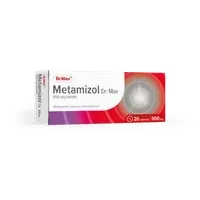
Table of Contents
Package leaflet: Information for the patient
Metamizol Dr. Max, 500 mg, tablets
Metamizolum natricum monohydricum
Please read the entire leaflet carefully before use, as it contains
important information for the patient.
This medicine should always be used exactly as described in this patient leaflet or as directed by a
physician or pharmacist.
- Keep this leaflet for future reference.
- If advice or further information is needed, consult a pharmacist.
- If the patient experiences any adverse reactions, including any adverse reactions not listed in this leaflet, inform a doctor or pharmacist. See section 4.
- If there is no improvement after 3–5 days, or if the patient feels worse, contact a doctor.
Metamizol Dr. Max may cause a significantly reduced number of white blood cells
(agranulocytosis), which may lead to severe and life-threatening infections (see section 4).
Treatment should be discontinued and immediate medical advice sought if any of the following symptoms occur: fever, chills, sore throat, painful ulcers of the nose, mouth, throat, genital area, or anus.
If the patient has ever experienced agranulocytosis during treatment with metamizole or similar medicines, this medicine must never be used again in the future (see section 2).
Contents of the leaflet
- What Metamizol Dr. Max is and what it is used for
- Important information before taking Metamizol Dr. Max
- How to take Metamizol Dr. Max
- Possible side effects
- How to store Metamizol Dr. Max
- Contents of the package and other information
1. What Metamizol Dr. Max is and what it is used for
Metamizol Dr. Max is an analgesic (pain-relieving) medicine and belongs to the pyrazolone group.
In addition to its analgesic effect, Metamizol Dr. Max has spasmolytic (antispasmodic) and antipyretic (fever-reducing) properties. The effect of Metamizol Dr. Max begins within 30 to 60 minutes and lasts for approximately 4 hours.
Metamizol Dr. Max is indicated in adults and adolescents over 15 years of age for the treatment of severe acute or chronic pain and high fever when other treatment methods are ineffective.
Consult a doctor if there is no improvement after 3–5 days or if the patient feels worse.
2. Important information before using Metamizol Dr. Max
When not to use Metamizol Dr. Max
-
if the patient is allergic to metamizole or other pyrazolone derivatives (e.g. phenazone, propyphenazone) or pyrazolidines (e.g. phenylbutazone, oxyphenbutazone), or to any of the
other ingredients of this medicine (listed in section 6). -
if the patient has ever experienced asthma or allergic reactions such as urticaria or so-called angioedema (swelling of the face and mucous membranes of the respiratory or gastrointestinal tract) associated with the use of pain-relieving medicines (salicylates, paracetamol, diclofenac, ibuprofen, indomethacin or naproxen).
-
if the patient has previously experienced a significant reduction in the number of white blood cells called granulocytes, caused by metamizole or other similar medicines known as pyrazolones or pyrazolidines.
-
if the patient has bone marrow dysfunction (e.g. following cancer treatment) or a disease affecting the production or function of blood cells.
-
if the patient has blood formation disorders (hematopoiesis).
-
if the patient has congenital glucose-6-phosphate dehydrogenase deficiency (an inherited disorder with risk of red blood cell breakdown).
-
if the patient has severe liver disease, so-called porphyria (risk of triggering a porphyria attack).
-
if the patient is in the last three months of pregnancy.
Warnings and precautions
Before starting treatment with Metamizol Dr. Max, discuss this with your doctor or
pharmacist.
Low white blood cell count (agranulocytosis)
Metamizol Dr. Max may cause agranulocytosis, meaning a very low number of a certain type of
white blood cells called granulocytes, which play an important role in fighting infections (see
section 4). You must stop taking metamizole and contact your doctor immediately if
the following symptoms occur, as they may indicate possible agranulocytosis: chills,
fever, sore throat and painful mucosal ulcers, especially in the mouth, nose and throat
or in the genital or anal area. Your doctor will order laboratory tests to check
the patient's blood cell counts.
If metamizole is taken for fever, some symptoms of developing agranulocytosis may
remain unnoticed. Similarly, symptoms may also be masked if the patient is receiving
antibiotics.
Agranulocytosis may develop at any time during treatment with Metamizol Dr.
Max, and even shortly after stopping metamizole.
Agranulocytosis may occur even if metamizole was previously administered without complications.
Special caution is required when using Metamizol Dr. Max:
- if the patient develops objective and subjective symptoms suggesting blood disorders (such as general malaise, infection, persistent fever, bruising, bleeding and pallor), immediate medical attention is required. These may be symptoms of pancytopenia (reduction in all types of blood cells).
- if the patient has asthma or atopy (a type of allergy), as there is an increased risk of anaphylactic shock after administration of metamizole (a life-threatening allergic reaction).
- if the patient has any of the following conditions associated with an increased risk of severe anaphylactoid reactions to metamizole:
- bronchial asthma and coexisting nasal mucosa inflammation
- chronic urticaria
- alcohol intolerance, where even small amounts of alcohol cause sneezing, eye tearing and severe facial flushing
- hypersensitivity to dyes (e.g. tartrazine) or preservatives (e.g. benzoates).
- if the patient has low blood pressure, dehydration, unstable body fluid volume or early-stage circulatory failure, or high fever. In such cases, there is an increased risk of severe hypotensive reactions (reactions related to a drop in blood pressure). The use of metamizole should be carefully considered, and if metamizole is administered under these conditions, close medical supervision is required. Measures to prevent severe hypotensive reactions must be taken. Metamizole may cause hypotensive reactions unrelated to the above-mentioned diseases. These reactions may be dose-dependent.
- if the patient has severe ischemic heart disease or significant narrowing of blood vessels supplying blood to the brain. In such cases, lowering blood pressure must be avoided; therefore, metamizole should be administered only under strict monitoring of circulatory function.
- if the patient has impaired kidney or liver function. In such cases, high doses of metamizole should not be taken, as its elimination is reduced.
If the patient belongs to any of these risk groups, they should inform their doctor before
taking Metamizol Dr. Max.
Severe skin reactions
Severe skin reactions, including Stevens-Johnson syndrome, toxic epidermal necrolysis, and drug reaction with eosinophilia and systemic symptoms (DRESS syndrome), have been reported with metamizole treatment. If the patient develops any of these
symptoms related to severe skin reactions listed in section 4, treatment with metamizole must be discontinued and immediate medical help sought.
Metamizol Dr. Max must not be restarted at any time if the patient has ever experienced any severe skin reactions (see section 4).
Liver function disorders
Cases of hepatitis have been reported in patients taking metamizole, with symptoms appearing from several days to several months after starting treatment.
Metamizol Dr. Max should be discontinued and the doctor contacted if the patient develops symptoms of liver dysfunction, such as: nausea (nausea or vomiting),
fever, fatigue, loss of appetite, dark urine, pale stools, yellowing of the skin or whites of the eyes, itching, rash or upper abdominal pain. The doctor
will check the patient's liver function.
The patient should not take Metamizol Dr. Max if they have previously taken any medicines
containing metamizole and experienced liver function disorders.
Effect on laboratory tests
Before undergoing any laboratory tests, inform the doctor about the use of
Metamizol Dr. Max, as metamizole may affect the results of certain tests (e.g.
blood creatinine levels, lipids, HDL cholesterol or uric acid levels).
Children and adolescents
Metamizol Dr. Max should not be used in children and adolescents under 15 years of age. Other metamizole-containing medicines may be available for children; consult your doctor or pharmacist.
Metamizol Dr. Max and other medicines
Tell your doctor or pharmacist about all medicines currently or recently taken by the patient, as well as any medicines the patient plans to take.
Metamizole may reduce the effectiveness of the following medicines:
- bupropion, a medicine used to treat depression or to help quit smoking
- efavirenz, a medicine used to treat HIV infection (AIDS)
- methadone, a medicine used to treat addiction to illegal narcotics (so-called opioids)
- valproate, a medicine used to treat epilepsy or bipolar affective disorder
- cyclosporine, a medicine that suppresses the immune system
- tacrolimus, a medicine used to prevent organ rejection in transplant patients
- sertraline, a medicine used to treat depression.
If Metamizol Dr. Max is taken simultaneously with any of the above
medicines, the doctor will closely monitor the patient.
Additional administration of metamizole with methotrexate (a medicine used to treat cancer or
certain rheumatic diseases) may increase the potential risk of hematotoxicity (damage to the blood-forming system) by methotrexate, especially in elderly patients.
Therefore, such a combination should be avoided.
Metamizol Dr. Max should be used with caution in patients taking low-dose acetylsalicylic acid for the prevention of heart attack.
Metamizol Dr. Max and alcohol
Do not consume alcohol while taking Metamizol Dr. Max.
Pregnancy and breastfeeding
If the patient is pregnant or breastfeeding, suspects she may be pregnant, or plans to become pregnant, she should consult her doctor or pharmacist before using this medicine.
Pregnancy
Available data on the use of metamizole during the first three months of pregnancy are
limited, but do not indicate harmful effects on the fetus. In selected cases, when no
other treatment options are available, single doses of metamizole during the first and second
trimesters of pregnancy may be acceptable after consultation with a doctor or pharmacist and careful
consideration of the benefits and risks of using metamizole. However, metamizole is generally not recommended during the first and second trimesters.
Metamizol Dr. Max must not be taken during the last three months of pregnancy due to the increased risk of complications for mother and child (bleeding, premature closure of an important fetal blood vessel, the so-called ductus arteriosus Botalli, which normally closes only after birth).
Breastfeeding
Metamizole metabolites pass into breast milk in significant amounts, and risk to the breastfed infant cannot be excluded. Therefore, repeated use of metamizole should be particularly avoided during breastfeeding. After a single dose of metamizole, mothers are advised to express and discard breast milk for 48 hours after administration of the medicine.
Driving and operating machinery
At the recommended dose, this medicine does not affect the ability to drive or operate
machinery. Taking higher than recommended doses and taking Metamizol Dr. Max with alcohol
impairs reaction ability and concentration. In such cases, driving and operating machinery should be avoided.
Metamizol Dr. Max contains sodium
This medicine contains 32.7 mg of sodium (the main component of table salt) per tablet. This corresponds to 1.64% of the maximum recommended daily sodium intake in the adult diet.
3. How to use Metamizol Dr. Max
This medicine should always be taken exactly as described in this patient information leaflet or as directed by a doctor or pharmacist. If in doubt, consult a doctor or pharmacist.
The dosage depends on the severity of pain or fever and individual sensitivity to Metamizol Dr. Max. The lowest effective dose required to control pain and (or) fever should always be used.
For adults and adolescents aged 15 years and older (with body weight exceeding 53 kg), a single dose of up to 1000 mg of metamizole (2 tablets) may be administered, which can be taken up to 4 times daily at intervals of 6–8 hours. The maximum daily dose is 4000 mg (equivalent to 8 tablets).
A noticeable effect can be expected within 30 to 60 minutes after oral administration and usually lasts about 4 hours.
Use in children and adolescents
Metamizol Dr. Max must not be used in children and adolescents under 15 years of age. Other formulations and (or) strengths of this medicine are available for younger children and adolescents; consult a doctor or pharmacist.
Elderly patients and patients in poor general condition or with impaired renal function
Dosage should be reduced in elderly individuals, debilitated patients, and those with impaired renal function, as elimination of metamizole metabolites may be delayed.
Patients with impaired renal or hepatic function
Due to reduced elimination rate in patients with impaired renal or hepatic function, repeated administration of high doses should be avoided. For short-term use, dosage adjustment is not necessary.
There is no experience with long-term use.
After administration of very high doses, excretion of a harmless metabolite of metamizole may cause reddening of urine, which resolves after discontinuation of treatment.
Method of administration
This medicine is for oral use. Tablets should be swallowed whole with sufficient fluid (e.g. a glass of water).
The break line on the tablet is intended solely to facilitate splitting the tablet if the patient has difficulty swallowing it whole.
Metamizol Dr. Max may be taken with or without food.
Duration of treatment
Do not use this medicine for longer than 3–5 days without consulting a doctor.
If there is no improvement after 3–5 days, or if the patient feels worse, consult a doctor.
Use of a higher than recommended dose of Metamizol Dr. Max
In case of overdose, contact a doctor immediately so that appropriate countermeasures can be taken.
Symptoms of overdose:
- nausea, vomiting, abdominal pain
- impaired renal function, even acute renal failure
- dizziness, drowsiness, loss of consciousness
- seizures
- drop in blood pressure, up to circulatory collapse (shock)
- rapid heartbeat (tachycardia)
Missed dose of Metamizol Dr. Max
Do not take a double dose to make up for a missed dose.
If you have any further doubts about the use of this medicine, consult your doctor or pharmacist.
4. Possible adverse effects
Like any medicine, this medicine can cause adverse effects, although not everyone will experience them.
You must stop using Metamizol Dr. Max and contact your doctor immediately if any of the following symptoms occur:
nausea (feeling sick or vomiting), fever, feeling of fatigue, loss of appetite, dark urine, pale stools, yellowing of the skin or whites of the eyes (jaundice), itching, rash or pain in the upper abdomen. These symptoms may indicate liver function disorders. See also section 2 "Warnings and precautions".
Other adverse effects:
Rare (may affect up to 1 in 1,000 patients):
- Blood disorders: reduced number of red blood cells due to suppression of bone marrow function (aplastic anaemia), reduced number or absence of one type of white blood cells (agranulocytosis), reduced number of all blood components (pancytopenia), including fatal cases, reduced number of white blood cells (leukopenia), and reduced number of platelets (thrombocytopenia). Typical symptoms of reduced number of one type of white blood cells (agranulocytosis): inflammatory changes in mucous membranes, mainly in the mouth, nose and throat, and inflammatory changes around the anus and genital organs, sore throat and fever (suddenly persistent or recurring). These symptoms may be mild in patients taking antibiotics (medicines used to treat bacterial infections). Erythrocyte sedimentation rate is markedly accelerated, and lymph node enlargement is mild or completely absent. Typical symptoms of reduced number of platelets (thrombocytopenia): increased tendency to bleeding and small brownish-red spots (petechiae) on the skin and mucous membranes.
- Allergic reactions (anaphylactic shock, anaphylactoid or anaphylactic reactions), which may be severe or life-threatening and in some cases even fatal. These may occur even if metamizole was previously tolerated without complications. These reactions usually occur within the first hour after administration of Metamizol Dr. Max, but may occur immediately or may also appear several hours later. Mild allergic reactions usually manifest as skin and mucous membrane symptoms (e.g. itching, burning, redness, urticaria, swelling), breathing difficulties, and less frequently gastrointestinal symptoms. However, these symptoms may progress to severe forms with generalized urticaria, severe condition characterized by swelling of the face, tongue, throat or larynx (angioedema), severe dyspnoea, irregular heartbeat (arrhythmia), drop in blood pressure (which may sometimes be preceded by a rise in blood pressure) and shock. These reactions occur in patients with bronchial asthma as an asthma attack.
- Skin rash.
Very rare (may affect up to 1 in 10,000 patients):
- Transient worsening of kidney function with low urine volume (oliguria) or absence of urine (anuria), or acute kidney failure with excretion of blood proteins in the urine (proteinuria).
Frequency not known (frequency cannot be estimated from available data):
- Heart disorders in the context of allergic reaction (Kounis syndrome)
- Transient (only exceptionally critical) isolated drop in blood pressure without other symptoms of hypersensitivity reaction
- Hepatitis, yellowing of the skin and whites of the eyes (jaundice), increased concentration of liver enzymes in the blood
- Severe skin reactions: Treatment with metamizole must be discontinued and immediate medical help sought if any of the following severe adverse effects occur:
- Red, non-hairy, target-shaped or circular spots on the trunk, often with blisters in the center, peeling of the skin, ulceration of the mouth, throat, nose, genital organs and eyes. These serious skin rashes may be preceded by fever and flu-like symptoms (Stevens-Johnson syndrome, toxic epidermal necrolysis).
- Widespread rash, high body temperature and enlarged lymph nodes (DRESS syndrome or drug hypersensitivity syndrome).
- Kidney inflammation (interstitial nephritis).
Reporting of adverse effects
If any adverse effects occur, including any adverse effects not listed in this leaflet, inform your doctor or pharmacist. Adverse effects can be reported directly to the Department of Monitoring of Adverse Drug Reactions at the Office for Registration of Medicinal Products, Medical Devices and Biocidal Products, Al. Jerozolimskie 181C, 02-222 Warsaw, tel.: +48 22 49 21 301, fax: +48 22 49 21 309, website: https://smz.ezdrowie.gov.pl
Adverse effects can also be reported to the marketing authorization holder.
Reporting adverse effects helps to provide more information on the safety of the medicine.
5. How to store Metamizol Dr. Max
Keep the medicine out of the sight and reach of children.
There are no special storage temperature requirements for this medicine.
Store in the original packaging to protect from light.
Do not use this medicine after the expiry date stated on the carton or blister after:
EXP. The expiry date refers to the last day of the stated month.
Medicines must not be disposed of via wastewater or household waste. Ask your pharmacist how to dispose of medicines no longer required. Such measures help protect the environment.
6. Contents of the packaging and other information
What Metamizol Dr. Max contains:
- The active substance is metamizole sodium monohydrate. Each tablet contains 500 mg of metamizole sodium monohydrate.
- The other ingredients are: pregelatinized corn starch, macrogol 6000, crospovidone (type A), magnesium stearate, and colloidal anhydrous silica.
What Metamizol Dr. Max looks like and contents of the pack
White or almost white, round, flat tablets (approximately 12.5 mm in diameter) with a division line on one side.
The division line on the tablet is intended solely to facilitate breaking the tablet for easier swallowing and does not ensure division into equal doses.
The tablets are supplied in white, opaque unit-dose blisters made of PVC/aluminum foil, sealed with a child-resistant aluminum/paper laminate foil or non-child-resistant aluminum foil. The blisters are placed in a cardboard box.
Pack sizes: 6, 10, 12, 20 or 50 tablets.
Not all pack sizes may be marketed.
Marketing Authorisation Holder and Manufacturer
Marketing Authorisation Holder:
Dr. Max Pharma s.r.o.
Na Florenci 2116/15
Nové Město
110 00 Prague 1
Czech Republic
Tel.: (+420) 516 770 199
Manufacturer:
Sofarimex Industria Quimica e Farmaceutica S.A.
Alto De Colaride, Avenida Das Industrias
2735-213 Agualva-Cacém
Portugal
This medicinal product is authorised in the European Economic Area under the following names:
Czech Republic: Metamizol Medreg
Romania: Metamizol Gemax Pharma 500 mg comprimate
Slovakia: Metamizol Medreg
Poland: Metamizol Dr. Max