Mepivastesin
Poland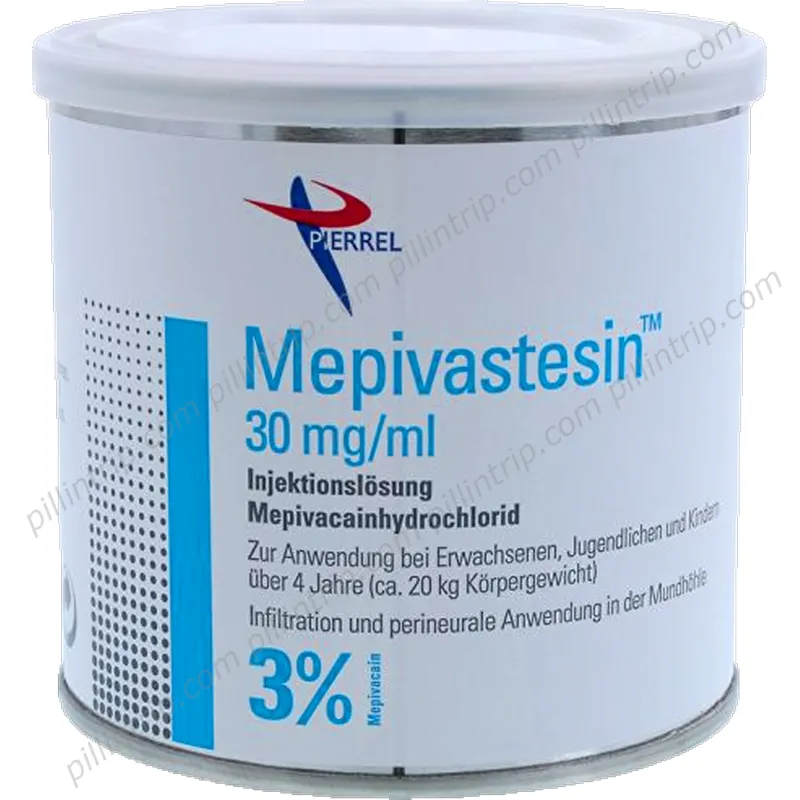
Table of Contents
Package leaflet: Information for the patient
MEPIVASTESIN, 30 mg/ml, solution for injection
Mepivacaini hydrochloridum
Please read the entire leaflet carefully before using the medicine, as it contains
important information for the patient.
- Keep this leaflet, so that you can read it again if necessary.
- If you have any doubts, please consult your doctor, dentist or pharmacist.
- This medicine has been prescribed for a specific individual. Do not pass it on to others. The medicine may harm another person, even if their symptoms are the same.
- If you experience any adverse reactions, including any adverse reactions not listed in this leaflet, inform your doctor, dentist or pharmacist. See section 4.
Table of contents of the leaflet
- What Mepivastesin is and what it is used for
- Important information before using Mepivastesin
- How to use Mepivastesin
- Possible side effects
- How to store Mepivastesin
- Contents of the pack and other information
1. What Mepivastesin is and what it is used for
Mepivastesin is a local anaesthetic medicine that numbs a specific area to prevent or minimize pain.
The medicine is used locally in dental procedures in adults, adolescents and children above 4 years of age (approximately 20 kg body weight). It contains the active substance mepivacaine hydrochloride and belongs to the group of nervous system anaesthetics.
2. Important information before using Mepivastesin
When not to use Mepivastesin
- if the patient is allergic to mepivacaine or any of the other ingredients of this medicine (listed in section 6);
- if the patient is allergic to other local anaesthetic agents belonging to the same group of medicines (e.g. lidocaine, bupivacaine);
- if the patient has:
- heart rhythm disorders caused by abnormal electrical impulses triggering heart contractions (severe conduction disorders);
- treatment-resistant epileptic seizures;
- in children under 4 years of age (approximately 20 kg body weight).
Warnings and precautions
Before starting treatment with Mepivastesin, discuss with your dentist if the patient has:
- heart disorders;
- severe anaemia;
- high blood pressure (severe or untreated hypertension);
- low blood pressure (hypotension);
- epilepsy;
- liver disease;
- kidney disease;
- a disease affecting the nervous system and causing neurological disturbances (porphyria);
- increased acidity of the blood (acidosis);
- circulatory disorders;
- general physical weakness;
- infection or inflammation at the injection site.
Inform the doctor about any of the above conditions. The doctor may decide to administer a lower dose of the medicine.
Mepivastesin and other medicines
Tell the doctor about all medicines the patient is currently taking or has recently taken, as well as any medicines the patient plans to take, especially:
- other local anaesthetic agents;
- medicines used to treat heartburn, stomach and intestinal ulcers (such as cimetidine);
- sedatives and hypnotics;
- medicines used to treat cardiac arrhythmias (antiarrhythmics);
- cytochrome P450 1A2 inhibitors;
- medicines used to treat hypertension (propranolol).
Mepivastesin and food
Avoid eating and chewing gum until normal sensation returns, especially in children, due to the risk of biting the lips, inner cheek or tongue.
Pregnancy, breastfeeding and fertility
If the patient is pregnant or breastfeeding, suspects she may be pregnant, or is planning to have a child, she should consult a doctor, dentist or pharmacist before using this medicine.
As a precautionary measure, it is recommended to avoid using the medicine during pregnancy unless necessary.
Breastfeeding women should not breastfeed for 10 hours after administration of the anaesthetic.
Driving and operating machinery
This medicine may have a minor influence on the ability to drive and operate machinery.
After administration, dizziness (including vertigo), visual disturbances and fatigue may occur, as well as loss of consciousness (see section 4). The patient should not leave the dental office until control and sensation are regained (usually within 30 minutes) following the dental procedure.
Mepivastesin contains sodium
The medicine contains 1.87 mg of sodium in 1.7 ml of solution, i.e. less than 1 mmol of sodium (23 mg) in 1.7 ml of solution, which means the medicine is considered "sodium-free".
3. How to use Mepivastesin
Mepivastesin should be administered only by, or under the supervision of, dentists or other
trained physicians, via slow local injection.
The physician will adjust the appropriate dose according to the procedure selected, age, body weight, and the patient's general health condition.
The smallest effective dose required to achieve adequate anesthesia should be used. This medicine is administered by injection in the oral cavity.
Use of a higher than recommended dose of Mepivastesin
Following overdose of local anaesthetic medicines, the following signs of toxicity may occur: excitation, numbness of lips and tongue, prickling and tingling sensations around the mouth, dizziness, visual and auditory disturbances, tinnitus, muscle stiffness and tremors, low blood pressure, weak or irregular heartbeat. If any of these symptoms occur, administration of the medicine must be stopped immediately and medical help should be sought.
If you have any further questions regarding the use of this medicine, consult your doctor or dentist.
4. Possible adverse reactions
Like all medicines, this medicine can cause adverse reactions, although not everyone will experience them.
After administration of Mepivastesin, one or more of the following adverse reactions may occur.
Common adverse reactions (may occur in up to 1 in 10 patients):
- headache.
Uncommon adverse reactions (may occur in up to 1 in 1,000 patients):
- rash, itching, swelling of the face, lips, gums, tongue, and/or throat, and breathing difficulties, wheezing/asthma, urticaria (hives): these may be symptoms of hypersensitivity reactions (allergic reactions or allergy-type reactions);
- pain due to nerve damage (neuropathic pain);
- burning, pricking, tingling sensation around the mouth, without visible changes (paresthesia);
- sensory disturbances in and around the mouth (hypoesthesia);
- metallic taste, altered taste, loss of taste (taste disturbances);
- dizziness (feeling of emptiness in the head);
- tremor;
- loss of consciousness, seizures (convulsions), coma;
- fainting;
- confusion, disorientation;
- speech disturbance, dysarthria;
- nervousness, restlessness;
- loss of balance (imbalance);
- somnolence;
- blurred vision, difficulty focusing on an object, visual disturbances;
- sensation of spinning (peripheral vertigo);
- inability of the heart to contract properly (cardiac arrest), rapid and irregular heartbeat (ventricular fibrillation), severe and crushing chest pain (angina pectoris);
- problems with heart rhythm coordination (conduction disturbances, atrioventricular block), abnormally slow heartbeat (bradycardia), abnormally fast heartbeat (tachycardia), palpitations;
- low blood pressure;
- increased blood flow (hyperemia);
- breathing difficulties, such as shortness of breath, rarely slow or rapid breathing;
- yawning;
- nausea, vomiting, oral or gum ulceration, swelling of the tongue, lips, or gums;
- excessive sweating;
- muscle spasms;
- chills;
- swelling at the injection site.
Very rare adverse reactions (may occur in up to 1 in 10,000 patients):
- high blood pressure.
Frequency not known (frequency cannot be estimated from the available data):
- euphoria, anxiety/nervousness;
- disturbances of smell;
- involuntary eye movements, eye problems such as constricted pupils, drooping of the upper eyelid (as in Horner's syndrome), dilated pupils, enophthalmos (sunken eyeball in the orbit due to changes in orbital volume), double vision, or loss of vision;
- hearing disturbances such as tinnitus, sound sensitivity;
- inability of the heart to contract properly (myocardial failure);
- dilation of blood vessels (vasodilation);
- skin color changes with disorientation, cough, rapid heartbeat, rapid breathing, sweating: these may be symptoms of tissue oxygen deficiency (hypoxia);
- rapid or difficult breathing, somnolence, headache, inability to think and fall asleep, which may indicate high levels of carbon dioxide in the blood (hypercapnia);
- voice changes (hoarseness);
- swelling of the lips, mouth, tongue, and gums, excessive salivation;
- difficulty swallowing;
- fatigue, feeling of weakness, sensation of heat, pain at the injection site;
- nerve damage.
Reporting of adverse reactions
If any adverse reactions occur in a patient, including any adverse reactions not listed in this leaflet, inform a doctor, pharmacist, or nurse.
Adverse reactions can be reported directly to the Department of Monitoring of Adverse Drug Reactions of the Office for Registration of Medicinal Products, Medical Devices and Biocidal Products:
Al. Jerozolimskie 181C
02-222 Warsaw
Tel.: + 48 22 49-21-301
Fax: + 48 22 49-21-309
Website: https://smz.ezdrowie.gov.pl
Adverse reactions can also be reported to the marketing authorization holder.
Reporting adverse reactions helps to provide more information on the safety of the medicine.
5. How to store Mepivastesin
Keep the medicine out of the sight and reach of children.
Do not use this medicine after the expiry date stated on the label of the ampoule and on the
outer packaging (metal can) following: Expiry (EXP). The expiry date refers to the last day of the stated month.
Store below 25°C and protect from light.
Do not use this medicine if the solution appears not clear or colourless.
Ampoules are for single use only. After opening the ampoule, the medicine should be administered immediately.
Any unused solution should be discarded.
Medicines must not be disposed of via wastewater or household waste. Ask your dentist, doctor, or pharmacist how to dispose of medicines no longer required. Such measures help protect the environment.
6. Contents of the packaging and other information
What Mepivastesin contains
- The active substance is mepivacaine hydrochloride.
- 1 ml of injection solution contains 30 mg of mepivacaine hydrochloride.
- Each 1.7 ml cartridge contains 51 mg of mepivacaine hydrochloride.
- The other ingredients are: sodium chloride, water for injections, and 9% sodium hydroxide solution (for pH adjustment).
What Mepivastesin looks like and contents of the pack
Mepivastesin is a clear, colourless solution.
It is packed in single-dose cartridges made of colourless, neutral type I glass, sealed at one end with an aluminium cap with a bromobutyl rubber disc, and at the other end with a bromobutyl rubber stopper.
The metal can contains 50 cartridges of 1.7 ml each.
Marketing Authorisation Holder
Pierrel S.p.A.
Strada Statale Appia 7bis, 46/48 81043 Capua (CE)
Italy
Tel: +39 0823 626 111
Fax: +39 0823 626 228
Manufacturer
Pierrel S.p.A.
Strada Statale Appia 7bis, 46/48 81043 Capua (CE)
Italy
Tel: +39 0823 626 111
Fax: +39 0823 626 228
---------------------------------------------------------------------------------------------------------------------
Information intended exclusively for medical professionals:
The medicinal product is administered solely by dentists; therefore, at the end of the patient leaflet, the full text of the Product Characteristics will be included as a detachable section.