Melatonin olimp
Poland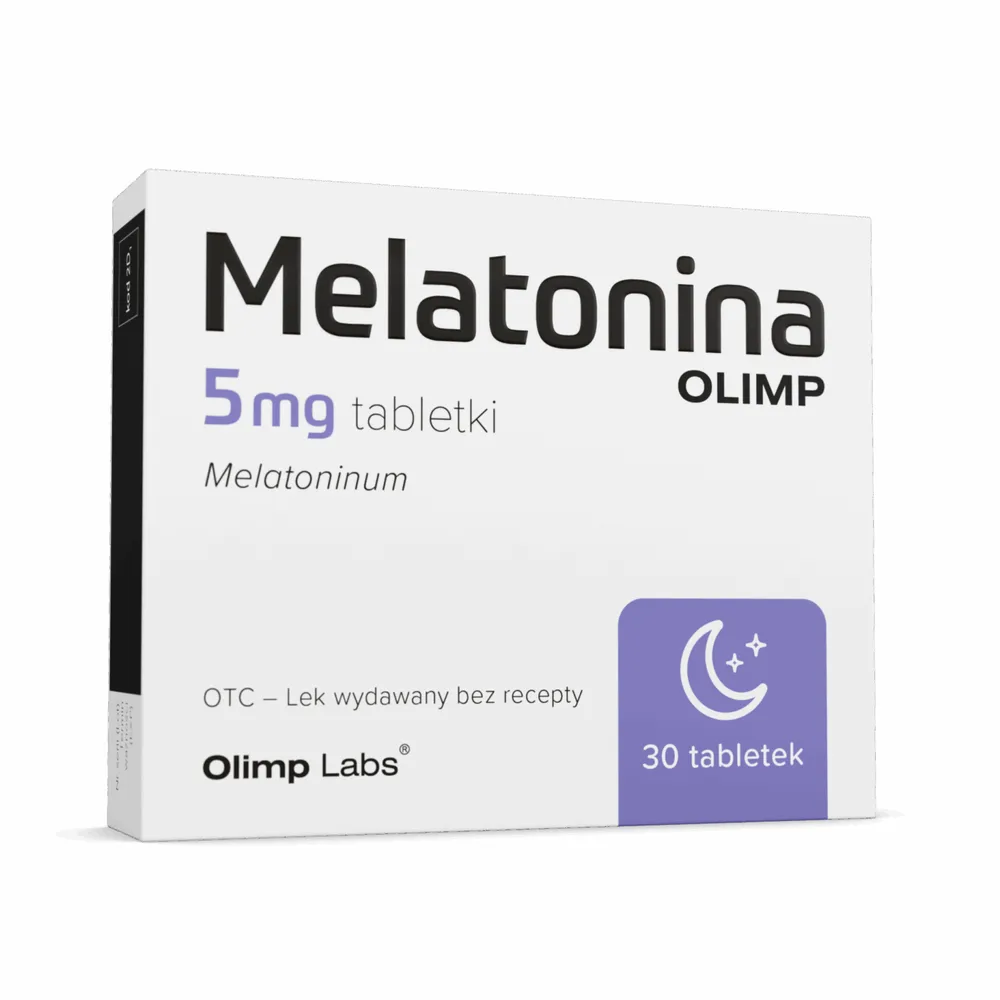
Table of Contents
Package leaflet: Information for the user
Melatonina OLIMP, 5 mg, tablets
Melatoninum
Please read all of this leaflet carefully before taking this medicine, because it contains
important information for you.
This medicine is available without a prescription and should always be taken exactly as described in
this patient leaflet, or as directed by a doctor or pharmacist.
- Keep this leaflet, as you may need to read it again.
- If you need advice or further information, please consult your doctor or pharmacist.
- If you experience any side effects, including any not listed in this leaflet, inform your doctor, pharmacist or nurse. See section 4.
- If your symptoms do not improve or worsen, contact your doctor.
Leaflet contents
- What Melatonin is and what it is used for
- Important information before taking Melatonin
- How to take Melatonin
- Possible side effects
- How to store Melatonin
- Contents of the pack and other information
1. What Melatonin is and what it is used for
Melatonin is a hormone naturally produced in the human body by the pineal gland in the central nervous system. Melatonin plays a role in regulating the sleep-wake cycle over 24 hours. Melatonin used in this medicine is a synthetic equivalent of the natural hormone.
Melatonin is indicated for the short-term treatment of:
- Sleep disorders related to disturbances in the sleep-wake rhythm, such as sleep disorders associated with time zone changes (jet lag) or resulting from shift work,
- Sleep-wake rhythm disorders in blind patients.
If there is no improvement or if you feel worse, consult your doctor.
2. Important information before taking Melatonin
When not to take Melatonin
- If you are allergic to melatonin or any of the other ingredients of this medicine (listed in section 6),
- Before, during or after alcohol consumption,
- During pregnancy or breastfeeding.
Warnings and precautions
Before starting Melatonin, consult your doctor if you have any of the following conditions: liver function disorders, depression, immune system disorders, hormonal disorders, epilepsy, or kidney function disorders.
This medicine is not intended for children and adolescents under 18 years of age.
Melatonin may cause drowsiness; therefore, use with caution if drowsiness could pose a safety risk.
Melatonin and other medicines
Tell your doctor or pharmacist about all medicines you are currently taking, have recently taken, or plan to take.
Medicines metabolized in the liver, such as fluvoxamine, citalopram, omeprazole, and lanzoprazole, may increase blood levels of melatonin when taken concomitantly.
Other medicines that may affect melatonin's action include: cimetidine (used in peptic ulcer disease), estrogens (contraceptives and hormone replacement therapy), imipramine (used to treat depression), nortriptyline, and sedatives or hypnotics such as benzodiazepines and non-benzodiazepines like zaleplon, zolpidem, and zopiclone.
Melatonin may enhance the effect of anticoagulants such as warfarin by prolonging prothrombin time, especially in elderly patients, which may increase the risk of bleeding.
Melatonin may reduce the effectiveness of concomitantly administered antihypertensive drugs such as nifedipine, potentially leading to increased blood pressure.
Melatonin has been shown to affect certain enzymes (e.g. CYP3A4 isoenzyme) in vitro at concentrations exceeding therapeutic levels. As a result of this effect, melatonin may reduce plasma concentrations of other concurrently administered drugs.
Exercise caution in patients treated with 5- or 8-methoxypsoralen (5 and 8-MOP), which increases melatonin concentrations by inhibiting its metabolism. Tobacco smoking may reduce melatonin levels due to its effect on certain enzymes (e.g. CYP1A2).
Some medicines, such as quinolones (and other drugs inhibiting CYP1A2 enzymes), may increase melatonin concentrations.
Do not consume alcohol while taking Melatonin, as alcohol reduces the sleep-inducing effect of the medicine.
Taking Melatonin with food and drink
Do not consume alcohol while taking Melatonin.
Pregnancy and breastfeeding
If you are pregnant, breastfeeding, think you may be pregnant, or are planning to have a baby, consult your doctor or pharmacist before using this medicine. Due to insufficient data, Melatonin must not be used during pregnancy or breastfeeding.
Driving and operating machinery
Do not drive or operate machinery, as drowsiness after taking the medicine may reduce concentration and impair reaction times.
Melatonin contains sodium
This medicine contains less than 1 mmol (23 mg) of sodium per tablet; therefore, it is considered "sodium-free".
3. How to take Melatonina
This medicine should always be taken exactly as described in this patient leaflet or as directed by
your doctor or pharmacist. If in doubt, consult your doctor or pharmacist.
The medicine should be taken orally.
The lowest effective dose of melatonin should be used, and if necessary, another medicinal product containing melatonin should be considered, allowing for a different (e.g. lower) dose.
Adults:
The recommended dose of Melatonina is:
For sleep disorders related to time zone changes: 2 mg to 5 mg of melatonin once daily, taken after dusk or half an hour to one hour before the planned bedtime, starting on the first day of travel. Continue treatment for 2 to 3 consecutive days after completion of travel.
For circadian rhythm sleep-wake disorders, e.g. related to shift work: 1 mg to 5 mg per day, taken half an hour to one hour before the planned bedtime.
For circadian rhythm sleep-wake disorders in blind individuals: 0.5 mg to 5 mg once daily around 9:00 PM to 10:00 PM.
This dosing also applies to long-term use of the medicine.
Use in elderly patients
The recommended dose of Melatonina is the same as for adult patients. Dose reduction is not required. However, due to the increased risk of adverse reactions in this patient group, consultation with a doctor or pharmacist is recommended before using Melatonina.
Use in patients with renal impairment
There are no clinical data on the use of melatonin in patients with renal impairment. Any use of Melatonina should be discussed with a doctor.
Use in patients with hepatic impairment
There are no clinical data on the use of melatonin in patients with hepatic impairment. Any use of Melatonina should be discussed with a doctor.
Use in children and adolescents
The medicine is not intended for use in children and adolescents.
Accidental overdose of Melatonina
In case of accidental overdose, contact your doctor or pharmacist immediately. Taking more than the recommended daily dose may, in individual cases, cause a significant drop in blood pressure.
Missed dose of Melatonina
Do not take a double dose to make up for a missed dose.
Discontinuation of Melatonina
If you have any further questions about the use of this medicine, consult your doctor or pharmacist.
4. Possible adverse reactions
Like all medicines, this medicine can cause adverse reactions, although not everyone will experience them.
You should immediately inform your doctor or go to the nearest hospital if the following occur:
Uncommon (may occur in up to 1 in 100 people):
-
chest pain;
Rare (may occur in up to 1 in 1,000 people): -
decrease in white blood cell count, decrease in platelet count;
-
disorientation;
-
fainting;
-
reduced visual acuity;
-
angina, palpitations, tachycardia;
-
haematuria
Frequency unknown (cannot be estimated from available data): -
hypersensitivity reaction (e.g. itching, severe skin reactions, difficulty breathing);
-
swelling of the face, lips or tongue, which may make swallowing and speaking difficult.
The following additional adverse reactions may also occur:
Uncommon (may occur in up to 1 in 100 people):
- irritability, nervousness, anxiety, insomnia, unusual dreams, nightmares, restlessness;
- migraine, headache, lethargy (fatigue, lack of energy), psychomotor agitation, dizziness, somnolence;
- hypertension;
- abdominal pain, epigastric pain, dyspepsia, oral ulceration, dry mouth, nausea;
- increased blood bilirubin levels;
- skin inflammation, night sweats, itching, rash, generalized pruritus, dry skin;
- limb pain;
- glycosuria, proteinuria;
- menopausal symptoms;
- asthenia, decreased body temperature;
- abnormal liver function test results;
- weight gain.
Rare (may occur in up to 1 in 1,000 people):
- herpes zoster;
- increased blood triglyceride levels, decreased blood calcium levels, decreased blood sodium levels;
- mood changes, aggression, agitation, crying, tension symptoms, early morning awakening, increased libido (increased sexual drive), depressed mood, depression;
- memory disturbances, concentration difficulties, dream-like state, restless legs syndrome, poor sleep quality, tingling or numbness;
- increased frequency of epileptic seizures in children with central nervous system damage and epilepsy;
- blurred vision, excessive lacrimation;
- dizziness upon changing body position, vestibular dizziness;
- hot flushes;
- gastroesophageal reflux disease, gastrointestinal disturbances, oral mucosal blisters, tongue ulceration, dyspepsia, vomiting, abnormal intestinal peristalsis sounds, bloating, excessive salivation, bad breath, abdominal discomfort, gastric disturbances, gastric mucosal inflammation;
- urticaria, exanthema, erythema, hand dermatitis, psoriasis, generalized rash, pruritic rash, nail plate abnormalities;
- arthritis, muscle cramps, neck pain, nocturnal cramps;
- polyuria, nocturia;
- prolonged, painful erection (priapism), prostatitis;
- breast enlargement in men (gynaecomastia);
- feeling of fatigue, pain, thirst;
- increased liver enzyme activity, abnormal blood electrolyte levels, abnormal laboratory test results.
Frequency unknown (cannot be estimated from available data):
- galactorrhoea (excessive milk production).
If any of the adverse effects worsen or if any adverse effects not listed in this leaflet occur, inform your doctor or pharmacist.
Reporting of adverse reactions
If any adverse reactions occur, including any adverse reactions not listed in this leaflet, inform your doctor or pharmacist. Adverse reactions can be reported directly to the Department for Monitoring Adverse Drug Reactions of the Office for Registration of Medicinal Products, Medical Devices and Biocidal Products:
Al. Jerozolimskie 181C,
02–222 Warsaw,
Tel.: +48 22 49 21 301,
Fax: +48 22 49 21 309,
Website: https://smz.ezdrowie.gov.pl
Adverse reactions can also be reported to the marketing authorization holder. Reporting adverse reactions helps to provide more information on the safety of the medicine.
5. How to store the medicinal product Melatonina OLIMP
Keep the medicinal product out of sight and reach of children.
Do not use this medicinal product after the expiry date stated on the carton. The expiry date refers to the last day of the stated month.
There are no special storage temperature requirements for this medicinal product.
Store in the original packaging to protect from light.
Medicinal products must not be disposed of via wastewater or household waste. Ask your pharmacist how to dispose of medicinal products no longer required. Such measures will help protect the environment.
6. Contents of the pack and other information
What Melatonin contains
The active substance is melatonin. Each tablet contains 5 mg of melatonin.
The other ingredients (excipients) are: microcrystalline cellulose type 105, microcrystalline cellulose type 102, sodium croscarmellose, colloidal anhydrous silica, magnesium stearate.
What Melatonin looks like and contents of the pack
White or almost white, round, biconvex tablets with a diameter of approximately 6 mm. Minor specks originating from raw materials may be present.
PVC/PVDC/Aluminum blister packs in a cardboard box.
The pack contains 30, 60 or 90 tablets.
Not all pack sizes may be marketed.
Marketing Authorisation Holder and Manufacturer
OLIMP LABORATORIES Sp. z o.o.
Pustynia 84F
39-200 Dębica
Tel. +48 14 680 32 00
{Logo Olimp Laboratories}