Lutapol
Poland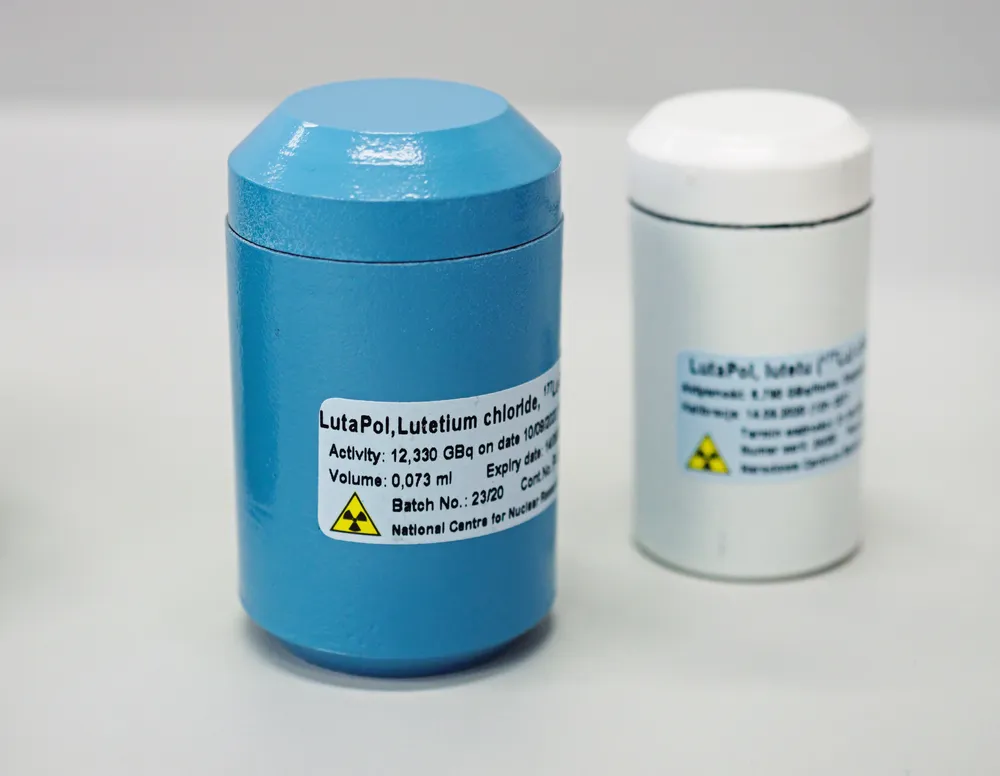
Table of Contents
Package leaflet: Information for the patient
LutaPol, radiopharmaceutical precursor, solution
Lutetium ( Lu) chloride
Please read all of this leaflet carefully before use, as it contains important information for the patient.
- Keep this leaflet for future reference.
- If you have any questions, consult your nuclear medicine specialist physician.
- If you experience any adverse reactions, including those not listed in this leaflet, inform your nuclear medicine specialist physician immediately. See section 4.
Leaflet contents:
What LutaPol is and what it is used for
Important information before use of LutaPol
How to use LutaPol
Possible side effects
How to store LutaPol
Contents of the pack and other information
1. WHAT LUTAPOL IS AND WHAT IT IS USED FOR
LutaPol is a radiopharmaceutical product intended for therapeutic use only after combination with another medicinal product that targets specific cells in the body. Once the combined product reaches its target, the cells receive small doses of radiation emitted from LutaPol.
The use of lutetium ( Lu)-labelled medicinal products involves exposure to low levels of radiation. Your treating physician and nuclear medicine physician have determined that the clinical benefit derived from the radiopharmaceutical procedure outweighs the risks associated with radiation exposure.
Further information on the use and possible adverse effects of the lutetium ( Lu)-labelled medicinal product can be found in the package leaflet of the specific medicinal product intended for labelling.
2. IMPORTANT INFORMATION BEFORE USING LUTAPOL
When not to use LutaPol
if the patient is allergic to lutetium chloride ( Lu) or to any of the other ingredients
of this product (listed in section 6).
Warnings and precautions
Exercise special caution when using the radiolabeled medicinal product LutaPol:
if the patient is pregnant or there is suspicion of possible pregnancy (see below)
if the patient is breastfeeding.
LutaPol is a radiopharmaceutical product, intended solely for use after combination with another
medicinal product.
It is not intended for direct administration to patients.
Treatment with lutetium-177 ( Lu) radiolabeled agents may lead to the following adverse effects:
- reduced number of red blood cells (anemia),
- reduced number of platelets in the blood (thrombocytopenia), which play an important role in stopping bleeding (thrombocytopenia),
- reduced number of white blood cells, which play a key role in protecting the body against infection (leukopenia, lymphopenia or neutropenia).
Most of these events are mild and transient. In some patients, reduced counts of all three types of blood cells (red blood cells, platelets and white blood cells – pancytopenia) have been reported, requiring discontinuation of treatment.
Since lutetium ( Lu) may occasionally affect blood cells, the doctor will perform blood tests before starting treatment and will repeat them at regular intervals during treatment.
Talk to your doctor if you experience shortness of breath, cyanosis, nosebleeds, bleeding gums or fever.
During targeted radioisotope therapy based on somatostatin analogues used in the treatment of neuroendocrine tumours, radiolabeled somatostatin analogues are excreted through the kidneys. Therefore, before starting treatment and during treatment, the doctor will perform blood tests to assess kidney function in the patient.
Treatment with lutetium ( Lu) may cause liver function disorders. To monitor liver function during treatment, the treating physician will perform blood tests.
After treatment of neuroendocrine tumours with lutetium ( Lu), patients may experience symptoms related to hormone release from tumour cells, known as carcinoid crisis. The patient should inform the doctor if feeling weak or dizzy, or if sudden facial flushing or diarrhoea occurs after treatment.
Treatment with lutetium ( Lu) may lead to tumour lysis syndrome (TLS) due to rapid breakdown of tumour cells. This may result in abnormal blood test results, irregular heartbeat, kidney failure or seizures within a week of treatment. The doctor will perform blood tests to monitor for the development of TLS. Inform the doctor if muscle cramps, muscle weakness, confusion or shortness of breath occur.
Radiolabeled medicinal products containing lutetium ( Lu) may be administered directly into the patient's vein via a tube called a cannula. Cases of fluid leakage into surrounding tissue (extravasation) have been reported. Inform the doctor if the patient experiences swelling or pain in the arm.
Before administration of LutaPol, the patient should:
- drink plenty of water before administration of the radiolabeled drug and urinate as frequently as possible during the first few hours after the procedure.
Children and adolescents
Special precautions must be taken when administering radiopharmaceuticals to children and adolescents (aged 2 to 16 years).
LutaPol and other medicines
Inform your doctor or pharmacist about all medicines currently used, recently used, or planned for use.
No interactions between lutetium chloride ( Lu) and other medicines are known, as appropriate clinical study data are not available.
Pregnancy, breastfeeding and effects on fertility
LutaPol is contraindicated during pregnancy.
Before administering the product, inform the nuclear medicine specialist if:
- pregnancy is suspected,
- menstruation has not occurred at the expected time,
- the patient is breastfeeding.
In case of doubt, a consultation with a nuclear medicine specialist is required.
The doctor will consider alternative therapies that do not involve ionizing radiation emission and radiation exposure.
Anticonception in men and women
Radioisotope therapy and diagnostic procedures involving ionizing radiation may affect the unborn child and cause fetal developmental disorders; therefore, LutaPol must not be used in pregnant women.
It is recommended that women of reproductive age use an effective method of contraception during treatment and for several months after completion of treatment, depending on the administered radiopharmaceutical.
The nuclear medicine physician will advise for how long after administration of the lutetium ( Lu)-labeled radiopharmaceutical the patient should avoid becoming pregnant.
Male patients whose partners are of reproductive age should use effective contraception during treatment and for several months after receiving the last dose of the drug, depending on the radiopharmaceutical administered. The nuclear medicine physician will advise for how long after administration of the lutetium ( Lu)-labeled radiopharmaceutical the patient's partner should avoid becoming pregnant.
If breastfeeding is required and radiopharmaceutical administration is necessary, the doctor will recommend discontinuation of breastfeeding.
Before using any medicine, consult a nuclear medicine specialist.
Driving and operating machinery
No data available
3. HOW TO USE LUTAPOL
Radiopharmaceutical products may be administered only by authorized personnel. There are
strict regulations regarding the use, transfer, and disposal of radiopharmaceuticals.
LutaPol must be used only under appropriate conditions and solely by appropriately
qualified personnel. These individuals will take special precautionary measures to ensure
safe handling of the product and will continuously monitor their procedures.
The physician does not administer the LutaPol product directly to the patient.
The nuclear medicine physician supervising the procedure will determine the required dose of the
radiolabelled drug using LutaPol to be administered in each individual case. This will be the
smallest dose necessary to achieve the appropriate diagnostic or therapeutic outcome, depending on
the radiolabelled drug and its intended use.
Administration of the drug radiolabelled with LutaPol and performance of the procedure
LutaPol may only be used in combination with another medicinal product specifically developed and
authorized for use with LutaPol. Only the drug radiolabelled with LutaPol will be administered.
Duration of the procedure
The nuclear medicine physician will inform the patient about the standard duration of the procedure
following administration of the drug radiolabelled with LutaPol.
After administration of the drug radiolabelled with LutaPol
The nuclear medicine physician will inform the patient about any precautionary measures that should
be taken after receiving the drug radiolabelled with LutaPol. Any questions should be directed to the
nuclear medicine physician.
Administration of a higher than recommended dose of the drug radiolabelled with LutaPol
The drug radiolabelled with LutaPol is administered by a nuclear medicine physician under strict
control conditions, so the likelihood of an overdose is extremely low. However, in the event of an
overdose, appropriate treatment will be initiated.
If there are any doubts regarding the use of LutaPol, please consult the nuclear medicine specialist.
4. POSSIBLE ADVERSE REACTIONS
Like all medicines, LutaPol can cause adverse reactions, although not everyone will experience them.
Dry mouth has been reported in patients with prostate cancer receiving lutetium ( Lu)-containing medicinal products.
Very common adverse reactions (may occur in more than 1 in 10 patients):
- Decrease in blood cells (platelets, red blood cells or white blood cells)
- Nausea
- Vomiting
Adverse reactions reported in patients treated for neuroendocrine tumours
Very common (may occur in more than 1 in 10 patients):
- Mild, transient hair loss
Common (may occur in 1 in 10 patients):
- Bone marrow cancer (myelodysplastic syndrome)
- Decreased number of white blood cells (neutropenia)
Uncommon (may occur in 1 in 100 patients):
- Bone marrow cancer (acute myeloid leukaemia)
Unknown frequency (cannot be estimated from available data):
- Carcinoid crisis
- Tumour lysis syndrome (rapid breakdown of tumour cells)
- Decreased number of red blood cells, platelets and white blood cells (pancytopenia)
- Dry mouth
Cases of bone marrow cancer (myelodysplastic syndrome and acute myeloid leukaemia) have been reported several years after radioisotope therapy using lutetium ( Lu)-labelled somatostatin analogues for the treatment of neuroendocrine tumours.
Exposure to ionising radiation may lead to an increased risk of cancer (in case of administration of high radioactive activities) and may also lead to the development of hereditary defects.
Further information on possible adverse reactions associated with administration of lutetium ( Lu)-labelled medicinal products is available in the package leaflet of the respective medicinal product intended for labelling.
If any adverse reactions occur in the patient, including any adverse reactions not listed in this leaflet, inform the nuclear medicine physician.
Reporting of suspected adverse reactions
If any adverse reactions occur, including any not listed in this leaflet, inform a doctor or pharmacist. Adverse reactions can be reported directly to the Department of Monitoring of Adverse Drug Reactions of the Office for Registration of Medicinal Products, Medical Devices and Biocidal Products
Al. Jerozolimskie 181C
02-222 Warsaw
Tel. (22) 49 21 301
Fax (22) 49 21 309
e-mail: [email protected]
Adverse reactions can also be reported to the marketing authorisation holder.
Reporting of adverse reactions enables further collection of information on the safety of the medicine.
5. HOW TO STORE LUTAPOL
The patient will not have to store this medicinal product.
Radiopharmaceutical products such as LutaPol are stored exclusively by authorized personnel under appropriate conditions. Storage of radiopharmaceuticals is carried out in accordance with local regulations concerning radioactive substances.
The following information is intended solely for medical personnel.
Keep the medicine out of sight and reach of children.
Do not use the product after the expiry date and time stated on the packaging.
Store in the original packaging to protect from radiation.
6. CONTENTS OF THE PACKAGE AND OTHER INFORMATION
What LutaPol contains
The active substance is lutetium (Lu) chloride.
Each vial contains on a specified day and at a specified time 0.925–37 GBq of lutetium (Lu) [corresponding to 1.86–74 micrograms of lutetium (Lu) as lutetium chloride (Lu)].
The other ingredients are concentrated hydrochloric acid and water for injections.
What LutaPol looks like and contents of the pack
A colourless vial made of type I glass with a capacity of 2 ml, closed with a rubber stopper and sealed with an aluminium cap, contained within a lead shielding container.
Radiopharmaceutical precursor, solution.
Clear, colourless solution.
Marketing Authorisation Holder and Manufacturer
National Centre for Nuclear Research
Andrzeja Sołtana 7
05-400 Otwock
Phone: (22) 718 07 00
Fax: (22) 718 03 50
e-mail: [email protected]
The complete Product Information (SmPC) for LutaPol is included as a separate document inside the product packaging, providing healthcare professionals with additional scientific and practical information regarding administration and use of this radiopharmaceutical.