Lovastatol
Poland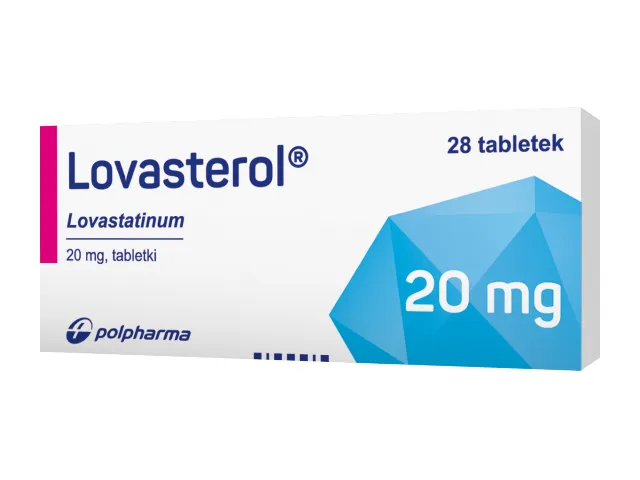
Table of Contents
Package leaflet: Information for the patient
Lovasterol, 20 mg, tablets
Lovastatinum
Please read this leaflet carefully before taking this medicine, because it contains
important information for the patient.
- Keep this leaflet so that you can read it again if necessary.
- If you have any doubts, please consult your doctor or pharmacist.
- This medicine has been prescribed for a specific individual. Do not pass it on to others. This medicine may harm another person, even if their symptoms are the same.
- If you experience any adverse reactions, including any not listed in this leaflet, inform your doctor or pharmacist. See section 4.
Table of contents
- What Lovasterol is and what it is used for
- Important information before taking Lovasterol
- How to take Lovasterol
- Possible side effects
- How to store Lovasterol
- Contents of the pack and other information
1. What Lovasterol is and what it is used for
Lovasterol contains the active substance lovastatin, which belongs to a group of medicines called
HMG-CoA reductase inhibitors (3-hydroxy-3-methylglutaryl-coenzyme A). This medicine reduces
the levels of both total cholesterol and LDL cholesterol. It also moderately increases
HDL cholesterol levels and reduces plasma triglyceride levels.
Lovasterol is indicated for:
treatment of primary hypercholesterolemia (hyperlipoproteinemia type IIa and IIb) in patients
in whom dietary restriction of saturated fats and cholesterol, as well as other
non-pharmacological treatment methods, have been ineffective;
slowing the progression of coronary atherosclerosis in patients with coronary artery disease
as part of comprehensive treatment aimed at reducing total cholesterol and LDL cholesterol levels.
The medicine should be taken together with a diet.
2. Important information before using Lovasterol
When not to use Lovasterol
if the patient is allergic to lovastatin or any of the other components of this
medicine (listed in section 6);
if the patient has active liver disease or increased serum aminotransferase activity;
if the patient is pregnant or breastfeeding;
if the patient is concurrently using mibefradil (a calcium channel blocker from the
tetralol derivative group);
if the patient has severe renal insufficiency;
if the patient has skeletal muscle disorders (myopathy);
if the patient has impaired bile flow (cholestasis);
if the patient is concurrently using strong inhibitors of the CYP3A4 enzyme (e.g. itraconazole,
ketoconazole, HIV protease inhibitors, erythromycin, clarithromycin, telithromycin,
or nefazodone).
Warnings and precautions
Before starting treatment with Lovasterol, discuss this with your doctor.
- If the patient has or has had myasthenia (a disease causing general muscle weakness, including in some cases muscles involved in breathing) or ocular myasthenia (a disease causing weakness of eye muscles), because statins may sometimes worsen symptoms or lead to the development of myasthenia (see section 4).
- Before starting treatment with lovastatin, non-pharmacological treatment should be initiated, including an appropriate diet, increased physical activity, and weight reduction. Lovastatin treatment is effective only if the patient adheres to the recommended diet and physical exercise.
- Before starting treatment with lovastatin, inform the doctor about all medications being taken. Due to the risk of myopathy, concomitant use of lovastatin with itraconazole, ketoconazole, erythromycin, clarithromycin, telithromycin, HIV protease inhibitors, nefazodone, cyclosporine, gemfibrozil, other fibrates or niacin, amiodarone, and verapamil should be avoided (details see section "Lovasterol with other medicines").
- Before starting treatment, patients with diabetes or patients at risk of developing diabetes should inform their doctor about their health status. These patients should be under close medical supervision during treatment with this medicine. Patients with high blood sugar and lipid levels, overweight, and high blood pressure may be at risk of developing diabetes.
- Before starting treatment, patients with a history of liver disease should inform their doctor about their health status.
- Before starting treatment, patients with severe respiratory insufficiency should consult their doctor.
- The prescribing doctor should be informed about: liver disease, alcoholic liver disease, seizures (involuntary muscle contractions), recent major surgical procedures, hypotension, diabetes, hypothyroidism, or history of hypersensitivity to drugs with similar action to HMG-CoA reductase inhibitors. During treatment with lovastatin, it is essential to strictly follow scheduled follow-up visits and recommended laboratory tests.
- If the patient is currently taking or has taken within the last 7 days an oral or injectable medicine containing fusidic acid (used in the treatment of bacterial infections). Concomitant administration of lovastatin and fusidic acid may lead to severe muscle damage (rhabdomyolysis).
If any of the following symptoms occur during treatment with Lovasterol, contact your doctor.
- Inform the doctor if muscle weakness persists. Additional tests and medications may be necessary for diagnosis and treatment of this condition.
- If symptoms such as muscle pain, tenderness (increased sensitivity to touch), or muscle weakness, muscle cramps occur, especially if accompanied by malaise or fever, stomach or abdominal pain, seek immediate medical attention.
- Periodic interruption of lovastatin treatment is recommended in cases such as: severe infections, hypotension, trauma, serious metabolic, endocrine or electrolyte disorders, major surgical procedures (the medicine should be discontinued a few days before planned major surgeries), in case of acute severe illness requiring internal medicine or surgical treatment, and in case of uncontrolled muscle spasms.
- If the medicine is discontinued, blood cholesterol levels will increase again.
Children and adolescents
Lovastatin is not recommended for use in children and adolescents under 18 years of age, as efficacy and safety of this medicine in children and adolescents have not been established.
Lovasterol with other medicines
Inform your doctor or pharmacist about all medicines currently or recently taken, as well as any medicines you plan to take.
The medicines listed below may be marketed under several different brand names. They will not be listed by brand name here; only active substances or their groups are mentioned. Therefore, carefully check the packaging and leaflet of the medicine you are taking for the name of its active ingredient.
- Concomitant use of lovastatin with itraconazole, ketoconazole, erythromycin, clarithromycin, telithromycin, HIV protease inhibitors, and nefazodone should be avoided due to the risk of myopathy. If treatment with itraconazole, ketoconazole, erythromycin, or clarithromycin is unavoidable, lovastatin treatment should be suspended for the duration of therapy.
- Concomitant use of mibefradil and lovastatin is contraindicated.
- Lovastatin doses higher than 20 mg daily should not be used in patients concurrently taking cyclosporine, danazol, gemfibrozil, other fibrates, or niacin in lipid-lowering doses (≥1 g daily), as this increases the risk of myopathy.
- Lovastatin doses higher than 40 mg daily should not be used with amiodarone or verapamil due to the risk of myopathy.
- When lovastatin is used concomitantly with coumarin derivatives, prothrombin time may be prolonged (monitoring of prothrombin time is recommended).
- If treatment of a bacterial infection with oral or injectable fusidic acid is necessary, Lovasterol should be temporarily discontinued. The doctor will inform the patient when it is safe to resume Lovasterol. Concomitant use of Lovasterol with fusidic acid may rarely lead to muscle weakness, tenderness, or pain (rhabdomyolysis). More information on rhabdomyolysis can be found in section 4.
Lovasterol with food and drink
The medicine should be taken with a meal.
Avoid drinking large amounts of grapefruit juice (more than 1.1 litres per day) during treatment with lovastatin, as this may increase HMG-CoA reductase inhibition activity.
Pregnancy and breastfeeding
If the patient is pregnant or breastfeeding, suspects she may be pregnant, or plans to become pregnant, she should consult her doctor or pharmacist before using this medicine.
Pregnancy
The medicine is contraindicated during pregnancy.
Women of childbearing potential should use effective contraception methods while taking this medicine.
If a patient becomes pregnant while being treated with lovastatin, the medicine should be discontinued immediately and the doctor should be consulted, as there is a risk of fetal harm.
Breastfeeding
Women who are breastfeeding should not take Lovasterol.
Driving and operating machinery
Due to the occurrence of adverse effects such as dizziness after lovastatin, there is a potential risk associated with driving and operating machinery. Caution is advised, especially during the initial period of treatment.
Lovasterol contains lactose
If the patient has previously been diagnosed with intolerance to certain sugars, the patient should consult a doctor before taking this medicine.
3. How to use Lovasterol
This medicine should always be taken exactly as prescribed by your doctor. If in doubt, consult your
doctor or pharmacist. Dosages may vary for different patients.
During treatment, follow a standard cholesterol-lowering diet.
The usual dosage recommendations are as follows:
Patients with severe hypercholesterolemia: initially 20 mg once daily, taken with the evening meal.
It has been shown that the drug is more effective when taken at this time than when taken at the same dose with the morning meal.
Patients with mild or moderate hypercholesterolemia: initially 10 mg once daily, taken with the evening meal.
Do not take more than 80 mg daily. This dose may be taken as a single dose or divided into two doses – with the morning and evening meals.
Divided doses (i.e. taken twice daily) are slightly more effective than a single daily dose.
Dosage adjustments may be made by the doctor no more frequently than every 4 weeks.
Patients taking immunosuppressive drugs should start treatment with lovastatin at a dose of 10 mg daily and should not take more than 20 mg daily.
During treatment, your doctor will order periodic monitoring of serum cholesterol levels. The doctor will decide whether to reduce the dose if LDL cholesterol concentration falls below 75 mg/100 ml (1.94 mmol/l) or total cholesterol concentration falls below 140 mg/100 ml (3.6 mmol/l).
Use of Lovasterol in patients with renal function impairment
Lovastatin is excreted in urine to a small extent (about 10%), and therefore dosage adjustment is not necessary in patients with moderate renal impairment.
Taking more Lovasterol than recommended
If an overdose occurs, adverse reactions may be more pronounced.
There is no specific antidote for lovastatin. The doctor will apply general principles for the treatment of acute poisoning and will order monitoring of liver function. It is not known whether lovastatin and its metabolites are removed from blood by dialysis.
Missed dose of Lovasterol
If you miss a dose, take it as soon as possible. If it is almost time for your next dose, do not take the missed dose. Do not take a double dose to make up for a missed dose.
If you have any further questions about the use of this medicine, consult your doctor or pharmacist.
4. Possible adverse reactions
Like all medicines, this medicine can cause adverse reactions, although not everyone will experience them.
Lovastatin is generally well tolerated, and most adverse reactions are mild and transient.
Adverse reactions have been classified according to their frequency of occurrence:
Common: in less than 1 out of 10 people
Uncommon: in less than 1 out of 100 people
Rare: in less than 1 out of 1,000 people
Very rare: in less than 1 out of 10,000 people
Frequency not known (cannot be estimated from the available data)
The following adverse reactions have been observed in controlled clinical trials:
Common:
- fatigue, dizziness, headache
- abdominal pain, constipation, diarrhoea, dyspepsia, flatulence, nausea
- involuntary muscle contractions, muscle pain
- rash, visual disturbances
Uncommon:
- feeling of tiredness
- heartburn, vomiting, dry mouth, taste disturbances
- pain in lower limbs, arm pain, joint pain, chest pain
- insomnia, sleep disorders, paraesthesia
- hair loss, itching
- eye irritation
Rare:
- myopathy and rhabdomyolysis, with or without acute renal failure
- decreased libido
- marked and persistent increase in aminotransferase, alkaline phosphatase, and bilirubin activity; usually slight and transient increase in serum creatine kinase (CK) activity
- increased creatine kinase levels associated with breakdown of striated muscle and kidney damage, more frequently observed in transplant patients
Frequency not known:
- persistent muscle weakness
- myasthenia (a disease causing generalised muscle weakness, including in some cases muscles involved in breathing)
- ocular myasthenia (a disease causing weakness of eye muscles)
Patients should consult a doctor if they experience weakness in hands or legs worsening after periods of activity, double vision or drooping eyelids, difficulty swallowing or shortness of breath.
In isolated cases, acute pancreatitis has been observed (no causal relationship between this adverse reaction and the use of lovastatin has been established).
After lovastatin was introduced into clinical use, the following additional adverse reactions have been reported:
hepatitis, cholestatic jaundice, anorexia, peripheral neuropathy, psychiatric disorders including anxiety, toxic epidermal necrolysis, erythema multiforme, including Stevens-Johnson syndrome.
In rare cases, a hypersensitivity syndrome has been reported, characterized by one or more of the following symptoms: anaphylaxis, angioedema, lupus-like syndrome, polymyositis-like syndrome, dermatomyositis, vasculitis, thrombocytopenia (low platelet count), leukopenia (reduced number of white blood cells in blood), eosinophilia (increased number of eosinophils in blood), haemolytic anaemia, positive antinuclear antibody test, increased ESR, arthritis, arthralgia, urticaria, fatigue, photosensitivity, fever, flushing, chills, dyspnoea, and malaise.
Adverse reactions characteristic of drugs in this class:
- nightmares, sleep disturbances, including insomnia;
- memory loss;
- sexual dysfunction;
- depression;
- respiratory disorders, including persistent cough and/or dyspnoea or fever;
- diabetes. The risk of developing diabetes is higher in individuals with high blood sugar and fat levels, overweight, and high blood pressure. Your doctor will monitor your condition during treatment with this medicine.
Reporting of adverse reactions
If any adverse effects occur, including any not listed in this leaflet, inform your doctor or pharmacist. Adverse reactions can be reported directly to the Department of Monitoring Adverse Reactions of Medicinal Products at the Office for Registration of Medicinal Products, Medical Devices and Biocidal Products
Al. Jerozolimskie 181C
02-222 Warsaw
Phone: +48 22 49 21 301
Fax: +48 22 49 21 309
Website: https://smz.ezdrowie.gov.pl
Adverse reactions may also be reported to the marketing authorization holder.
Reporting adverse reactions helps provide more information on the safety of this medicine.
5. How to store Lovasterol
Keep this medicine out of sight and reach of children.
Store in the original packaging to protect from light and moisture.
Do not store above 25°C.
Do not use this medicine after the expiry date stated on the packaging. The expiry date refers to the last day of the stated month.
The marking on the packaging following the abbreviation EXP indicates the expiry date, and following the abbreviation Lot/LOT indicates the batch number.
Medicines must not be disposed of via wastewater or household waste. Ask your pharmacist how to dispose of medicines no longer in use. This will help protect the environment.
6. Contents of the pack and other information
What Lovasterol contains
- The active substance is lovastatin. Each tablet contains 20 mg of lovastatin.
- The other ingredients are: powdered cellulose, monohydrate lactose, pregelatinized starch, stearic acid, butylhydroxyanisole.
What Lovasterol looks like and contents of the pack
Lovasterol 20 mg are white, round, biconvex tablets.
One pack contains:
- 28 tablets containing 20 mg of lovastatin.
Marketing Authorisation Holder and Manufacturer
POLPHARMA S.A. Pharmaceutical Works
Pelplińska 19 Street, 83-200 Starogard Gdański
tel. + 48 22 364 61 01