Lotensin
Poland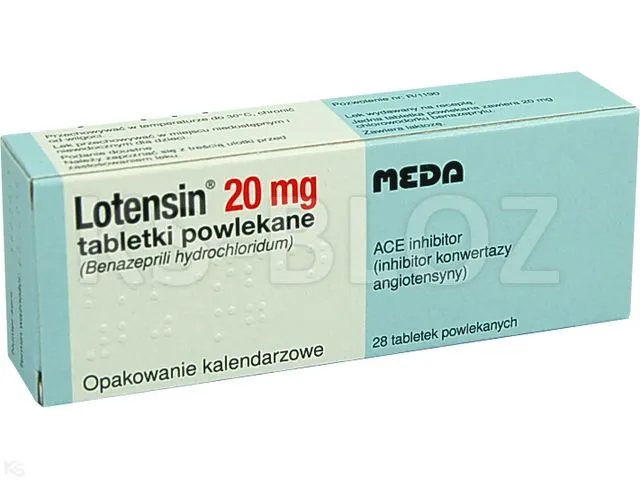
Table of Contents
Package leaflet: Information for the patient
LOTENSIN, 5 mg, film-coated tablets
Benazepril hydrochloride
Please read this leaflet carefully before taking the medicine, as it contains
important information for the patient.
- Keep this leaflet, as you may need to read it again.
- If you have any questions, please consult your doctor or pharmacist.
- This medicine has been prescribed for a specific individual. Do not pass it on to others. This medicine may harm another person, even if their symptoms are the same.
- If you experience any adverse reactions, including any not listed in this leaflet, inform your doctor or pharmacist. See section 4.
Table of contents of the leaflet
- What Lotensin is and what it is used for
- Important information before taking Lotensin
- How to take Lotensin
- Possible side effects
- How to store Lotensin
- Contents of the pack and other information
1. What Lotensin is and what it is used for
Lotensin is available in three strengths: 5 mg, 10 mg, and 20 mg.
Lotensin belongs to a group of medicines called angiotensin-converting enzyme inhibitors (ACE inhibitors), which help control high blood pressure. These medicines work by inhibiting the activity of a substance responsible for narrowing blood vessels. As a result, blood vessels relax and blood pressure decreases.
Lotensin is used in the treatment of hypertension. High blood pressure is often asymptomatic. Many patients with high blood pressure feel perfectly well. However, high blood pressure increases the strain on the heart and blood vessels. If this condition persists over time, it may lead to damage of blood vessels in the brain, heart, or kidneys, resulting in stroke, heart failure, or kidney failure. High blood pressure increases the risk of myocardial infarction. The likelihood of these conditions is reduced when normal blood pressure is maintained.
Indications
- Treatment of hypertension.
- Adjunctive treatment of congestive heart failure (in NYHA class II-IV).
2. Important information before using Lotensin
Lotensin should only be used after a medical examination, as it is not suitable for all patients.
When not to use Lotensin
- if the patient is allergic to the active substance or to any of the other ingredients of this medicine (listed in section 6),
- if the patient has or has previously had angioedema (a type of swelling) associated with previous treatment with other ACE inhibitors or sulfonamide-derived drugs, manifesting as swelling of the face, lips, tongue, hands or feet, or sudden breathing difficulties,
- if the patient has or has previously had hereditary (congenital) or idiopathic (of unknown cause) angioedema,
- after the 3rd month of pregnancy (Lotensin should also be avoided during early pregnancy - see pregnancy section).
Lotensin must not be used if the patient:- has diabetes or kidney problems and is being treated with a blood pressure-lowering medicine containing aliskiren,
- has taken or is currently taking sacubitril with valsartan, a medicine used to treat certain types of chronic (long-term) heart failure in adults, because this increases the risk of angioedema (rapid swelling of tissues beneath the skin, such as in the throat).
The risk of angioedema may be increased if the patient is taking any of the following medicines:
- racecadotril, a medicine used to treat diarrhoea,
- medicines used to prevent organ transplant rejection and to treat cancer (e.g. temsirolimus, sirolimus, everolimus),
- vildagliptin, a medicine used to treat diabetes.
Warnings and precautions
Before starting treatment with Lotensin, discuss it with your doctor or pharmacist.
If you are pregnant or suspect you may be pregnant, consult your doctor. Lotensin is not recommended during early pregnancy and must not be taken after the 3rd month of pregnancy, as it may cause serious harm to the unborn child (see pregnancy section).
If you develop an allergic reaction while taking Lotensin, such as swelling of the face, lips, tongue, difficulty breathing and/or itching and rash, stop taking the medicine immediately and contact your doctor.
Take special care:
- if the patient has kidney problems or is undergoing dialysis; Lotensin is not recommended for patients who have recently undergone kidney transplantation,
- if the patient has heart or blood vessel disorders such as:
- heart failure (inadequate pumping of blood),
- heart disease caused by reduced blood supply or cerebrovascular disease,
- aortic valve stenosis or certain other heart defects,
- if the patient is due to undergo surgery under anaesthesia (including dental procedures); inform the anaesthetist or dentist that you are taking Lotensin before the procedure,
- if the patient has diarrhoea or vomiting,
- if the patient is scheduled for insect venom immunotherapy (venom used in allergy testing or treatment of insect sting allergies),
- if the patient has liver problems or progressive liver disease, such as cirrhosis. If jaundice (yellowing of the skin or eyes) occurs during treatment with Lotensin, stop treatment immediately and contact your doctor without delay,
- if the patient has diabetes,
- if the patient has high blood cholesterol and is scheduled for plasmapheresis,
- if the patient is on a low-salt diet,
- if the patient is taking diuretics (water tablets); your doctor may advise stopping them 2 to 3 days before starting Lotensin,
- if the patient has an adrenal gland disorder called Conn's syndrome (also known as primary hyperaldosteronism),
- if the patient has a blood vessel disorder called collagenosis or is taking immunosuppressive medicines, medicines used for gout (allopurinol), or antiarrhythmic medicines (procainamide); severe infections may occur. Your doctor may recommend regular monitoring of white blood cell counts and advise you to report any signs of infection (e.g. fever, sore throat, mouth ulcers),
- if the patient has kidney failure or diabetes and is also taking potassium-sparing diuretics, potassium supplements, potassium-containing salt substitutes, or other medicines that increase blood potassium levels, as this may lead to elevated potassium levels in the blood,
- patients of Black African origin have an increased risk of allergic reactions – particularly angioedema – and may experience reduced effectiveness of Lotensin,
- if the patient is taking any of the following medicines used to treat high blood pressure:
- an angiotensin II receptor antagonist (AIIRA), also known as a sartan – for example, valsartan, telmisartan, irbesartan, particularly if the patient has kidney problems related to diabetes,
- aliskiren.
Your doctor may recommend regular monitoring of kidney function, blood pressure, and blood electrolyte levels (e.g. potassium).
See also the section "When not to use Lotensin".
Regular follow-up visits are necessary during treatment so your doctor can assess the effectiveness of therapy.
Contact your doctor immediately if nausea, vomiting, or diarrhoea occur, especially if they are severe or persistent. These conditions may lead to excessive fluid loss and cause a significant drop in blood pressure.
Dizziness (lightheadedness) or fainting may occur during physical exertion or in hot weather. Excessive sweating may lead to excessive fluid loss and may result in low blood pressure. Be cautious during physical activity and in hot weather, and ensure adequate fluid intake by drinking sufficient water.
Children and adolescents
Lotensin may be used in children over 7 years of age and weighing more than 25 kg.
Elderly patients
Lotensin may be used in patients aged 65 years and older.
Lotensin with other medicines
Tell your doctor about all medicines you are currently taking, have recently taken, or plan to take. Your doctor may need to adjust the dose and/or take other precautions. This applies to both prescription and over-the-counter medicines.
In particular, talk to your doctor or pharmacist if you are currently taking, have recently taken, or may need to take any of the following medicines:
- antihypertensive medicines, diuretics, tricyclic antidepressants, antipsychotics, anaesthetics,
- potassium supplements (including salt substitutes), potassium-sparing diuretics, and other medicines that increase blood potassium levels (e.g. trimethoprim and co-trimoxazole, used for bacterial infections; cyclosporine, an immunosuppressant used to prevent organ transplant rejection; and heparin, a medicine used to thin the blood to prevent clots),
- sympathomimetics,
- allopurinol, procainamide, cytostatic agents, immunosuppressive medicines, systemic corticosteroids, and other medicines affecting blood counts,
- medicines containing lithium,
- antidiabetic medicines (e.g. insulin, oral antidiabetic medicines),
- non-steroidal anti-inflammatory drugs (NSAIDs) used to relieve pain and inflammation (e.g. ibuprofen, indomethacin),
- acetylsalicylic acid (aspirin), used to relieve pain and inflammation (benazepril may be used with aspirin when aspirin is used to prevent heart attack and stroke),
- medicines used to prevent organ transplant rejection and in cancer treatment (e.g. temsirolimus, sirolimus, everolimus),
- angiotensin II receptor antagonists (AIIRAs) or aliskiren (see also sections "When not to use Lotensin" and "Warnings and precautions"),
- racecadotril, a medicine used to treat diarrhoea.
Taking Lotensin with food, drink and alcohol
Drinking alcohol while taking Lotensin may enhance its blood pressure-lowering effect and/or increase the risk of dizziness or fainting.
Pregnancy and breastfeeding
Pregnancy
If you are pregnant or suspect you may be pregnant, consult your doctor. Your doctor should advise stopping Lotensin before pregnancy or as soon as pregnancy is suspected or confirmed and may recommend using an alternative medicine.
Lotensin is not recommended during early pregnancy and must not be taken after the 3rd month of pregnancy, as it may cause serious harm to the unborn child.
Breastfeeding
If you are breastfeeding or planning to breastfeed, consult your doctor. Breastfeeding is not recommended for newborns (first weeks after birth), especially premature infants, while taking Lotensin. For older infants, your doctor will discuss the benefits and risks of taking Lotensin during breastfeeding compared to other medicines.
Driving and using machines
Like many other medicines that lower blood pressure, Lotensin may cause dizziness and affect concentration. Assess how you react to Lotensin before driving, operating machinery, or performing tasks requiring mental focus.
Lotensin contains lactose
If you have been diagnosed with an intolerance to certain sugars, consult your doctor before taking this medicine.
3. How to use Lotensin
This medicine should always be taken exactly as your doctor has told you. If you are unsure, you should consult your doctor or pharmacist. Do not exceed the recommended dose.
Take this medicine strictly according to your doctor's instructions. Do not change the dose or stop taking the medicine without your doctor's consent.
Dosage
Hypertension
For patients not already taking thiazide diuretics, the recommended initial dose is 10 mg once daily. Your doctor may increase the dose to 20 mg once daily. The dosage should be adjusted according to the blood pressure response to the medicine, usually at intervals of 1 to 2 weeks.
In some patients, the antihypertensive effect may be reduced towards the end of the dosing interval. In such cases, your doctor may recommend dividing the total daily dose into two equal doses. The maximum recommended daily dose of Lotensin in patients with hypertension is 40 mg, which may be taken as a single dose or divided into two doses.
If Lotensin does not sufficiently lower blood pressure, your doctor may prescribe another antihypertensive medicine to be taken at the same time, for example a thiazide diuretic or a calcium antagonist (initially in low doses). If you have previously been treated with diuretics, your doctor may recommend discontinuing them for 2 to 3 days before starting Lotensin. Your doctor may then restart them if necessary. If discontinuation of diuretics is not possible, your doctor may recommend reducing the initial dose of Lotensin (to 5 mg instead of 10 mg) to avoid excessive lowering of blood pressure.
For patients with creatinine clearance ≥ 30 ml/min, the usual doses of Lotensin are recommended.
Patients with creatinine clearance < 30 ml/min
The initial dose is 5 mg. Your doctor may increase the dose up to the maximum dose of 10 mg once daily. To achieve additional antihypertensive effect, your doctor may recommend adding a diuretic other than a thiazide diuretic or another antihypertensive medicine.
Congestive heart failure (CHF)
The recommended initial dose is 2.5 mg once daily. Due to the risk of a sudden drop in blood pressure after the first dose, your doctor will monitor you very carefully when you start taking Lotensin for the first time. If, after 2 to 4 weeks of treatment, there is no satisfactory improvement in heart failure symptoms, your doctor may increase the dose to 5 mg once daily, provided you have not experienced symptomatic hypotension or other significant adverse effects. Depending on your clinical response, your doctor may gradually increase the dose to 10 mg or up to the maximum dose of 20 mg once daily, at appropriate intervals.
Once-daily dosing is usually effective. Some patients may respond better to twice-daily dosing. Controlled clinical studies indicate that in patients with more advanced heart failure (NYHA class IV), lower doses of Lotensin are usually required compared to patients with mild to moderate heart failure (NYHA classes II and III).
In patients with CHF and creatinine clearance < 30 ml/min, your doctor may increase the daily dose up to 10 mg; however, the initial low dose (2.5 mg once daily) may prove to be the most appropriate.
Use in children
Children with hypertension (aged 7–16 years, body weight ≥ 25 kg)
The usual recommended initial dose of Lotensin is 0.2 mg/kg body weight (up to a maximum of 10 mg) once daily. Your doctor will adjust the dose according to the blood pressure response. Doses higher than 0.6 mg/kg body weight (or higher than 40 mg daily) have not been studied in children. Long-term effects of Lotensin on growth and development have not been studied.
Lotensin is not recommended for children under 7 years of age, for older children who cannot swallow tablets, or when the calculated dose (mg/kg body weight) does not correspond to the available tablet strengths. The use of Lotensin is not recommended in children with glomerular filtration rate < 30 ml/min due to insufficient data to recommend a dosing regimen in this patient group.
The efficacy and safety of Lotensin have not been studied in children with CHF or with progressive chronic renal failure.
Administration
It is recommended to take the medicine in the morning at the same time each day.
Lotensin may be taken with or without food.
Lotensin should be taken under medical supervision. Lotensin is used as an additional treatment in heart failure (usually in combination with digitalis glycosides or diuretics).
Taking more than the recommended dose of Lotensin
Contact your doctor immediately if you experience:
- Severe dizziness and/or fainting;
- Persistent or severe nausea, vomiting, or diarrhoea;
- Severe fatigue, weakness, or muscle cramps;
- Irregular heartbeat.
Missed dose of Lotensin
If you forget to take a dose at the usual time, take the missed dose as soon as you remember, unless it is almost time for the next dose. In that case, skip the missed dose and take the next dose at the usual time.
If you have any further questions about the use of this medicine, consult your doctor.
4. Possible adverse reactions
Like all medicines, this medicine can cause adverse reactions, although not everyone experiences them.
Even though not all of these adverse reactions occur frequently, appropriate medical action may be required if they occur.
Common (in more than 1 in 100 treated patients, but less than 1 in 10 treated patients):
palpitations, orthostatic symptoms (dizziness or fainting due to a drop in blood pressure upon changing body position to standing), hot flushes, non-specific gastrointestinal disturbances, rash, sudden flushing of the face, itching, photosensitivity, frequent urination, cough, respiratory tract symptoms, headache, dizziness, feeling of fatigue, decreased concentration of haemoglobin, haematocrit, white blood cell count and platelet count.
Uncommon (in more than 1 in 10,000 treated patients, but less than 1 in 1,000 treated patients):
orthostatic hypotension (drop in blood pressure upon standing), chest pain, angina pectoris, arrhythmia, diarrhoea, constipation, nausea, vomiting, abdominal pain, bullae, urticaria, hepatitis (mainly due to cholestasis), cholestatic jaundice (due to bile stasis), increased blood urea concentration, increased serum creatinine concentration, somnolence, insomnia, nervousness, prickling sensation, paraesthesia and burning sensation, angioedema, swelling of the lips or face, joint pain, arthritis, muscle pain.
Rare (in less than 1 in 10,000 treated patients):
myocardial infarction or cerebral ischaemic episode, pancreatitis, intestinal obstruction, Stevens-Johnson syndrome, renal dysfunction, tinnitus, taste disturbances, haemolytic anaemia, thrombocytopenia.
Frequency not known (cannot be estimated from available data):
agranulocytosis, neutropenia, leukopenia, pseudoanaphylactic reactions, hyperkalaemia, angioedema of the small intestine, exacerbation of psoriasis (a skin disease causing red, itchy, scaly patches, most commonly on knees, elbows, torso and scalp).
Reporting of adverse reactions
If any adverse reactions occur, including any adverse reactions not listed in this leaflet, inform your doctor or pharmacist. Adverse reactions can be reported directly to the Department of Monitoring Adverse Drug Reactions, Office for Registration of Medicinal Products, Medical Devices and Biocidal Products, Al. Jerozolimskie 181C, 02-222 Warsaw, tel.: +48 22 49 21 301, fax: +48 22 49 21 309, website: https://smz.ezdrowie.gov.pl
Adverse reactions can also be reported to the marketing authorisation holder.
Reporting adverse reactions helps provide more information on the safety of the medicine.
5. How to store Lotensin
Store at a temperature not exceeding 30°C, protect from moisture.
The medicine should be stored in a place inaccessible and out of sight of children.
Do not use this medicine after the expiry date stated on the packaging following: Expiry
date. The expiry date refers to the last day of the stated month.
Medicines must not be disposed of via wastewater or household waste. Ask your pharmacist how to dispose of medicines no longer required. This will help protect the environment.
6. Contents of the packaging and other information
What Lotensin contains
- The active substance is benazepril hydrochloride. One tablet contains 5 mg of benazepril hydrochloride.
- The other ingredients are: colloidal anhydrous silica, microcrystalline cellulose, hydrogenated castor oil, lactose monohydrate, pregelatinized maize starch, crospovidone, hypromellose, yellow iron oxide, macrogol 8000, talc, titanium dioxide.
What Lotensin looks like and contents of the pack
Lotensin 5 mg film-coated tablets are oval, light yellow tablets with a score line on both sides. The pack contains 28 tablets in blisters.
Marketing Authorisation Holder:
Viatris Healthcare Sp. z o.o.
ul. Postępu 21B
02-676 Warsaw
Manufacturer:
Madaus GmbH
51101 Cologne
Germany
For further information, please contact the Marketing Authorisation Holder:
Viatris Healthcare Sp. z o.o.
tel.: 22 546 64 00