Lokren 20
Poland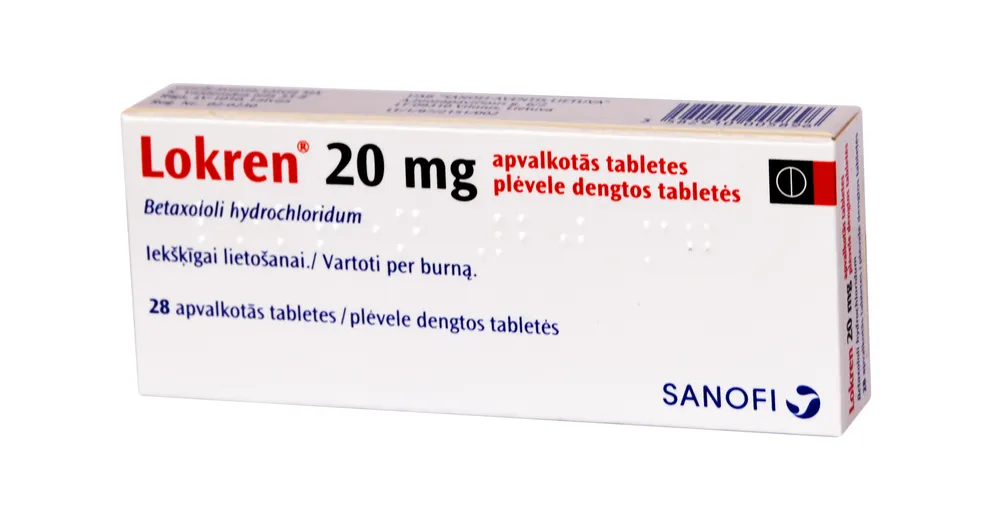
Table of Contents
PACKAGE LEAFLET: INFORMATION FOR THE PATIENT
Warning! Keep this leaflet. Information on the immediate packaging is in a foreign language!
Lokren 20
20 mg, coated tablets
Betaxololi hydrochloridum
Please read the following leaflet carefully before using this medicine, as it contains
important information for the patient.
- Keep this leaflet, as you may need to read it again.
- If you have any questions, please consult your doctor, pharmacist, or nurse.
- This medicine has been prescribed for a specific individual. Do not pass it on to others. It may harm other people, even if their symptoms are the same.
- If you experience any adverse reactions, including any not listed in this leaflet, inform your doctor or pharmacist. See section 4.
Table of contents
- What Lokren 20 is and what it is used for
- Important information before taking Lokren 20
- How to take Lokren 20
- Possible side effects
- How to store Lokren 20
- Contents of the pack and other information
1. What Lokren 20 is and what it is used for
Lokren 20 is available as coated tablets and contains the active substance: betaxolol hydrochloride. Betaxolol blocks beta-adrenergic receptors in the heart. Administered once daily, the drug provides long-lasting antihypertensive effect.
Indications:
- arterial hypertension,
- ischemic heart disease.
2. Important information before using Lokren 20
When not to use Lokren 20:
- if the patient is allergic to betaxolol hydrochloride or any of the other ingredients of this medicine (listed in section 6),
- if the patient has severe bronchial asthma or severe chronic obstructive pulmonary disease,
- if the patient has heart failure that is not controlled by treatment,
- if the patient has cardiogenic shock,
- if the patient has second- or third-degree atrioventricular block (except in patients with a pacemaker implanted),
- as the sole treatment if the patient has pure Prinzmetal's angina (variant angina pectoris),
- if the patient has sinoatrial node dysfunction (including sinoatrial block),
- if the patient has a slow heart rate (heart rate below 45–50 beats per minute),
- if the patient has severe Raynaud's disease or severe peripheral arterial disorders,
- if the patient has untreated pheochromocytoma,
- if the patient has hypotension,
- if the patient has previously experienced anaphylactic reactions (severe allergic reactions),
- if the patient has metabolic acidosis,
- during treatment with floctafenic or sultopride.
Warnings and precautions
Do not abruptly stop using this medicine, especially in patients with angina pectoris (ischaemic heart disease), as this may lead to severe cardiac arrhythmias, myocardial infarction, or sudden death. The doctor will recommend gradually reducing the dose, for example over a period of 1 to 2 weeks. During this time, if necessary, the doctor may decide to introduce a substitute medicine to prevent worsening of angina. The decision on whether to discontinue the medicine and how to stop treatment must be made by the doctor.
It is essential to inform the doctor if the patient has bronchial asthma or any other chronic respiratory disease. Beta-adrenergic receptor blocking agents may be administered only to patients with mild forms of these diseases, and treatment should be initiated with low doses of such medicines.
Patients with compensated heart failure treated with betaxolol hydrochloride should remain under continuous medical supervision.
Exercise caution when using this medicine in patients with a heart rate below 55 beats per minute, as well as in those with first-degree atrioventricular block.
Betaxolol hydrochloride may be used in milder forms of Prinzmetal's angina and in mixed forms of angina, provided that a vasodilator is administered concomitantly.
Exercise caution when using beta-adrenergic blocking agents in patients with peripheral arterial disorders (Raynaud's syndrome or disease, arteritis, or chronic arterial insufficiency of the lower limbs). Inform the doctor about such conditions.
In patients with pheochromocytoma, blood pressure should be monitored regularly.
Inform the doctor if the patient has impaired kidney function, diabetes (requiring more frequent monitoring of blood glucose levels at the beginning of treatment), psoriasis (possible exacerbation of symptoms during treatment with beta-adrenergic blocking agents), or a tendency towards allergies (especially those caused by iodine-containing contrast agents or floctafenic, or in patients undergoing desensitization therapy).
In the case of any planned or emergency surgical procedure, the anaesthesiologist must be informed about the use of Lokren 20 before anaesthesia.
Inform the doctor if the patient has glaucoma or thyroid disorders.
Athletes should not take this medicine, as it contains an active substance that may affect the outcome of anti-doping tests (positive result).
Lokren 20 and other medicines
Tell your doctor or pharmacist about all medicines the patient is currently taking or has recently taken, as well as any medicines the patient plans to take.
Concomitant use of betaxolol hydrochloride with floctafenic (a non-steroidal anti-inflammatory drug) or sultopride (a medicine used to treat certain psychiatric disorders) is contraindicated.
Concomitant use of betaxolol hydrochloride with amiodarone (an antiarrhythmic medicine), digitalis glycosides (used in heart failure), or fingolimod (used in multiple sclerosis) is not recommended.
When diltiazem and betaxolol hydrochloride are used concomitantly, there may be an increased risk of depression.
Exercise caution when using concomitantly with:
- halogenated inhaled anaesthetics,
- calcium antagonists (bepridil, diltiazem, verapamil),
- antiarrhythmic drugs (propafenone, quinidine, hydroquinidine, disopyramide),
- baclofen (a medicine that reduces muscle tone),
- insulin and blood glucose-lowering sulphonamides,
- lidocaine,
- iodine-containing contrast agents,
- non-steroidal anti-inflammatory drugs,
- calcium antagonists (dihydropyridine derivatives, e.g. nifedipine),
- antidepressant medicines (imipramine derivatives),
- neuroleptics (medicines used to treat psychotic disorders),
- corticosteroids, tetracosactide,
- mefloquine (a medicine used in malaria),
- sympathomimetic agents,
- clonidine.
Taking Lokren 20 with food and drink
Food does not affect the absorption of the medicine.
Lokren 20 may be taken with meals or independently of meals.
Pregnancy and breastfeeding
If the patient is pregnant or breastfeeding, suspects she may be pregnant, or is planning to become pregnant, she should consult a doctor before using this medicine.
Driving and operating machinery
When driving or operating machinery, bear in mind that dizziness or fatigue may occur during treatment.
Lokren 20 contains monohydrate lactose
If the patient has previously been diagnosed with intolerance to certain sugars, the patient should consult a doctor before taking Lokren 20.
3. How to use Lokren 20
This medicine should always be taken as prescribed by your doctor. If you have any doubts, consult your doctor.
The usual dose of Lokren 20 is one tablet once daily.
Dosing in patients with renal impairment
Your doctor will adjust the dose according to kidney function: if creatinine clearance is greater than 20 ml/minute, dose adjustment is not necessary. However, close medical monitoring is recommended at the beginning of treatment until the blood concentration of the drug reaches a steady state (on average, after 4 days).
In patients with severe renal impairment (creatinine clearance less than 20 ml/minute), the recommended dose is 10 mg once daily.
In patients with hepatic impairment, dose adjustment is not required. However, close medical monitoring, especially at the beginning of treatment, is advised.
In elderly patients, treatment should start with the lowest effective dose. Regular medical check-ups are necessary.
If you feel that the effect of Lokren 20 is too strong or too weak, consult your doctor.
Use in children
The use of this medicine is not recommended in children.
Taking more Lokren 20 than recommended
The most common symptoms of overdose include slow heart rate or cardiac arrest, feeling of fatigue, dizziness, breathing difficulties, hypotension, heart block (impairment of electrical conduction in the heart), heart failure, bronchospasm, and hypoglycaemia (low blood glucose levels).
If you have taken too much of this medicine, contact your doctor immediately or go to the nearest hospital emergency department. The doctor will decide on the appropriate management based on the severity of poisoning symptoms.
Take the medicine package with you so that it is clear which medicine has been taken and what treatment should be initiated.
Missing a dose of Lokren 20
If you miss a dose, take it as soon as possible, unless it is almost time for the next dose. Do not take a double dose to make up for the missed dose.
Stopping Lokren 20
Do not stop taking this medicine suddenly, especially if you have angina pectoris (ischaemic heart disease); your doctor will recommend gradually reducing the dose over a period of 1 to 2 weeks. Whether the medicine should be discontinued and how therapy should be ended is decided by your doctor.
If you have any further doubts about using this medicine, consult your doctor.
4. Possible adverse effects
Like all medicines, this medicine can cause adverse effects, although not everyone will experience them.
The frequency of the adverse effects listed below has been defined as follows:
Very common: affects at least 1 in 10 patients
Common: affects 1 to 10 in 100 patients
Uncommon: affects 1 to 10 in 1,000 patients
Rare: affects 1 to 10 in 10,000 patients
Very rare: affects less than 1 in 10,000 patients
Frequency not known (cannot be estimated from the available data).
Commonly reported:
- dizziness and headache, fatigue, insomnia;
- abdominal pain, diarrhoea, nausea and vomiting;
- bradycardia (slowing of the heart rate) – severe bradycardia may occur, cold extremities;
- impotence.
Rarely reported:
- skin reactions, including psoriasiform eruptions or exacerbation of psoriasis;
- depressive disorders;
- heart failure, hypotension, atrioventricular conduction delay or worsening of existing atrioventricular block;
- Raynaud's syndrome (cold extremities due to disturbances in peripheral blood circulation), worsening of intermittent claudication;
- bronchospasm. In rare cases, antinuclear antibodies have been reported, which only exceptionally were associated with clinical symptoms such as systemic lupus erythematosus, which resolved after discontinuation of treatment.
Very rarely reported:
- paresthesia (tingling or numbness), visual disturbances, hallucinations, confusion, nightmares;
- hypoglycemia (decreased blood glucose concentration) or hyperglycemia (increased blood glucose concentration).
Frequency not known:
- urticaria, itching, excessive sweating;
- lethargy;
- slowing or stopping of the heartbeat, dizziness, feeling of significant fatigue, breathing difficulties – these symptoms may particularly occur in patients over 65 years of age or in patients with pre-existing heart conditions.
Reporting of adverse effects
If any adverse effects occur, including any adverse effects not listed in this leaflet, inform your doctor or pharmacist. Adverse effects can be reported directly to the Department for Monitoring of Adverse Drug Reactions at the Office for Registration of Medicinal Products, Medical Devices and Biocidal Products:
Al. Jerozolimskie 181C, 02-222 Warsaw
Tel.: +48 22 49 21 301, Fax: +48 22 49 21 309
Website: https://smz.ezdrowie.gov.pl
Reporting adverse effects helps to provide more information on the safety of the medicine.
5. How to store Lokren 20
Store below 25 °C, in the original packaging.
The medicine should be kept out of sight and reach of children.
Do not use this medicine after the expiry date stated on the packaging. The expiry date refers to the last day of the stated month.
Medicines must not be disposed of via wastewater or household waste. Ask your pharmacist how to dispose of medicines no longer required. This will help protect the environment.
6. Contents of the pack and other information
What Lokren 20 contains
- The active substance is betaxolol hydrochloride. One coated tablet contains 20 mg of betaxolol hydrochloride.
Other ingredients are: lactose monohydrate, microcrystalline cellulose, sodium carboxymethyl starch (type A), colloidal anhydrous silica, magnesium stearate;
Film-coat composition: titanium dioxide (E 171), macrogol 400, hypromellose.
What Lokren 20 looks like and contents of the pack
White, round, biconvex coated tablets, with a division line on one side and engraved "KE 20" on the other side.
The tablet can be divided into two equal parts.
Pack containing 28 coated tablets in 2 PVC/Al blisters, packed in a cardboard box.
For further information, please contact the Marketing Authorisation Holder or Parallel Importer.
Marketing Authorisation Holder in Romania, country of export:
CHEPLAPHARM Arzneimittel GmbH
Ziegelhof 24
17489 Greifswald, Germany
Manufacturer:
Sanofi Winthrop Industrie
30-36 avenue Gustave Eiffel
37100 Tours, France
Parallel Importer:
Medezin Sp. z o.o.
ul. Zbąszyńska 3
91-342 Łódź, Poland
Repackaged in:
Medezin Sp. z o.o.
ul. Zbąszyńska 3
91-342 Łódź, Poland
Marketing Authorisation numbers in Romania, country of export:
7016/2014/01
7016/2014/02
7016/2014/03
Parallel Import Licence number: 152/20