Locoid lipocream
Poland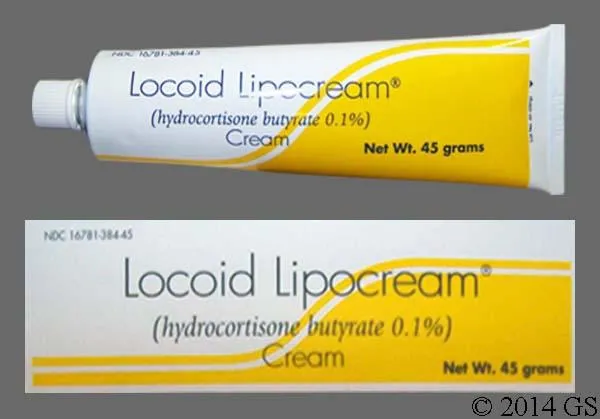
Table of Contents
Patient Information Leaflet
Caution! Please keep this leaflet. The packaging information is in a foreign language.
Locoid Lipocream (Locoid Lipocream 0.1%), 1 mg/g (0.1%), cream
Hydrocortisoni butyras
Locoid Lipocream and Locoid Lipocream 0.1% are different trade names for the same medicine.
Please read this leaflet carefully before using the medicine, as it contains
important information for the patient.
- Keep this leaflet for future reference.
- If you have any questions, consult your doctor or pharmacist.
- This medicine has been prescribed for a specific individual. Do not pass it on to others. The medicine may harm someone else, even if their symptoms are the same.
- If you experience any adverse effects, including any not listed in this leaflet, inform your doctor, pharmacist, or nurse. See section 4.
Table of contents:
- What Locoid Lipocream is and what it is used for
- Important information before using Locoid Lipocream
- How to use Locoid Lipocream
- Possible side effects
- How to store Locoid Lipocream
- Contents of the pack and other information
1. What Locoid Lipocream is and what it is used for
Locoid Lipocream contains the active substance hydrocortisone butyrate, a corticosteroid with anti-inflammatory and vasoconstrictive properties. The medicine relieves symptoms of inflammatory skin conditions, often accompanied by itching.
Indications for Locoid Lipocream
- Inflammatory skin conditions (not caused by microorganisms) responsive to corticosteroid treatment, when topical treatment with less potent corticosteroids has not produced the desired results;
- Continuation of treatment or maintenance therapy of inflammatory skin diseases, when previous use of more potent topical corticosteroids has been effective.
2. Important information before using Locoid Lipocream
When not to use Locoid Lipocream
- on skin lesions caused by bacterial infections (e.g. syphilitic or tuberculous lesions), viral infections (e.g. chickenpox, herpes simplex, shingles), fungal infections, or parasitic infestations;
- on skin ulcers or wounds;
- in perioral dermatitis;
- in acne vulgaris or rosacea;
- if the patient is hypersensitive to the active substance or to any of the other ingredients of this medicine (listed in section 6).
Warnings and precautions
Before starting treatment with Locoid Lipocream, consult a doctor or pharmacist.
Protect the eyes and mucous membranes from contact with the medicine.
Avoid contact of the medicine with the eyes and its use around the eye area, as the cream coming into contact with the conjunctiva may cause primary glaucoma or subcapsular cataract.
Avoid applying the medicine to the facial skin, hairy skin, and skin in the genital area, as these areas are particularly sensitive to corticosteroids. Only weak-acting corticosteroids should be used in these areas.
Avoid using the medicine on large skin surfaces, especially under occlusive dressings (e.g. under plastic film or diapers), and in skin folds and creases. In such cases, absorption of corticosteroids may be significantly increased, leading to suppression of adrenal cortex function.
Use with caution and avoid prolonged treatment in children, as adrenal suppression may occur rapidly; growth hormone secretion may also be suppressed.
Extreme caution is required in patients with psoriasis, as topical use of corticosteroids in psoriasis may lead to disease recurrence due to development of tolerance, risk of generalized pustular psoriasis, and local or systemic toxic effects resulting from impaired skin barrier integrity.
Visual disturbances may occur following systemic or topical use of corticosteroids. If a patient experiences symptoms such as blurred vision or other visual disturbances, referral to an ophthalmologist should be considered to determine possible causes, including cataract, glaucoma, or rare conditions such as central serous chorioretinopathy (CSCR), which has been reported following both systemic and topical corticosteroid use.
Locoid Lipocream and other medicines
Inform your doctor or pharmacist about all medicines currently used, recently used, or planned for use.
Interactions with other medicines are not known.
Pregnancy and breastfeeding
If the patient is pregnant or breastfeeding, suspects she might be pregnant, or is planning to have a child, she should consult a doctor or pharmacist before using this medicine.
This medicine should only be used during pregnancy if clearly indicated by a physician.
If a doctor prescribes the use of this medicine during breastfeeding, it may be applied to small skin areas for a short duration. In case of prolonged treatment or application to large skin areas, breastfeeding should be discontinued.
Driving and operating machinery
There are no data on the effect of Locoid Lipocream on the ability to drive vehicles or operate machinery.
Locoid Lipocream contains cetostearyl alcohol and propyl parahydroxybenzoate
Due to the presence of cetostearyl alcohol, the medicine may cause local skin reactions (e.g. contact dermatitis).
Due to the presence of propyl parahydroxybenzoate, the medicine may cause allergic reactions (including delayed-type reactions).
3. How to use Locoid Lipocream
This medicine should always be used as directed by a physician. In case of doubt, consult a
physician or pharmacist.
Usually, a thin layer of the cream should be applied evenly to the affected skin areas
1 to 3 times daily. The cream may be gently massaged in. Once improvement has occurred,
treatment is usually sufficient once daily or 2–3 times per week.
Locoid Lipocream is used in the treatment of dry and dry-oozing skin lesions.
The applied dose should not exceed 30–60 g per week.
Use of a higher than recommended dose of Locoid Lipocream
There are no reports of overdose. With prolonged use, suppression of adrenal cortex function may occur.
If you have any further doubts regarding the use of this medicine, consult your
physician or pharmacist.
4. Possible adverse reactions
Like all medicines, this medicine can cause adverse reactions, although not everyone will experience them.
Adverse reactions occurring rarely (may occur in fewer than 1 in 1,000 people):
- skin atrophy, often irreversible, with epidermal thinning;
- telangiectasia (dilation of small blood vessels);
- purpura;
- striae (stretch marks);
- acneiform eruptions;
- perioral dermatitis;
- so-called "rebound effect", which may lead to dependence on topical corticosteroids;
- skin depigmentation;
- dermatitis and rash, including contact dermatitis.
Adverse reactions occurring very rarely (may occur in fewer than 1 in 10,000 people):
- suppression of adrenal cortex function.
Frequency not known (frequency cannot be estimated from the available data):
- hypersensitivity;
- blurred vision.
Due to the presence of excipients – cetostearyl alcohol and propyl parahydroxybenzoate – local skin reactions (e.g. contact dermatitis) and allergic reactions (including delayed-type reactions) may also occur.
Systemic adverse reactions following topical application of corticosteroids are rare but can be severe. Suppression of adrenal cortex function may occur, particularly during prolonged use of the medicine.
The risk of systemic corticosteroid adverse reactions increases during:
- application under occlusive dressing (e.g. under plastic film, under diaper), especially in skin folds;
- application over large skin areas;
- long-term treatment;
- use in children (children have thinner skin and a larger skin surface area relative to body weight).
Reporting of adverse reactions
If any adverse reactions occur, including those not listed in this leaflet, inform your doctor, pharmacist, or nurse. Adverse reactions can be reported directly to the Department of Monitoring of Adverse Drug Reactions at the Office for Registration of Medicinal Products, Medical Devices and Biocidal Products
Al. Jerozolimskie 181 C
02-222 Warsaw
Phone: +48 22 49 21 301
Fax: +48 22 49 21 309
Website: https://smz.ezdrowie.gov.pl
Reporting adverse reactions helps provide more information on the safety of the medicine.
5. How to store Locoid Lipocream
Keep this medicine out of the sight and reach of children.
Do not use this medicine after the expiry date stated on the packaging. The expiry date refers to the last day of the specified month.
Shelf-life after first opening: 2 months.
Store below 25°C in the original packaging.
Do not store in a refrigerator or freeze.
Medicines must not be disposed of via the sewage system or in household waste. Ask your pharmacist how to dispose of medicines no longer required. Such measures will help protect the environment.
6. Contents of the package and other information
What Locoid Lipocream contains
- The active substance is hydrocortisone butyrate. 1 g of cream contains 1 mg of hydrocortisone butyrate.
- The other ingredients are: cetostearyl alcohol, macrogol 25 cetostearyl ether, liquid paraffin, white soft paraffin, propyl parahydroxybenzoate, benzyl alcohol, citric acid, sodium citrate, purified water.
What Locoid Lipocream looks like and contents of the pack
Locoid Lipocream is a white cream.
The pack contains 30 g of cream.
For further information, please contact the responsible party or parallel importer.
Responsible party in Bulgaria, country of export:
CHEPLAPHARM Arzneimittel GmbH
Ziegelhof 24
17489 Greifswald
Germany
Manufacturer:
Temmler Italia S.R.L.
Via Delle Industrie 2
20061 Carugate (MI)
Italy
Parallel importer:
Delfarma Sp. z o.o.
ul. Św. Teresy od Dzieciątka Jezus 111
91-222 Łódź
Repackaged in:
Delfarma Sp. z o.o.
ul. Św. Teresy od Dzieciątka Jezus 111
91-222 Łódź
Bulgaria, country of export licence number: 20000282
Parallel import licence number: 32/26