Lithium carbonicum gsk
Poland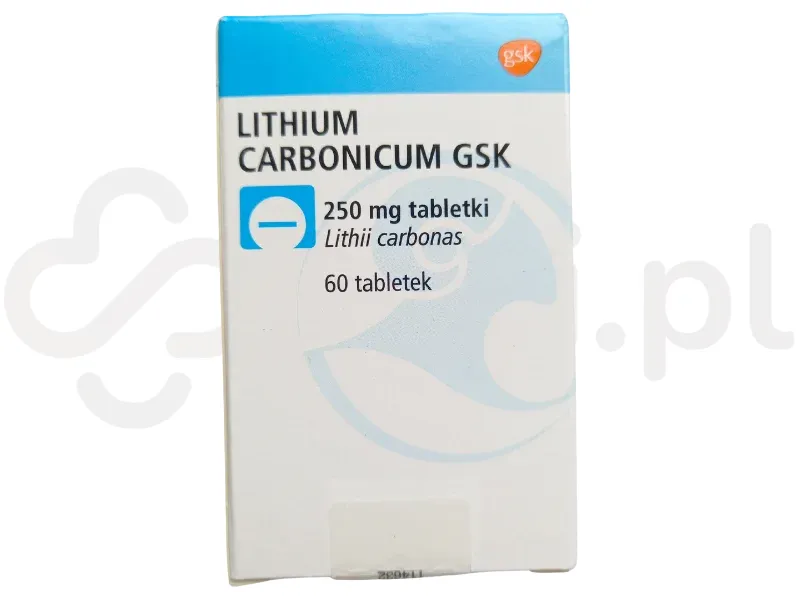
Table of Contents
- Package leaflet: Information for the user
- 1. What Lithium Carbonicum GSK is and what it is used for
- 2. Information before taking Lithium Carbonicum GSK
- 3. How to take Lithium Carbonicum GSK
- 4. Possible adverse reactions
- 5. How to store Lithium Carbonicum GSK
- 6. Contents of the pack and other information
Package leaflet: Information for the user
Lithium Carbonicum GSK, 250 mg, tablets
Lithii carbonas
Please read all of this leaflet carefully before taking this medicine because it contains
important information for you.
- Keep this leaflet as you may need to read it again.
- If you have any further questions, ask your doctor, pharmacist, or nurse.
- This medicine has been prescribed for you personally. Do not pass it on to others. It may harm someone else even if their symptoms are the same as yours.
- If you experience any side effects, including any not listed in this leaflet, tell your doctor, pharmacist, or nurse. See section 4.
Contents of the leaflet:
- What Lithium Carbonicum GSK is and what it is used for
- What you need to know before taking Lithium Carbonicum GSK
- How to take Lithium Carbonicum GSK
- Possible side effects
- How to store Lithium Carbonicum GSK
- Contents of the pack and other information
1. What Lithium Carbonicum GSK is and what it is used for
Lithium Carbonicum GSK contains the active substance lithium carbonate. The medicine has a mood-stabilizing (normalizing) effect on depression and manic states.
Therapeutic indications:
- Treatment of manic episodes in bipolar affective disorders,
- Prevention of relapses in bipolar affective disorders or reduction of severity and frequency of subsequent manic episodes in patients with a history of manic states,
- Prevention of depressive episodes in recurrent depressive disorders.
2. Information before taking Lithium Carbonicum GSK
When not to take Lithium Carbonicum GSK
Do not take this medicine:
- if the patient is allergic to lithium carbonate or any of the other ingredients of this medicine (listed in section 6),
- if the patient has severe renal insufficiency,
- if the patient has recently suffered a myocardial infarction,
- if the patient has organic brain damage,
- if the patient has leukaemia,
- if the patient is pregnant or breastfeeding (see section 2: Pregnancy and breastfeeding).
Warnings and precautions
Before starting Lithium Carbonicum GSK, consult a doctor if:
- the patient has Brugada syndrome (a hereditary condition affecting heart function) or if anyone in the family has had Brugada syndrome, cardiac arrest, or sudden death,
- the patient has severe renal insufficiency,
- the patient is or will be undergoing electroconvulsive therapy,
- the patient has cardiovascular disease,
- the patient has untreated hypothyroidism,
- the patient has unbalanced sodium levels due to dehydration or a low-sodium diet (reduced salt intake),
- the patient has Addison's disease (chronic adrenal insufficiency caused by insufficient hormone production in the adrenal cortex),
- the patient is taking medications for type 2 diabetes (see section 2: Lithium Carbonicum GSK and other medicines),
- the patient has elevated calcium levels in the blood.
These conditions increase the risk of adverse effects (listed in section 4).
Contact a doctor or pharmacist if:
- the patient plans or has undergone bariatric surgery, as a lower dose of lithium may be required. The doctor will monitor the patient's blood lithium levels and adjust the dose accordingly.
Increased calcium levels in the blood
Treatment with Lithium Carbonicum GSK may increase blood calcium levels.
Before starting treatment and during therapy, the treating physician may order blood tests to monitor calcium levels.
Special caution is required when using lithium if the patient has:
- Parkinson's disease,
- sinus node and atrioventricular conduction disorders (heart rhythm disorders),
- epilepsy,
- psoriasis,
- congenital muscle weakness – myasthenia gravis (a condition characterized by excessive muscle weakness),
- diabetes,
- schizophrenia.
Before starting treatment, the doctor will order tests to assess thyroid and kidney function, perform an ECG, and measure blood sodium and glucose levels.
Effect on kidneys
Lithium increases the excretion of sodium and water by the kidneys; therefore, adequate intake of sodium and fluids should be maintained during treatment to prevent dehydration (see section: Lithium Carbonicum GSK with food and drink).
If the patient is on a low-sodium diet, they should inform the doctor before taking this medicine.
If diarrhoea or excessive sweating occurs (e.g. during viral infections), contact the doctor immediately. In such cases, the doctor may reduce the dose or temporarily discontinue treatment.
Fluid loss from the body may be increased by:
- drinking large amounts of caffeinated beverages, e.g. coffee, tea, and cola (increases urine output),
- intense physical exercise or staying in a hot environment (increases sweating).
Long-term use of Lithium Carbonicum GSK may cause severe kidney dysfunction. If the patient produces more urine than usual, they should inform the doctor.
In some patients with severe kidney dysfunction, long-term use of Lithium Carbonicum GSK may lead to kidney changes, including renal cancer (see section 4).
Toxicity
Treatment must be stopped immediately and medical advice sought without delay if early signs of lithium toxicity appear, such as:
- cardiovascular disorders (e.g. QT/QTc prolongation observed on ECG),
- gastrointestinal disturbances, e.g. diarrhoea, vomiting, and dehydration,
- neurological disorders, such as: ataxia (difficulty maintaining balance, unsteady gait), tremor, hypertonia (increased skeletal muscle tone), involuntary muscle contractions, peripheral neuropathy (peripheral nerve damage causing sensory disturbances), diminished or absent deep tendon reflexes, hyperreflexia (exaggerated reflexes), speech disturbances, confusion, drowsiness, nystagmus. In some cases, neurological symptoms may persist despite discontinuation of the drug and may be irreversible (syndrome of irreversible lithium-effectuated neurotoxicity, SILENT).
If the patient intends to take any other medicine, they should consult their doctor (see section 2: Lithium Carbonicum GSK and other medicines).
In elderly patients (over 65 years of age), the doctor may reduce the dose of Lithium Carbonicum GSK.
In patients with depression or bipolar affective disorders, clinical worsening may occur. Suicidal thoughts and behaviours may emerge, regardless of whether antidepressant treatment is being used. If these symptoms occur, contact the doctor immediately.
Lithium Carbonicum GSK and other medicines
Inform the doctor about all medicines currently taken or recently used, as well as any medicines the patient plans to take.
Medicines that increase lithium blood levels and may cause lithium toxicity:
- metronidazole (used to treat infections caused by certain bacteria and protozoa),
- non-steroidal anti-inflammatory drugs (pain-relieving and anti-inflammatory medicines, e.g. indometacin, ketoprofen), including selective cyclooxygenase-2 inhibitors (e.g. celecoxib),
- medicines used to treat hypertension: angiotensin-converting enzyme inhibitors (e.g. ramipril), angiotensin II receptor antagonists (e.g. losartan, valsartan),
- diuretics (medicines that increase urine output, especially thiazide diuretics and amiloride).
Medicines that decrease lithium blood levels:
- urea,
- xanthines (caffeine, medicines used to treat asthma, e.g. aminophylline, theophylline and others),
- alkalinising agents (medicines used, for example, in the treatment of metabolic acidosis, such as sodium bicarbonate),
- medicines for type 2 diabetes (such as empagliflozin, dapagliflozin and other gliflozins known as SGLT2 inhibitors),
- diuretics (e.g. carbonic anhydrase inhibitors).
Inform the doctor or pharmacist if taking:
- topiramate (used to treat epilepsy or migraine).
Some medicines taken concurrently with lithium may have neurotoxic effects, causing: mild incoordination, muscle tremors, hypertonia (increased muscle tone), involuntary muscle contractions, hyperreflexia (exaggerated reflexes), speech disturbances, confusion, drowsiness, and nystagmus. If such symptoms occur, treatment should be stopped immediately.
Very rarely, concurrent use of lithium and neuroleptics may cause psychiatric and neurological symptoms (delirium, seizures, or increased frequency of extrapyramidal symptoms – muscle rigidity, reduced facial expression, bradykinesia, restlessness, involuntary muscle contractions, and involuntary movements). These symptoms may resemble or be identical to those of neuroleptic malignant syndrome. In some cases, irreversible brain damage may occur.
Medicines with neurotoxic effects when used concomitantly with lithium:
- neuroleptics (antipsychotic medicines),
- carbamazepine (used to treat epilepsy),
- methyldopa (used to treat hypertension),
- selective serotonin reuptake inhibitors (medicines used to treat depression) – may enhance the toxic effects of lithium, leading to serotonin syndrome symptoms such as tremors, dizziness, agitation, confusion, diarrhoea,
- calcium channel blockers (medicines used, among others, to treat hypertension),
- tricyclic antidepressants (medicines used to treat depression).
Lithium Carbonicum GSK may enhance and prolong the effects of muscle relaxants (medicines used before surgical procedures). If the patient is to undergo surgery under anaesthesia, they should inform the doctor that they are taking lithium.
Lithium enhances the effects of high doses of iodine (used to treat thyroid disorders).
Lithium may inhibit the effects of amphetamines (e.g. medicines used to treat ADHD and weight loss).
Lithium Carbonicum GSK may affect laboratory blood test results, causing increased levels of glucose, parathyroid hormone, and calcium.
In rare cases, Lithium Carbonicum GSK may trigger episodes of congenital myasthenia (a condition causing excessive muscle weakness).
Lithium Carbonicum GSK with food and drink
- During treatment, maintain a consistent intake of sodium and fluids (2.5 to 3 litres per day) and avoid changing salt intake (see section: Warnings and precautions).
- If the patient intends to follow a special diet, they should consult the doctor.
- Antacids (containing aluminium or magnesium hydroxide) do not affect lithium absorption and may be taken concurrently.
- Drinking large amounts of coffee may reduce lithium blood levels.
Pregnancy and breastfeeding
If the patient is pregnant or breastfeeding, suspects she may be pregnant, or plans to become pregnant, she should consult a doctor before using this medicine.
Lithium Carbonicum GSK must not be used during pregnancy, especially during the first trimester.
This medicine must not be used during breastfeeding, as it passes into human milk and may cause toxicity in the infant.
Driving and operating machinery
Lithium may cause drowsiness, dizziness, or hallucinations, and may therefore affect the ability to drive or operate machinery.
If such symptoms occur, do not drive or operate machinery.
Lithium Carbonicum GSK contains lactose
If the patient has previously been diagnosed with intolerance to certain sugars, they should consult a doctor before taking this medicine.
3. How to take Lithium Carbonicum GSK
This medicine should always be taken exactly as directed by the doctor. In case of doubt, consult your doctor.
Recommended dosage:
The dosage is individually determined by the doctor for each patient (based on serum lithium concentration and clinical improvement achieved).
The usual daily dose is 0.5 to 1.25 g of lithium carbonate, administered in divided doses.
The daily dose should be increased gradually.
During the initial treatment period, serum lithium levels should be monitored at least once a week. It is recommended to maintain serum lithium concentration within the range of 0.5–0.8 mmol/l (to prevent relapses of affective disorders). After reaching the desired concentration, monitoring may be performed less frequently, once monthly or every two months; during remission, every 2 to 3 months.
In acute illness states (manic episodes), a dose of 1.5 to 2.0 g per day is used (serum lithium concentration should range from 0.6 to 1.2 mmol/l). After resolution of the acute phase, the dose should be reduced immediately.
The daily dose should be divided into at least three doses.
This medicine may be taken regardless of meals.
Use in children
Do not use in children under 12 years of age.
If you take more Lithium Carbonicum GSK than recommended
In case of overdose, seek immediate medical advice.
Any lithium overdose should be considered potentially life-threatening. In patients undergoing chronic lithium treatment, even a minor overdose may lead to severe toxicity, as body tissues are already saturated with lithium.
Symptoms of acute lithium poisoning:
- Persistent vomiting, diarrhoea,
- Motor incoordination, seizures,
- Coma,
- Often cardiac arrhythmias and shock, which may lead to life-threatening conditions.
During long-term treatment, symptoms of toxicity usually develop gradually. Possible causes include irregular intake of the medicine, electrolyte imbalances, or increased sodium loss due to diuretic use or excessive sweating.
At serum concentrations of 1.5–2 mmol/l (measured 12 hours after the last dose), symptoms include: diarrhoea, coarse and fine tremor, muscle weakness, speech disturbances, motor incoordination.
At serum concentrations of 2–3 mmol/l, symptoms include: confusion, seizures, memory disturbances, nystagmus, coma, and even death.
If the first signs of poisoning occur, stop taking the medicine immediately and consult your doctor.
If you forget to take Lithium Carbonicum GSK
If you miss a dose, take it as soon as possible. If it is almost time for your next dose, skip the missed dose. Take the next dose at the usual time.
Do not take a double dose to make up for a missed dose.
Stopping Lithium Carbonicum GSK
Planned discontinuation of lithium
Gradual discontinuation of lithium is recommended (over a period of at least 2 weeks). Abruptly stopping the medicine may cause a recurrence of the symptoms of the illness for which lithium treatment was initiated.
Discontinuation of lithium due to toxicity
If the first signs of toxicity occur, treatment should be stopped immediately and the patient should contact the doctor without delay (see section 2: Toxicity).
If you have any further questions about the use of this medicine, consult your doctor.
4. Possible adverse reactions
Like all medicines, this medicine can cause adverse reactions, although not everyone experiences them.
The occurrence and severity of adverse reactions depend on the patient's sensitivity and the drug concentration in blood serum.
Serious adverse reactions
The patient should discontinue the medicine and immediately contact a doctor or seek medical help if the following adverse reactions of unknown frequency (frequency cannot be estimated from available data) occur:
- Extensive rash, high fever, increased liver enzyme activity, blood abnormalities (eosinophilia), lymph node enlargement and involvement of other organs (drug reaction with eosinophilia and systemic symptoms, also known as DRESS or drug-induced hypersensitivity syndrome);
- Diarrhoea, vomiting, and dehydration;
- Neurological disorders such as: ataxia (difficulty maintaining balance, unsteady gait), tremor, hypertonia (increased skeletal muscle tone), involuntary muscle contractions, peripheral neuropathy (damage to peripheral nerves causing sensory disturbances), diminished or absent deep tendon reflexes, hyperreflexia (exaggerated reflexes), speech disorders, confusion (disturbances in consciousness, thought process, orientation in time, place, situation or self), somnolence, nystagmus (involuntary eye movement). In some cases, neurological symptoms may persist despite discontinuation of the medicine and may be irreversible (syndrome of irreversible lithium-effectuated neurotoxicity, SILENT) (see section 2: Toxicity).
The patient should immediately contact a doctor if the following adverse reactions of unknown frequency (frequency cannot be estimated from available data) occur:
- If blood in the urine, any lumps or pain in the flank area are noticed during treatment with this medicine. In some patients with severe renal impairment, long-term use of Lithium carbonicum GSK may lead to kidney changes, including kidney cancer.
Other adverse reactions
Contact a doctor, pharmacist, or nurse if any of the following adverse reactions are observed:
During initial treatment, the following adverse symptoms occur relatively frequently and tend to diminish during continued treatment:
- Tremor;
- Gastrointestinal disturbances (nausea, vomiting, diarrhoea, abdominal pain, salivation, dryness of oral mucous membranes);
- Polyuria (excretion of large amounts of urine);
- Increased thirst;
- Decreased muscle strength;
- Fatigue.
Very common adverse reactions (may occur in more than 1 in 10 people):
- Endocrine disorders: hypercalcaemia (increased calcium levels in blood).
Adverse reactions of unknown frequency (frequency cannot be estimated from available data):
- Blood and lymphatic system disorders: leukocytosis (increased white blood cell count);
- Endocrine disorders: goitre (enlargement of the thyroid gland), hypothyroidism, hyperthyroidism, hyperparathyroidism (when parathyroid glands produce too much parathormone, increasing blood calcium levels), enlargement of parathyroid glands, parathyroid adenoma (benign tumour);
- Metabolism and nutrition disorders: hyperglycaemia (increased blood glucose levels), weight gain, anorexia (loss of appetite);
- Psychiatric disorders: hallucinations (perception of non-existent objects or people), somnolence, memory disturbances;
- Nervous system disorders: seizures, muscle twitching (fine and coarse tremors), ataxia (difficulty maintaining balance, unsteady gait), choreoathetoid movements (involuntary, uncoordinated limb movements), impaired nerve conduction, increased tendon reflexes, extrapyramidal symptoms (muscle rigidity, reduced facial expression, bradykinesia, restlessness, involuntary muscle contractions and movements), convulsions, slurred speech, dizziness, nystagmus (involuntary eye movement), stupor (patient is conscious but unresponsive to external stimuli), coma, pseudotumour cerebri, headache, taste disturbances, myasthenia gravis (muscle fatigue - a disease characterized by excessive muscle weakness);
- Eye disorders: visual disturbances – spots before eyes, blurred vision;
- Cardiac disorders: arrhythmia, bradycardia (slowed heart rate), sinoatrial node dysfunction, peripheral oedema, ECG changes, unmasking and/or worsening of Brugada syndrome symptoms (an inherited condition affecting heart function);
- Vascular disorders: peripheral circulatory failure, hypotension (low blood pressure), Raynaud's phenomenon (episodic arterial spasm in the hands – hands first turn pale, then blue, then red due to hyperaemia);
- Gastrointestinal disorders: nausea, vomiting, diarrhoea, gastritis, salivation, dryness of oral mucous membranes;
- Skin and subcutaneous tissue disorders: alopecia, acne, folliculitis, pruritus, exacerbation of psoriasis, rash, ulceration, excessive skin keratinization, other skin hypersensitivity symptoms, skin or mucous membrane eruptions (drug-induced lichenoid reaction);
- Musculoskeletal and connective tissue disorders: joint pain, muscle pain;
- Renal and urinary disorders: symptoms of nephrogenic diabetes insipidus, urinary incontinence, kidney damage (tubulointerstitial nephropathy) due to long-term treatment, impaired kidney function;
- Reproductive system and breast disorders: impotence (erectile dysfunction), sexual dysfunction;
- General disorders and administration site conditions: oedema.
Reporting of adverse reactions
If any adverse reactions occur, including any possible adverse reactions not listed in this leaflet, inform a doctor or pharmacist. Adverse reactions can be reported directly to the Department of Monitoring Adverse Drug Reactions, Office for Registration of Medicinal Products, Medical Devices and Biocidal Products, Al. Jerozolimskie 181C, 02-222 Warsaw, tel.: +48 22 49 21 301, fax: +48 22 49 21 309, website: https://smz.ezdrowie.gov.pl
Adverse reactions can also be reported to the marketing authorization holder.
Reporting adverse reactions helps to provide more information on the safety of the medicine.
5. How to store Lithium Carbonicum GSK
Keep the medicine out of the sight and reach of children.
Store below 25 °C in the original packaging. Protect from moisture.
Do not use this medicine after the expiry date stated on the cardboard box
and container following: "EXP".
The expiry date refers to the last day of the stated month.
The medicine's batch number is indicated on the box and container following: "Lot".
Medicines must not be disposed of via wastewater or household waste. Ask your
pharmacist for advice on how to dispose of medicines no longer required. Such measures will help
protect the environment.
6. Contents of the pack and other information
What Lithium Carbonicum GSK contains
- The active substance is lithium carbonate. Each tablet contains 250 mg of lithium carbonate.
- The other ingredients are: lactose monohydrate, potato starch, povidone K-30, talc, colloidal anhydrous silica, magnesium stearate.
What Lithium Carbonicum GSK looks like and contents of the pack
The medicine is in the form of round tablets, white to cream in colour, marked with "LC" on one side
and smooth on the other side.
The tablets are packed in a high-density polyethylene (HDPE) container with a child-resistant polyethylene closure
with a tamper-evident ring or a child-resistant polypropylene closure with an induction seal,
placed in a cardboard box.
The pack contains 60 tablets together with the patient information leaflet in a cardboard box.
Marketing Authorisation Holder
GSK PSC Poland sp. z o.o.
ul. Grunwaldzka 189
60-322 Poznań
Manufacturer
Delpharm Poznań Spółka Akcyjna
ul. Grunwaldzka 189
60-322 Poznań
For further information about this medicine, please contact the marketing authorisation holder:
GSK Services Sp. z o.o.
tel. + 48 (22) 576-90-00
{logo of the marketing authorisation holder}