Lisinopril aurovitas
Poland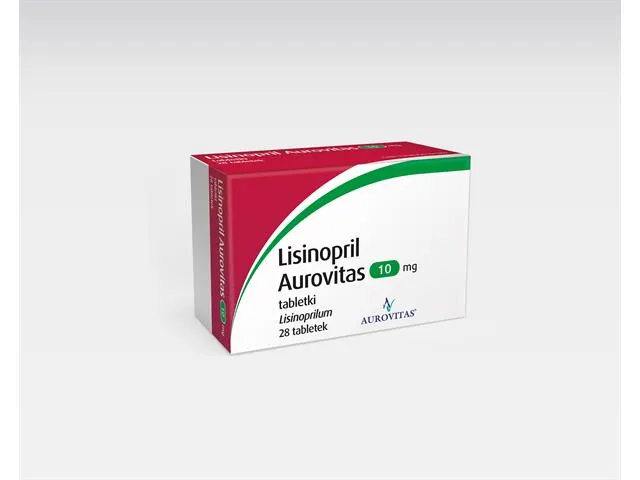
Table of Contents
- Package leaflet: Information for the patient
- 1. What Lisinopril Aurovitas is and what it is used for
- 2. Important information before using Lisinopril Aurovitas
- 3. How to use Lisinopril Aurovitas
- 4. Possible adverse reactions
- 5. How to store Lisinopril Aurovitas
- 6. Contents of the pack and other information
Package leaflet: Information for the patient
Lisinopril Aurovitas, 10 mg, tablets
Lisinopril Aurovitas, 20 mg, tablets
Lisinoprilum
Please read all of this leaflet carefully before taking this medicine, because it contains
important information for you.
- Keep this leaflet, as you may need to read it again.
- If you have any further questions, ask your doctor or pharmacist.
- This medicine has been prescribed for a specific individual. Do not pass it on to others. This medicine may harm others, even if their symptoms are the same.
- If you experience any adverse effects, including any not listed in this leaflet, tell your doctor or pharmacist. See section 4.
Contents of the leaflet:
- What Lisinopril Aurovitas is and what it is used for
- Important information before taking Lisinopril Aurovitas
- How to take Lisinopril Aurovitas
- Possible side effects
- How to store Lisinopril Aurovitas
- Contents of the pack and other information
1. What Lisinopril Aurovitas is and what it is used for
Lisinopril Aurovitas contains an active substance called lisinopril. It belongs to a group of medicines known as ACE inhibitors (angiotensin-converting enzyme inhibitors).
Lisinopril Aurovitas may be used in the following conditions:
- Treatment of high blood pressure (hypertension).
- Treatment of heart failure.
- Treatment following a recent heart attack (myocardial infarction).
- Treatment of kidney problems caused by type 2 diabetes in patients with high blood pressure.
The action of Lisinopril Aurovitas involves widening of blood vessels. This helps reduce blood pressure and makes it easier for the heart to pump blood to all parts of the body.
2. Important information before using Lisinopril Aurovitas
When not to use Lisinopril Aurovitas:
- if the patient is allergic (hypersensitive) to the active substance or to any of the other ingredients of this medicine (listed in section 6);
- if the patient has ever had an allergic reaction while taking another ACE inhibitor. An allergic reaction may cause swelling of the hands, feet, ankles, face, lips, tongue or throat. It may also cause difficulty swallowing or breathing (angioedema);
- if a family member has had severe allergic reactions (angioedema) while taking any ACE inhibitor, or if the patient has had severe allergic reactions (angioedema) of unknown cause;
- after the 3rd month of pregnancy (Lisinopril Aurovitas should also be avoided during early pregnancy – see section “Pregnancy”);
- if the patient has diabetes or kidney function impairment and is being treated with a blood pressure-lowering medicine containing aliskiren;
- if the patient has taken or is currently taking a combination medicine containing sacubitril and valsartan (used to treat certain types of chronic heart failure in adults), because this increases the risk of angioedema (rapid swelling of the subcutaneous tissue, e.g. in the throat).
If in doubt whether any of the above conditions apply to the patient, consult a doctor or pharmacist before using Lisinopril Aurovitas.
If the patient develops a persistent dry cough after starting Lisinopril Aurovitas, inform the doctor.
Warnings and precautions
Before starting Lisinopril Aurovitas, discuss with the doctor or pharmacist if the patient:
- has narrowing (stenosis) of the aorta (the main artery carrying blood from the heart) or narrowing of heart valves (e.g. mitral valve);
- has narrowing (stenosis) of the renal artery;
- has thickening of the heart muscle (hypertrophic cardiomyopathy);
- has blood vessel disorders (vascular diseases such as collagen vascular diseases);
- has low blood pressure. This may be felt as dizziness or lightheadedness, especially when standing up;
- has kidney problems or is undergoing dialysis;
- has liver problems;
- has diabetes;
- is taking any of the following medicines used to treat high blood pressure:
- an angiotensin II receptor antagonist (AIIRA), also known as a sartan
- e.g. valsartan, telmisartan, irbesartan, especially if the patient has kidney problems related to diabetes;
- aliskiren;
- is taking any of the following medicines, because there is an increased risk of angioedema:
- racecadotril, used to treat diarrhoea;
- medicines used to prevent rejection of transplanted organs and in cancer treatment (e.g. temsirolimus, sirolimus, everolimus);
- vildagliptin, a medicine used to treat diabetes.
The doctor may regularly monitor kidney function, blood pressure and blood electrolyte levels (e.g. potassium). See also section “When not to use Lisinopril Aurovitas”.
- if the patient has recently had diarrhoea or vomiting;
- if the patient has been advised by a doctor to restrict salt intake in the diet;
- if the patient has high cholesterol levels and is undergoing a procedure called “LDL apheresis”;
- inform the doctor if pregnancy is suspected or planned. Lisinopril Aurovitas is not recommended during early pregnancy and must not be taken after the 3rd month of pregnancy, as it may seriously harm the unborn child (see section “Pregnancy and breastfeeding”);
- is of Black race, as Lisinopril Aurovitas may be less effective in people of this race. Also, the adverse reaction known as “angioedema” (a severe allergic reaction) occurs more frequently in Black patients.
If in doubt whether any of the above conditions apply to the patient, consult a doctor or pharmacist before using Lisinopril Aurovitas.
Treatment of allergies, such as insect venom allergy
Inform the doctor if desensitisation treatment for insect venom allergy (allergy immunotherapy) is being or will be performed. Taking Lisinopril Aurovitas during such treatment may cause severe allergic reactions.
Surgical procedures
Inform the doctor or dentist that the patient is taking Lisinopril Aurovitas if a surgical procedure (including dental surgery) is planned. Low blood pressure (hypotension) may occur during local or general anaesthesia when the patient is taking Lisinopril Aurovitas.
Children and adolescents
The use of Lisinopril Aurovitas in children has been studied. Consult a doctor for further information. Lisinopril Aurovitas is not recommended for children under 6 years of age and for children with severe kidney function impairment.
Lisinopril Aurovitas and other medicines
Tell the doctor or pharmacist about all medicines the patient is currently taking or has recently taken, as well as any medicines the patient plans to take. Lisinopril Aurovitas may affect the action of other medicines, and other medicines may affect the action of Lisinopril Aurovitas. The doctor may recommend changing the dose and/or taking other precautions.
In particular, inform the doctor or pharmacist if the patient is taking any of the following medicines:
- other medicines that lower blood pressure;
- an angiotensin II receptor antagonist (AIIRA) or aliskiren (see also sections “When not to use Lisinopril Aurovitas” and “Warnings and precautions”);
- diuretics (water pills);
- beta-blockers, such as atenolol and propranolol;
- nitrates (used to treat heart conditions);
- non-steroidal anti-inflammatory drugs (NSAIDs) used to treat pain and joint inflammation;
- aspirin (acetylsalicylic acid) at doses higher than 3 g per day;
- medicines used to treat depression and psychiatric disorders, including lithium;
- potassium supplements (including salt substitutes), potassium-sparing diuretics, and other medicines that may increase blood potassium levels (e.g. trimethoprim and co-trimoxazole, used for bacterial infections; cyclosporine, an immunosuppressant used to prevent rejection of transplanted organs; and heparin, a medicine used to thin the blood to prevent clots);
- insulin or oral antidiabetic medicines;
- anti-asthma medicines;
- medicines used for nasal or sinus congestion, or other cold remedies (including over-the-counter medicines);
- medicines that suppress the body's immune response (immunosuppressants);
- allopurinol (used to treat gout);
- procainamide (used for heart rhythm disorders);
- gold-containing medicines, such as sodium aurothiomalate, administered by injection.
The following medicines may increase the risk of angioedema (symptoms of angioedema include swelling of the face, lips, tongue and/or throat with difficulty swallowing or breathing):
- medicines that dissolve blood clots (tissue plasminogen activator), usually administered in hospital;
- medicines most commonly used to prevent rejection of transplanted organs (sirolimus, everolimus) and in cancer treatment, and other medicines belonging to the group of so-called mTOR inhibitors – see section “Warnings and precautions”;
- racecadotril, used to treat diarrhoea.
Pregnancy and breastfeeding
Pregnancy
Inform the doctor if pregnancy is suspected or planned. The doctor will usually recommend stopping Lisinopril Aurovitas before a planned pregnancy or immediately after pregnancy is confirmed, and will recommend an alternative medicine. Lisinopril Aurovitas is not recommended during early pregnancy and must not be used after the 3rd month of pregnancy, as it may seriously harm the unborn child if used during this period.
Breast-feeding
Inform the doctor if the patient is breast-feeding or planning to breast-feed. Lisinopril Aurovitas is not recommended for breast-feeding women. The doctor may recommend alternative treatment if the patient wishes to breast-feed, especially if the baby is a newborn or premature.
Driving and using machines
- Some people may experience dizziness or fatigue while taking this medicine. If these symptoms occur, do not drive, use tools or operate machinery.
- Before engaging in such activities, the patient should be aware of their individual response to the medicine.
3. How to use Lisinopril Aurovitas
This medicine should always be taken exactly as directed by your doctor or pharmacist. If you have any doubts,
consult your doctor or pharmacist.
If you have already started taking Lisinopril Aurovitas, your doctor may perform blood tests. Your doctor may then adjust the dose according to your individual needs.
Taking the medicine
- Swallow the tablet with water.
- Try to take the medicine at the same time each day. It does not matter whether Lisinopril Aurovitas is taken before or after food.
- Lisinopril Aurovitas should be taken for as long as your doctor has instructed. Treatment is long-term. It is important to take the medicine every day.
Taking the first dose
- Be cautious when taking the first dose or when increasing the dose, as a greater drop in blood pressure may occur compared to subsequent doses.
- Dizziness or faintness may occur. If such symptoms occur, lying down may help. If you have any concerns, contact your doctor as soon
as possible.
Adults
The dose depends on the patient's medical condition and other medicines being taken. Your doctor
will inform you how many tablets to take each day. If you have any doubts, contact your doctor or pharmacist.
High blood pressure
- The usual recommended starting dose is 10 mg once daily.
- The usual maintenance dose is 20 mg once daily.
Heart failure
- The usual recommended starting dose is 2.5 mg once daily.
- The usual maintenance dose ranges from 5 mg to 35 mg once daily.
After a heart attack
- The usual recommended initial dose is 5 mg within 24 hours after the heart attack, followed by 5 mg on the next day.
- The usual maintenance dose is 10 mg once daily.
Kidney disorders due to diabetes
- The usual recommended dose is 10 mg or 20 mg once daily.
For elderly patients, patients with impaired kidney function, or those taking diuretics,
your doctor may prescribe a lower dose than normally recommended.
Use in children and adolescents (aged 6 to 16 years) with high blood pressure
- Lisinopril Aurovitas is not recommended for children under 6 years of age or for children with severe kidney problems.
- Your doctor will determine the appropriate dose based on the child's body weight.
- For children weighing between 20 and 50 kg, the usual recommended starting dose is 2.5 mg once daily.
- For children weighing more than 50 kg, the usual recommended starting dose is 5 mg once daily.
Taking more Lisinopril Aurovitas than recommended
If you take more medicine than prescribed by your doctor, contact your doctor immediately or go to hospital. The most likely symptoms include dizziness and palpitations.
If you forget to take Lisinopril Aurovitas
- If you miss a dose of Lisinopril Aurovitas, take it as soon as possible unless it is almost time for your next dose, in which case you should skip the missed dose.
- Do not take a double dose to make up for a missed dose.
Stopping Lisinopril Aurovitas
Do not stop taking Lisinopril Aurovitas, even if you feel well, and continue taking it for as long as your doctor has instructed.
If you have any further questions about the use of this medicine, consult your doctor or pharmacist.
4. Possible adverse reactions
Like all medicines, this medicine can cause adverse reactions, although not everybody will experience them.
If any of the following reactions occur, stop taking Lisinopril Aurovitas and contact your doctor immediately.
- Severe allergic reactions (rare, may occur in fewer than 1 in 1,000 people). Symptoms may begin suddenly:
- swelling of the face, lips, tongue or throat, which may cause difficulty swallowing;
- severe or sudden swelling of the hands, feet and ankles;
- difficulty breathing;
- severe itching of the skin (with rash formation).
- Severe skin disorders, such as sudden, unexpected rash or burning sensation, redness or peeling of the skin (very rare, may occur in fewer than 1 in 10,000 people).
- Infection with symptoms such as fever and severe worsening of general condition, or fever with local signs of infection such as sore throat or mouth, or urinary tract disturbances (very rare, may occur in fewer than 1 in 10,000 people).
Other possible adverse reactions:
Common (may affect fewer than 1 in 10 people):
- headache;
- dizziness or lightheadedness, especially when standing up quickly;
- diarrhoea;
- persistent dry cough;
- vomiting;
- kidney-related disorders (detected in blood tests).
Uncommon (may affect fewer than 1 in 100 people):
- mood changes;
- changes in the colour of fingers or toes (bluish discoloration followed by redness), or numbness or tingling in fingers;
- changes in taste perception;
- drowsiness;
- dizziness;
- difficulty falling asleep;
- stroke;
- rapid heartbeat;
- nasal congestion;
- nausea;
- abdominal pain or indigestion;
- skin rash or itching;
- inability to achieve erection (impotence);
- feeling of fatigue or weakness;
- significant decrease in blood pressure may occur in patients with the following conditions: ischaemic heart disease; aortic stenosis (narrowing of the artery carrying blood from the heart), renal artery stenosis, or heart valve stenosis; hypertrophy of the heart muscle. In case of low blood pressure, patients may experience dizziness or lightheadedness, especially when standing up quickly;
- changes in blood test results assessing liver and kidney function;
- myocardial infarction;
- visual and/or auditory hallucinations.
Rare (may affect fewer than 1 in 1,000 people):
- feeling of disorientation;
- nodular rash (urticaria);
- dryness of the oral mucosa;
- hair loss;
- psoriasis (a skin disorder);
- changes in smell perception;
- breast enlargement in males;
- changes in certain blood cells or other blood components. Your doctor may periodically recommend blood tests to monitor the effect of Lisinopril Aurovitas on blood parameters. Possible symptoms include feeling of fatigue, pale skin, sore throat, high temperature (fever), joint and muscle pain, joint or lymph node swelling, or photosensitivity;
- low sodium levels in the blood (symptoms may include: feeling of fatigue, headache, nausea, vomiting);
- sudden kidney failure.
Very rare (may affect fewer than 1 in 10,000 people):
- sinusitis (pain and pressure in the cheek and eye area);
- wheezing;
- low blood sugar levels (hypoglycaemia). Symptoms include: feeling of hunger or weakness, sweating, rapid heartbeat;
- lung inflammation. Symptoms include: cough, shortness of breath, and high temperature (fever);
- yellowing of the skin or whites of the eyes (jaundice);
- liver inflammation. This may cause loss of appetite, yellowing of the skin and eyes, and dark urine;
- pancreatitis, causing moderate to severe upper abdominal pain;
- severe skin diseases. Symptoms include: redness, blistering and peeling;
- sweating;
- reduced urine output or anuria;
- liver failure;
- nodules;
- intestinal inflammation.
Frequency not known (frequency cannot be estimated from available data):
- symptoms of depression;
- fainting.
Adverse reactions in children appear to be similar to those observed in adults.
Reporting of adverse reactions
If any adverse reactions occur, including any adverse reactions not listed in this leaflet, inform your doctor, pharmacist, or nurse. Adverse reactions can be reported directly to the Department of Monitoring Adverse Drug Reactions of the Office for Registration of Medicinal Products, Medical Devices and Biocidal Products, Al. Jerozolimskie 181C, 02-222 Warsaw, tel.: +48 22 49 21 301, fax: +48 22 49 21 309, website: https://smz.ezdrowie.gov.pl
Reporting adverse reactions helps to provide more information on the safety of the medicine.
Adverse reactions can also be reported to the marketing authorisation holder.
5. How to store Lisinopril Aurovitas
This medicine should be stored out of sight and reach of children.
There are no special storage instructions for this medicine.
Do not use this medicine after the expiry date stated on the cardboard package following
"EXP". The expiry date refers to the last day of the specified month.
Medicines must not be disposed of via wastewater or household waste. Ask your pharmacist how to dispose of medicines no longer in use. This will help protect
the environment.
6. Contents of the pack and other information
What Lisinopril Aurovitas contains
- The active substance is lisinopril in the form of lisinopril dihydrate.
Each tablet of Lisinopril Aurovitas contains 10 mg of lisinopril (as lisinopril dihydrate).
Each tablet of Lisinopril Aurovitas contains 20 mg of lisinopril (as lisinopril dihydrate).
- The other ingredients are: calcium hydrogen phosphate, maize starch, mannitol, pregelatinized starch (maize), magnesium stearate, and yellow iron oxide (E 172).
What Lisinopril Aurovitas looks like and contents of the pack
Tablets.
Lisinopril Aurovitas 10 mg tablets
Lisinopril Aurovitas 10 mg are light yellow, round (6 mm in diameter), biconvex, uncoated tablets, with the letter "L" engraved on one side and the number "10" on the other.
Lisinopril Aurovitas 20 mg tablets
Lisinopril Aurovitas 20 mg are light yellow, capsule-shaped, biconvex, uncoated tablets, with the letter "L" engraved on one side and the number "20" on the other. The tablet size is 10 mm x 5 mm.
Lisinopril Aurovitas tablets are available in blister packs.
Pack sizes: 14, 28, 56 and 84 tablets.
Not all pack sizes may be marketed.
Marketing Authorisation Holder and Manufacturer
Marketing Authorisation Holder:
Aurovitas Pharma Polska Sp. z o.o.
ul. Sokratesa 13D, lok. 27
01-909 Warsaw
Poland
Manufacturer/Importer:
APL Swift Services (Malta) Ltd.
HF26, Hal Far Industrial Estate, Hal Far
Birzebbugia, BBG 3000
Malta
Generis Farmacêutica, S.A.
Rua João de Deus 19, Venda Nova
2700-487 Amadora
Portugal
Arrow Génériques
26 Avenue Tony Garnier
69007 Lyon
France
This medicinal product is authorised in the European Economic Area countries under the
following names:
France: Lisinopril Arrow Lab 20 mg, comprimé
Malta: Lisinopril Aurobindo 10 mg/20 mg tablets
Poland: Lisinopril Aurovitas
Portugal: Lisinopril Generis Phar
Spain: Lisinopril Aurovitas 20 mg comprimidos EFG