Lignox spray
Poland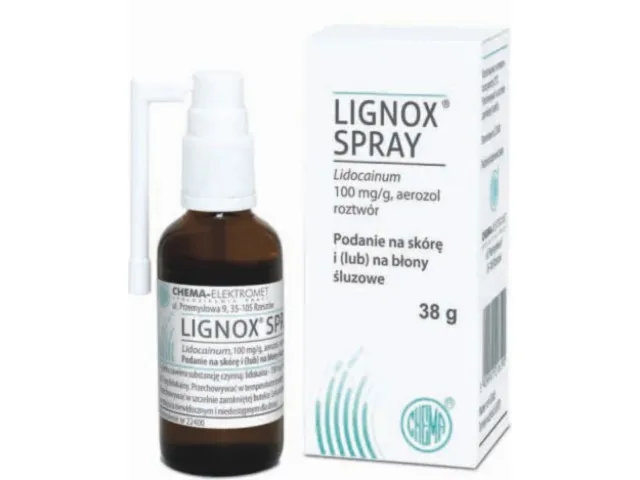
Table of Contents
Patient Information Leaflet
LIGNOX SPRAY, 100 mg/g, spray, solution
Lidocaine
Please read this leaflet carefully before using the medicine, as it contains
important information for the patient.
- Keep this leaflet, as you may need to read it again.
- If you have any questions, please consult your doctor or pharmacist.
- This medicine has been prescribed for a specific individual. Do not pass it on to others. It may harm someone else, even if their symptoms are the same.
- If you experience any adverse reactions, including those not listed in this leaflet, inform your doctor or pharmacist. See section 4.
Table of Contents
- What Lignox Spray is and what it is used for
- Important information before using Lignox Spray
- How to use Lignox Spray
- Possible side effects
- How to store Lignox Spray
- Contents of the pack and other information
1. What Lignox Spray is and what it is used for
Lignox Spray contains lidocaine. This substance is a local anaesthetic of the amide type with a short duration of action.
These medicines produce local, superficial loss of pain sensation on mucous membranes (e.g. oral cavity) and skin.
Indications
Lignox Spray may be used in adults and children over 4 years of age whenever anaesthesia of the skin or mucous membranes is required, particularly:
In dentistry:
- prior to injections, incision of superficial abscesses, removal of loose deciduous teeth, bone fragments, or dental calculus,
- for gingival anaesthesia before fixation of dental crowns and bridges,
- prior to taking dental impressions or X-rays to suppress the gag reflex,
In otorhinolaryngology:
- prior to electrocauterization procedures (electrical cauterization),
- prior to septoplasty or nasal polyp removal,
- prior to tonsillectomy to suppress the gag reflex and for local anaesthesia at the site of injection of anaesthetic agents,
- as supplementary anaesthesia prior to drainage of peritonsillar abscess,
- prior to maxillary sinus puncture (puncture),
- prior to sinus irrigation,
In obstetrics:
- during the final stage of labour,
- prior to episiotomy and perineal suturing as an adjunctive analgesic,
- during suture removal,
In endoscopy and instrument-based procedures:
- for superficial anaesthesia of the pharynx and trachea, and to reduce reflexes and diminish hemodynamic responses during insertion of various instruments into the respiratory and gastrointestinal tracts.
2. Important information before using Lignox Spray
When not to use Lignox Spray:
- if the patient is allergic to lidocaine, as well as to other local anaesthetics of amide-type structure, or to any of the other ingredients of this medicine (listed in section 6);
- when gypsum is used as an impression material; due to the risk of aspiration, flexible impression materials should be used;
- for local anaesthesia prior to tonsil and adenoid removal procedures in children under 8 years of age, due to the higher likelihood of children swallowing the medicine;
- in children under 4 years of age;
- on surfaces of instruments made of plastic materials.
Relative contraindications include: hypovolemia, shock, second- and third-degree atrioventricular conduction block, myasthenia gravis, severe liver damage.
Warnings and precautions
Particular attention should be paid to the expiry date of the medicine. Do not use expired medicine.
Special caution is required:
- when applying in the throat and cheek area (especially in children), due to the risk of suppressed cough reflex, difficulty swallowing, numbness of the tongue and cheek mucosa;
- when used over large areas in children;
- in patients with wounds or inflammation of the mucous membrane and (or) infected areas;
- in patients treated with tricyclic antidepressants and MAO inhibitors;
- when using the medicine in patients with epilepsy, cardiovascular diseases and heart failure, conduction disorders or bradycardia, severe renal impairment, liver function disorders, in severe shock, in elderly patients, critically ill patients and those in poor general health, nephrotic syndrome, or low serum protein levels.
In patients with acute porphyria, Lignox Spray may be used only in emergency situations and with appropriate precautions.
Patients treated with class III antiarrhythmic drugs (e.g. amiodarone) should be under strict supervision with continuous electrocardiographic (ECG) monitoring, as the effects of both drugs on cardiac function may be additive.
Higher blood concentrations of lidocaine may occur in patients under general anaesthesia compared to freely breathing patients.
Lidocaine absorption depends on the site of administration. Lidocaine is readily and rapidly absorbed through mucous membranes. Particularly high absorption of lidocaine has been observed after application within the bronchial tree, increasing the risk of toxic symptoms (e.g. seizures).
If increased blood concentrations of lidocaine are expected due to the site of application, dose used, and size of the anaesthetized area, lower doses should be administered. Dosing should be individually adjusted according to the patient's age and general condition.
When using Lignox Spray, equipment and medicines necessary for treating toxic reactions should be readily available. In case of neurological, respiratory, or circulatory toxic symptoms, immediate resuscitation measures must be initiated: the physician should ensure proper ventilation using oxygen, administer anticonvulsant drugs and agents to raise arterial blood pressure.
Using Lignox Spray in doses higher than recommended or administering the medicine too frequently may increase blood lidocaine levels and lead to serious adverse effects.
Management of serious adverse reactions may require resuscitation equipment, oxygen, and resuscitation drugs.
WARNING! Lidocaine may cause a positive result in anti-doping tests.
Lignox Spray and other medicines
Inform your doctor about all medicines currently or recently taken, as well as any medicines the patient plans to take.
Particular caution is required in patients receiving other local anaesthetics and drugs that are lidocaine analogues. Lidocaine should be used cautiously in patients receiving antiarrhythmic drugs (e.g. tocainide, mexiletine, amiodarone). Toxic effects of these drugs may be additive.
Use with caution in patients treated with tricyclic antidepressants and MAO inhibitors.
Medicines that reduce lidocaine clearance (e.g. cimetidine or beta-blockers) may lead to potentially toxic lidocaine plasma concentrations, especially with repeated high doses over a prolonged period.
Lidocaine potentiates the effect of neuromuscular blocking agents.
Pregnancy and breastfeeding
If the patient is pregnant or breastfeeding, suspects she may be pregnant, or is planning to have a child, she should consult a doctor before using this medicine.
Pregnancy
There is insufficient evidence regarding the safety of lidocaine use in pregnant women. Therefore, the medicine should be used during pregnancy only if absolutely necessary and when no safer alternative treatment is available.
Breastfeeding
There is insufficient data on the use of Lignox Spray in breastfeeding women.
Driving and operating machinery
Local anaesthetics, depending on the dose size, may have a minor effect on mental functions and may transiently impair motor function and coordination.
Lignox Spray contains propylene glycol (E 1520), ethanol, and peppermint essential oil (containing benzyl alcohol, citronellol, eugenol, geraniol, d-limonene, linalool)
This medicine contains 57.2 mg of alcohol (ethanol) per unit dose (spray).
The amount of alcohol in one dose of this medicine is equivalent to less than 15 ml of beer or 6 ml of wine. The small amount of alcohol in this medicine will not cause noticeable effects.
It may cause a burning sensation on damaged skin.
The medicine contains 18.9 mg of propylene glycol per unit dose (spray).
The medicine contains a fragrance component consisting of benzyl alcohol, citronellol, eugenol, geraniol, d-limonene, and linalool, which may cause allergic reactions.
The medicinal product contains 13.26 ng of benzyl alcohol per unit dose (spray). Benzyl alcohol may cause allergic reactions. The medicine may cause mild local irritation.
3. How to use Lignox Spray
Lignox Spray is administered by a physician. However, if the medicine has been prescribed for self-administration by the patient, it should always be used according to the doctor's instructions. In case of doubts, consult your doctor.
Lignox Spray should be used in adult patients and children above 4 years of age. Always use the lowest effective dose.
In debilitated, seriously ill, and elderly patients, dosage should be adjusted according to the patient's age and general condition.
Do not inhale vapors. Avoid swallowing the medicine.
Lignox Spray must not enter the eyes. Protect eyes from contact with the medicine.
Before first use, press the spray pump several times to prime it with liquid.
Whenever possible, hold the bottle vertically during administration of Lignox Spray.
A detailed description of how to use Lignox Spray is provided later in this leaflet (see section "Information intended exclusively for healthcare professionals").
Use in children above 4 years of age
Dosage varies depending on the child's age and body weight, general condition of the patient, size of the area to be anesthetized, and type of procedure performed.
Use of a higher than recommended dose of Lignox Spray
When used in children or when large quantities are applied, dosage should be calculated according to the patient's body weight (see section "Information intended exclusively for healthcare professionals").
In the event of symptoms of acute systemic toxicity, particularly ventricular fibrillation and circulatory arrest, full resuscitation procedures must be initiated immediately.
If you have any further doubts regarding the use of this medicine, consult your doctor.
4. Possible adverse effects
Like all medicines, this medicine can cause adverse effects, although not everyone experiences them.
If a patient develops severe symptoms of adverse effects, including the allergic reactions listed below,
immediate medical advice must be sought.
Very rare (occur in fewer than 1 in 10,000 patients):
allergic reactions (symptoms: facial swelling, swelling of lips, tongue or throat (difficulty swallowing), swelling of hands, feet and ankles, breathing difficulties, severe skin itching), in extreme cases anaphylactic shock (symptoms: drop in blood pressure, weakness, fainting).
Frequency not known (frequency cannot be estimated from available data):
local irritation at the site of application, sore throat, hoarseness, loss of voice (after administration to mucous membranes of the larynx prior to intubation), nervousness, drowsiness, dizziness, seizures, loss of consciousness, respiratory arrest, hypotension, myocardial hypoxia, bradycardia (abnormally slow heartbeat), cardiac arrest.
Reporting of adverse effects
If any adverse effects occur, including any not listed in this leaflet, inform your doctor or pharmacist. Adverse effects can be reported directly to the Department of Monitoring of Adverse Drug Reactions at the Office for Registration of Medicinal Products, Medical Devices and Biocidal Products
Al. Jerozolimskie 181C
02-222 Warsaw
Tel: +48 22 49 21 301
Fax: +48 22 49 21 309
Website: https://smz.ezdrowie.gov.pl
Adverse effects can also be reported to the marketing authorization holder.
Reporting adverse effects helps to provide more information on the safety of the medicine.
5. How to store Lignox Spray
Keep the medicine out of the sight and reach of children.
Do not use this medicine after the expiry date stated on the container. The expiry date refers to the last day of the stated month.
Store below 25°C.
Keep the bottle tightly closed.
Shelf-life after first opening of the container: 12 months.
Medicines should not be disposed of via the sewage system or household waste. Ask your pharmacist how to dispose of medicines no longer required. This will help protect the environment.
6. Contents of the packaging and other information
What Lignox Spray contains
- The active substance is lidocaine. 1 g of the medicinal product contains 100 mg of lidocaine. One dose (spray) contains 8.7 mg of lidocaine.
- The other ingredients are: ethanol, propylene glycol (E 1520), peppermint essential oil (contains: benzyl alcohol, citronellol, eugenol, geraniol, d-limonene, linalool), saccharin.
What Lignox Spray looks like and contents of the pack
Lignox Spray is a colourless, transparent alcoholic solution with a characteristic minty odour.
The immediate container is a brown glass bottle of type III, closed with a spray pump made of HDPE/POM/LDPE/Stainless steel/EVA/IIR/mixture of LDPE and HDPE, with an applicator made of PP/HDPE, containing 38 g of liquid. The bottle, together with the patient leaflet, is placed in a cardboard box.
Marketing Authorisation Holder and Manufacturer
CHEMA-ELEKTROMET
Labour Cooperative
Przemysłowa 9 Street
35-105 Rzeszów
Phone: +48 17 862 05 90
Email: [email protected]
Information intended exclusively for healthcare professionals:
Please refer to the Summary of Product Characteristics (SmPC) for Lignox Spray.
The Summary of Product Characteristics is available on the website of the Office for Registration of Medicinal Products, Medical Devices and Biocidal Products.
Please also refer to section 3 of the package leaflet.
One dose (one spray) of Lignox Spray contains 8.7 mg of lidocaine.
Approximately 430 sprays can be delivered from one package (38 g of product).
It is not necessary to dry the application site prior to administering Lignox Spray.
Lignox Spray must not be used on surfaces made of plastic materials (see section 4.4 of the SmPC).
Always use the lowest effective dose of Lignox Spray.
Dosage
Adults
For debilitated, severely ill, and elderly patients, dosage should be adjusted according to age and general condition of the patient.
The maximum daily dose in adults should not exceed 200 mg of lidocaine, equivalent to 2.2 mL of the product (approximately 22 sprays).
The dosage regimen of Lignox Spray varies depending on the indication and the size of the area to be anesthetized.
Dosage recommendations for various indications:
Indication | Lidocaine dose (number of sprays)
--- | ---
Dentistry | 8.7–26.1 mg (1–3 sprays)
Otorhinolaryngology | 8.7–26.1 mg (1–3 sprays)
Obstetrics | 87–130.5 mg (10–15 sprays)
maximum of approximately 200 mg
(22 sprays)
Endoscopy and
procedures involving instruments | 8.7–26.1 mg (1–3 sprays)
Children over 4 years of age
Dosage regimen varies depending on the child's age and body weight, general condition, size of the area to be anesthetized, and type of procedure performed.
The average dose administered per session is 16.2 mg to 24.3 mg of lidocaine.
The recommended lidocaine dose (in mg) for children is calculated using the formula: child's body weight (in kg) × 1.33. The lidocaine dose should not exceed 2.2 mg/kg body weight.
Treatment of toxicity due to overdose
In case of neurological, respiratory, or cardiovascular toxic symptoms, resuscitation measures must be initiated immediately, especially upon onset of seizures. Essential medications and equipment must be immediately available. Adequate ventilation with oxygen should be ensured, and artificial respiration should be applied if necessary. If seizures do not resolve spontaneously within 15–30 seconds, anticonvulsant medication should be administered. Intravenous thiopental sodium at a dose of 1–3 mg/kg provides immediate seizure termination. Alternatively, diazepam may be used at 0.1 mg/kg body weight, although its onset of action is slower. Prolonged seizures may lead to patient hypoxia. In such cases, intravenous administration of a muscle relaxant, e.g., 1 mg/kg body weight of succinylcholine, is indicated.
Succinylcholine may cause respiratory arrest; therefore, it should be administered only by specialists experienced in endotracheal intubation and management of patients with respiratory paralysis.
In case of cardiovascular symptoms (arterial hypotension, bradycardia), intravenous ephedrine at a dose of 5–10 mg/kg is recommended; the dose may be repeated after 2–3 minutes if necessary.
In case of ventricular fibrillation or cardiac arrest, full resuscitation procedures must be initiated immediately.