Levoxa
Poland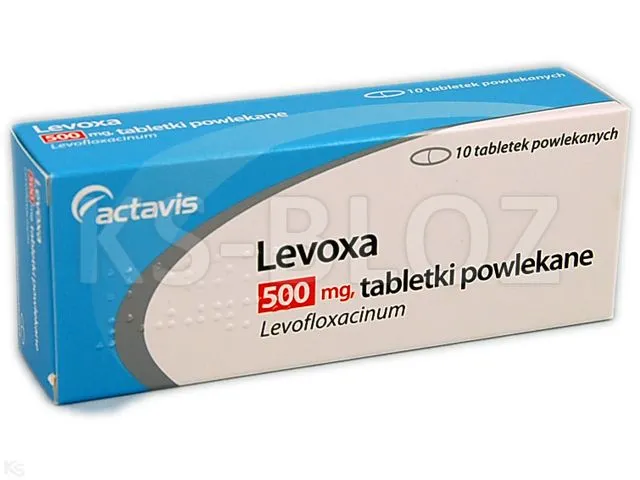
Table of Contents
Package leaflet: Information for the patient
Levoxa, 250 mg, coated tablets
Levoxa, 500 mg, coated tablets
Levofloxacinum
Please read all of this leaflet carefully before taking this medicine because it contains
important information for you.
- Keep this leaflet. You may need to read it again.
- If you have any further questions, ask your doctor or pharmacist.
- This medicine has been prescribed for you personally. Do not pass it on to others. It may harm them, even if their symptoms are the same as yours.
- If you experience any adverse reactions, including any not listed in this leaflet, inform your doctor or pharmacist. See section 4.
Leaflet contents
- What Levoxa is and what it is used for
- Important information before taking Levoxa
- How to take Levoxa
- Possible side effects
- How to store Levoxa
- Contents of the pack and other information
1. What Levoxa is and what it is used for
The name of this medicine is Levoxa. Levoxa contains an active substance called levofloxacin. It belongs to a group of medicines known as antibiotics. Levofloxacin is a fluoroquinolone antibiotic. It works by killing bacteria that cause infections in the body.
Levoxa may be used to treat the following bacterial infections:
- Sinuses
- Lungs, in patients with chronic respiratory problems or pneumonia
- Urinary tract, including kidneys or bladder
- Prostate gland, in cases of long-term infection
- Skin and underlying tissues, including muscles. These are sometimes referred to as "soft tissues."
In certain situations, Levoxa may be used to prevent a lung disease called anthrax or an exacerbation of the disease that may occur after exposure to bacteria causing anthrax.
2. Important information before using Levoxa
When not to use Levoxa:
- if the patient is allergic to levofloxacin or any other quinolone, such as moxifloxacin, ciprofloxacin or ofloxacin, or to any of the other ingredients of this medicine (listed in section 6). Symptoms of an allergic reaction include: rash, difficulty swallowing or breathing, swelling of the lips, face, throat or tongue
- if the patient has ever had epilepsy
- if the patient has ever had tendon problems, such as tendonitis, associated with treatment with quinolones. Tendons are fibrous tissues connecting muscles to bones
- if the patient is a child or adolescent during the growth period
- if the patient is pregnant, may become pregnant, or suspects she is pregnant
- if the patient is breastfeeding.
Do not use this medicine if any of the above apply to the patient. In case of
doubt, consult a doctor or
pharmacist before starting Levoxa.
Warnings and precautions
Before starting Levoxa, discuss this with a doctor or pharmacist if:
- the patient is 60 years of age or older
- the patient is taking corticosteroids, sometimes called steroids (see section "Levoxa and other medicines")
- the patient has received an organ transplant
- the patient has ever had seizures (epileptic fits)
- the patient has ever had brain damage caused by stroke or other brain injury
- the patient has kidney problems
- the patient has a condition called "glucose-6-phosphate dehydrogenase deficiency"; the patient may then be more susceptible to serious blood disorders during treatment with this medicine
- the patient has ever had mental health problems
- the patient has ever had heart problems: caution is required during treatment with this medicine if the patient has congenital or family history of prolonged QT interval (seen on ECG - test of the heart's electrical activity), if the patient has electrolyte imbalances in the blood (especially low potassium or magnesium levels), if the patient has a slow heart rate (called "bradycardia"), if the patient's heart function is weakened (heart failure), if the patient has previously had a heart attack (myocardial infarction), if the patient is female or elderly, or if the patient is taking other medicines causing unusual changes in the ECG, or taking medicines called vitamin K antagonists (e.g. warfarin), due to possible increased blood clotting parameters and/or bleeding (see section "Levoxa and other medicines")
- the patient has diabetes
- the patient has ever had liver problems
- the patient has myasthenia gravis
- the patient has nerve damage (peripheral neuropathy)
- the patient has been diagnosed with a dilated large blood vessel (aortic aneurysm or large peripheral artery aneurysm)
- the patient has previously experienced aortic dissection (tearing of the aortic wall)
- the patient has been diagnosed with heart valve insufficiency
- in the patient's family there have been cases of aortic aneurysm or aortic dissection, or congenital heart valve disease, or other risk factors or predisposing conditions (e.g. connective tissue disorders such as Marfan syndrome or vascular Ehlers-Danlos syndrome, Turner syndrome, Sjögren's syndrome [an autoimmune inflammatory disease], or vascular diseases such as Takayasu arteritis, giant cell arteritis, Behçet's disease, hypertension, confirmed arterial atherosclerosis, rheumatoid arthritis [joint disease] or endocarditis [heart infection])
- the patient has ever experienced severe skin rash, skin peeling, blistering and/or oral ulcers after taking levofloxacin.
If the patient is unsure whether any of the above apply, they should consult
a doctor or pharmacist before starting Levoxa.
Do not take antibacterial medicines containing fluoroquinolones or quinolones, including Levoxa,
if the patient has previously experienced any severe adverse reaction during treatment with quinolones or fluoroquinolones. In such a case, inform the doctor immediately.
Consult a doctor, nurse or pharmacist if the patient is taking Levoxa
- If sudden severe abdominal, chest or back pain occurs, which may be symptoms of an aneurysm or aortic dissection, seek emergency care immediately. The risk of these events may be higher when undergoing systemic corticosteroid treatment.
- If sudden shortness of breath occurs, especially when lying down, or if swelling of the ankles, feet or abdomen is observed, or palpitations (feeling of rapid or irregular heartbeat) appear, seek medical advice immediately.
- Rarely, pain and swelling of joints, tendon inflammation or tendon rupture may occur. The risk is increased in elderly patients (over 60 years), after organ transplantation, in patients with kidney problems or those receiving corticosteroid treatment. Tendon inflammation and rupture may occur within the first 48 hours of treatment, or even several months after stopping Levoxa. If first symptoms of tendon pain or inflammation occur (e.g. in the ankle, wrist, elbow, shoulder or knee), discontinue Levoxa, contact a doctor and rest the affected area. Avoid excessive physical exertion, as this may increase the risk of tendon rupture.
- The patient may rarely experience symptoms of nerve damage (neuropathy), such as pain, burning, tingling, numbness and/or weakness, especially in the feet and legs or hands and arms. In such a case, discontinue Levoxa and inform the doctor immediately to prevent potentially irreversible disease progression.
- If vision deteriorates or other visual disturbances occur, consult an ophthalmologist immediately (see section "Driving and operating machinery" and section 4).
- Quinolone antibiotics may cause blood glucose levels to rise above normal (hyperglycaemia) or fall below normal, potentially leading to loss of consciousness (hypoglycaemic coma) in severe cases (see section 4). This is important for diabetic patients. Diabetic patients are advised to carefully monitor their blood glucose levels.
- If sudden involuntary jerks, muscle twitches or muscle spasms occur, seek medical advice immediately, as these may be symptoms of myoclonus. The doctor may decide to discontinue levofloxacin and initiate appropriate treatment.
- If nausea, general malaise, severe and persistent or worsening abdominal pain, or vomiting occur, seek medical advice immediately, as these may be symptoms of pancreatitis (acute inflammation of the pancreas).
- If fatigue, pallor, bruising, uncontrolled bleeding, fever, sore throat, significant worsening of health or feeling of reduced immunity to infections occur, seek medical advice immediately, as these may be symptoms of blood disorders. The doctor should monitor the patient's blood count via a complete blood count test. If abnormalities in blood counts occur, the doctor may decide to discontinue treatment.
Severe skin reactions
Severe skin reactions have been reported during treatment with levofloxacin, including Stevens-Johnson syndrome (SJS), toxic epidermal necrolysis (TEN), and drug reaction with eosinophilia and systemic symptoms (DRESS).
- SJS or TEN may initially appear as red, target-like or circular spots, often with blisters in the center, on the trunk. Oral, throat, nose, genital and eye ulcers (red, swollen eyes) may also occur. These severe skin rashes are often preceded by fever and/or flu-like symptoms. These rashes may lead to extensive skin peeling, which can be life-threatening or fatal.
- In DRESS syndrome, flu-like symptoms and facial rash appear initially, followed by widespread rash with high fever, increased liver enzyme activity and elevated white blood cell count (eosinophilia) in blood tests, and enlarged lymph nodes.
If a severe rash or any of these skin symptoms occur, discontinue levofloxacin and consult a doctor or seek immediate medical help.
Long-term, disabling and potentially irreversible serious adverse reactions
Antibacterial medicines containing fluoroquinolones or quinolones, including Levoxa, have been associated with very rare but serious adverse reactions. Some of these were long-term (lasting months or years), disabling or potentially irreversible. These include: tendon, muscle and joint pain in the upper and lower limbs, difficulty walking, abnormal sensations such as pricking, tingling, tickling, numbness or burning (paresthesias), sensory disturbances including vision, taste, smell and hearing disorders, depression, memory disturbances, severe fatigue and severe sleep disturbances.
If any of these adverse reactions occur after taking Levoxa, contact a doctor immediately before continuing treatment. The patient and doctor will decide whether to continue treatment, possibly considering an antibiotic from another class.
Children and adolescents
This medicine must not be used in children and adolescents.
Levoxa and other medicines
Inform the doctor or pharmacist about all medicines currently used, recently used or planned for use. Levoxa may affect the action of other medicines. Other medicines may also affect the action of Levoxa.
In particular, inform the doctor if the patient is taking any of the following medicines. The risk of adverse reactions may increase when these medicines are used with Levoxa:
- corticosteroids, sometimes called steroids – used for inflammatory conditions. The patient may be more susceptible to tendon inflammation and/or tendon damage.
- warfarin – used to thin the blood. The patient may be more susceptible to bleeding. The doctor may recommend regular blood tests to monitor blood clotting.
- theophylline – used for breathing problems. The patient may be more susceptible to seizures (epileptic fits) when taking Levoxa.
- non-steroidal anti-inflammatory drugs (NSAIDs) – used for pain and inflammation, such as: acetylsalicylic acid, ibuprofen, fenbufen, ketoprofen and indomethacin. The patient may be more susceptible to seizures (epileptic fits) when taking Levoxa.
- cyclosporine – used after organ transplantation. The patient may be more susceptible to cyclosporine adverse effects.
- medicines affecting heart rhythm. This includes medicines used for irregular heartbeat (antiarrhythmics, such as: quinidine, hydroquinidine, disopyramide, sotalol, dofetilide, ibutilide and amiodarone), for depression (tricyclic antidepressants, such as: amitriptyline and imipramine), for psychiatric disorders (antipsychotics), and for bacterial infections (macrolide antibiotics, such as: erythromycin, azithromycin and clarithromycin).
- probenecid – used for gout. If the patient has kidney problems, the doctor may recommend a lower dose.
- cimetidine – used for peptic ulcer disease and heartburn. If the patient has kidney problems, the doctor may recommend a lower dose.
Do not take Levoxa at the same time as the following medicines. These medicines may affect the action of Levoxa:
- iron-containing tablets (used for anaemia), zinc supplements, antacids containing magnesium or aluminium (used for acid reflux or heartburn), didanosine (an antiviral medicine used in HIV infections) or sucralfate (used for stomach ulcers). See "If the patient is already taking iron-containing tablets, zinc supplements, antacids, didanosine or sucralfate" in section 3 below.
Urine tests for opioids
Urine tests detecting strong painkillers called opioids may give false-positive results in patients taking Levoxa. If a doctor has ordered a urine test, the patient should inform the doctor that they are taking Levoxa.
Tuberculosis tests
This medicine may give falsely negative results in certain laboratory tests used to detect tuberculosis-causing bacteria.
Pregnancy and breastfeeding
Do not use this medicine if the patient:
- is pregnant, may become pregnant or suspects she is pregnant
- is breastfeeding or plans to breastfeed.
Driving and operating machinery
After taking this medicine, the patient may experience adverse effects, including dizziness, drowsiness, vertigo (spinning sensation) or visual disturbances. Some of these adverse effects may impair concentration and reaction speed. In such cases, the patient should not drive or operate machinery requiring attention.
Levoxa contains lactose
If the patient has previously been diagnosed with intolerance to certain sugars, they should consult a doctor before starting Levoxa.
Levoxa contains sodium
This medicine contains less than 1 mmol (23 mg) of sodium per tablet, i.e. the medicine is considered "sodium-free".
3. How to take Levoxa
This medicine should always be taken as prescribed by your doctor. If in doubt, consult your
doctor or pharmacist.
Taking this medicine
- take the medicine orally
- swallow the tablets whole with water
- the tablets may be taken during or between meals.
Protecting skin from sunlight
During treatment with this medicine and for 2 days after stopping it, avoid direct sunlight. This is because the patient's skin will become more sensitive to the sun, which may lead to sunburn, tingling sensation, and development of large blisters on the skin if the following precautions are not observed:
- use sunscreen creams with high UV protection
- always wear a hat and clothing covering arms and legs
- avoid sunbathing, including in tanning beds.
If the patient is already taking iron tablets, zinc preparations, antacids, didanosine, or sucralfate
- These medicines should not be taken at the same time as Levoxa. Take the prescribed dose at least 2 hours before or 2 hours after taking Levoxa coated tablets.
What dose to take
- Your doctor will decide how many Levoxa coated tablets you should take.
- The dose depends on the type and location of the infection.
- The duration of treatment depends on the severity of the infection.
- If the patient feels the medicine's effect is too weak or too strong, do not change the dose independently, but consult your doctor.
Adults and elderly patients
Sinusitis
- two Levoxa coated tablets, 250 mg once daily
- or one Levoxa coated tablet, 500 mg once daily.
Lung infections in patients with chronic breathing problems
- two Levoxa coated tablets, 250 mg once daily
- or one Levoxa coated tablet, 500 mg once daily.
Pneumonia
- two Levoxa coated tablets, 250 mg once or twice daily
- or one Levoxa coated tablet, 500 mg once or twice daily.
Urinary tract infections, including kidneys or bladder
- one or two Levoxa coated tablets, 250 mg once daily
- or half a Levoxa coated tablet or one Levoxa coated tablet, 500 mg once daily.
Prostate gland infections
- two Levoxa coated tablets, 250 mg once daily
- or one Levoxa coated tablet, 500 mg once daily.
Skin and subcutaneous tissue infections, including muscles
- two Levoxa coated tablets, 250 mg once or twice daily
- or one Levoxa coated tablet, 500 mg once or twice daily.
Exposure to bacteria causing pulmonary anthrax
- two Levoxa coated tablets, 250 mg once daily
- or one Levoxa coated tablet, 500 mg once daily.
Adults and elderly patients with impaired kidney function
Your doctor may recommend a lower dose.
Taking more Levoxa than prescribed
If you accidentally take more tablets than prescribed, contact your doctor immediately or go to the nearest hospital emergency department. Take the medicine packaging with you so the doctor knows which medicine was taken. The following symptoms may occur: seizures (epileptic fit), confusion, dizziness, disturbances of consciousness, muscle tremors, and heart disturbances leading to irregular heartbeat, as well as nausea and heartburn.
Missing a dose of Levoxa
If you miss a dose, take it as soon as you remember, unless it is almost time for your next dose. Do not take a double dose to make up for a missed dose.
Stopping Levoxa treatment
Do not stop taking Levoxa just because you feel better. It is important to take all the tablets prescribed by your doctor. If you stop taking the tablets too early, the infection may return, your condition may worsen, or bacteria may become resistant to the medicine.
If you have any further questions about the use of this medicine, consult your doctor or pharmacist.
4. Possible adverse effects
Like all medicines, this medicine can cause adverse effects, although not everyone will experience them.
If the patient experiences any of the following adverse effects, treatment with Levoxa must be discontinued immediately and the patient should contact a doctor immediately or go to hospital:
Rare (may affect fewer than 1 in 1,000 patients)
- Allergic reaction. Symptoms may include: rash, difficulty swallowing or breathing, swelling of the lips, face, throat or tongue.
Treatment with Levoxa must be discontinued and a doctor must be contacted immediately if the patient experiences any of the following adverse effects – immediate treatment may be required:
Rare (may affect fewer than 1 in 1,000 patients)
- Pain and inflammation of tendons or ligaments, possibly leading to rupture; most commonly affecting the Achilles tendon.
- Seizures (epileptic fits).
- Seeing or hearing things that are not real (hallucinations, paranoia).
- Feelings of depression, mental disturbances, anxiety (agitation), strange dreams or nightmares.
- Widespread rash, high body temperature, increased liver enzyme activity, abnormal blood counts (eosinophilia), swollen lymph nodes and other organs (drug reaction with eosinophilia and systemic symptoms, also known as DRESS or drug hypersensitivity syndrome). See also section 2.
- Syndrome associated with impaired water excretion and low sodium levels (SIADH).
- Decreased blood sugar levels (hypoglycaemia) or hypoglycaemia leading to coma (hypoglycaemic coma); this is particularly relevant in patients with diabetes. See section 2.
Frequency not known (frequency cannot be estimated from available data)
- Severe skin rashes, including Stevens-Johnson syndrome and toxic epidermal necrolysis. These may present as red, target-like or circular spots, often with central blisters on the trunk, skin peeling, ulcers in the mouth, throat, nose, genital organs and eyes, and may be preceded by fever and flu-like symptoms. See also section 2.
- Loss of appetite, yellowing of the skin and whites of the eyes, dark urine, itching or abdominal tenderness. These may be symptoms of liver dysfunction, including potentially fatal liver damage.
- Burning, tingling, pain or numbness. These may be symptoms of "neuropathy".
- Watery diarrhoea, possibly containing blood, possibly with abdominal cramps and high fever. These may be symptoms of serious intestinal problems.
- Changes in thoughts and beliefs (psychotic reactions) with risk of suicidal thoughts or attempts.
- Nausea, general malaise, discomfort or abdominal pain, or vomiting. These may be symptoms of pancreatitis (acute pancreatitis). See section 2.
If the patient experiences worsening of vision or any other visual disturbances while taking Levoxa, they should contact an ophthalmologist immediately (see section 2 "Consult a doctor, nurse or pharmacist if the patient is taking Levoxa" and "Driving and operating machinery").
Administration of quinolone and fluoroquinolone antibiotics has, in some cases and regardless of pre-existing risk factors, very rarely led to long-term (persisting for months or years) or permanent adverse effects, such as tendon inflammation, tendon rupture, joint pain, limb pain, difficulty walking, abnormal sensations such as pricking, tingling, tickling, burning, numbness or pain (neuropathy), fatigue, memory and concentration problems, psychiatric effects (including sleep disturbances, anxiety, panic attacks, depression and suicidal thoughts), and disturbances in hearing, vision, taste and smell.
In patients receiving fluoroquinolones, cases of aortic aneurysm, aortic dissection, or rupture of the arterial wall have been reported, which may result in rupture and lead to death, as well as cases of heart valve regurgitation. See also section 2.
The doctor should be informed if any of the following adverse effects worsen or persist for longer than a few days:
Common (may affect fewer than 1 in 10 patients)
- Sleep disturbances
- Headache, dizziness
- Nausea, vomiting, diarrhoea
- Increased levels of certain liver enzymes in the blood.
Uncommon (may affect fewer than 1 in 100 patients)
- Changes in the number of other bacteria or fungi, fungal infection caused by Candida, which may require treatment
- Changes in white blood cell count shown in blood test results (leukopenia, eosinophilia)
- Anxiety, confusion, nervousness, drowsiness, tremor, sensation of spinning (vestibular dizziness)
- Shortness of breath (dyspnoea)
- Changes in taste sensation, loss of appetite, stomach upset or indigestion, stomach pain, bloating with flatulence or constipation
- Itching and skin rash, severe itching or urticaria, excessive sweating (hyperhidrosis)
- Joint or muscle pain
- Abnormal blood test results due to impaired liver function (increased bilirubin concentration) or kidney function (increased creatinine concentration)
- General weakness.
Rare (may affect fewer than 1 in 1,000 patients)
- Increased tendency to bruising and bleeding due to reduced platelet count (thrombocytopenia)
- Low white blood cell count (neutropenia)
- Excessive immune response (hypersensitivity)
- Tingling sensation in hands and feet (paraesthesia)
- Hearing problems (tinnitus) or vision problems (blurred vision)
- Unusually rapid heartbeat (tachycardia), palpitations or low blood pressure (hypotension)
- Muscle weakness; this is particularly relevant in patients with myasthenia (a rare neurological disorder)
- Changes in kidney function and, occasionally, kidney failure, possibly due to an allergic reaction in the kidneys known as interstitial nephritis
- Fever
- Well-demarcated erythematous lesions with or without blisters, developing within hours after administration of levofloxacin. These resolve with post-inflammatory pigmentation. Upon subsequent administration of levofloxacin, these lesions usually reappear at the same site on the skin or mucous membranes
- Memory disturbances.
Frequency not known (frequency cannot be estimated from available data)
- Decreased number of red blood cells (anaemia): this may cause paleness or yellowing of the skin due to destruction of red blood cells; decreased number of all blood cell types (pancytopenia)
- Cessation of new blood cell production by the bone marrow, which may lead to fatigue, reduced ability to fight infections and uncontrolled bleeding (bone marrow failure)
- Fever, sore throat and general malaise that does not resolve; this may be due to reduced white blood cell count (agranulocytosis)
- Circulatory arrest (anaphylactic-like shock)
- Increased blood sugar levels (hyperglycaemia). This is particularly relevant in patients with diabetes. See section 2.
- Changes in smell perception, loss of smell or taste (olfactory hallucinations, anosmia, ageusia)
- Feeling of intense excitement, elation, agitation or enthusiasm (mania)
- Problems with movement and walking (dyskinesia, extrapyramidal disorders)
- Transient loss of consciousness or fainting (syncope)
- Transient loss of vision, eye inflammation
- Hearing disturbances or hearing loss
- Irregular, abnormally fast heart rhythm, life-threatening arrhythmias, including cardiac arrest, cardiac rhythm disorders (so-called "QT prolongation" visible on ECG – an examination of the heart's electrical activity)
- Breathing difficulties or wheezing (bronchospasm)
- Allergic lung reactions
- Pancreatitis
- Hepatitis
- Increased skin sensitivity to sunlight and ultraviolet radiation (photosensitivity), skin discoloration (hyperpigmentation)
- Inflammation of blood vessels supplying blood to the body due to an allergic reaction (vasculitis)
- Inflammation of the mucous membrane lining the mouth (stomatitis)
- Muscle damage and breakdown (rhabdomyolysis)
- Redness and swelling of joints (arthritis)
- Pain, including back, chest and limb pain
- Sudden, involuntary jerks, muscle twitches and muscle spasms (myoclonus)
- Porphyria attacks in patients with porphyria (a very rare metabolic disorder)
- Persistent headache with or without blurred vision (benign intracranial hypertension)
Reporting of adverse effects
If any adverse effects occur, including any not listed in this leaflet, the patient should inform their doctor or pharmacist. Adverse effects can be reported directly to the Department of Monitoring Adverse Drug Reactions of the Office for Registration of Medicinal Products, Medical Devices and Biocidal Products, Al. Jerozolimskie 181C, 02-222 Warsaw, tel.: +48 22 49 21 301, fax: +48 22 49 21 309, website: https://smz.ezdrowie.gov.pl
Adverse effects can also be reported to the marketing authorisation holder.
Reporting adverse effects helps to provide more information on the safety of the medicine.
5. How to store Levoxa
Keep this medicine out of the sight and reach of children.
Do not use this medicine after the expiry date stated on the carton and blister pack after EXP.
The expiry date refers to the last day of the stated month.
No special storage conditions are required.
Medicines should not be disposed of via wastewater or household waste. Ask your pharmacist how to dispose of medicines no longer required. Such measures help protect the environment.
6. Contents of the pack and other information
What Levoxa contains
- The active substance is levofloxacin. Each coated tablet contains 250 mg of levofloxacin as levofloxacin hemihydrate or 500 mg of levofloxacin as levofloxacin hemihydrate.
- Other ingredients are:
Tablet core: Sodium stearyl fumarate, crospovidone type A, anhydrous colloidal silicon dioxide, copovidone (K 25.2-30.8), microcrystalline cellulose silicified (98% microcrystalline cellulose and 2% anhydrous colloidal silicon dioxide).
Tablet coating: Opadry II Pink 31K34554 (lactose monohydrate, hypromellose 15 cP, titanium dioxide (E 171), triacetin, iron oxide red (E 172), iron oxide yellow (E 172)).
What Levoxa looks like and contents of the pack
Levoxa 250 mg, film-coated tablets
Pink, oval, biconvex film-coated tablets with a break line on one side and the mark “L” on the other side. The length is approximately 13 mm and the width 6 mm.
Levoxa 500 mg, film-coated tablets
Pink, oval, biconvex film-coated tablets with a break line on one side and the mark “L” on the other side. The length is approximately 16 mm and the width 8 mm.
Pack sizes:
Aluminium/PVC blister packs in cardboard cartons containing 1, 3, 7, 10, 14, 50, 200 film-coated tablets.
HDPE bottle with LDPE cap, in cardboard carton, containing 50 or 100 film-coated tablets.
Not all pack sizes may be marketed.
Marketing Authorisation Holder
Actavis Group PTC ehf.
Dalshraun 1
220 Hafnarfjörður
Iceland
Manufacturer
Actavis Ltd.
BLB015-016, Bulebel Industrial Estate
Zejtun ZTN 3000
Malta
This medicinal product is authorised in the European Economic Area countries under the following names:
Poland: Levoxa
Romania: Levofloxacina Teva 500 mg comprimate filmate
Hungary: Levoxa
For further information about this medicinal product, please contact the representative of the Marketing Authorisation Holder:
Teva Pharmaceuticals Polska Sp. z o.o., ul. Emilii Plater 53, 00-113 Warsaw, tel.: (22) 345 93 00.