Levosimendan kabi
Poland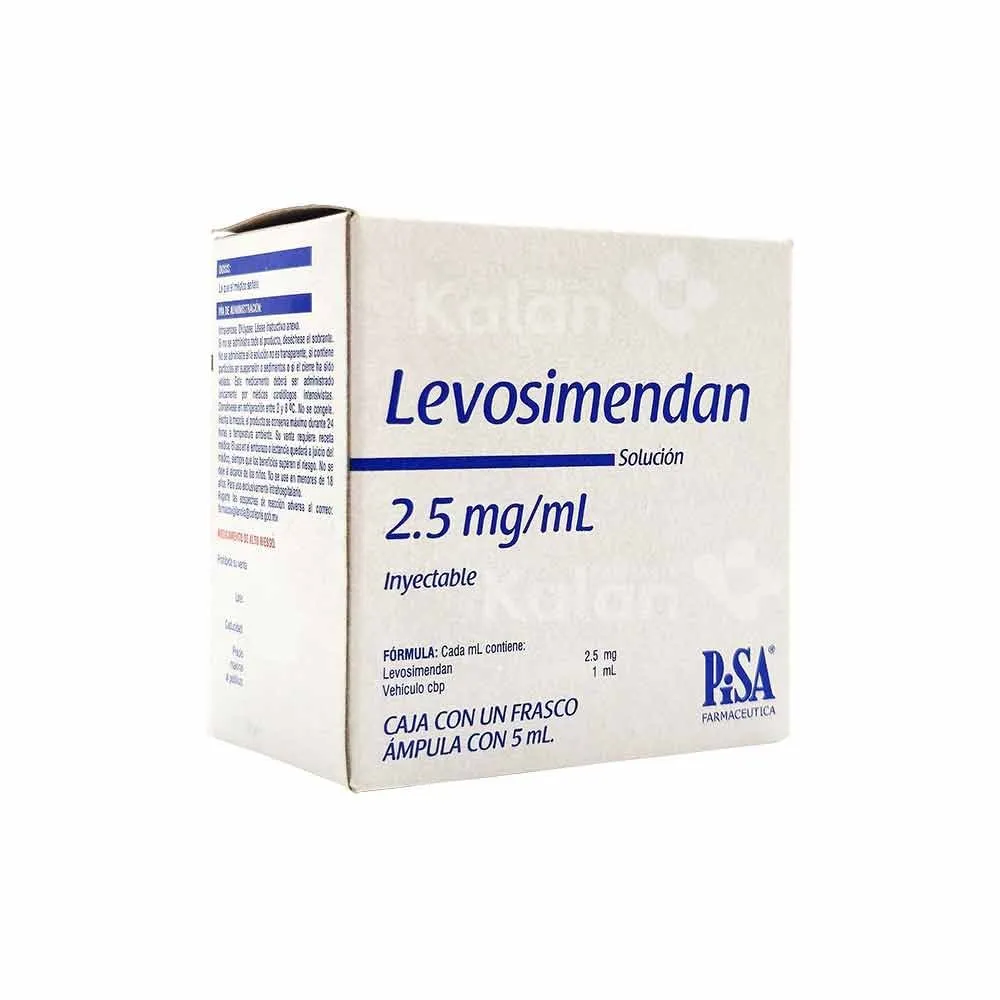
Table of Contents
- Package leaflet: Information for the user
- 1. What Levosimendan Kabi is and what it is used for
- 2. Important information before using Levosimendan Kabi
- 3. How to use Levosimendan Kabi
- 4. Possible adverse reactions
- 5. How to store Levosimendan Kabi
- 6. Contents of the pack and other information
- Information intended exclusively for healthcare professionals:
Package leaflet: Information for the user
Levosimendan Kabi, 2.5 mg/ml, concentrate for solution for infusion
Levosimendanum
Please read all of this leaflet carefully before this medicine is given to you, because it contains
important information for you.
- Keep this leaflet. You may need to read it again.
- If you have any further questions, ask your doctor or nurse.
- If you get any side effects, including any not listed in this leaflet, please tell your doctor or pharmacist. See section 4.
Contents of the leaflet:
- What Levosimendan Kabi is and what it is used for
- What you need to know before you are given Levosimendan Kabi
- How Levosimendan Kabi is given
- Possible side effects
- How to store Levosimendan Kabi
- Contents of the pack and other information
1. What Levosimendan Kabi is and what it is used for
Levosimendan Kabi is a concentrated medicine that must be diluted before intravenous infusion.
Levosimendan Kabi increases the force with which the heart pumps blood and allows blood vessels to relax. As a result, pulmonary congestion is reduced and blood and oxygen flow throughout the body is improved. Levosimendan Kabi helps relieve breathlessness caused by severe heart failure.
Levosimendan Kabi is used for the short-term treatment of acute, decompensated, severe, chronic heart failure in adult patients who still experience difficulty breathing despite treatment with other medicines that remove excess fluid from the body.
Levosimendan Kabi is indicated for use in adult patients.
2. Important information before using Levosimendan Kabi
When not to use Levosimendan Kabi:
- if the patient is allergic (hypersensitive) to levosimendan or to any of the other ingredients of this medicine (listed in section 6);
- if the patient has very low blood pressure or a rapid heartbeat;
- if the patient has severe kidney or liver disease;
- if the patient has a heart condition that impairs filling or emptying of the heart;
- if the patient has ever been informed by a doctor of having an abnormal heart rhythm called torsades de pointes.
Warnings and precautions
Before starting treatment with Levosimendan Kabi, discuss this with the doctor or
nurse:
- if the patient has any kidney or liver disease;
- if the patient has a low number of red blood cells and chest pain;
- if the patient has a rapid heartbeat, an abnormal heart rhythm, or if the doctor has ever informed the patient of having atrial fibrillation or low potassium levels in the blood, Levosimendan Kabi should be used with great caution.
Children and adolescents
Levosimendan Kabi must not be given to children and adolescents under 18 years of age.
Levosimendan Kabi and other medicines
Tell the doctor about all medicines the patient is currently taking or has recently taken,
as well as any medicines the patient plans to use.
If the patient is receiving other intravenous medicines for the heart, administration of Levosimendan Kabi may
cause a drop in blood pressure.
Inform the doctor if isosorbide mononitrate is being used, as administration of Levosimendan Kabi may increase the drop in blood pressure upon standing.
Pregnancy and breastfeeding
If the patient is pregnant or breastfeeding, suspects she may be pregnant, or is planning to have
a child, she should consult her doctor before using this medicine.
It is not known whether the use of Levosimendan Kabi affects the unborn child. The doctor
will decide whether the benefits to the mother outweigh the risks to the fetus.
There is evidence that Levosimendan Kabi passes into human milk; therefore, breastfeeding should be avoided during treatment with Levosimendan Kabi to prevent potential cardiovascular adverse effects in infants.
Levosimendan Kabi contains alcohol
This medicine contains 3925 mg of alcohol (absolute ethanol) in each 5 ml vial, equivalent to
98% vol. The amount of alcohol in one 5 ml vial of this medicine is equivalent to 99.2 ml of beer or 41.3 ml
of wine.
The amount of alcohol in this medicine may affect the ability to drive vehicles and operate machinery,
as it may impair judgment and reaction speed.
If the patient has epilepsy or liver problems, he or she should consult a doctor or
pharmacist before using this medicine.
The amount of alcohol in this medicine may alter the effects of other medicines. If the patient is taking other medicines,
he or she should consult a doctor or pharmacist.
If the patient is pregnant or breastfeeding, she should consult a doctor or pharmacist before
using this medicine.
If the patient is alcohol-dependent, he or she should consult a doctor or pharmacist before
using this medicine.
Since this medicine is administered slowly over 24 hours, the effects of alcohol may be reduced.
3. How to use Levosimendan Kabi
Levosimendan Kabi is administered as an intravenous infusion (by drip). Levosimendan Kabi is used exclusively in a hospital setting, where a doctor can monitor the patient's condition. The doctor will decide the appropriate dose of Levosimendan Kabi to administer. Periodically, the doctor will assess the patient's response to Levosimendan Kabi (e.g. by measuring pulse or blood pressure, performing an ECG, and/or asking about symptoms) and, if necessary, adjust the dose accordingly. The doctor may monitor the patient for up to 4–5 days after the infusion has ended.
Typically, the medicine is given as a rapid infusion over 10 minutes, followed by a slower intravenous infusion lasting up to 24 hours.
The doctor should periodically check the patient's response to Levosimendan Kabi. The doctor may reduce the infusion rate if the patient experiences low blood pressure, increased heart rate, or feels unwell. Inform the doctor or nurse immediately if you experience palpitations, dizziness, or if you feel that the effects of Levosimendan Kabi are too strong or too weak.
If the doctor determines that a higher dose of Levosimendan Kabi is required and the patient is not experiencing adverse effects, the infusion rate may be increased.
The doctor will continue the Levosimendan Kabi infusion for as long as cardiac support is needed. This typically lasts 24 hours.
The effect of Levosimendan Kabi on the heart persists for at least 24 hours after the end of the infusion. The medicine may exert effects for up to 9 days after the infusion ends.
Renal impairment
Caution should be exercised when administering Levosimendan Kabi to patients with mild or moderate renal impairment. The medicine should not be used in patients with severe renal impairment (see section 2).
Hepatic impairment
Caution should be exercised when administering Levosimendan Kabi to patients with mild or moderate hepatic impairment, although dose adjustment is not necessary in these patients. The medicine should not be used in patients with severe hepatic impairment (see section 2).
Administration of a higher than recommended dose of Levosimendan Kabi
If a patient receives too high a dose of Levosimendan Kabi, a decrease in blood pressure and an increased heart rate may occur. The doctor will provide appropriate treatment based on the patient's condition.
4. Possible adverse reactions
Like all medicines, this medicine can cause adverse reactions, although not everybody will experience them.
Very common (may affect more than 1 in 10 patients):
- abnormally rapid heartbeat;
- headache;
- decreased blood pressure.
Common (may affect up to 1 in 10 patients):
- low blood potassium levels;
- insomnia;
- dizziness;
- heart rhythm disorders called atrial fibrillation (a part of the heart flutters instead of beating properly);
- extra heartbeats;
- heart failure;
- myocardial ischaemia;
- nausea;
- constipation;
- diarrhoea;
- vomiting;
- low number of blood cells.
In patients receiving Levosimendan Kabi, heart rhythm disorders called ventricular fibrillation (a part of the heart flutters instead of beating properly) have been reported.
If adverse reactions occur, inform your doctor or nurse immediately. The doctor may reduce the infusion rate or discontinue the Levosimendan Kabi infusion.
Reporting of adverse reactions
If you experience any adverse effects, including any not listed in this leaflet, tell your doctor, pharmacist, or nurse. Adverse reactions can be reported directly to the Department of Monitoring of Adverse Drug Reactions at the Office for Registration of Medicinal Products, Medical Devices and Biocidal Products
Al. Jerozolimskie 181C
02-222 Warsaw
tel.: + 48 22 49 21 301
fax: + 48 22 49 21 309
website: https://smz.ezdrowie.gov.pl
Adverse reactions may also be reported to the responsible entity.
Reporting adverse reactions allows the collection of further information on the safety of the medicine.
5. How to store Levosimendan Kabi
Keep this medicine out of sight and reach of children.
Store in the refrigerator (2℃-8℃). Do not freeze.
Do not use this medicine after the expiry date stated on the vial and carton. The expiry date refers to the last day of the specified month.
The storage and use time after dilution must not exceed 24 hours.
Medicines must not be disposed of via wastewater or household waste. Ask your pharmacist how to dispose of medicines no longer required. These measures will help protect the environment.
6. Contents of the pack and other information
What Levosimendan Kabi contains
- The active substance is levosimendan, 2.5 mg/ml.
- The other ingredients are povidone, citric acid, and anhydrous ethanol.
What Levosimendan Kabi looks like and contents of the pack
The concentrate is a clear, yellow to orange solution for dilution prior to administration.
Pack sizes:
1, 4 or 10 vials (of colourless type I glass) with a capacity of 5 ml, in a cardboard carton.
Not all pack sizes may be marketed.
Marketing Authorisation Holder
Fresenius Kabi Polska Sp. z o.o.
Al. Jerozolimskie 134
02-305 Warsaw
Poland
Manufacturer
BAG Health Care GmbH
Amtsgerichtsstrasse 1-5
D-35423 Lich
Germany
| Wessling GmbH | |
| Johann-Krane-Weg 42 | |
| 48149 Münster | |
| Germany | |
For more detailed information, please contact the marketing authorization holder:
Fresenius Kabi Polska Sp. z o.o.
Al. Jerozolimskie 134, 02-305 Warsaw
tel.: +48 22 345 67 89
This medicinal product is authorized for marketing in the European Economic Area countries and in the United Kingdom (Northern Ireland) under the following names:
| Austria | Levosimendan Kabi 2.5 mg/ml concentrate for solution for infusion |
| Belgium | Levosimendan Kabi 2.5 mg/ml, concentrate for solution for infusion / solution to dilute for perfusion / concentrate for solution for infusion |
| Czech Republic | Levosimendan Kabi |
| Denmark | Levosimendan Fresenius Kabi Fresenius Kabi AB |
| Finland | Levosimendan Fresenius Kabi 2.5 mg/ml infusion concentrate, solution for dilution |
| France | Levosimendan Kabi 2.5 mg/mL, solution to dilute for perfusion |
| Germany | Levosimendan Kabi 2.5 mg/ml concentrate for solution for infusion |
| Hungary | Levosimendan Kabi 2.5 mg/ml concentrate for infusion solution |
| Italy | Levosimendan Kabi |
| Lithuania | Levosimendan Kabi 2.5 mg/ml concentrate for infusion solution |
| Norway | Levosimendan Fresenius Kabi 2.5 mg/ml |
| Poland | Levosimendan Kabi |
| Portugal | Levossimendano Kabi |
| Spain | Levosimendan Kabi 2.5 mg/ml concentrate for solution for perfusion EFG |
| Sweden | Levosimendan Fresenius Kabi 2.5 mg/ml concentrate for infusion solution, solution |
Information intended exclusively for healthcare professionals:
Instructions for use and handling
Levosimendan Kabi is intended for single use only.
Levosimendan Kabi must not be diluted to a concentration exceeding 0.05 mg/ml, as specified in the instructions below; otherwise, opalescence and precipitation may occur.
As with all parenteral medications, the diluted solution should be visually inspected for particulate matter and discoloration prior to administration.
- To prepare an infusion solution with a concentration of 0.025 mg/ml, mix 5 ml of Levosimendan Kabi concentrate for infusion solution, 2.5 mg/ml, with 500 ml of 5% glucose solution.
- To prepare an infusion solution with a concentration of 0.05 mg/ml, mix 10 ml of Levosimendan Kabi concentrate for infusion solution, 2.5 mg/ml, with 500 ml of 5% glucose solution.
Dosage and administration
Levosimendan Kabi is intended exclusively for use in a hospital setting. The medication must be administered in a hospital environment where appropriate monitoring equipment and personnel experienced in administering inotropic drugs are available.
Levosimendan Kabi must be diluted before administration.
The solution is intended solely for intravenous infusion and may be administered peripherally or centrally.
For dosage information, refer to the Summary of Product Characteristics.