Levobupivacaine molteni
Poland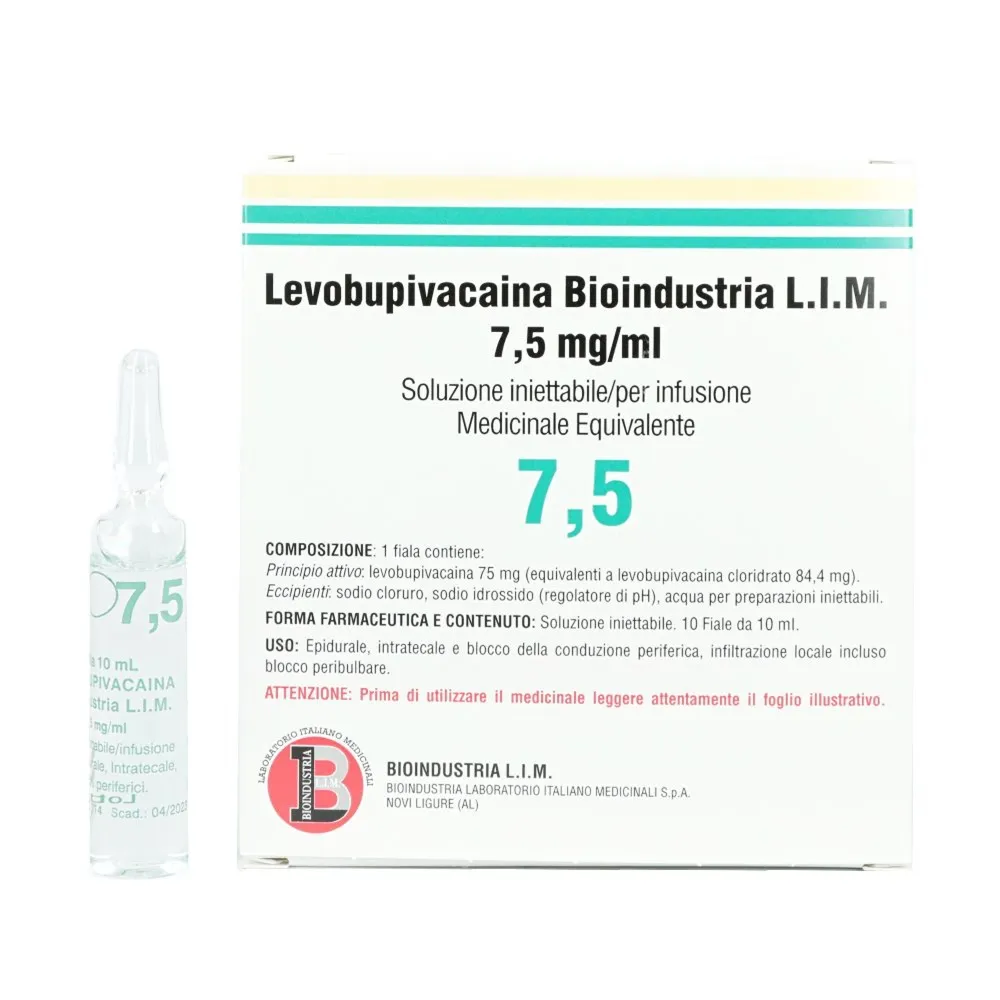
Table of Contents
- Package leaflet: Information for the patient
- 1. What Levobupivacaine Molteni is and what it is used for
- 2. Information before using Levobupivacaine Molteni
- 3. How to use Levobupivacaine Molteni
- 4. Possible side effects
- 5. How to store Levobupivacaine Molteni
- 6. Contents of the pack and other information
Package leaflet: Information for the patient
LEVOBUPIVACAINE MOLTENI 2.5 mg/ml solution for injection/infusion
LEVOBUPIVACAINE MOLTENI 5 mg/ml solution for injection/infusion
Levobupivacainum
Please read all of this leaflet carefully before the medicine is administered, as it contains
important information for you.
- Keep this leaflet, as you may need to read it again.
- If you have any further questions, please consult your doctor or nurse.
- This medicine has been prescribed for a specific individual. Do not pass it on to others. It may harm someone else, even if their symptoms are the same.
- If you experience any adverse reactions, including any not listed in this leaflet, inform your doctor or nurse immediately. See section 4.
Contents of the leaflet
- What Levobupivacaine Molteni is and what it is used for
- Important information before using Levobupivacaine Molteni
- How to use Levobupivacaine Molteni
- Possible side effects
- How to store Levobupivacaine Molteni
- Contents of the pack and other information
1. What Levobupivacaine Molteni is and what it is used for
Levobupivacaine Molteni belongs to a group of medicines called local anaesthetics.
These medicines are used to numb or relieve pain in a specific area of the body.
What Levobupivacaine Molteni is used for
- This medicine is used in adult patients and adolescents (aged 12 years and older):
- To anaesthetize part of the body before major surgery, for example, epidural anaesthesia before caesarean section.
- To anaesthetize a specific area before minor surgery, for example, in the eye or oral cavity.
- To relieve pain after surgery.
- To relieve pain during childbirth.
- This medicine is used in children (under 12 years of age):
- To anaesthetize part of the body before surgery.
- To relieve pain after minor surgical procedures, for example, hernia repair.
2. Information before using Levobupivacaine Molteni
When not to use Levobupivacaine Molteni:
- if the patient is allergic to levobupivacaine, any other locally acting anaesthetic medicine, or any of the other ingredients of this medicine (listed in section 6)
- if the patient has very low blood pressure
- for cervical paracervical block anaesthesia during childbirth
- for regional anaesthesia by intravenous injection of Levobupivacaine Molteni
Warnings and precautions
Before using Levobupivacaine Molteni, discuss with the doctor if any of the following apply to the patient, as closer monitoring or a lower dose may be required:
- the patient has heart function disorders
- the patient has a neurological disorder
- the patient is weakened or ill
- the patient is elderly
- the patient has liver function disorders
If any of the above conditions apply (or if there is any uncertainty), consult a doctor before administering the medicine.
Children
Levobupivacaine Molteni has not been studied in children under 6 months of age.
Levobupivacaine Molteni and other medicines
Inform the doctor or nurse about all medicines the patient is currently taking or has recently taken, as well as any medicines the patient plans to take. This includes medicines available without prescription and herbal medicines.
In particular, inform the doctor or nurse if the patient is taking medicines for:
- heart rhythm disorders (e.g. mexiletine)
- Cushing's syndrome, i.e. when the body produces too much cortisol (e.g. ketoconazole) – this may affect how long Levobupivacaine Molteni remains in the body
- asthma (e.g. theophylline) – this may affect how long Levobupivacaine Molteni remains in the body
If any of the above situations apply (or if there is any uncertainty), consult a doctor before using the medicine.
Pregnancy, breastfeeding and fertility
If the patient is pregnant or breastfeeding, suspects she may be pregnant, or is planning to have a baby, she should consult her doctor before using this medicine. Reasons:
- Levobupivacaine Molteni must not be used to relieve pain during childbirth by injection into the cervix area (paracervical block).
- Levobupivacaine Molteni should not be administered during the first three months of pregnancy unless the doctor considers it necessary. This is because the effect of the medicine on the fetus in early pregnancy is unknown.
It is not known whether Levobupivacaine Molteni passes into human breast milk. However, based on experience with a similar medicine, only small amounts of Levobupivacaine Molteni are expected to pass into breast milk. Therefore, breastfeeding after local anaesthesia may be possible. If the patient is breastfeeding, she should discuss this with her doctor.
There are no data available on the effect of this medicine on fertility.
Driving and using machines
During treatment with this medicine, patients should not drive, ride a bicycle, or use tools or operate machinery. This is because the medicine may significantly affect the patient's ability to perform these activities. Wait until all effects of the medicine and surgical procedure have worn off. Before leaving the hospital, discuss this with the doctor or nurse.
Levobupivacaine Molteni contains sodium
-
Levobupivacaine Molteni 2.5 mg/ml contains approximately 3.3 mg of sodium (the main component of table salt) in each 1 ml of solution, corresponding to approximately 33 mg of sodium in a 10 ml ampoule. This equals 1.65% of the maximum recommended daily dietary sodium intake for adults.
-
Levobupivacaine Molteni 5 mg/ml contains approximately 3.1 mg of sodium (the main component of table salt) in each 1 ml of solution, corresponding to approximately 31 mg of sodium in a 10 ml ampoule. This equals 1.55% of the maximum recommended daily dietary sodium intake for adults.
3. How to use Levobupivacaine Molteni
Dosage
The dose and frequency of administration depend on the reason for use, as well as the patient's
health status, age, and body weight. The lowest effective dose required to achieve anaesthesia
of the targeted body area should be used. The doctor will carefully determine the appropriate dose.
If this medicine is used to relieve pain during childbirth or caesarean section
(epidural anaesthesia), the dose will be carefully controlled.
Method of administration
Levobupivacaine Molteni is administered by a doctor via injection:
- using a needle or through a small catheter placed in the back area (epidural anaesthesia), or
- into other parts of the body to anaesthetize them (e.g. eye, arm, or leg).
The doctor and nurse will closely monitor the patient during administration of the medicine.
Use of a higher than recommended dose of Levobupivacaine Molteni
Since this medicine is administered by hospital staff, it is unlikely that an excessive dose will be given.
However, if the patient suspects that too high a dose has been administered, they must immediately inform the doctor.
Symptoms may include:
- numbness or tingling of the tongue
- dizziness
- blurred vision
- muscle twitching
- severe breathing difficulties
- seizures (convulsions)
If any of these symptoms occur, the doctor must be informed immediately.
Occasionally, administration of a higher than recommended dose of Levobupivacaine Molteni may cause
a decrease in blood pressure, increased or decreased heart rate, and changes in heart rhythm.
The doctor may need to administer other medicines to treat these symptoms.
If you have any further questions about the use of this medicine, please consult your doctor
or nurse.
4. Possible side effects
Like all medicines, this medicine can cause side effects, although not everyone gets them.
The following side effects may occur during treatment with this medicine:
If any of the following side effects occur, you should
inform your doctor immediately:
Very common: may affect more than 1 in 10 people
- feeling tired or weak, breathlessness, paleness (symptoms of anaemia)
- low blood pressure
- nausea
Common: may affect up to 1 in 10 people
- dizziness
- headache
- feeling unwell (vomiting)
- harm to the unborn child
- back pain
- high body temperature (fever)
- postoperative pain
Frequency not known: frequency cannot be estimated from the available data
- severe allergic reactions which may cause serious breathing difficulties, difficulty swallowing, hives and very low blood pressure
- allergic reactions with red, itchy skin, sneezing, increased sweating, rapid heartbeat, fainting or swelling of the face, lips, mouth, tongue or throat
- fainting
- drowsiness
- blurred vision
- respiratory arrest
- heart block or cardiac arrest
- tingling in certain parts of the body
- sensation of numbness of the tongue
- muscle weakness or tremors
- loss of control over bladder or bowel
- paralysis
- convulsions (seizures)
- tingling, numbness or other unusual sensations
- prolonged penile erection, which may be painful
- nerve-related disorders which may cause drooping eyelid, pupil constriction (the central, black spot of the eye), sunken eye socket, sweating and (or) redness on one side of the face.
Changes in heart rate, including fast, slow or irregular heartbeat observed on ECG, have also been reported as side effects.
Rarely, some side effects may be long-lasting or permanent.
Reporting of side effects
If any side effects occur, including any not listed in this leaflet, inform your doctor, pharmacist or nurse. Side effects can also be reported directly to the Department of Monitoring Adverse Drug Reactions, Office for Registration of Medicinal Products, Medical Devices and Biocidal Products, Al. Jerozolimskie 181C, 02-222 Warsaw, tel.: + 48 22 49 21 301, fax: + 48 22 49 21 309. Website: https://smz.ezdrowie.gov.pl.
Reporting side effects helps to provide more information on the safety of this medicine.
5. How to store Levobupivacaine Molteni
Keep this medicine out of sight and reach of children.
No special storage conditions are required for this medicine.
Do not use Levobupivacaine Molteni after the expiry date stated on the packaging. The expiry date refers to the last day of the month indicated.
Expiry after first opening: the medicinal product should be used immediately.
Do not use this medicine if the solution contains any visible particles or is not clear.
Medicines must not be disposed of via wastewater or household waste. Proper disposal helps protect the environment.
6. Contents of the pack and other information
What Levobupivacaine Molteni contains
The active substance is levobupivacaine (as hydrochloride).
- Levobupivacaine Molteni 2.5 mg/ml, solution for injection/infusion: one ml of solution contains 2.5 mg of levobupivacaine (as hydrochloride). One 10 ml ampoule contains 25 mg of levobupivacaine.
- Levobupivacaine Molteni 5 mg/ml, solution for injection/infusion: one ml of solution contains 5 mg of levobupivacaine (as hydrochloride). One 10 ml ampoule contains 50 mg of levobupivacaine.
The other ingredients are water for injections, sodium chloride, sodium hydroxide (for pH adjustment), or a small amount of hydrochloric acid (for pH adjustment).
Levobupivacaine Molteni contains a component with known effect (sodium). See section 2.
What Levobupivacaine Molteni looks like and contents of the pack
Levobupivacaine Molteni solution for injection/infusion is a clear, colourless solution in polypropylene ampoules. Each ampoule contains 10 ml of solution.
The medicine is available in packs containing 10 ampoules.
Marketing Authorisation Holder and Manufacturer
L. Molteni & C. dei F.lli Alitti Società di Esercizio S.p.A.,
Strada Statale 67, Fraz. Granatieri,
50018 Scandicci (Firenze), Italy
Tel: +3905573611
Fax: +39055720057
e-mail: [email protected]
This medicine has been authorised in the European Economic Area countries under the following names:
France LEVOBUPIVACAINE MEDAC
Italy Levobupivacaina Molteni
Poland Levobupivacaine Molteni
Sweden Levobupivacaine Molteni
Netherlands Levobupivacaine Molteni
------------------------------------------------------------------------ ------------------------------------------------
The following information is intended for healthcare professionals only:
Levobupivacaine Molteni 2.5 mg/ml or 5 mg/ml solution for injection/infusion
Instructions for use and preparation of the medicinal product
Levobupivacaine Molteni 2.5 mg/ml or 5 mg/ml solution for injection/infusion is intended for single use only. Any unused solution should be discarded.
From a microbiological standpoint, the product should be used immediately. If not used immediately, the responsibility for storage conditions and duration prior to use lies with the user.
There is limited experience regarding the safety of levobupivacaine administration for periods longer than 24 hours.
Stability after dilution with 0.9% sodium chloride solution: chemical and physical stability of the solution has been demonstrated for 7 days at 20–22°C. Chemical and physical stability of the prepared solution with clonidine, morphine, or fentanyl has been demonstrated for 40 hours at 20–22°C.
As with all parenteral medicinal products, the solution should be visually inspected before use. Only clear, particle-free solutions should be used.
Standard levobupivacaine solutions should be diluted using 9 mg/ml (0.9%) sodium chloride solution for injection, using aseptic technique.
Compatibility of levobupivacaine injection solution with 9 mg/ml (0.9%) sodium chloride has been demonstrated with clonidine 8.4 μg/ml, morphine 0.05 mg/ml, and fentanyl 4 μg/ml.
Levobupivacaine Molteni medicinal product should not be mixed with other medicinal products except those listed above. Dilution in alkaline solutions such as sodium bicarbonate may result in precipitation.
Dosage and method of administration
Levobupivacaine must be administered only by appropriately trained and experienced physicians or under their supervision.
Careful aspiration before and during injection is recommended to avoid intravascular injection.
Aspiration should be repeated before and during bolus dose administration, which should be injected slowly in divided doses at a rate of 7.5–30 mg/minute, with close monitoring of vital signs and continuous verbal contact with the patient.
If signs of toxicity occur, injection must be stopped immediately.
Maximum dose:
The maximum dose should be adjusted according to the patient’s/child’s size, body build, and physical condition, as well as the concentration of the anaesthetic agent, and the site and route of administration.
There is individual variability in onset and duration of block. Clinical trial experience indicates that sensory block adequate for surgical procedures occurs within 10–15 minutes after intrathecal administration, and duration of effect lasts 6–9 hours.
The maximum recommended single dose is 150 mg. If prolonged motor and sensory block is required due to extended surgical procedures, additional doses may be necessary. The maximum recommended dose administered within 24 hours is 400 mg.
In postoperative pain management, the infusion rate should not exceed 18.75 mg per hour.
Obstetrics
In caesarean section, concentrations greater than 5.0 mg/ml should not be used (see section 4.3). The maximum recommended dose is 150 mg.
For pain relief during labour, the infusion rate should not exceed 12.5 mg per hour.
Children and adolescents
In children, the maximum recommended dose for analgesia (femoral–inguinal or femoral–subinguinal nerve block) is 1.25 mg/kg body weight per side of the body.
The maximum dose should be adjusted according to the size, body build, and physical condition of the patient/child.
The efficacy and safety of levobupivacaine in children have not been established for other indications.
Special patient groups
Reduced doses of levobupivacaine should be administered to debilitated patients, elderly patients, and those with acute medical conditions, according to their physical status.
In postoperative pain management, the dose administered during surgery should be taken into account.
The table below provides dosage recommendations for the most commonly used blocks. For analgesia (e.g. epidural administration for pain treatment), lower concentrations and doses are recommended.
Dosage table
Adults and children (aged ≥ 12 years)
Concentration Dose Motor block
(mg/ml)
Surgical
anaesthesia
Epidural
anaesthesia
(slow bolus)
for surgery
- Adults 5.0–7.5 10–20 ml Moderate to (50–150 mg) complete
Epidural 5.0 15–30 ml Moderate to
anaesthesia (75–150 mg) complete
(slow injection)
for caesarean
section
Spinal 5.0 3 ml (15 mg) Moderate to
anaesthesia complete
Peripheral 2.5–5.0 1–40 ml Moderate to
nerve block (2.5–150 mg complete
(max.)
Ophthalmic 7.5 5–15 ml Moderate to
procedures (37.5–112.5 mg) complete
(peribulbar block)
Local
infiltration
anaesthesia 2.5 1–60 ml Not applicable
- Adults (2.5–150 mg max.)
Pain management
Labour pain 2.5 6–10 ml Minimal to
relief (15–25 mg) moderate
(epidural bolus)
Labour pain 1.25 4–10 ml/h Minimal to
relief (5–12.5 mg/h) moderate
(epidural
infusion)
Postoperative 1.25 10–15 ml/h Minimal to
pain (12.5–18.75 moderate
(12.5–18.75 mg/h)
2.5 5–7.5 ml/h
(12.5–18.75
mg/h)
In children
aged <12 years
Surgical 2.5 0.5 ml/kg body Moderate to
anaesthesia weight per side complete
Peripheral nerve 5.0 0.25 ml/kg body Not applicable
block (femoral– weight per side
inguinal/femoral– (1.25 mg/kg body
subinguinal) weight per side)
Levobupivacaine, solution for injection/infusion, is available in concentrations of 2.5 and 5.0 mg/ml. For other medicinal products containing levobupivacaine, a concentration of 7.5 mg/ml may also be available.
Over 5 minutes (see also text).
Administered over 15–20 minutes.
When levobupivacaine is combined with other medicinal products, e.g. opioids for pain treatment, the dose of levobupivacaine should be reduced and lower concentrations (e.g. 1.25 mg/ml) are preferred.
The minimum recommended interval between successive injections is 15 minutes.
For dilution instructions, see above.
The safety and efficacy of levobupivacaine have not been established in children under 6 months of age.
For further information, please refer to the Product Characteristics.