Lenalidomide eugia
Poland
Table of Contents
Package leaflet: Information for the user
Lenalidomide Eugia, 5 mg, hard capsules
Lenalidomide Eugia, 10 mg, hard capsules
Lenalidomide Eugia, 15 mg, hard capsules
Lenalidomide Eugia, 25 mg, hard capsules
Lenalidomidum
Please read this leaflet carefully before taking this medicine because it contains important information for you.
- Keep this leaflet. You may need to read it again.
- If you have any further questions, ask your doctor or pharmacist.
- This medicine has been prescribed for you personally. Do not pass it on to others. It may harm them, even if their symptoms are the same as yours.
- If you experience any side effects, including any not listed in this leaflet, tell your doctor or pharmacist. See section 4.
Leaflet contents:
- What Lenalidomide Eugia is and what it is used for
- Important information before taking Lenalidomide Eugia
- How to take Lenalidomide Eugia
- Possible side effects
- How to store Lenalidomide Eugia
- Contents of the pack and other information
1. What Lenalidomide Eugia is and what it is used for
What Lenalidomide Eugia is
Lenalidomide Eugia contains the active substance lenalidomide. This medicine belongs to a group of medicines
that affect the function of the immune system.
What Lenalidomide Eugia is used for
Lenalidomide Eugia is used in adult patients for the treatment of:
- multiple myeloma,
- myelodysplastic syndromes,
- mantle cell lymphoma,
- follicular lymphoma.
Multiple myeloma
Multiple myeloma is a type of cancer that affects a certain type of white blood cells called plasma cells. These cells accumulate in the bone marrow and divide uncontrollably. This may lead to damage of bones and kidneys.
Multiple myeloma is generally incurable. However, it is possible to achieve a significant temporary reduction or disappearance of signs and symptoms of the disease. This is called "remission".
Newly diagnosed multiple myeloma – in patients who have undergone stem cell transplantation
Lenalidomide Eugia is used as a single agent for maintenance treatment after achieving an adequate response following transplantation.
Newly diagnosed multiple myel游戏副本
2. Important information before taking Lenalidomide Eugia
Before starting treatment with Lenalidomide Eugia, carefully read the package leaflets of all medicinal products used in combination with Lenalidomide Eugia.
When not to take Lenalidomide Eugia:
- If the patient is pregnant, suspects she is pregnant, or plans to become pregnant, because Lenalidomide Eugia is expected to be harmful to the unborn child (see section 2, "Pregnancy, breastfeeding and contraception – information for women and men").
- If the patient could become pregnant, unless she is using all required contraceptive measures (see section 2, "Pregnancy, breastfeeding and contraception – information for women and men"). If the patient could become pregnant, the doctor will always document at the time of prescribing that necessary precautions have been taken and will confirm this with the patient.
- If the patient has a known allergy to lenalidomide or any of the other ingredients of this medicine (listed in section 6). In case of suspected allergy, consult your doctor for advice.
If any of these points apply to the patient, Lenalidomide Eugia must not be used.
In case of doubt, consult your doctor.
Warnings and precautions
Before starting to take Lenalidomide Eugia, discuss this with your doctor,
pharmacist or nurse if the patient:
- Has previously had blood clots – this increases the risk of developing blood clots in veins and arteries during treatment
- Has any signs of infection, such as cough or fever
- Currently has or has previously had a viral infection, particularly varicella-zoster virus, hepatitis B or HIV. In case of doubt, consult your doctor. Treatment with Lenalidomide Eugia may reactivate viruses in patients previously infected, leading to recurrence of infection. The doctor will check whether the patient has previously had hepatitis B
- Has kidney problems – the doctor may adjust the dose of lenalidomide
- Has had a heart attack (myocardial infarction), has previously had a blood clot, smokes, has high blood pressure or high cholesterol levels
- Experienced allergic reactions while taking thalidomide (another medicine used in the treatment of multiple myeloma), such as rash, itching, swelling, dizziness or breathing difficulties
- Previously experienced a combination of any of the following symptoms: widespread rash, skin redness, high fever, flu-like symptoms, elevated liver enzymes, blood abnormalities (eosinophilia), swollen lymph nodes – these are symptoms of a severe skin reaction known as drug reaction with eosinophilia and systemic symptoms, also referred to as “DRESS” (Drug Reaction with Eosinophilia and Systemic Symptoms) or “drug hypersensitivity syndrome” (see also section 4 “Possible side effects”).
If any of the above apply to the patient, consult your doctor, pharmacist or nurse before starting treatment.
Immediately inform your doctor or nurse if, at any time during or after treatment,
the patient experiences any of the following symptoms:
- Blurred vision, loss of vision or double vision, difficulty speaking, muscle weakness in the arm or leg, change in walking pattern or difficulty maintaining balance, persistent numbness, reduced sensation or loss of sensation, memory loss or disorientation. All of these may be symptoms of a serious and potentially fatal condition called progressive multifocal leukoencephalopathy (PML). If the patient experienced any of these symptoms before starting Lenalidomide Eugia, inform the doctor.
- Shortness of breath, fatigue, dizziness, chest pain, rapid heartbeat or swelling of the legs or ankles. These may be symptoms of a serious condition known as pulmonary hypertension (see section 4).
Tests and examinations
Before and during treatment with Lenalidomide Eugia, the patient will undergo regular blood tests because Lenalidomide Eugia may reduce the number of blood cells that help fight infection (white blood cells) and help blood to clot (platelets). The doctor will schedule blood tests:
- Before treatment
- Weekly for the first 8 weeks of treatment
- Then at least once a month.
Before starting lenalidomide treatment and during treatment, the patient may be evaluated for circulatory and respiratory problems.
Patients with MDS taking Lenalidomide Eugia
If the patient has myelodysplastic syndromes (MDS), there is an increased chance of developing a serious disease called acute myeloid leukaemia. Furthermore, it is not known how Lenalidomide Eugia affects the likelihood of developing acute myeloid leukaemia. Therefore, the doctor may perform tests to check for signs that may better predict the risk of acute myeloid leukaemia during treatment with Lenalidomide Eugia.
Patients with MCL taking Lenalidomide Eugia.
The doctor will request blood tests:
- Before treatment
- Weekly for the first 8 weeks (2 cycles) of treatment
- Then every 2 weeks during cycles 3 and 4 (more information in section 3 “Treatment cycle”)
- Then at the beginning of each cycle and
- At least once a month.
Patients with FL taking Lenalidomide Eugia.
The doctor will request blood tests:
- Before treatment
- Weekly for the first 3 weeks (1 cycle) of treatment
- Then every 2 weeks during cycles 2 to 4 (more information in section 3 “Treatment cycle”)
- Then at the beginning of each cycle and
- At least once a month.
The doctor may perform an assessment to determine whether the patient has a large amount of tumour tissue in the body, including in the bone marrow. This may lead to a situation where tumour tissue begins to die, causing an abnormal increase in the concentration of various substances in the blood, which may lead to kidney failure (a condition known as tumour lysis syndrome).
The doctor may examine the patient to check for skin changes such as red spots or rash.
The doctor may adjust the dose of Lenalidomide Eugia or discontinue treatment based on blood test results and the patient’s overall condition. If the disease was recently diagnosed, the doctor may also consider the patient’s age and other pre-existing conditions when evaluating treatment.
Blood donation
During treatment and for at least 7 days after treatment ends, the patient must not donate blood.
Children and adolescents
Lenalidomide Eugia is not recommended for use in children and adolescents under 18 years of age.
Elderly patients and patients with kidney problems
If the patient is 75 years of age or older, or has moderate to severe kidney problems, the doctor will perform thorough assessments before starting treatment.
Lenalidomide Eugia and other medicines
Inform your doctor or nurse about all medicines currently or recently taken by the patient. This is necessary because Lenalidomide Eugia may affect the action of other medicines. Likewise, other medicines may affect the action of Lenalidomide Eugia.
In particular, inform your doctor or nurse if the patient is taking the following medicines:
- Certain contraceptives, such as oral contraceptives, because they may become ineffective
- Certain medicines used for heart problems – such as digoxin
- Certain medicines used to thin the blood – such as warfarin.
Pregnancy, breastfeeding and contraception – information for women and men
Pregnancy
For women taking Lenalidomide Eugia
- Do not take Lenalidomide Eugia if the patient is pregnant, because it is expected to be harmful to the unborn child.
- Women must not become pregnant while taking Lenalidomide Eugia. Therefore, women who could become pregnant must use an effective method of contraception (see “Contraception”).
- If the patient becomes pregnant during treatment with Lenalidomide Eugia, she must immediately stop treatment and inform her doctor.
For men taking Lenalidomide Eugia
- If the male patient’s partner becomes pregnant while he is being treated with Lenalidomide Eugia, she should immediately inform her doctor. The partner should seek medical advice.
- Men must also use an effective method of contraception (see “Contraception”).
Breastfeeding
Do not breastfeed while taking Lenalidomide Eugia, because it is not known whether lenalidomide passes into human milk.
Contraception
Women taking Lenalidomide Eugia
Before starting treatment, ask your doctor about the possibility of becoming pregnant, even if the patient considers it unlikely.
Women who could become pregnant:
- Will undergo pregnancy tests under the supervision of a doctor (before each treatment, at least every 4 weeks during treatment and at least 4 weeks after treatment ends), unless the patient has undergone tubal ligation (sterilisation of the fallopian tubes) OR
- Must use effective methods of contraception for at least 4 weeks before starting treatment, during treatment and for 4 weeks after treatment ends. The doctor will advise the patient on appropriate contraceptive methods.
Men taking Lenalidomide Eugia
Lenalidomide passes into human sperm. If a woman is pregnant or could become pregnant and is not using an effective contraceptive method, her partner should use a condom during treatment and for at least 7 days after treatment ends. This also applies to men who have had a vasectomy. During treatment and for at least 7 days after treatment ends, the patient must not donate semen.
Driving and using machines
Do not drive or operate machinery if the patient experiences dizziness, fatigue, somnolence, balance disturbances due to vestibular dizziness or blurred vision after taking Lenalidomide Eugia.
Lenalidomide Eugia contains lactose
If the patient has previously been diagnosed with intolerance to certain sugars, the patient should consult their doctor before taking this medicine.
Lenalidomide Eugia contains sodium
This medicine contains less than 1 mmol (23 mg) of sodium per capsule, meaning the medicine is considered “sodium-free”.
3. How to take Lenalidomide Eugia
Lenalidomide Eugia must be administered by medical professionals experienced in the treatment of multiple myeloma, MDS, MCL, or FL.
- When Lenalidomide Eugia is used to treat multiple myeloma in patients who are not eligible for bone marrow transplantation or who have previously received other treatment, the medicine should be used in combination with other medicines (see section 1 "Why Lenalidomide Eugia is used").
- When Lenalidomide Eugia is used to treat multiple myeloma in patients after bone marrow transplantation, or in patients with MDS or MCL, the medicine should be used as monotherapy.
- When Lenalidomide Eugia is used to treat follicular lymphoma, it should be taken together with another medicine called "rituximab". Lenalidomide Eugia must always be taken according to the doctor's instructions. If in doubt, consult your doctor or pharmacist.
If you are taking Lenalidomide Eugia together with other medicines, you should read the package leaflet included with their packaging to obtain information on how to use and how these medicines work.
Treatment cycle
Lenalidomide Eugia is taken on specific days over a period of three weeks (21 days).
- Each 21-day period is called a treatment cycle.
- Depending on the day of the cycle, you may take one or more medicines. However, on some days you will not take any medicines.
- After completing each 21-day cycle, you should start a new 21-day cycle.
OR
Lenalidomide Eugia is taken on specific days over a period of four weeks (28 days).
- Each 28-day period is called a treatment cycle.
- Depending on the day of the cycle, you may take one or more medicines. However, on some days you will not take any medicines.
- After completing each 28-day cycle, you should start a new 28-day cycle.
Recommended dose of Lenalidomide Eugia
Before starting treatment, your doctor will inform you:
- how much Lenalidomide Eugia you should take
- how much of any other medicines you should take in combination with Lenalidomide Eugia, if applicable
- on which days of the cycle to take which medicines.
How and when to take Lenalidomide Eugia
- Swallow the capsule whole, preferably with water.
- Do not crush, open, or chew the capsules. If powder from a damaged Lenalidomide Eugia capsule comes into contact with the skin, wash the skin immediately and thoroughly with soap and water.
- Healthcare professionals, caregivers, and family members should wear disposable gloves when handling the blister pack or capsules. Gloves should then be carefully removed to avoid skin exposure, placed in a sealed polyethylene plastic bag, and disposed of according to local regulations. Hands should then be washed thoroughly with soap and water. Pregnant women or women who suspect they may be pregnant should not handle the blister pack or capsules.
- Capsules may be taken with or without food.
- Lenalidomide Eugia should be taken at approximately the same time each day on which the dose is scheduled.
How to take this medicine
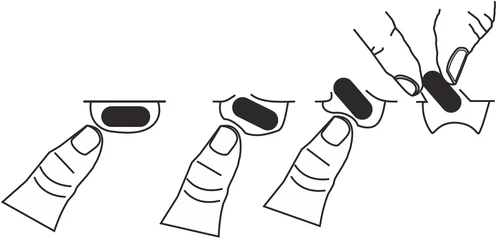
To remove the capsule from the blister:
- Press only on one side of the capsule to push it through the foil
- Do not press on the center of the capsule, as this may damage it.
Duration of treatment with Lenalidomide Eugia
Lenalidomide Eugia is administered in treatment cycles; each cycle lasts 28 days (see above, "Treatment cycle"). Treatment cycles should continue until your doctor decides to discontinue treatment.
If you take more Lenalidomide Eugia than you should
If you take more Lenalidomide Eugia than prescribed, contact your doctor immediately.
If you miss a dose of Lenalidomide Eugia
If you have missed taking Lenalidomide Eugia at the scheduled time and
- less than 12 hours have passed: take the capsule immediately.
- more than 12 hours have passed: do not take the missed capsule. Take the next capsule at the scheduled time on the following day.
If you have any further questions about the use of this medicine, consult your doctor or pharmacist.
4. Possible side effects
Like all medicines, Lenalidomide Eugia may cause side effects, although not everyone will experience them.
If any of the following serious side effects occur, stop taking Lenalidomide Eugia immediately and seek medical advice – immediate treatment may be required:
- Hives, rash, swelling of the eyes, lips or face, difficulty breathing or itching, which may be symptoms of severe allergic reactions known as angioedema and anaphylactic reaction.
- Severe allergic reaction starting as a rash in one area and spreading over the entire body, accompanied by significant loss of the outer layer of skin (Stevens-Johnson syndrome and/or toxic epidermal necrolysis).
- Widespread rash, high fever, increased liver enzyme activity, blood abnormalities (eosinophilia), swollen lymph nodes and involvement of other organs (drug rash with eosinophilia and systemic symptoms, also known as “DRESS” or “drug hypersensitivity syndrome”). See also section 2.
Immediately inform your doctor if any of the following serious side effects occur:
- Fever, chills, sore throat, cough, mouth ulcers or any other signs of infection (including blood infections (sepsis))
- Bleeding or bruising without injury
- Chest pain or leg pain
- Shortness of breath
- Bone pain, muscle weakness, confusion or fatigue, which may result from high levels of calcium in the blood.
Lenalidomide Eugia may reduce the number of white blood cells that fight infection, as well as blood cells that help blood to clot (platelets), which may lead to bleeding disorders such as nosebleeds and bruising.
Lenalidomide Eugia may also cause blood clots in the veins (thrombosis).
Other side effects
It should be noted that in a small number of patients, development of other types of cancer may occur, and that this risk may be increased by treatment with Lenalidomide Eugia.
Therefore, your treating physician should carefully evaluate the benefits and risks before prescribing Lenalidomide Eugia to you.
Very common side effects (may occur in more than 1 in 10 people):
- Decreased number of red blood cells, which may lead to anaemia causing tiredness and weakness
- Rash, itching
- Muscle cramps, muscle weakness, muscle pain, bone pain, joint pain, back pain, limb pain
- Generalised swelling, including swelling of hands and feet
- Weakness, fatigue
- Influenza and influenza-like symptoms, including fever, muscle pain, headache, ear pain, cough and chills
- Numbness, tingling or burning sensation of the skin, pain in hands or feet, dizziness, tremor
- Decreased appetite, altered taste sensation
- Worsening of pain, enlargement or redness around a tumour
- Weight loss
- Constipation, diarrhoea, nausea, vomiting, abdominal pain, heartburn
- Low levels of potassium or calcium and (or) sodium in the blood
- Abnormally low thyroid function
- Leg pain (which may be a sign of thrombosis), chest pain or shortness of breath (which may indicate presence of blood clots in the lungs, known as pulmonary embolism)
- All types of infections, including sinus infection, lung infection and upper respiratory tract infections
- Shortness of breath
- Blurred vision
- Cloudy vision (cataract)
- Kidney problems, including impaired kidney function or inability to maintain normal kidney function
- Abnormal liver function test results
- Increased liver function test values
- Changes in blood proteins leading to blood vessel swelling (vasculitis)
- Increased blood sugar levels (diabetes)
- Decreased blood sugar levels
- Nosebleeds
- Headache
- Dry skin
- Depression, mood changes, sleep disturbances
- Cough
- Low blood pressure
- Vague feeling of physical discomfort, malaise
- Painful inflammation of the mouth, dry mouth
- Dehydration.
Common side effects (may occur in less than 1 in 10 people):
- Breakdown of red blood cells (haemolytic anaemia)
- Certain types of skin tumours
- Bleeding from gums, stomach or intestines
- Increased blood pressure, slow, fast or irregular heartbeat
- Increased levels of a substance produced by normal and abnormal breakdown of red blood cells
- Increased levels of a protein indicating inflammation in the body
- Darkening of the skin; skin discolouration due to bleeding under the skin, usually caused by bruising; blood-filled skin swelling, bruises
- Increased levels of uric acid in the blood
- Skin eruptions, redness of the skin, cracking, peeling or flaking of the skin, hives
- Itching, excessive sweating, night sweats
- Difficulty swallowing, sore throat, voice quality problems or voice changes
- Nasal inflammation (rhinitis)
- Passing significantly more or significantly less urine than normal, or inability to control the timing of urination
- Blood in the urine
- Shortness of breath, especially when lying down (which may be a sign of heart failure)
- Erectile dysfunction
- Stroke, fainting, dizziness (inner ear disorder causing a sensation that everything is spinning), transient loss of consciousness
- Chest pain spreading to arms, neck, jaw, back or abdomen, sweating, shortness of breath, nausea or vomiting, which may be signs of a heart attack (myocardial infarction)
- Muscle weakness, lack of energy
- Neck pain, chest pain
- Chills
- Joint swelling
- Slowing or blockage of bile flow from the liver
- Low levels of phosphates or magnesium in the blood
- Speech difficulties
- Liver damage
- Balance disorders, difficulty moving
- Deafness, tinnitus (ringing in the ears)
- Nerve pain, unpleasant or abnormal sensations, especially in response to touch
- Excess iron in the body
- Thirst
- Confusion
- Toothache
- Falls that may lead to injury.
Uncommon side effects (may occur in less than 1 in 100 people):
- Bleeding inside the skull
- Circulatory problems
- Loss of vision
- Loss of sex drive (libido)
- Passing large amounts of urine, accompanied by bone pain and weakness, which may be a sign of kidney disease (Fanconi syndrome)
- Yellowing of the skin, mucous membranes or eyes (jaundice), pale stools, dark urine, itchy skin, rash, abdominal pain or swelling – may be signs of liver damage (liver failure)
- Abdominal pain, bloating or diarrhoea, which may be signs of inflammation of the large intestine (colitis or typhlitis)
- Kidney cell damage (known as tubular necrosis)
- Skin colour changes, sensitivity to sunlight
- Tumour lysis syndrome – metabolic complications that may occur during cancer treatment, and sometimes even without treatment. These complications are caused by products released from dying tumour cells and may include: changes in blood chemistry; high levels of potassium, phosphate and uric acid, and low calcium levels, leading to kidney dysfunction, heart rhythm disturbances, seizures, and sometimes death.
- High blood pressure in blood vessels leading to the lungs (pulmonary hypertension).
Unknown frequency side effects (frequency cannot be estimated from available data):
- Sudden or gradual but worsening pain in the upper abdomen and (or) back, lasting for several days, usually accompanied by nausea, vomiting, fever and rapid heartbeat – these symptoms may occur in association with pancreatitis
- Wheezing, shortness of breath or dry cough, possibly due to inflammation of lung tissue
- Rare cases of muscle breakdown (muscle pain, weakness or swelling) leading to kidney problems (rhabdomyolysis) have been observed, some occurring when lenalidomide was administered concomitantly with a statin (a type of medicine that lowers blood cholesterol levels)
- Skin disease caused by inflammation of small blood vessels, accompanied by joint pain and fever (leucocytoclastic vasculitis)
- Perforation of the stomach or intestinal wall, which may lead to severe infection. Inform your doctor if you experience severe stomach pain, fever, nausea, vomiting, blood in stool or changes in bowel function
- Viral infections, including herpes zoster (a viral disease causing a painful skin rash with blisters) and reactivation of hepatitis B virus infection (which may cause yellowing of the skin and eyes, dark brown urine, pain in the lower right abdomen, fever, nausea and vomiting)
- Solid organ transplant rejection (e.g. kidney, heart).
Reporting of side effects
If any side effects occur, including any not listed in this leaflet, inform your doctor or pharmacist. Side effects can be reported directly to the Department of Monitoring Adverse Drug Reactions, Office for Registration of Medicinal Products, Medical Devices and Biocidal Products, Al. Jerozolimskie 181C, 02-222 Warsaw, tel.: +48 22 49 21 301, fax: +48 22 49 21 309, website: https://smz.ezdrowie.gov.pl
Reporting side effects helps provide more information on the safety of this medicine.
Side effects can also be reported to the responsible entity.
5. How to store Lenalidomide Eugia
Keep this medicine out of the sight and reach of children.
Do not use this medicine after the expiry date stated on the carton and blister after:
EXP. The expiry date refers to the last day of the stated month.
Store below 30°C.
Medicines must not be disposed of via wastewater or household waste. Ask your pharmacist how to dispose of medicines you no longer require. This will help protect the environment.
6. Contents of the Package and Other Information
What Lenalidomide Eugia contains
- The active substance is lenalidomide. Each capsule contains 5 mg of lenalidomide. Each capsule contains 10 mg of lenalidomide. Each capsule contains 15 mg of lenalidomide. Each capsule contains 25 mg of lenalidomide.
- The other ingredients are:
Capsule contents: lactose, microcrystalline cellulose (Type-102), sodium croscarmellose, magnesium stearate
Capsule shell: titanium dioxide (E 171), iron oxide yellow (E 172) (only for the 10 mg strength), indigo carmine (E 132) (only for the 10 mg strength), iron oxide red (E 172) (only for the 10 mg and 15 mg strengths), gelatin
Printing ink: shellac, iron oxide black, potassium hydroxide
What Lenalidomide Eugia looks like and contents of the pack
Hard capsule.
Lenalidomide Eugia, 5 mg, hard capsules: [Size approximately 17.8 mm]
Hard gelatin capsules of size “2”, consisting of a white opaque body and a white opaque cap, printed with “L5” in black ink, filled with powder ranging from white to pale yellow in colour.
Lenalidomide Eugia, 10 mg, hard capsules: [Size approximately 21.4 mm]
Hard gelatin capsules of size “0”, consisting of an orange opaque body and an olive-green opaque cap, printed with “L10” in black ink, filled with powder ranging from white to pale yellow in colour.
Lenalidomide Eugia, 15 mg, hard capsules: [Size approximately 21.4 mm]
Hard gelatin capsules of size “0”, consisting of a dark orange opaque body and a dark orange opaque cap, printed with “L15” in black ink, filled with powder ranging from white to pale yellow in colour.
Lenalidomide Eugia, 25 mg, hard capsules: [Size approximately 21.4 mm]
Hard gelatin capsules of size “0”, consisting of a white opaque body and a white opaque cap, printed with “L25” in black ink, filled with powder ranging from white to pale yellow in colour.
Pack sizes: 7, 14, 21, 28 and 42 hard capsules
Not all pack sizes may be marketed.
Marketing Authorisation Holder and Manufacturer
Marketing Authorisation Holder:
Eugia Pharma (Malta) Ltd.
Vault 14, level 2
Valetta Waterfront
Floriana, FRN1914
Malta
e-mail: [email protected]
Manufacturer/Importer:
APL Swift Services (Malta) Ltd.
HF26, Hal Far Industrial Estate, Hal Far
Birzebbugia, BBG 3000
Malta
Generis Farmacêutica, S.A.
Rua João De Deus 19, Venda Nova
2700-487 Amadora
Portugal
Arrow Génériques
26 Avenue Tony Garnier
69007 Lyon
France
This medicinal product is authorised in the Member States of the European Economic Area under the following names:
Belgium: Lenalidomide Eugia 2.5 mg/5 mg/7.5 mg/10 mg/15 mg/20 mg/25 mg hard capsules, gélules, Hartkapseln
France: Lenalidomide Arrow 2.5 mg, 5 mg, 7.5 mg, 10 mg, 15 mg, 20 mg & 25 mg, gélules
Germany: Lenalidomid PUREN 2,5 mg/5 mg/7,5 mg/10 mg/15 mg/20 mg/25 mg Hartkapseln
Netherlands: Lenalidomide Eugia 2,5 mg, 5 mg, 7,5 mg, 10 mg, 15 mg, 20 mg, 25 mg, harde capsules
Poland: Lenalidomide Eugia
Portugal: Lenalidomida Generis
Spain: Lenalidomida Aurovitas 5 mg/10 mg/15 mg/20 mg/25 mg cápsulas duras EFG