Laremid
Poland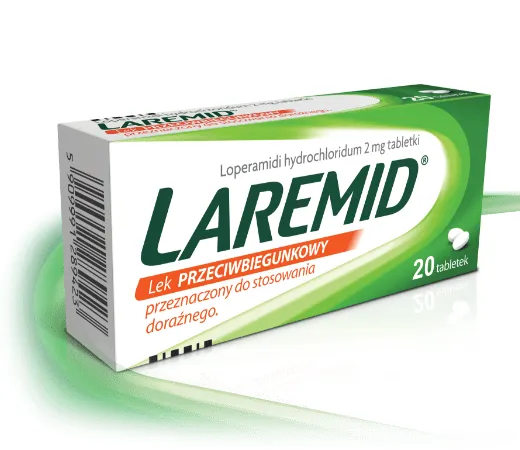
Table of Contents
Package leaflet: Information for the patient
LAREMID, 2 mg, tablets
Loperamide hydrochloride
Please read all of this leaflet carefully before taking this medicine, because it contains
important information for the patient.
This medicine should always be used exactly as described in this patient leaflet or as directed by
the doctor or pharmacist.
- Keep this leaflet, so that you can read it again if necessary.
- If you need advice or further information, please consult your pharmacist.
- If you experience any adverse reactions, including any not listed in this leaflet, inform your doctor or pharmacist. See section 4.
- If there is no improvement after 2 days or if you feel worse, contact your doctor.
Contents of the leaflet
- What Laremid is and what it is used for
- Important information before taking Laremid
- How to take Laremid
- Possible side effects
- How to store Laremid
- Contents of the pack and other information
1. What Laremid is and what it is used for
Laremid is an antidiarrheal medicine.
The medicine prolongs the transit time of food through the gastrointestinal tract, reduces the loss of water and electrolytes, and decreases the immediate urge to defecate. As a result, the frequency and number of bowel movements are reduced.
Laremid is used:
- for symptomatic treatment of acute and chronic diarrhoea;
- to reduce the number and volume of stools and to increase their consistency in patients with an ileostomy.
2. Important information before using Laremid
When not to use Laremid:
- if the patient is allergic to loperamide hydrochloride or any of the other ingredients of this medicine (listed in section 6),
- in children under 6 years of age,
- if the patient has severe diarrhoea with blood and high fever (acute dysentery),
- if the patient has ulcerative colitis,
- if the patient has acute diarrhoea caused by pathogenic bacteria or pseudomembranous colitis associated with antibiotic use,
- in cases where inhibition of intestinal peristalsis should be avoided due to the possible risk of serious complications, including intestinal obstruction, colonic dilation, and toxic megacolon. Laremid must be discontinued immediately if constipation or abdominal distension occurs.
Warnings and precautions
Before starting treatment with Laremid, consult a doctor or pharmacist if the patient has previously been diagnosed with impaired liver function.
Treatment of diarrhoea with Laremid is symptomatic only. In every case where the cause of diarrhoea can be identified, and when appropriate (or indicated), the doctor will recommend suitable treatment.
This medicine should not be used for purposes other than those specified in its indication (see section 1) or in doses higher than recommended (see section 3). In patients taking excessive doses of loperamide (the active substance in Laremid), serious cardiac adverse effects have been reported (including rapid or irregular heartbeat).
In patients with diarrhoea, especially in children, debilitated patients, and elderly individuals, fluid (water) and electrolyte losses should be replenished during treatment.
In patients with AIDS treated with loperamide for diarrhoea, the treatment should be discontinued at the first signs of abdominal distension and medical advice should be sought.
If there is no improvement within 48 hours after starting loperamide for acute diarrhoea, treatment should be discontinued and the patient should consult a doctor.
If the patient is using Laremid to treat diarrhoea associated with diagnosed irritable bowel syndrome and no improvement occurs within 48 hours, the medicine should be discontinued and medical advice should be sought. Patients should also consult a doctor if symptoms change or if recurrent diarrhoea persists for more than two weeks.
Children
Laremid should not be given to children under 6 years of age.
Laremid and other medicines
Inform the doctor or pharmacist about all medicines currently taken or recently taken, as well as any medicines planned for future use. In particular, inform if the patient is taking:
- ritonavir (used in the treatment of HIV);
- quinidine (used in the treatment of cardiac arrhythmias or malaria);
- oral desmopressin (used in the treatment of frequent urination);
- itraconazole or ketoconazole (used in the treatment of fungal infections);
- gemfibrozil (used in the treatment of high blood cholesterol levels).
Pregnancy and breastfeeding
If the patient is pregnant or breastfeeding, suspects she may be pregnant, or is planning to have a child, she should consult a doctor or pharmacist before using this medicine.
Use of this medicine during pregnancy (especially during the first trimester) and while breastfeeding is not recommended. Small amounts may pass into breast milk. Consult a doctor to determine which medicine may be used during this period.
Driving and operating machinery
During treatment of diarrhoea with Laremid, symptoms such as loss of consciousness, reduced level of consciousness, fatigue, dizziness, or drowsiness may occur. Therefore, caution should be exercised when driving or operating machinery.
Laremid contains 100 mg of monohydrate lactose
If the patient has previously been diagnosed with intolerance to certain sugars, the patient should consult a doctor before taking this medicine.
3. How to use Laremid
This medicine should always be taken exactly as described in this patient information leaflet or as directed by a doctor or pharmacist. If in doubt, consult a doctor or pharmacist.
Adults and children aged 6 years and above
Acute diarrhoea:
Initial dose – 2 tablets (4 mg) for adults and 1 tablet (2 mg) for children; then 1 tablet (2 mg) after each subsequent loose stool.
The maximum dose is 8 tablets (16 mg) per day for adults; in children, the dose should be adjusted according to body weight (3 tablets/20 kg body weight per day).
If there is no clinical improvement within 48 hours during treatment of acute diarrhoea, Laremid should be discontinued and the patient should consult a doctor.
Chronic diarrhoea:
Initial dose – 2 tablets (4 mg) per day for adults and 1 tablet (2 mg) per day for children; this initial dose should be adjusted until 1 to 2 normal stools per day are achieved, which is usually attained by using a maintenance dose of 1 to 6 tablets (2 to 12 mg) per day.
The maximum dose is 8 tablets (16 mg) per day for adults; in children, the dose should be adjusted according to body weight (3 tablets/20 kg body weight per day).
Since prolonged diarrhoea may be a symptom of more serious diseases, loperamide should not be used long-term until the cause of diarrhoea has been established.
In elderly patients and patients with impaired kidney function, dosage adjustment is not usually required.
Use of a higher than recommended dose of Laremid
If a patient has taken too much Laremid, seek immediate medical advice from a doctor or go to hospital. The following symptoms may occur: rapid heartbeat, irregular heart rhythm, changes in heart rhythm (these may have serious, life-threatening consequences), muscle stiffness, uncoordinated movements, drowsiness, difficulty in urinating and shallow breathing.
Children may react more strongly to an overdose of Laremid than adults. If a child has taken too much Laremid or develops any of the symptoms listed above, contact a doctor immediately.
Other symptoms of overdose may also occur, such as: stupor, constipation, pinpoint pupils, intestinal obstruction manifested by abdominal pain, nausea and vomiting.
Missed dose of Laremid
Do not take a double dose to make up for a missed dose.
4. Possible adverse reactions
Like all medicines, this medicine can cause adverse reactions, although not everybody will experience them.
You should stop taking the medicine and consult a doctor immediately if any of the following symptoms occur.
These symptoms require immediate treatment.
- Sudden swelling of the face, lips or throat – these may be symptoms of a severe allergic reaction;
- Skin changes such as rash, severe irritation, redness, blisters, erosions on the skin, in the mouth, eyes and genital organs, fever and joint pain or skin peeling; abdominal pain, nausea and vomiting, severe abdominal distension, which may result from impaired intestinal motility (intestinal obstruction); epigastric pain, abdominal pain radiating to the back, abdominal tenderness, fever, rapid heartbeat, nausea, vomiting, which may be symptoms of inflammation of the pancreas (acute pancreatitis).
During the use of loperamide hydrochloride, the following have been reported:
Common (affects less than 1 in 10 patients):
- headache, constipation, nausea, flatulence.
Uncommon (affects less than 1 in 100 patients):
- dizziness, drowsiness, abdominal pain, discomfort in the abdominal cavity, dry mouth, epigastric pain, vomiting, dyspepsia;
- rash.
Rare (affects less than 1 in 1,000 patients):
- hypersensitivity reaction, anaphylactic reaction (including anaphylactic shock), anaphylactoid reaction, angioedema – see symptoms listed above;
- loss of consciousness, stupor, decreased level of consciousness, increased muscle tone, coordination disturbances;
- miosis (pupillary constriction);
- intestinal obstruction (including paralytic ileus), colonic dilatation (including toxic dilatation of the colon), abdominal distension;
- bullous rash (including Stevens-Johnson syndrome, toxic epidermal necrolysis, erythema multiforme) – see symptoms listed above;
- pruritus, urticaria;
- urinary retention;
- fatigue.
Frequency not known (cannot be estimated from the available data):
- acute pancreatitis – see symptoms listed above.
Reporting of adverse reactions
If any adverse reactions occur, including any adverse reactions not listed
in this leaflet, you should inform your doctor, pharmacist or nurse. Adverse reactions can be reported directly to the Department of Monitoring of Adverse Drug Reactions of the Office for Registration of Medicinal Products, Medical Devices
and Biocidal Products
Al. Jerozolimskie 181C
02-222 Warsaw
Phone: +48 22 4921301
Fax: +48 22 4921309
Website: https://smz.ezdrowie.gov.pl
Adverse reactions can also be reported to the marketing authorization holder.
Reporting adverse reactions helps to provide more information on the safety of the medicine.
5. How to store Laremid
Store below 25°C.
Keep the medicine in a place invisible and out of reach of children.
Do not use this medicine after the expiry date stated on the blister and carton after: EXP.
The expiry date refers to the last day of the stated month.
Medicines must not be disposed of via wastewater or household waste. Ask your pharmacist how to dispose of medicines you no longer use. This will help protect the environment.
6. Contents of the pack and other information
What Laremid contains
- The active substance is loperamide hydrochloride. Each tablet contains 2 mg of loperamide hydrochloride.
- The other ingredients are: monohydrate lactose, corn starch, povidone K-25, stearic acid.
What Laremid looks like and contents of the pack
Laremid is a white or almost white, biconvex tablet with a bevelled edge.
The medicine pack contains 10 or 20 tablets in aluminium/PVC blisters, packed in a cardboard box.
Marketing Authorisation Holder
Zakłady Farmaceutyczne POLPHARMA S.A.
ul. Pelplińska 19, 83-200 Starogard Gdański
tel. +48 22 364 61 01
Manufacturer
Zakłady Farmaceutyczne POLPHARMA S.A.
Production Plant in Nowa Dęba
ul. Metalowca 2, 39-460 Nowa Dęba