Lanzul
Poland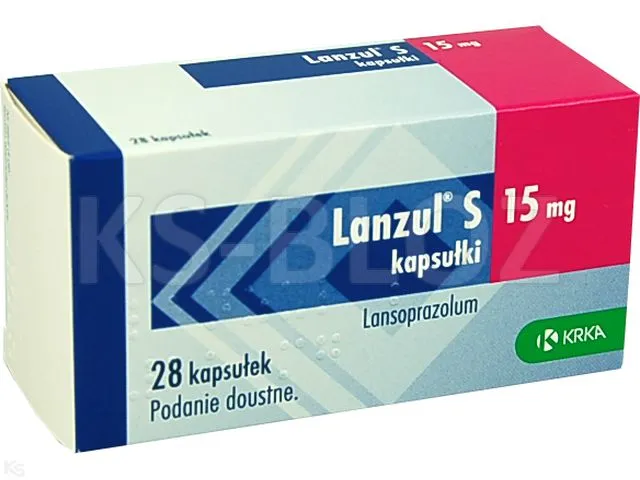
Table of Contents
Package leaflet: Information for the patient
Lanzul, 30 mg, capsules
Lansoprazole
Please read this leaflet carefully before using the medicine, as it contains important information for the patient.
- Keep this leaflet for future reference.
- If you have any questions, consult your doctor or pharmacist.
- This medicine has been prescribed for a specific individual. Do not share it with others. The medicine may harm other people, even if their symptoms are identical.
- If any adverse reactions occur, including those not listed in this leaflet, inform your doctor or pharmacist. See section 4.
Table of contents
- What Lanzul is and what it is used for
- Important information before taking Lanzul
- How to take Lanzul
- Possible side effects
- How to store Lanzul
- Contents of the package and other information
1. What Lanzul is and what it is used for
Lansoprazole, the active substance in Lanzul, is a proton pump inhibitor. Proton pump inhibitors reduce the amount of acid produced in the stomach.
Your doctor may prescribe Lanzul for adult patients for the following indications:
- Treatment of duodenal and gastric ulcers
- Treatment of reflux esophagitis
- Prevention of reflux esophagitis
- Treatment of heartburn and acid regurgitation into the esophagus
- Treatment of infections caused by Helicobacter pylori bacteria, in combination with appropriate antibiotic therapy
- Treatment or prevention of duodenal or gastric ulcers in patients requiring long-term treatment with non-steroidal anti-inflammatory drugs (NSAIDs) (used to relieve pain or inflammation)
- Treatment of Zollinger-Ellison syndrome
Your doctor may also prescribe Lanzul for other indications or at doses different from those described in this leaflet. Take the medicine exactly as directed by your doctor.
2. Important information before using Lanzul
When not to use Lanzul
- if the patient is allergic (hypersensitive) to lanzoprazole or to any of the other ingredients of this medicine (listed in section 6).
Warnings and precautions
Inform your doctor if the patient has severe liver disease. The doctor may then reduce the dose.
To confirm the diagnosis and (or) exclude malignancy, the doctor has already performed or may perform an additional examination, known as endoscopy.
If diarrhoea occurs during treatment with Lanzul, inform the doctor as soon as possible, because the use of Lanzul is associated with a slight increase in the frequency of infectious diarrhoea.
If the doctor has prescribed Lanzul together with other medicines (antibiotics) for Helicobacter pylori infection or with anti-inflammatory medicines relieving pain or symptoms of rheumatic disease: carefully read the package leaflets of these medicines as well.
Taking proton pump inhibitors such as Lanzul, especially for more than one year, may slightly increase the risk of fractures of the hip, wrist or spine. Inform your doctor if osteoporosis (reduced bone density) has been diagnosed or if the doctor has told you that there is a risk of developing osteoporosis (for example, if the patient is taking steroid medicines).
While taking lanzoprazole, kidney inflammation may occur. Symptoms may include reduced urine volume or presence of blood in the urine and (or) allergic reactions such as fever, rash and joint stiffness. Such symptoms should be reported to the treating physician.
If the patient is taking Lanzul for a prolonged period (over 1 year), the doctor will likely monitor the patient’s condition regularly. During each visit to the doctor, report any new or unusual symptoms or circumstances.
Before starting Lanzul, consult your doctor:
- if the patient has vitamin B deficiency or risk factors indicating possible decreased vitamin B levels, and the patient is being treated long-term with lanzoprazole. Like all medicines that reduce gastric acid secretion, lanzoprazole may lead to reduced absorption of vitamin B12.
- if the patient has ever had a skin reaction due to taking a medicine similar to Lanzul that reduces gastric acid secretion.
- if a specific blood test (chromogranin A levels) is planned.
- if the patient develops a skin rash, especially in areas exposed to sunlight, inform the doctor immediately, as discontinuation of Lanzul may be necessary. Also report any other adverse reactions such as joint pain.
- severe skin reactions [Stevens-Johnson syndrome, toxic epidermal necrolysis, and drug reaction with eosinophilia and systemic symptoms (DRESS)] have been reported in association with the use of Lanzul. Discontinue Lanzul and contact your doctor immediately if any of the symptoms related to serious skin reactions described in section 4 occur.
Lanzul and other medicines
Tell your doctor or pharmacist about all medicines the patient is currently taking or has recently taken, as well as any medicines the patient plans to take.
In particular, inform your doctor about other medicines containing the following active substances, whose effectiveness may be affected during treatment with Lanzul:
- HIV protease inhibitors such as atazanavir and nelfinavir (used in the treatment of HIV infection),
- methotrexate (used in the treatment of autoimmune disease and cancer),
- ketoconazole, itraconazole, rifampicin (used in the treatment of infections),
- digoxin (used in the treatment of heart conditions),
- warfarin (used in the treatment of blood clots),
- theophylline (used in the treatment of asthma),
- tacrolimus (used to prevent transplant rejection),
- fluvoxamine (used in the treatment of depression and other psychiatric disorders),
- medicines that neutralize gastric acid (used to treat heartburn or acid reflux),
- sucralfate (used in the treatment of gastric and duodenal ulcers),
- medicines containing St. John's wort (Hypericum perforatum) (used in the treatment of mild depression).
Taking Lanzul with food and drink
For optimal treatment results, Lanzul should be taken at least 30 minutes before a meal, with a glass of water.
Pregnancy, breastfeeding and fertility
If the patient is pregnant or breastfeeding, thinks she may be pregnant, or is planning to have a baby, she should consult her doctor or pharmacist before using this medicine.
Driving and using machines
Patients taking Lanzul may occasionally experience adverse effects such as dizziness, impaired balance, fatigue, and visual disturbances. If such adverse effects occur, the patient should exercise caution due to possible impairment of reaction ability. The patient should personally decide whether he or she is able to drive or perform other activities requiring concentration. Because of the possibility of adverse drug effects, the way the patient takes the medicine may negatively affect the ability to safely perform such activities.
A description of adverse reactions is provided in other sections of this leaflet (see section 4).
Please read all the information provided in this leaflet.
If you have any questions, consult your doctor or pharmacist.
Lanzul contains sucrose and sodium
If the patient has previously been diagnosed with intolerance to certain sugars, the patient should consult the doctor before taking this medicine.
The medicine contains less than 1 mmol (23 mg) of sodium per dose, meaning the medicine is considered "sodium-free".
3. How to take Lanzul
This medicine should always be taken exactly as directed by the doctor. If in doubt, consult the doctor.
The doctor will determine the dose of Lanzul according to the patient's condition. Below is the usual dosage regimen for Lanzul in adults. The doctor will inform the patient how long the treatment will last. Sometimes the doctor may prescribe a different dose.
Treatment of heartburn and acid regurgitation: 15 mg or 30 mg once daily for 4 weeks.
If symptoms persist after 4 weeks of treatment, consult the doctor.
Treatment of duodenal ulcer: 30 mg once daily for 2 weeks.
Treatment of gastric ulcer: 30 mg once daily for 4 weeks.
Treatment of reflux esophagitis (caused by gastric acid regurgitation): 30 mg once daily for 4 weeks.
Long-term prevention of reflux esophagitis: 15 mg once daily. The doctor may change the dose and prescribe 30 mg once daily.
Treatment of Helicobacter pylori infection: usually 30 mg of lanzoprazole in combination with two different antibiotics, taken in the morning and the same dose in the evening. Treatment usually lasts 7 days.
The following antibiotic combinations are recommended:
- Lanzul 30 mg with clarithromycin 250–500 mg and amoxicillin 1000 mg.
- Lanzul 30 mg with clarithromycin 250 mg and metronidazole 400–500 mg.
In patients with peptic ulcer disease who have successfully completed treatment, the risk of reinfection is low. To ensure effective action of the medicine, it must be taken at the correct time and no dose should be missed.
Treatment of gastric and duodenal ulcers in patients requiring continuous NSAID therapy: 30 mg once daily for 4 weeks.
Prevention of gastric and duodenal ulcers in patients requiring continuous NSAID therapy: 15 mg once daily. The doctor may change the dose and prescribe 30 mg once daily.
Zollinger-Ellison syndrome: treatment usually starts with 60 mg once daily; the doctor will then adjust the dose according to the patient's response to treatment.
Use in children and adolescents
Lanzoprazole is not recommended for use in children, as its safety and efficacy have not been established in this age group. Lanzoprazole should be avoided in infants under 1 year of age, as available data do not show benefit in treating gastroesophageal reflux disease.
The capsule should be swallowed whole with a glass of water. If the patient has difficulty swallowing capsules, the doctor may recommend an alternative method of administration. Do not crush or chew the capsule or its contents, as this would impair the proper action of the medicine.
If the doctor has prescribed Lanzul once daily, it should be taken at approximately the same time each day, if possible. Optimal treatment results are achieved when Lanzul is taken in the morning, before breakfast.
If Lanzul is taken twice daily, the first dose should be taken in the morning and the second in the evening.
Taking more Lanzul than prescribed
If the patient takes more Lanzul than prescribed, they should seek immediate medical advice.
Missing a dose of Lanzul
If the patient forgets to take a dose, they should take it as soon as they remember. However, if it is almost time for the next dose, the missed dose should be skipped. Do not take a double dose to make up for a missed dose.
Stopping Lanzul treatment prematurely
The patient should not stop treatment too early, even if symptoms have improved. If the prescribed course of treatment is not completed, the condition may not be fully cured and may recur.
If there are any further questions about the use of this medicine, consult the doctor or pharmacist.
4. Possible adverse reactions
Like all medicines, this medicine can cause adverse reactions, although not everyone will experience them.
You should stop taking Lanzul S and contact your doctor immediately if any of the following symptoms occur:
- Reddish flat, disc-shaped or circular spots on the trunk, often with centrally located blisters, skin peeling, ulceration of the mouth, throat, nose, genital organs and eyes. These serious skin rashes may be preceded by fever and flu-like symptoms (Stevens-Johnson syndrome, toxic epidermal necrolysis).
- Skin rash, high fever and enlarged lymph nodes (DRESS syndrome or drug hypersensitivity syndrome).
Frequent adverse reactions (may occur in up to 1 in 10 patients):
- Headache, dizziness.
- Diarrhoea, constipation, abdominal pain, nausea or vomiting, flatulence, dryness or pain in the mouth or throat, benign gastric polyps.
- Changes in liver enzyme test results.
- Skin rash, itching.
- Fatigue.
Uncommon adverse reactions (may occur in up to 1 in 100 patients):
- Changes in blood cell counts.
- Depression.
- Joint or muscle pain.
- Fluid retention or swelling.
Rare adverse reactions (may occur in up to 1 in 1000 patients):
- Anaemia (pallor).
- Insomnia, hallucinations, confusion.
- Restlessness, dizziness with balance disturbances, tingling and numbness (paraesthesiae), somnolence, muscle tremor.
- Visual disturbances.
- Inflammation of the tongue, candidiasis (fungal infection which may affect the skin or mucous membranes), pancreatitis, taste disturbances.
- Hepatitis (which may present as yellowing of the skin or eye whites).
- Hair loss, photosensitivity.
- Kidney-related disorders.
- Breast enlargement in men.
- Fever, loss of appetite, impotence.
- Skin reactions, e.g. burning or pricking sensation under the skin, bruising, redness and excessive sweating.
- Angioedema; patients should contact their doctor immediately if symptoms of angioedema occur, such as swelling of the face, tongue or throat, difficulty swallowing, urticaria and breathing difficulties.
Very rare adverse reactions (may occur in up to 1 in 10,000 patients):
- Very severe hypersensitivity reactions, including anaphylactic shock. Symptoms of hypersensitivity may include fever, rash, swelling and sometimes a drop in blood pressure.
- Inflammation of the large intestine (colitis), inflammation of the oral mucosa.
- Laboratory test abnormalities, e.g. levels of sodium, cholesterol and triglycerides.
- Very severe skin reactions with redness, blistering, intense inflammatory changes and skin loss.
- Very rarely, Lanzul may cause a decrease in white blood cell count, leading to reduced resistance to infections. Patients should consult their doctor immediately if an infection occurs, with symptoms such as fever, significant deterioration in general health or fever with signs of local infection (e.g. sore throat, larynx or mouth), or discomfort during urination. A blood test will be performed to diagnose possible reduction in white blood cell count (agranulocytosis).
Adverse reactions with unknown frequency (frequency cannot be estimated from available data):
- If Lanzul has been taken for longer than three months, there may be a decrease in blood magnesium levels. Symptoms of low magnesium levels may include fatigue, involuntary muscle contractions, disorientation, seizures, dizziness, and rapid heartbeat. If any of these symptoms occur, the doctor should be informed immediately. Low magnesium levels may lead to reduced levels of potassium or calcium in the blood. The doctor may recommend regular blood tests to monitor magnesium levels.
- Low sodium levels in the blood. Typical symptoms include nausea and vomiting, headache, somnolence and fatigue, disorientation, weakness or muscle cramps, irritability, seizures, coma.
- Skin rash accompanied by joint pain.
- Visual hallucinations.
Reporting of adverse reactions
If any adverse reactions occur, including any not listed in this leaflet, inform your doctor or pharmacist. Adverse reactions can be reported directly to the Department of Monitoring Adverse Drug Reactions at the Office for Registration of Medicinal Products, Medical Devices and Biocidal Products:
Al. Jerozolimskie 181C, 02-222 Warsaw
Tel.: +48 22 49 21 301
Fax: +48 22 49 21 309
Website: https://smz.ezdrowie.gov.pl
Adverse reactions can also be reported to the marketing authorisation holder.
Reporting adverse reactions helps provide more information on the safety of this medicine.
5. How to store Lanzul
Keep the medicine out of the sight and reach of children.
Store below 25°C and protect from moisture.
Do not use this medicine after the expiry date stated on the packaging after the abbreviation
"EXP". The expiry date refers to the last day of the stated month.
The batch number is indicated on the packaging after the abbreviation "Lot".
Medicines must not be disposed of via sewage or household waste. Ask your pharmacist how to
dispose of medicines no longer in use. This will help protect the environment.
6. Contents of the packaging and other information
What Lanzul contains
- The active substance is lanzoprazole. Each capsule contains 30 mg of lanzoprazole.
- Other ingredients are: sucrose, granules, hydroxypropylcellulose, heavy magnesium carbonate, sucrose, corn starch, sodium lauryl sulfate, hypromellose, methacrylic acid and ethyl acrylate copolymer (1:1), 30% dispersion, talc, macrogol 6000, titanium dioxide (E 171); capsule shell ingredients: cap: titanium dioxide (E 171), water, gelatin; body: titanium dioxide (E 171), water, gelatin. See section 2 "Lanzul contains sucrose and sodium".
What Lanzul looks like and contents of the pack
Capsules contain white to light brown or slightly pinkish pellets; the cap and body of the capsule are white.
Packaging: 7, 14, 28 or 56 capsules in blister packs contained in a cardboard box.
Marketing Authorisation Holder and Manufacturer
KRKA, d.d., Novo mesto, Šmarješka cesta 6, 8501 Novo mesto, Slovenia
For more detailed information about this medicinal product, please contact the local representative of the Marketing Authorisation Holder:
KRKA-POLSKA Sp. z o.o.
Równoległa 5 Street
02-235 Warsaw, Poland
Tel. +48 22 57 37 500