Lactulose orifarm
Poland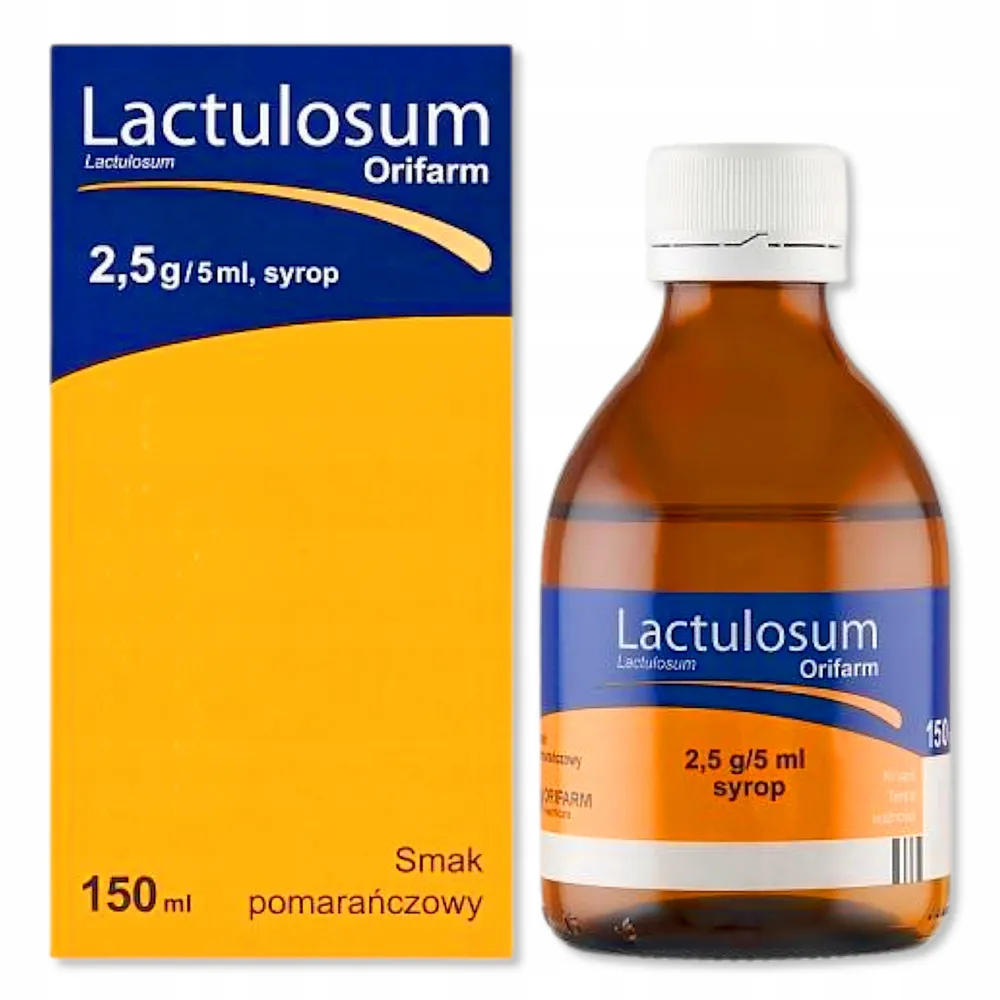
Table of Contents
Patient Information Leaflet
Lactulosum Orifarm, 2.5 g/5 ml, syrup
Lactulosum
Orange flavour
Please read all of this leaflet carefully before taking this medicine, because it contains
important information for you.
You must always use this medicine exactly as described in this patient leaflet or as your
doctor or pharmacist has told you.
- Keep this leaflet. You may need to read it again.
- If you need advice or more information, ask your pharmacist.
- If you get any side effects, including any possible side effects not listed in this leaflet, tell your doctor or pharmacist. See section 4.
- If there is no improvement after using one pack of Lactulosum Orifarm, or if you feel worse, consult your doctor (this does not apply to chronic constipation).
Contents of the leaflet
- What Lactulosum Orifarm is and what it is used for
- What you need to know before taking Lactulosum Orifarm
- How to take Lactulosum Orifarm
- Possible side effects
- How to store Lactulosum Orifarm
- Contents of the pack and other information
1. What Lactulosum Orifarm is and what it is used for
Lactulose is a synthetic disaccharide which, when administered orally, is not broken down by digestive enzymes and is practically not absorbed from the gastrointestinal tract. In the colon, under the influence of saccharolytic bacteria, lactulose is degraded into organic acids, mainly lactic acid. This leads to acidification of the colonic contents (pH decreases to about 5). As a result of osmosis, the degradation products of lactulose increase the volume of intestinal contents, stimulate peristalsis and exert a laxative effect. The reduction in pH of the colonic contents decreases the concentration of ammonia in the intestine and increases the concentration of less absorbable ammonium ions. In addition, there is a reduction in ammonia production and increased consumption of ammonia by intestinal bacteria, as well as reduced absorption of ammonia due to shortened intestinal transit time. Consequently, the blood ammonia concentration is reduced in patients with liver failure who are in a pre-comatose or comatose state (hepatic encephalopathy).
Lactulosum Orifarm is used:
- in chronic constipation;
- in hepatic encephalopathy associated with liver failure (pre-coma and hepatic coma) in adults.
2. Important information before using Lactulosum Orifarm
When not to use Lactulosum Orifarm:
- if the patient is allergic to lactulose or any of the other ingredients of this medicine (listed in section 6);
- if the patient has intestinal obstruction;
- if the patient has elevated galactose levels in the blood (galactosemia);
- if the patient has lactose intolerance.
Warnings and precautions
Before starting treatment with Lactulosum Orifarm, discuss it with your doctor or
pharmacist.
If the patient (or their child) has previously been diagnosed with intolerance to certain sugars, or if the patient has previously been diagnosed with hereditary fructose intolerance, a rare genetic disorder in which the patient's body cannot break down fructose, the patient should consult a doctor
before taking this medicine or giving it to a child. Sorbitol is a source of fructose.
During long-term use of high doses of lactulose in hepatic encephalopathy, serum sodium and potassium levels should be monitored.
There is a lack of data on the safety of use in hepatic encephalopathy in children and
adolescents (up to 18 years of age).
Lactulosum Orifarm with other medicines
Tell your doctor or pharmacist about all medicines the patient is currently taking or has recently taken, as well as any medicines the patient plans to take.
Since lactulose lowers the pH in the colon, drugs whose release is pH-dependent may be inactivated.
Concomitant use of lactulose:
- with agents that neutralize gastric acid may inhibit the reduction of intestinal content pH by lactulose;
- with oral anticoagulants (e.g. acenocoumarol, phenprocoumon) may enhance the effect of these drugs;
- with doperidol – increases the risk of lactulose-induced lowering of serum potassium and magnesium levels below normal (hypokalaemia, hypomagnesaemia) and enhances the risk of cardiotoxic effects (damage to heart muscle);
- with liquorice root – increases the risk of hypokalaemia.
Pregnancy and breastfeeding
If the patient is pregnant or breastfeeding, suspects she may be pregnant, or is planning to have a
child, she should consult a doctor or pharmacist before using this medicine.
Driving and operating machinery
This medicine does not affect the ability to drive or operate machinery.
Lactulosum Orifarm contains, among others: ethanol, linalool, d-limonene (aroma components), sorbitol,
as well as galactose, lactose, fructose, and sulphites (substances originating from the manufacturing process
of the active substance).
Sorbitol
This medicine contains 5.3 mg of sorbitol in 5 ml of syrup. Sorbitol is a source of fructose.
If the patient (or their child) has previously been diagnosed with intolerance to certain sugars, or if the patient has previously been diagnosed with hereditary fructose intolerance, a rare genetic disorder in which the patient's body cannot break down fructose, the patient should consult a doctor before taking this medicine or giving it to a child.
Sorbitol may cause gastrointestinal discomfort and may have a mild laxative effect.
Ethanol
This medicine contains 1.4 mg of ethanol in 5 ml of syrup, equivalent to 0.034% (v/v). The small amount of alcohol in this medicine will not cause noticeable effects.
Sugars
This medicine contains 375 mg of galactose, 250 mg of lactose, and 25 mg of fructose in 5 ml of syrup. This should be taken into account in patients with diabetes.
Galactose, lactose
If the patient has previously been diagnosed with intolerance to certain sugars, the patient should consult a doctor before taking this medicine.
Fruktose
If the patient (or their child) has previously been diagnosed with intolerance to certain sugars, or if the patient has previously been diagnosed with hereditary fructose intolerance, a rare genetic disorder in which the patient's body cannot break down fructose, the patient should consult a doctor before taking this medicine or giving it to a child.
Sulphites
This medicine may rarely cause severe hypersensitivity reactions and bronchospasm.
3. How to use Lactulosum Orifarm
15 ml of syrup contains 7.5 g of lactulose, and 5 ml of syrup contains 2.5 g of lactulose.
This medicine should always be used exactly as described in this patient information leaflet or as directed by the
physician or pharmacist. If in doubt, consult a doctor or pharmacist.
Recommended dose
Adults:
In chronic constipation – initial dose: 20 ml to 40 ml (corresponding to 10 g to 20 g
of lactulose) per day in 1 or 2 doses. When administered once daily as a single dose,
20 ml to 40 ml of the medicinal product should be given; when administered twice daily,
the patient should take 10 ml to 20 ml of syrup per dose.
After achieving the desired effect, the dose should be individually adjusted according to the patient's needs.
In liver insufficiency, pre-comatose states or hepatic coma: 120 ml–240 ml (corresponding to 60 g to 120 g
of lactulose) in 3 to 4 divided doses per day. When administered 3 times daily, each dose should be 40 ml to 80 ml of syrup; when administered 4 times daily, each dose should be 30 ml to 60 ml of syrup. The dosage should be individually adjusted and modified every 1–2 days so that the number of bowel movements per day amounts to 2 to 3.
Children:
In chronic constipation – 5 ml to 15 ml (corresponding to 2.5 g to 7.5 g of lactulose) per day.
Initial dose:
Infants – 2.5 ml (corresponding to 1.25 g of lactulose) per day, children up to 3 years – 5 ml (corresponding to
2.5 g of lactulose) per day, children over 3 years – 15 ml (corresponding to 7.5 g of lactulose) per day.
The dose may then be gradually increased every 3 days until normal bowel movements are achieved. If abdominal distension occurs, the dose should be reduced to a level tolerated by the child.
Laxatives should be used in children only under medical supervision.
There is no safety data available regarding the use of Lactulosum Orifarm in hepatic encephalopathy in children and adolescents (up to 18 years of age).
Method of administration
Oral use. It is recommended to take the syrup diluted with water or fruit juice.
Use of a higher than recommended dose of Lactulosum Orifarm
If more medicine has been taken than recommended, consult a doctor or pharmacist immediately.
Overdose may result in diarrhea, significant fluid loss, decreased potassium levels, and increased sodium levels in blood.
Missed dose of Lactulosum Orifarm
If the medicine is taken regularly and only a short time has passed since the missed dose,
it should be taken as soon as possible.
If it is almost time for the next scheduled dose, take the next dose at the scheduled time.
Do not take a double dose to make up for a missed dose.
4. Possible adverse reactions
Like any medicine, this medicine can cause adverse reactions, although they do not occur in everyone.
Adverse reactions reported with unknown frequency – frequency cannot be estimated from the available data: allergic reactions, rash, itching, urticaria.
The frequency of possible adverse reactions listed below has been defined as follows:
- unknown – frequency cannot be estimated from the available data.
When lactulose is used as a laxative in constipation, the following adverse reactions have been observed, especially during the initial treatment period:
Gastrointestinal disorders:
- mild transient bloating, abdominal pain, occasional nausea. Very rarely, diarrhoea has been observed, which resolved within the first 5 hours after starting treatment.
When lactulose is used in high doses in hepatic encephalopathy, the following adverse reactions have been observed:
Gastrointestinal disorders:
- bloating, abdominal pain, nausea, diarrhoea;
- isolated cases of intestinal pneumatosis.
Metabolism and nutrition disorders:
- decreased concentration of potassium in blood plasma below normal levels (hypokalaemia);
- decreased concentration of sodium in blood plasma below normal levels (hyponatraemia).
Reporting of adverse reactions
If any adverse reactions occur, including any adverse reactions not listed in this leaflet, inform your doctor, pharmacist, or nurse. Adverse reactions can be reported directly to the Department of Monitoring Adverse Drug Reactions of the Office for Registration of Medicinal Products, Medical Devices and Biocidal Products:
Al. Jerozolimskie 181 C, 02-222 Warsaw, tel.: + 48 22 49 21 301, fax: + 48 22 49 21 309, website: https://smz.ezdrowie.gov.pl
Adverse reactions can also be reported to the marketing authorization holder.
Reporting adverse reactions helps to provide more information on the safety of the medicine.
5. How to store Lactulosum Orifarm
Do not store above 25°C.
Store in the original, tightly closed container.
Keep the medicine out of the sight and reach of children.
After first opening the bottle, do not store the medicine for longer than 2 months.
Do not use this medicine after the expiry date stated on the carton and label. The expiry date refers to the last day of the stated month.
Medicines must not be disposed of via wastewater or household waste. Ask your pharmacist how to dispose of medicines no longer required. Such measures help protect the environment.
6. Contents of the packaging and other information
What Lactulosum Orifarm contains
- The active substance is lactulose. 5 ml of syrup contains 2.5 g of lactulose.
- The other components (excipients) are: sorbitol liquid, non-crystallizing; citric acid monohydrate; orange flavor (containing: ethanol, linalool, d-limonene); purified water.
What Lactulosum Orifarm looks like and contents of the pack
The medicine is an orange-flavored syrup.
Packaging: brown glass bottle placed in a cardboard box, containing 150 ml of syrup, closed with a white HDPE screw cap with tamper-evident ring and a transparent sealing disc made of LDPE or LDPE and HDPE (dropper).
Marketing Authorisation Holder:
Orifarm Healthcare A/S
Energivej 15
5260 Odense S
Denmark
For further information about this medicine, please contact the local representative of the Marketing Authorisation Holder:
Orifarm Healthcare Sp. z o.o.
ul. Przyokopowa 31
01-208 Warsaw
Poland
[email protected]
Manufacturer:
Orifarm Manufacturing Poland Sp. z o.o.
ul. Księstwa Łowickiego 12
99-420 Łyszkowice
Poland