Klacid
Poland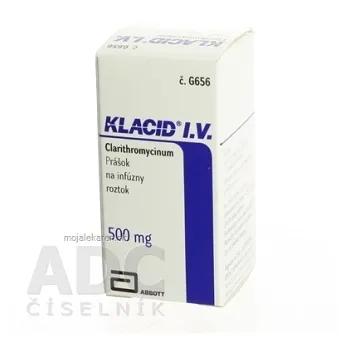
Table of Contents
- Package leaflet: Information for the user
- 1. What Klacid is and what it is used for
- 2. Important information before using Klacid
- 3. How to use Klacid
- 4. Possible adverse reactions
- 5. How to store Klacid
- 6. Contents of the pack and other information
- The following information is intended for healthcare professionals only
Package leaflet: Information for the user
Klacid, 500 mg, powder for solution for infusion concentrate
Clarithromycinum
Please read all of this leaflet carefully before using this medicine because it contains
important information for you.
- Keep this leaflet as you may need to read it again.
- If you have any further questions, please ask your doctor or pharmacist.
- This medicine has been prescribed for a specific individual. Do not pass it on to others. It may harm them even if their symptoms are the same.
- If you experience any adverse reactions, including any not listed in this leaflet, tell your doctor or pharmacist. See section 4.
Table of contents
- What Klacid is and what it is used for
- Important information before using Klacid
- How to use Klacid
- Possible side effects
- How to store Klacid
- Contents of the pack and other information
1. What Klacid is and what it is used for
Klacid contains the active substance clarithromycin. It is a macrolide antibiotic that inhibits the growth of bacteria causing infections.
Klacid, as a powder for solution for infusion concentrate, is indicated for use in adults and children aged 12 years and older for the treatment of infections caused by microorganisms sensitive to clarithromycin, when intravenous administration of an antibiotic is required. These infections include:
- Upper respiratory tract infections
- Lower respiratory tract infections
- Skin and soft tissue infections
- Disseminated or localized infections caused by mycobacteria
2. Important information before using Klacid
When not to use Klacid
- If the patient is allergic to clarithromycin or other macrolide antibiotics (such as azithromycin, erythromycin) or any of the other ingredients of this medicine (listed in section 6).
- If the patient is taking ergot alkaloids, such as ergotamine or dihydroergotamine (medicines used, among others, for migraine) or oral midazolam (a medicine used for anxiety and insomnia).
- If the patient is taking medicines that may cause severe heart rhythm disorders.
- If the patient is taking astemizole or terfenadine (medicines used for allergies), cisapride or domperidone (a medicine used for gastrointestinal motility disorders), or pimozide (a medicine used for psychiatric disorders), because concomitant use with Klacid may cause severe heart rhythm disturbances.
- If the patient is taking ticagrelor, ivabradine, or ranolazine (used in the treatment of angina pectoris or to reduce the risk of heart attack or stroke).
- If the patient has low blood potassium or magnesium levels (hypokalaemia or hypomagnesaemia).
- If the patient is taking lovastatin or simvastatin (statin medicines used to lower blood cholesterol levels).
- If the patient has severe liver dysfunction with concomitant kidney dysfunction.
- If the patient has a history of, or family history of, heart rhythm disorders (ventricular arrhythmias, including torsade de pointes) or electrocardiogram (ECG) abnormalities known as "long QT syndrome".
- If the patient is taking colchicine (a medicine used to treat gout).
- If the patient is taking a medicine containing lomitapide.
Warnings and precautions
If any of the following situations apply to the patient, discuss them with the doctor before starting
treatment with Klacid.
- The patient is pregnant or suspects she may be pregnant.
- The patient has impaired kidney or liver function.
- The patient has coronary artery disease, severe heart failure, or slow heart rate.
- The patient is taking any of the medicines listed in the section "Klacid with other medicines".
If any of the following occur during treatment with Klacid, inform the doctor immediately.
- Severe hypersensitivity reactions such as maculopapular rash, urticaria, petechiae, laryngeal oedema, or bronchospasm. Immediate medical attention is required, and appropriate treatment should be initiated.
- Diarrhoea, especially if acute or prolonged. Inform the doctor as soon as possible. If necessary, the doctor will recommend appropriate treatment. Do not use anti-diarrhoeal medicines.
- Symptoms suggesting liver dysfunction, such as loss of appetite, jaundice, dark urine, itching, or abdominal pain. Treatment should be discontinued and the patient should consult a doctor.
- New infection (superinfection) with bacteria resistant to clarithromycin or fungi, particularly during prolonged antibiotic use. The doctor will recommend appropriate treatment.
Additionally, during treatment with Klacid, the following may occur:
- Cross-resistance of bacteria (bacteria resistant to clarithromycin may also be resistant to other macrolide antibiotics, as well as to lincomycin and clindamycin).
If symptoms indicating damage to the hearing organ or vestibular system occur (see section 4), appropriate follow-up tests are recommended after completion of treatment.
Klacid with other medicines
Inform the doctor about all medicines currently taken or recently taken, as well as any medicines the patient intends to take.
It is essential to inform the doctor if the patient is taking any of the following medicines,
as their concomitant use with Klacid is contraindicated:
- ergot alkaloids, such as ergotamine or dihydroergotamine (medicines used, among others, for migraine)
- astemizole or terfenadine (medicines used for allergies)
- cisapride or domperidone (a medicine used for gastrointestinal motility disorders)
- pimozide (a medicine used for psychiatric disorders)
- ticagrelor, ranolazine (medicines used for heart and circulatory diseases)
- colchicine (a medicine used for gout)
- statins – lovastatin, simvastatin (medicines that lower blood cholesterol levels)
- midazolam administered orally (a medicine used for anxiety or insomnia)
Inform the doctor if the patient is taking any of the following medicines,
as special caution is required when using them concomitantly with Klacid:
- rifampicin, rifapentine, rifabutin (antibiotics used to treat tuberculosis)
- fluconazole, itraconazole (antifungal medicines)
- atazanavir, efavirenz, etravirine, nevirapine, ritonavir, saquinavir, zidovudine (used in the treatment of HIV infection)
- digoxin, quinidine, disopyramide, verapamil, amlodipine, diltiazem (used to treat heart rhythm disorders or hypertension)
- alprazolam, triazolam, midazolam administered intravenously or orally mucosally (medicines used for anxiety or insomnia)
- warfarin or any other anticoagulant, e.g. dabigatran, rivaroxaban, apixaban, edoxaban (medicines used to thin the blood)
- quetiapine or other atypical antipsychotics
- carbamazepine, valproate, phenytoin (antiepileptic medicines)
- methylprednisolone (an anti-inflammatory medicine)
- omeprazole (a medicine that reduces gastric acid secretion)
- cilostazol (a medicine used for intermittent claudication, characterised by pain in the lower limb muscles during exertion, subsiding after short rest)
- cyclosporine, tacrolimus, sirolimus (medicines used, among others, after organ transplantation)
- sildenafil, tadalafil, vardenafil (medicines used for erectile dysfunction)
- ibrutinib or vinblastine (medicines used in cancer chemotherapy)
- theophylline (a medicine used for bronchial asthma)
- tolterodine (a medicine used for urinary incontinence)
- phenobarbital (an anticonvulsant medicine)
- St. John's wort (a herbal medicine used for mild depression)
- sulfonylureas, nateglinide, repaglinide, insulin (medicines used for diabetes)
This is also important when using the following medicines:
- hydroxychloroquine or chloroquine (used, among others, for rheumatoid arthritis, and for treatment or prevention of malaria). Taking these medicines together with clarithromycin may increase the risk of heart rhythm disturbances and other serious adverse effects on the heart.
- corticosteroids administered orally, by injection, or by inhalation (used to suppress immune system activity, which is useful in treating many different conditions).
Pregnancy and breastfeeding
If the patient is pregnant or breastfeeding, suspects she may be pregnant, or is planning to have a
child, she should consult a doctor or pharmacist before using this medicine.
The safety of clarithromycin use during pregnancy and breastfeeding has not been established.
Klacid may be used during pregnancy only if, in the opinion of the doctor, the benefit to the mother
outweighs the potential risk to the foetus.
Since clarithromycin passes into human milk, a breastfeeding woman should exercise particular
caution when using Klacid.
Driving and using machines
The medicine may cause dizziness, confusion, and disorientation, which may affect the ability to
drive or operate machinery.
This medicine contains less than 1 mmol (23 mg) of sodium per dose, i.e. it is considered "sodium-free".
3. How to use Klacid
This medicine should always be used as directed by the physician. If in doubt, consult the
physician or pharmacist.
This is an intravenous preparation.
Adults
The recommended daily dose of clarithromycin for infusion is 1 gram, given in two divided doses
of 500 mg each.
The powder in the vial must be dissolved and then diluted in an appropriate solvent
(preparation method for the infusion solution is given in the section of the package leaflet intended for medical personnel). The dose should be administered intravenously by infusion lasting at least 60 minutes.
The medicine must not be administered as a single, rapid injection ( bolus ) or by intramuscular route.
Depending on the severity of infection, intravenous clarithromycin infusion should be limited
to 2–5 days; as soon as possible, oral administration of the medicine should be initiated.
Children and adolescents
There is insufficient documented evidence regarding the use and dosing of Klacid infusion formulation
in patients under 12 years of age.
In adolescents aged 12–18 years, the dosing is the same as in adults.
Patients with renal impairment
Depending on the degree of renal impairment, the physician may recommend reducing the dose by half,
i.e. to 500 mg per day.
Immunocompromised patients infected with mycobacteria
There are currently no clinical data available on the use of Klacid infusion formulation
in immunocompromised patients; however, data are available on the use of oral formulations of
clarithromycin in HIV-infected patients. For the treatment of disseminated or localized infections
caused by mycobacteria, the recommended daily dose in adults is 500 mg of clarithromycin
twice daily.
Administration of a higher than recommended dose or missing a dose of Klacid
The medicine is administered to the patient by medical personnel. If the patient suspects
that a higher than recommended dose has been administered or that a dose has been missed,
the patient should inform the physician or nurse.
4. Possible adverse reactions
Like all medicines, this medicine can cause adverse reactions, although not everyone will experience them.
If the patient experiences any of the following adverse reactions at any stage of treatment,
stop taking Klacid and consult a doctor immediately:
- anaphylactic shock or anaphylactoid reaction – acute, life-threatening allergic reaction, manifested among others by confusion, pallor, drop in blood pressure, sweating, reduced urine output, rapid breathing, weakness and fainting
- allergic reactions: rash (common), itching, urticaria (uncommon), angioedema of the face, tongue, lips, eyes and throat, breathing difficulties
- severe skin reactions:
- acute generalized exanthematous pustulosis – red, peeling rash with subcutaneous nodules and blisters, epidermal blistering (uncommon)
- erythema multiforme bullosum (Stevens-Johnson syndrome), characterized by sudden onset of fever and blisters, which resolve spontaneously and rapidly after discontinuation of the drug; a severe condition manifested by blisters and erosions on the skin, in the oral cavity, eyes and genital organs, accompanied by fever and joint pain
- toxic epidermal necrolysis (Lyell's syndrome) – a severe, rapidly progressing disease characterized by rupturing of giant subepidermal blisters, extensive skin erosions, shedding of large sheets of epidermis, and fever
- DRESS syndrome – severe (life-threatening) drug-induced rash associated with eosinophilia and internal organ involvement
- severe or prolonged diarrhoea, possibly with blood or mucus in the stool (pseudomembranous colitis). Diarrhoea may occur even up to two months after completion of clarithromycin treatment. In such cases, medical advice should also be sought
- yellowing of the skin (jaundice), skin irritation, pale stool, dark urine, abdominal tenderness or loss of appetite. These may be symptoms of liver failure
- cardiac arrest, atrial fibrillation, extrasystoles, palpitations, changes in ECG (prolongation of QT interval) (uncommon)
- loss of consciousness (uncommon)
- pulmonary embolism (uncommon; symptoms include dyspnoea, chest pain, cough, cyanosis). These reactions occur with unknown frequency unless otherwise stated.
Other adverse reactions
In clinical trials and post-marketing surveillance of clarithromycin in the form of powder
for preparation of infusion solution concentrate, very common (in more than 1 in 10 patients)
phlebitis at the injection site was reported.
In patients receiving clarithromycin intravenously or orally, the following adverse reactions were common
(occur in 1 to 10 out of 100 patients):
- pain at injection site, inflammation at injection site, phlebitis at injection site
- insomnia
- taste disturbances, headache, altered taste perception
- vasodilation
- diarrhoea, vomiting, dyspepsia, nausea, abdominal pain
- abnormal liver function test results
- excessive sweating
Adverse reactions reported uncommonly (occur in 1 to 10 out of 1000 patients):
- connective tissue inflammation, candidiasis (fungal infection), vaginal infection
- decreased white blood cell count
- anorexia, decreased appetite
- anxiety
- dyskinesia (involuntary, uncoordinated movements of limbs or whole body), dizziness, somnolence, tremor
- balance disorders, hearing loss, tinnitus
- asthma
- oesophagitis, gastritis, stomatitis, glossitis, constipation, dry mouth, belching, flatulence
- increased liver enzyme activity: alanine aminotransferase, increased aspartate aminotransferase activity
- musculoskeletal stiffness
- increased blood creatinine, increased blood urea, abnormal albumin to globulin ratio
- asthenia (weakness, lack of energy)
The following adverse reactions have been reported after marketing of various formulations of
Klacid (tablets, granules for oral suspension, powder for preparation of infusion concentrate)
at a frequency not known (frequency cannot be estimated from available data):
- lupus erythematosus
- agranulocytosis (reduction in granulocyte count), thrombocytopenia (reduction in platelet count)
- acne
- psychotic disorder, confusion, depersonalization, depression, disorientation, hallucinations, unusual dreams, mania
- convulsions, loss of taste, parosmia, anosmia, paraesthesia (numbness, tingling)
- deafness
- cardiac arrhythmias such as torsade de pointes, ventricular tachycardia, ventricular fibrillation
- haemorrhage
- acute pancreatitis, tongue discoloration, tooth discoloration
- myopathy (muscle disease with muscle weakness)
- renal failure, interstitial nephritis
- changes in diagnostic test results (increased international normalized ratio (INR), prolonged prothrombin time, abnormal urine color)
Patients with impaired immunity
In addition to symptoms related to the underlying disease, the following adverse reactions have been observed in adult patients with impaired immunity:
- nausea, vomiting, taste disturbances, constipation, abdominal pain, diarrhoea, flatulence, dry mouth
- headache, hearing disturbances
- rash
- dyspnoea, insomnia
- abnormal laboratory test results: increased aspartate aminotransferase (AspAT) and alanine aminotransferase (AlAT) activity, increased blood urea nitrogen, decreased platelet and white blood cell counts.
Reporting of adverse reactions
If any adverse reactions occur, including any not listed in this leaflet, inform your doctor or pharmacist. Adverse reactions can be reported directly to the Department of Monitoring Adverse Drug Reactions, Office for Registration of Medicinal Products, Medical Devices and Biocidal Products,
Al. Jerozolimskie 181C, 02-222 Warsaw,
Tel.: 22 49 21 301,
Fax: 22 49 21 309
Website: https://smz.ezdrowie.gov.pl
Adverse reactions can also be reported to the marketing authorization holder.
Reporting adverse reactions helps to provide more information on the safety of the medicine.
5. How to store Klacid
Keep this medicine out of sight and reach of children.
Do not use this medicine after the expiry date stated on the packaging after "EXP". The expiry date refers to the last day of the stated month.
The batch number is indicated on the packaging after "Lot".
Store at a temperature not exceeding 30°C.
Keep in the original packaging.
Store the infusion solution at 2°C to 8°C and use within 24 hours.
Medicines must not be disposed of via wastewater or household waste. Ask your pharmacist how to dispose of medicines no longer required. These measures will help protect the environment.
6. Contents of the pack and other information
What Klacid contains
- The active substance is clarithromycin. One vial contains 500 mg of clarithromycin.
- The other components are: lactobionic acid and sodium hydroxide to adjust pH.
What Klacid looks like and contents of the pack
Klacid is a white or almost white powder for concentrate for solution for infusion.
Packaging – a 15 ml type I Ph.Eur. colourless glass vial, closed with a grey halobutyl silicone-coated lyophilized stopper W4416/50 (Igloo).
Marketing Authorisation Holder
Viatris Healthcare Sp. z o.o.
ul. Postępu 21B
02-676 Warsaw
Manufacturer
Delpharm Saint Remy
Rue de l’Isle
28380 Saint-Rémy-sur-Avre
France
For further information about this medicinal product, please contact the Marketing Authorisation Holder:
Viatris Healthcare Sp. z o.o.
ul. Postępu 21B
02-676 Warsaw
Tel.: 22 546 64 00
-------------------------------[perforated line separating from patient leaflet]------------------------
The following information is intended for healthcare professionals only
INSTRUCTIONS FOR THE ADMINISTERING PERSONNEL
Klacid, 500 mg, powder for solution for infusion concentrate
Clarithromycinum
The powder in the vial must be dissolved and then diluted in an appropriate diluent
(see below: Preparation of the infusion solution). The dose should be administered intravenously
by infusion over at least 60 minutes.
The medicinal product must not be administered as a single, rapid injection ( bolus ) or by intramuscular route.
PREPARATION OF THE INFUSION SOLUTION
A. Preparation of the stock solution
Inject 10 ml of Water for Injections into the vial containing the powder. Shake until the contents are completely dissolved. Only Water for Injections should be used for reconstitution. Other solvents may cause precipitation. Do not use inorganic salt solutions or solutions containing preservatives.
Each 1 ml of the stock solution prepared as described above contains 50 mg of clarithromycin.
The stock solution is chemically and physically stable for 48 hours at 5°C or for 24 hours at 25°C. From a microbiological standpoint, the product should be used immediately after preparation. The user is responsible if the product is not used immediately after reconstitution or if storage conditions and times are not observed. As a standard, the solution should not be stored for longer than 24 hours at 2°C to 8°C. An exception applies if the solution has been prepared under controlled and validated full aseptic conditions.
B. Preparation of the infusion solution
Add the stock solution (500 mg in 10 ml of Water for Injections) to 250 ml of one of the following solutions: 5% glucose in Ringer's lactate solution, 5% glucose solution, Ringer's lactate solution, 5% glucose in 0.3% sodium chloride solution, Normosol-M in 5% glucose solution, Normosol-R in 5% glucose solution, 5% glucose in 0.45% sodium chloride solution, 0.9% sodium chloride solution.
The infusion solution is chemically and physically stable for 48 hours at 5°C or for 6 hours at 25°C. From a microbiological standpoint, the infusion solution should be used immediately after preparation. The user is responsible if the product is not used immediately after preparation or if storage conditions and times are not observed. As a standard, the solution should not be stored for longer than 24 hours at 2°C to 8°C. An exception applies if the solution has been prepared under controlled and validated full aseptic conditions.
Note: There are currently no clinically documented data on pharmaceutical compatibility with other intravenous solutions.