Ketonal
Poland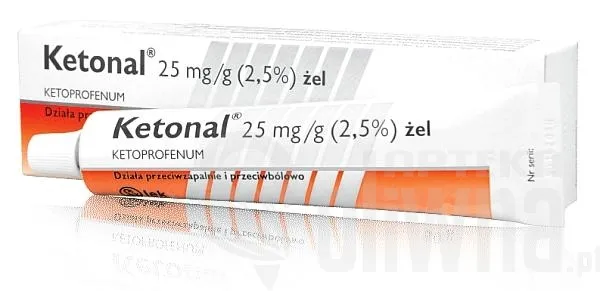
Table of Contents
Package leaflet: Information for the patient
Ketonal, 25 mg/g (2.5%) gel
Ketoprofen
Please read carefully the entire leaflet before use, as it contains
important information for the patient.
Keep this leaflet, so that you can read it again if necessary.
If you have any further questions, please consult your doctor or pharmacist.
This medicine has been prescribed for a specific individual. Do not give it to others.
The medicine may harm another person, even if their symptoms are the same.
If you experience any adverse reactions, including any not listed in this leaflet,
inform your doctor or pharmacist. See section 4.
Table of contents of the leaflet
- What Ketonal is and what it is used for
- Important information before using Ketonal
- How to use Ketonal
- Possible side effects
- How to store Ketonal
- Contents of the pack and other information
1. What Ketonal is and what it is used for
Ketonal gel contains the active substance ketoprofen – a non-steroidal anti-inflammatory drug.
The medicine has analgesic and anti-inflammatory effects.
Ketonal gel is intended for topical application to the skin.
Ketonal gel is indicated in adults for:
lumbar pain, muscle pain and rheumatic pain, sprains and post-traumatic injuries,
musculoskeletal pain and swelling due to sports injuries,
pain in mild to moderate joint inflammation.
2. Important information before using Ketonal
When not to use Ketonal
if the patient has ever had an allergic reaction to ketoprofen, fenofibrate, tiaprofenic acid, acetylsalicylic acid, other non-steroidal anti-inflammatory drugs (NSAIDs), sunscreens (UV filters), or perfumes, or to any of the other ingredients of this medicine (listed in section 6).
Allergic reactions may include symptoms such as bronchial asthma, inflammation of the nasal mucosa, rash, or urticaria (itchy rash).
if the patient has previously experienced photosensitivity reactions (hypersensitivity to sunlight).
if the patient is under 15 years of age.
if the patient is in the last 3 months of pregnancy.
if the skin at the site where the medicine is to be applied is damaged or diseased (eczema, acne, various dermatoses, open or infected wounds).
Do not use ketoprofen gel under occlusive dressings.
Immediately discontinue use if skin reactions occur, including skin reactions after concomitant use of products containing octocrylene (octocrylene is one of the excipients used in various cosmetics and hygiene products [such as shampoos, after-shave products, shower gels and bath products, skin creams, lip balms, anti-wrinkle creams, make-up removers, hair lacquers] to delay their breakdown under light exposure).
During treatment and for 2 weeks after stopping the medicine, avoid exposing the treated skin area to sunlight (even if the sky is cloudy) or UV radiation (e.g. in a solarium).
Warnings and precautions
Before using Ketonal gel, consult a doctor if:
- the patient has impaired kidney, heart, or liver function,
- the patient has had a cerebral haemorrhage or has a tendency to bleeding,
- the patient has previously been diagnosed with gastric or duodenal ulcer disease or inflammatory bowel disease. Elderly patients should use Ketonal gel with caution. If skin changes (e.g. rash) occur during treatment, including reactions after concomitant use of a product containing octocrylene, discontinue use of Ketonal gel immediately and consult a doctor. During use of Ketonal gel and for 2 weeks after treatment ends, avoid exposing the treated area to sunlight and UV radiation (e.g. in a solarium). Do not allow the gel to come into contact with mucous membranes, eyes, nose, mouth, around the eyes, anus, or genital organs. If contact occurs, rinse thoroughly with water. After applying the gel, wash hands thoroughly.
- Local application of ketoprofen may trigger asthma attacks in some individuals. Large amounts of topically applied gel may cause systemic effects, including hypersensitivity reactions and asthma.
- Exposure to sunlight (even if the sky is cloudy) or UVA radiation (e.g. in a solarium) on areas of skin treated with Ketonal gel may cause serious skin reactions (photosensitivity). Therefore, it is essential to:
- protect treated skin areas by wearing clothing during treatment and for two weeks after stopping the medicine, to avoid the risk of photosensitivity;
- thoroughly wash hands after each application of Ketonal gel.
- Patients with asthma, chronic inflammation of the nasal mucosa, chronic sinusitis, and/or nasal polyps have a higher risk of allergy to acetylsalicylic acid and/or non-steroidal anti-inflammatory drugs (NSAIDs) compared to the general population.
Do not exceed the recommended duration of treatment due to the increasing risk over time of contact dermatitis and photosensitivity reactions.
Children
The safety and efficacy of ketoprofen gel in children have not been established.
Ketonal and other medicines
Inform the doctor about all medicines currently used or recently used, as well as any medicines the patient plans to use, including those available without a prescription.
Concomitant use of Ketonal gel and other topical medicines on the same skin area is not recommended.
Although drug interactions between ketoprofen gel and other medicines are unlikely, caution is advised in patients receiving high doses of methotrexate (a medicine primarily used in oncological diseases).
Patients receiving coumarin derivatives (anticoagulants) should consult their doctor before starting Ketonal gel.
Pregnancy and breastfeeding
If a woman is pregnant or breastfeeding, suspects she may be pregnant, or is planning to have a child, she should consult a doctor or pharmacist before using this medicine.
This medicine must not be used during pregnancy. Use of ketoprofen during breastfeeding is not recommended.
Do not use Ketonal gel during the last 3 months of pregnancy. During the first 6 months of pregnancy, Ketonal gel should not be used unless the doctor considers its use absolutely necessary. If treatment is required during this period, the smallest effective dose for the shortest possible duration is recommended.
Oral formulations (e.g. tablets) of Ketonal may cause adverse effects in the unborn child. It is unknown whether the same risk applies when Ketonal is applied to the skin.
Driving and operating machinery
The effect of Ketonal gel on the ability to drive and operate machinery is unknown.
Ketonal contains ethanol
Ketonal gel contains approximately 4.07 g of ethanol in the maximum daily dose (15 g of gel), equivalent to about 271.32 mg of ethanol per 1 g of gel. This may cause stinging on damaged skin.
3. How to use Ketonal
This medicine should always be used according to the doctor's instructions. If in doubt, consult your
doctor or pharmacist.
Adults and adolescents over 15 years of age
Apply a small amount of gel to the skin over the painful area and gently massage into the skin for
several minutes, two or three times daily.
The amount of gel used should be adjusted according to the size of the painful area.
The maximum daily amount of gel that may be applied is 15 g (7.5 g corresponds to approximately
a 9 cm strip of squeezed-out gel), which equals 375 mg of the active substance—ketoprofen.
During treatment and for 2 weeks after discontinuation of application, protect the treated skin areas
from sunlight exposure by covering them with clothing to avoid the risk of photosensitivity reactions.
If symptoms do not improve, worsen, or new symptoms appear after 7 days of using the medicine,
consult your doctor.
After applying the gel, do not cover the affected area with plastic film (so-called occlusive dressing).
Avoid contact of the medicine with eyes and mucous membranes. After each application, wash hands thoroughly.
Children
Ketonal gel is not recommended for use in children under 15 years of age.
Use of more than the recommended dose of Ketonal
Overdose with topically applied medicine is unlikely.
In case of accidental ingestion of Ketonal gel, seek immediate medical advice from a doctor or the
nearest hospital, as systemic adverse effects may occur, the extent and severity of which depend on
the amount of medicine ingested.
If you have any further doubts regarding the use of this medicine, consult your doctor or pharmacist.
4. Possible adverse effects
Like all medicines, this medicine can cause adverse effects, although they do not occur in everyone.
The most common are local skin reactions, which may sometimes spread beyond the site of gel application.
Uncommon (may affect fewer than 1 in 100 people): local skin reactions such as redness, itching, rash (itchy, red, burning rash), burning sensation, mild transient skin inflammation.
Rare (may affect fewer than 1 in 1,000 people): urticaria, rash, photosensitivity, blistering rash, cases of severe reactions such as bullous or pustular eruptions, which may spread or become generalized.
Very rare (may affect fewer than 1 in 10,000 people): anaphylactic reaction (severe allergic reaction – difficulty breathing, dizziness), worsening of chronic renal failure.
Frequency not known (frequency cannot be estimated from available data): hypersensitivity reactions, anaphylactic shock, angioedema (allergic reaction – swelling mainly of the face and throat).
Severe contact dermatitis has been reported during exposure to sunlight. Severe, widespread, prolonged photosensitivity reactions have been reported. Even a single application of ketoprofen may cause prolonged photosensitivity.
Topically applied non-steroidal anti-inflammatory drugs may cause interstitial nephritis.
If any of the following symptoms occur, stop using the medicine immediately and contact a doctor or the nearest hospital:
allergic skin reaction,
asthma attack,
hypersensitivity reaction after exposure of the treated area to sunlight or UV radiation,
severe skin reaction that spreads rapidly.
Contact a doctor promptly if the following occur:
skin redness,
itching,
burning sensation,
dry skin due to frequent use.
Reporting of adverse effects
If any adverse effects occur, including any not listed in this leaflet, inform your doctor, pharmacist, or nurse. Adverse effects can be reported directly to the Department of Monitoring Adverse Drug Reactions of the Office for Registration of Medicinal Products, Medical Devices and Biocidal Products: Al. Jerozolimskie 181C, 02-222 Warsaw
tel.: + 48 22 49 21 301/fax: + 48 22 49 21 309/website: https://smz.ezdrowie.gov.pl
Adverse effects can also be reported to the marketing authorization holder.
Reporting adverse effects helps to provide more information on the safety of the medicine.
5. How to store Ketonal medicine
Keep the medicine out of the sight and reach of children.
Store below 25°C.
Do not use this medicine after the expiry date stated on the packaging after: EXP.
The expiry date refers to the last day of the stated month.
Medicines should not be disposed of via the sewage system or household waste. Ask your pharmacist how to dispose of medicines no longer in use. This will help protect the environment.
6. Contents of the pack and other information
What Ketonal contains
The active substance is ketoprofen. 1 gram of gel contains 25 mg of ketoprofen.
Other ingredients: carbomer, tromethamine, 96% ethanol, lavender essence, purified water.
What Ketonal looks like and contents of the pack
Ketonal gel is a homogeneous, transparent gel with a lavender and alcohol scent.
The gel is available in an aluminium tube, packed in a cardboard box.
Pack sizes contain 50 g or 100 g of gel.
Marketing Authorisation Holder and Manufacturer
Marketing Authorisation Holder
Sandoz GmbH
Biochemiestrasse 10
6250 Kundl, Austria
Manufacturer
Salutas Pharma GmbH
Lange Göhren 3
39171 Sülzetal, OT Osterweddingen, Germany
Salutas Pharma GmbH
Otto-von-Guericke-Allee 1
39179 Barleben
Germany
For further information on this medicinal product, please contact:
Sandoz Polska Sp. z o.o.
ul. Domaniewska 50 C
02-672 Warsaw
tel. +48 22 209 70 00