Ketalar 10
Poland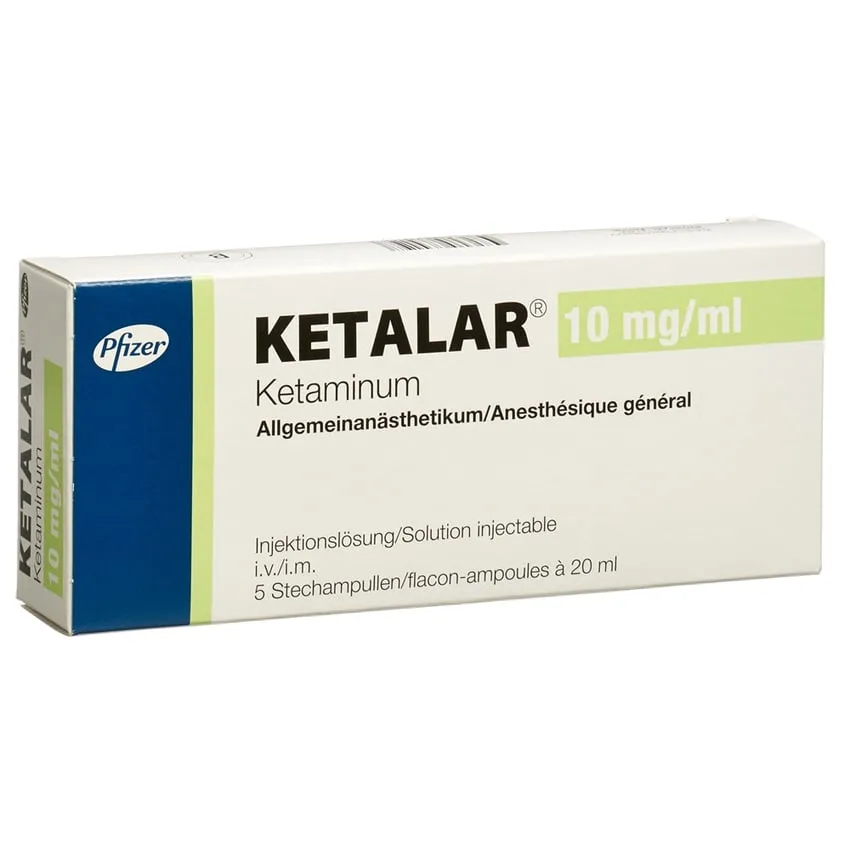
Table of Contents
- Package leaflet: Information for the user
- 1. What Ketalar 10 is and what it is used for
- 2. Important information before using Ketalar 10
- 3. How to use Ketalar 10
- 4. Possible adverse reactions
- 5. How to store Ketalar 10
- 6. Contents of the pack and other information
- Information intended exclusively for medical professionals
Package leaflet: Information for the user
Ketalar 10, 10 mg/ml, solution for injection
Ketaminum
Please read all of this leaflet carefully before the medicine is administered, because it contains
important information for the patient.
- Keep this leaflet, as you may need to read it again.
- If you have any further questions, please ask your doctor or nurse.
- If the patient experiences any adverse reactions, including any not listed in this leaflet, inform the doctor, pharmacist, or nurse. See section 4.
Contents of the leaflet
- What Ketalar 10 is and what it is used for
- What you need to know before receiving Ketalar 10
- How to use Ketalar 10
- Possible side effects
- How to store Ketalar 10
- Contents of the pack and other information
1. What Ketalar 10 is and what it is used for
Ketalar 10 is a fast-acting medicine used for general anaesthesia, administered by intravenous or intramuscular injection.
Ketalar 10 is used:
- as a single anaesthetic agent for short diagnostic and surgical procedures that do not require skeletal muscle relaxation;
- as induction of general anaesthesia prior to administration of other anaesthetic agents;
- in combination with other anaesthetic medicines.
Specific indications or types of procedures:
- When intramuscular administration is preferred.
- Surgical wound debridement, painful dressing changes, skin grafting in burn patients, and other surgical procedures involving body surfaces.
- Certain neurological, radiodiagnostic, and therapeutic procedures in children requiring immobilization.
- When airway management is difficult.
Ketamine is indicated for use in both children and adults.
Note: Ketamine should be used with caution in surgical procedures involving the pharynx, larynx, or trachea, as it increases salivary and tracheobronchial secretions and provides inadequate suppression of pharyngeal and laryngeal reflexes.
2. Important information before using Ketalar 10
When not to use Ketalar 10
- in patients with high blood pressure;
- if the patient is allergic to ketamine or any of the other ingredients of this medicine (listed in section 6);
- in pregnant women or women with threatened miscarriage;
- in patients with severe coronary heart disease or other heart disease;
- in patients with cerebrovascular disorders (e.g. stroke);
- in patients with a history of psychiatric disorders;
- in patients with suspected or diagnosed schizophrenia or acute psychosis (even if well controlled pharmacologically).
Warnings and precautions
Before starting treatment with Ketalar 10, discuss this with your doctor or nurse. Special caution is required:
- in patients with increased intracranial pressure before anaesthesia;
- in patients with chronic alcohol abuse or alcohol intoxication;
- in patients with liver cirrhosis or other types of liver dysfunction. Ketamine is metabolized in the liver and may therefore have a prolonged effect in patients with impaired liver function. Abnormal liver function test results associated with ketamine use have been reported, especially with prolonged use (more than 3 days) or drug abuse. In such cases, the doctor may consider reducing the dose;
- in patients with increased intraocular pressure (e.g. glaucoma), as this pressure may significantly increase even after administration of a single dose of ketamine;
- in patients with neurotic tendencies;
- in patients with acute intermittent porphyria (inherited or acquired disorders of heme synthesis, a component of, among others, haemoglobin);
- in patients experiencing seizures;
- in patients with hyperthyroidism treated with thyroid hormones;
- in patients with lung infections or upper respiratory tract infections (ketamine intensifies the cough reflex, which may provoke laryngospasm);
- in patients with intracranial lesions, post-head injury conditions, cerebral contusion or hydrocephalus;
- in patients with hypovolemia—reduced vascular filling due to blood loss (haemorrhage), plasma loss (burns), or extracellular fluid loss (e.g. diarrhoea, vomiting), dehydration, or heart disease, especially coronary artery disease (e.g. congestive heart failure, myocardial ischaemia, myocardial infarction);
- in patients with mild to moderate arterial hypertension and cardiac arrhythmia with rapid heart rate;
- in children and adolescents up to 15 years of age undergoing anaesthesia for diagnostic or surgical procedures, regardless of the type of anaesthesia, there is a relatively higher risk of critical respiratory events (e.g. laryngospasm, etc.). The main risk factors are age, medical history, and physical condition. Children under 3 years of age, premature infants, and children and adolescents with other risk factors in their medical history should be anaesthetized by appropriately experienced anaesthesiologists with adequate paediatric training.
Additional notes on the use of Ketalar 10:
- This medicine is intended exclusively for hospital use by or under the supervision of experienced anaesthesiologists, unless its use is necessary in emergency situations.
- As with other general anaesthetics, resuscitation equipment must be available during the use of Ketalar 10.
- Administration of Ketalar 10 must always be preceded by an appropriate dose of atropine, scopolamine, or another agent reducing salivary secretion.
- During emergence from anaesthesia, hallucinations may occur.
- Since pharyngeal and laryngeal reflexes are generally preserved during anaesthesia, ketamine should not be used as the sole anaesthetic agent in surgical or diagnostic procedures involving the pharynx, larynx, or bronchial tree. If ketamine is used as the sole anaesthetic agent, mechanical irritation of the pharynx should be avoided as much as possible. In such cases, the doctor may recommend the use of skeletal muscle relaxants, with appropriate control of respiratory function.
- Vomiting may occur for several hours after anaesthesia.
- High plasma concentrations of the drug after intravenous administration may cause transient respiratory depression and suppression of pharyngo-laryngeal reflexes. To minimize these effects, the doctor may recommend slow injection of a diluted solution. Aspiration is rare in clinical practice, but this possibility should be considered.
- In patients with diagnosed arterial hypertension or cardiac dysfunction, the doctor should recommend monitoring of cardiac function.
- In case of overdose of Ketalar 10, respiratory depression may occur; in such a case, the doctor may recommend respiratory support. Mechanical respiratory support is preferred over the use of analeptics.
- The intravenous dose should be administered slowly (over 60–120 seconds). Faster administration may cause transient respiratory depression or apnoea, and increased arterial blood pressure.
- In surgical procedures causing visceral pain (internal organs), Ketalar 10 should be supplemented with an agent that blocks visceral pain transmission.
- If Ketalar 10 is used in outpatient settings, the patient may be discharged home only after full recovery of consciousness. Afterwards, the patient should remain under the supervision of an adult.
- Blood pressure increases immediately after injection, reaches maximum values within a few minutes, and usually returns to pre-anaesthesia levels within 15 minutes after injection.
- In patients with long-term ketamine use (from 1 month to several years), cases of cystitis, including hemorrhagic cystitis, have been reported.
- Ketalar 10 has been identified as a drug with abuse potential. Ketalar 10 causes various adverse effects, including flashback episodes (recurrence of previous psychotic experiences), hallucinations, dysphoria, anxiety, insomnia, or disorientation. Cases of cystitis, including hemorrhagic cystitis, and hepatotoxicity have also been reported. Daily use over several weeks may lead to dependence and tolerance, particularly in patients with current or past history of drug abuse. Therefore, Ketalar 10 should be used under strict medical supervision and prescribed and administered with special caution.
- Confusion may occur during recovery from anaesthesia.
- Some patients may experience psychiatric disturbances of varying severity, ranging from a pleasant dream-like state, through vivid imagery, hallucinations, nightmares, to delirium requiring immediate intervention. In some cases, these states are accompanied by confusion, agitation, and irrational behavior. The duration of such disturbances usually lasts up to several hours; however, in some cases, recurrence has been observed up to 24 hours after surgery.
- The above reactions are less frequently observed in children and adolescents (up to 15 years of age), which is why ketamine is particularly used in paediatric anaesthesia. These reactions also occur less frequently in elderly patients (over 65 years). Furthermore, they occur less frequently when the product is administered intramuscularly. No long-term effects of ketamine on mental function are known.
You should consult your doctor, even if the above warnings relate to conditions occurring in the past.
Long-term use
Ketalar 10 is not indicated or recommended for long-term use.
Cases of cystitis, sometimes with accompanying bleeding, and liver disease have been reported, especially during prolonged use (>3 days) or drug abuse. See section 4 "Possible side effects".
Drug abuse and dependence
Daily use of this medicine for several weeks may lead to dependence and development of tolerance, particularly in individuals with a history of drug abuse, including psychoactive substances, and prior dependence. Other adverse effects have also been reported. See section "Long-term use".
Patients with liver dysfunction
The doctor may consider reducing the dose of the drug in patients with liver cirrhosis or other liver function disorders.
Ketalar 10 and other medicines
Tell your doctor or nurse about all medicines you are currently taking or have recently taken, as well as any medicines you plan to take.
Inform your doctor if you are taking the following medicines:
- barbiturates (sedatives and anticonvulsants) or narcotic agents—when used concomitantly with ketamine, they may prolong emergence from anaesthesia, similarly to premedication using benzodiazepines;
- diazepam—increases the half-life of ketamine and prolongs its pharmacodynamic action. Therefore, dose adjustment may be necessary;
- diazepam or other benzodiazepines (sedatives and tranquilizers)—increase blood concentration and reduce the clearance of ketamine (body's drug elimination rate);
- thyroid hormones—increase the risk of arterial hypertension and tachycardia (accelerated heart rate);
- other agents causing central nervous system depression (e.g. alcohol, phenothiazines, H-receptor blockers with sedative effects (antihistamines), skeletal muscle relaxants)—may enhance central nervous system depression and (or) increase the risk of respiratory depression. Dose reduction of ketamine may be necessary when used concomitantly with other anxiolytic, sedative, or hypnotic agents;
- antihypertensive agents—when administered with ketamine, increase the risk of hypotension;
- sympathomimetics (direct or indirect acting) and vasopressin—may enhance the stimulatory effect of ketamine on the sympathetic system;
- ergometrine—may lead to increased blood pressure;
- theophylline, aminophylline—unpredictable seizures may occur;
- when ketamine is administered concomitantly with drugs inhibiting CYP3A4 activity (e.g. itraconazole, ketoconazole, HIV protease inhibitors, erythromycin, clarithromycin, nefazodone, cyclosporine, gemfibrozil), dose reduction of ketamine may be necessary;
- when ketamine is administered concomitantly with drugs inducing CYP3A4 activity (e.g. rifampicin, phenytoin, phenobarbital, carbamazepine), dose increase of ketamine may be necessary.
Other interactions:
- Barbiturates and Ketalar 10—chemically incompatible due to precipitation, should not be administered from the same syringe.
- Other general anaesthetics—block the cardiovascular stimulation by ketamine mediated via the central nervous system. Combined use with halothane or enflurane anaesthesia resulted in significant cardiovascular depression. Halothane slows the distribution and redistribution (movement of the drug between tissues) of ketamine and inhibits its hepatic metabolism.
- Nitrous oxide—concomitant use with ketamine reduces the required dose of ketamine.
- Gallamine—concomitant use with ketamine leads to tachycardia (accelerated heart rate); use of ketamine with pancuronium (a skeletal muscle relaxant)
leads to arterial hypertension. Neither of these muscle relaxants should be used simultaneously with ketamine.
- Atracurium and tubocurarine (skeletal muscle relaxants leading to respiratory depression with apnoea)—ketamine may accelerate the onset of apnoea.
- Anaesthetic agents—concomitant use with ketamine (especially at high doses or rapid administration) may increase the risk of bradycardia (slowed heart rate), decreased arterial pressure, or reduced cardiac output.
- Thiopental—ketamine has been shown to reduce the hypnotic effect of thiopental.
Pregnancy, breastfeeding, and fertility
If the patient is pregnant or breastfeeding, suspects she may be pregnant, or plans to have a child, she should consult her doctor or nurse before using this medicine.
Ketalar 10 crosses the placenta. Use during pregnancy is not recommended, except for administration of Ketalar 10 during caesarean section or natural childbirth. Some newborns exposed to ketamine administered intravenously to their mothers during delivery experienced respiratory depression and scored lower on the Apgar scale.
In obstetrics, there are no data on the use of intramuscularly administered Ketalar 10 or intravenous maintenance doses, and recommended doses cannot be established. Due to lack of safety data, use of Ketalar 10 is not recommended in breastfeeding women.
Driving and operating machinery
Do not drive, operate any machinery, or perform hazardous activities for 24 hours or longer after anaesthesia.
Ketalar 10 contains sodium
The medicine contains 53 mg of sodium (the main component of table salt) in each 20 ml vial. This corresponds to 2.65% of the maximum recommended daily sodium intake in the diet for adults.
3. How to use Ketalar 10
Ketalar 10 is not indicated or recommended for long-term use.
Ketalar 10 should be used exclusively in hospital settings or under the supervision of an
experienced anaesthesiologist. Access to resuscitation equipment must be ensured during
administration of Ketalar 10.
Ketalar 10 may be administered as intravenous or intramuscular injections.
Adults, elderly patients (over 65 years of age), and children
In elderly patients, ketamine may be used as the sole anaesthetic agent or in combination with other anaesthetic agents.
Preparation for the procedure
- Ketalar 10 has been shown to be safe when administered as the sole anaesthetic agent in patients who are not fasting. However, it is recommended that, in the case of elective procedures, patients refrain from oral intake for at least 6 hours prior to anaesthesia, as ketamine may cause vomiting. The need for concomitant administration of other anaesthetic or muscle relaxant drugs cannot be excluded. Use of Ketalar 10 may be considered in non-fasting patients if, in the physician's judgment, the benefits outweigh the potential risks.
- Ketamine increases salivary secretion. The physician should decide appropriately in advance of anaesthesia induction to administer atropine, hyoscine, glycopyrrolate, or another agent reducing salivary secretion.
- Midazolam, diazepam, lorazepam, or flunitrazepam administered during premedication or concomitantly with ketamine reduce the frequency of
unwanted effects during emergence from anaesthesia.
Onset and duration of anaesthesia
As with other anaesthetic agents, individual response to Ketalar 10 varies depending on dose, route of administration, patient age, and concomitantly administered drugs.
The dose range may vary from 1 mg/kg body weight to 4.5 mg/kg body weight for intravenous administration and from 6.5 mg/kg body weight to 13 mg/kg body weight for intramuscular administration. The physician will determine the appropriate dosage for each patient.
Detailed dosing and administration instructions intended for healthcare professionals are provided at the end of this leaflet.
Due to the rapid onset of action following intravenous administration, the patient should be in a supported position during drug administration. Recovery of consciousness occurs gradually.
Use of a higher than recommended dose of Ketalar 10
Overdose of Ketalar 10 may lead to respiratory depression. Symptomatic treatment should be administered in such cases.
4. Possible adverse reactions
Like all medicines, this medicine can cause adverse reactions, although not everyone experiences them.
Common (may occur in up to 1 in 10 people):
- hallucinations
- vivid dreams
- nightmares
- confusion
- agitation
- irrational behaviour
- nystagmus
- hypertension
- tonic-clonic movements
- diplopia
- increased blood pressure
- increased heart rate
- increased respiratory rate
- nausea
- vomiting
- erythema
- acneiform rash
Uncommon (may occur in up to 1 in 100 people):
- loss of appetite
- anxiety
- bradycardia
- arrhythmia
- hypotension
- respiratory depression
- laryngospasm
- pain at injection site
- rash at injection site
Rare (may occur in up to 1 in 1,000 people):
- anaphylactic reactions
- delirium
- flashback episodes (recurrence of previous psychotic experiences)
- dysphoria
- insomnia
- disorientation
- airway obstruction
- apnoea
- excessive salivation
- cystitis and (or) dysuria, possible occurrence of haematuria
- haemorrhagic cystitis
Frequency unknown (cannot be estimated from available data):
- increased intraocular pressure
- abnormal liver function tests
- drug-induced liver injury
Reporting of adverse reactions
If any adverse reactions occur, including any adverse reactions not listed in this leaflet, inform your doctor, pharmacist or nurse. Adverse reactions can be reported directly to the Department of Monitoring of Adverse Drug Reactions at the Office for Registration of Medicinal Products, Medical Devices and Biocidal Products
Al. Jerozolimskie 181C
02-222 Warsaw
Phone: +48 22 49 21 301
Fax: +48 22 49 21 309
Website: https://smz.ezdrowie.gov.pl
Adverse reactions can also be reported to the marketing authorisation holder or its representative.
Reporting adverse reactions helps provide more information on the safety of the medicine.
5. How to store Ketalar 10
The medicine should be stored out of sight and reach of children.
Do not use this medicine after the expiry date stated on the packaging after: EXP.
The expiry date refers to the last day of the specified month.
No special temperature storage requirements apply. Store the vials in the outer packaging. Do not freeze.
Single-use vial. After opening: considering microbiological contamination risks, if the method of opening does not exclude the risk of microbiological contamination, the medicine should be used immediately. Any unused portions of the medicine must be discarded.
Before each administration, visually inspect the solution for the presence of particulate matter and discoloration, as far as the type of solution and packaging allow.
If the medicine is not used immediately, the user is responsible for the storage period and conditions.
6. Contents of the pack and other information
What Ketalar 10 contains
- The active substance is ketamine. One ml of solution contains 10 mg of ketamine as ketamine hydrochloride.
- The other ingredients are: sodium chloride (see section 2 “Ketalar 10 contains sodium”), benzethonium chloride, water for injections.
What Ketalar 10 looks like and contents of the pack
Ketalar 10 is a clear, colourless injection solution.
The medicine is contained in vials made of colourless type I glass, closed with a bromobutyl rubber stopper and sealed with an aluminium cap and a polypropylene (PP) plug, packed in a cardboard box.
Pack contents: 5 vials of 20 ml each.
Marketing Authorisation Holder
Pfizer Europe MA EEIG
Boulevard de la Plaine 17
1050 Bruxelles
Belgium
Manufacturer
Siegfried Hameln GmbH
Langes Feld 13
31789 Hameln
Germany
For further information about this medicine, please contact the local representative of the Marketing Authorisation Holder:
Pfizer Polska Sp. z o.o.
tel. 22 335 61 00
Detailed and up-to-date information about this product can be obtained by scanning the QR code located on the outer packaging using a mobile device. The same information is also available at the following URL: https://www.pfizer.pl/ulotka-ketalar10 and on the website of the Office for Registration of Medicinal Products, Medical Devices and Biocidal Products http://www.urpl.gov.pl.
Information intended exclusively for medical professionals
WARNING: All doses are expressed in terms of ketamine base.
Ketalar 10 is chemically incompatible with barbiturates and diazepam due to precipitation.
Therefore, these drugs must not be mixed in the same syringe or in the same infusion solution.
Dosage
Ketalar 10 is not indicated or recommended for long-term use.
Adults, elderly patients (over 65 years of age), and children
Ketamine has been shown to be effective alone or in combination with other anesthetic agents during surgical procedures in elderly patients.
Preparation for procedure
-
Ketalar 10 has been found safe when administered as the sole anesthetic agent in non-fasted patients. However, due to the possibility of inducing vomiting and the inability to predict the need for additional anesthetic agents or muscle relaxants, it is recommended that patients undergoing elective surgery refrain from oral intake and remain fasting for at least 6 hours prior to anesthesia. Use of ketamine may be considered in non-fasted patients if, in the physician's judgment, the benefits outweigh the potential risks.
-
Ketamine increases salivary secretion. Atropine, hyoscine, glycopyrrolate, or another agent reducing salivary secretion should be administered appropriately in advance prior to administering the anesthetic agent.
-
Premedication with midazolam, diazepam, lorazepam, or flunitrazepam, or other adjunctive agents used with ketamine, effectively reduces the incidence of negative emergence phenomena.
Onset and duration of anesthesia
As with other general anesthetics, individual response to Ketalar 10 varies depending on dose, route of administration, patient age, and concomitant medications, thus definitive dosage recommendations cannot be universally established. The dose should be individualized according to the needs of each patient.
Due to the rapid onset of action after intravenous administration, the patient should be in a supported position during drug administration. An intravenous dose of 1 to 2 mg/kg body weight typically induces surgical anesthesia within 30 seconds to 1 minute after injection, with anesthetic effect usually lasting 5 to 10 minutes. An intramuscular dose of 10 mg/kg body weight typically induces surgical anesthesia within 3 to 4 minutes after injection, with anesthetic effect usually lasting 12 to 25 minutes. Recovery of consciousness occurs gradually.
A. Ketalar 10 used as the sole anesthetic agent.
Intravenous infusion
Dilution of Ketalar 10 is not recommended.
Ketalar 50 is intended for preparation of infusion solutions.
Dosing in obstetrics
In obstetrics, for either vaginal delivery or cesarean section, recommended intravenous doses range from 0.2 to 1 mg/kg body weight.
However, there are no data regarding maintenance doses of ketamine administered by infusion in obstetrics, and recommended doses cannot be established.
Intermittent administration
Induction of anesthesia
Intravenous administration
The initial intravenous dose of ketamine may range from 1 mg/kg to 4.5 mg/kg body weight.
The average dose required to achieve anesthesia for a surgical procedure lasting 5 to 10 minutes is 2.0 mg/kg body weight. Intravenous administration of ketamine solution should be performed slowly (over 60 to 120 seconds). More rapid administration may cause respiratory depression and increased arterial blood pressure.
Intramuscular administration
The initial intramuscular dose of ketamine may range from 6.5 to 13 mg/kg body weight, most commonly 10 mg/kg body weight. A lower initial intramuscular dose of 4 mg/kg body weight has been used in less painful diagnostic procedures. A dose of 10 mg/kg body weight typically provides 12 to 25 minutes of surgical anesthesia.
Dosing in obstetrics
There are no data on intramuscular use of ketamine in obstetrics, and recommended doses cannot be established. Available pharmacokinetic data are provided in section 5.2 of the Summary of Product Characteristics.
Maintenance of anesthesia
Reduced depth of anesthesia may manifest as nystagmus, movement in response to stimuli, or vocalization. Anesthesia can be maintained by administering additional doses of ketamine intravenously or intramuscularly. However, there are no data on maintenance doses of ketamine in obstetrics, and recommended doses cannot be established.
Each supplemental maintenance dose should be from ½ to the full dose recommended for induction via the same route, regardless of the route used for the induction dose.
The higher the total administered dose of Ketalar 10, the longer the recovery of consciousness after anesthesia will take.
During anesthesia, unconscious and tonic-clonic limb movements may occur. These movements do not indicate inadequate depth of anesthesia and do not necessitate administration of additional anesthetic doses.
B. Ketalar 10 as an induction agent prior to administration of other general anesthetics.
Induction of anesthesia is achieved by intravenous or intramuscular administration of the full dose of ketamine as specified above. If ketamine is administered intravenously and the primary anesthetic agent has a slow onset, a second dose of ketamine may be necessary within 5 to 8 minutes after the initial dose. If ketamine is administered intramuscularly and the primary anesthetic agent has a rapid onset, administration of the primary anesthetic may be delayed up to 15 minutes after ketamine injection.
C. Ketalar 10 used in combination with other anesthetic agents.
Ketamine may be combined with commonly used general and local anesthetic agents, provided adequate respiratory exchange is maintained. The dose range of ketamine used concomitantly with other anesthetics is generally similar to that stated above; however, the second anesthetic agent may sometimes allow for a reduced ketamine dose.
Management during emergence from anesthesia
After completion of the procedure, the patient should be observed and kept in a quiet environment. This does not exclude monitoring of vital parameters. If any hallucinatory symptoms occur during recovery of consciousness, administration of diazepam (5 to 10 mg iv in adults) should be considered. To terminate severe reactions during emergence, a hypnotic dose of thiobarbiturate (50 to 100 mg iv.) may be administered. Use of either of these agents may prolong the emergence period.
Use in patients with hepatic impairment
Dose reduction should be considered in patients with liver cirrhosis or other hepatic dysfunction (see section 4.4 of the Summary of Product Characteristics).
Method of administration
Intravenous and intramuscular administration.