Inhibace
Poland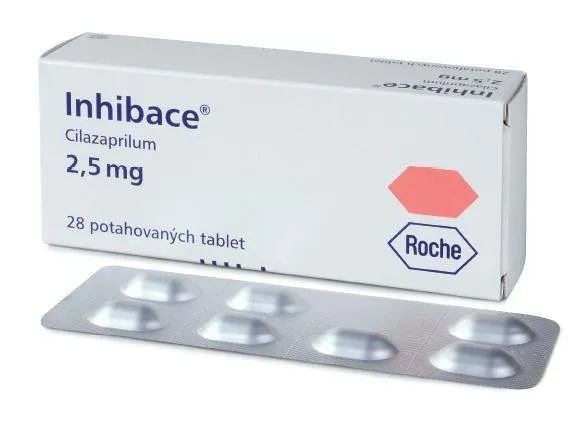
Table of Contents
PACKAGE LEAFLET: INFORMATION FOR THE PATIENT
Warning! Keep this leaflet! Information on the immediate packaging is in a foreign language.
Inhibace, 2.5 mg, coated tablets
cylazapril
Please read this leaflet carefully before taking this medicine because it contains
important information for the patient.
- Keep this leaflet, as you may need to read it again.
- If you have any further questions, please consult your doctor or pharmacist.
- This medicine has been prescribed for a specific individual and must not be passed on to others, as it may harm them even if their symptoms are the same.
- If the patient experiences any adverse reactions, including any not listed in this leaflet, inform a doctor or pharmacist immediately. See section 4.
Table of contents of the leaflet:
- What Inhibace is and what it is used for
- Important information before taking Inhibace
- How to take Inhibace
- Possible side effects
- How to store Inhibace
- Contents of the pack and other information
1. What Inhibace is and what it is used for
Inhibace contains a substance called cylazapril.
Inhibace is used to treat:
- high blood pressure (hypertension);
- chronic (long-term) heart failure.
Cylazapril belongs to a group of medicines known as ACE inhibitors (angiotensin-converting enzyme inhibitors). This medicine works by relaxing and widening blood vessels. This helps lower blood pressure. It also makes it easier for the heart to pump blood in patients with chronic heart failure.
Your doctor may prescribe other medicines to be used together with Inhibace.
2. Important information before using Inhibace
When not to use Inhibace:
- if the patient is allergic (hypersensitive) to cilazapril or any of the other ingredients of this medicine (listed in section 6);
- if the patient has an allergy (hypersensitivity) to other ACE inhibitors. These include captopril, enalapril, lisinopril, and ramipril;
- if the patient has previously experienced a severe adverse reaction called angioedema after taking other ACE inhibitors, if the patient has hereditary angioedema or angioedema of unknown cause. Symptoms include swelling of the face, lips, mouth, or tongue. Patients taking certain oral antidiabetic drugs or immunosuppressive drugs have an increased risk of developing angioedema;
- during the third trimester of pregnancy (Inhibace should also be avoided in early pregnancy - see section "Pregnancy" and "Breast-feeding");
- if the patient has diabetes or kidney problems and is being treated with a blood pressure-lowering medicine containing aliskiren;
- if the patient has taken or is currently taking sacubitril with valsartan, a medicine used to treat certain types of chronic (long-term) heart failure in adults, because the risk of angioedema (rapid swelling of tissues under the skin, such as in the throat) increases.
If any of the above situations apply, Inhibace must not be taken. In case of any doubts, consult a doctor or pharmacist before using Inhibace.
Warnings and precautions
Before using Inhibace, consult a doctor or pharmacist if:
- the patient has been diagnosed with heart disease. Inhibace must not be used by patients with certain heart conditions;
- the patient has previously had a stroke or impaired blood flow to the brain;
- the patient is taking any of the following medicines used to treat high blood pressure:
- an angiotensin II receptor antagonist (also known as sartans - for example, valsartan, telmisartan, irbesartan), especially if the patient has kidney problems related to diabetes;
- aliskiren. The treating doctor may monitor kidney function, blood pressure, and blood electrolyte levels (e.g. potassium) at regular intervals. See also information under the heading "When not to use Inhibace";
- the patient is taking immunosuppressive drugs;
- the patient has been diagnosed with severe liver disease or jaundice;
- the patient has been diagnosed with kidney disease or impaired blood flow to the kidneys, known as renal artery stenosis;
- the patient is undergoing dialysis;
- the patient has recently experienced vomiting or diarrhea;
- the patient is on a low-salt (low-sodium) diet;
- the patient is undergoing desensitization to bee or wasp venom;
- the patient is scheduled for surgery (including dental surgery). Some anesthetics may lower blood pressure, causing it to become too low;
- the patient has fluid in the abdominal cavity (ascites);
- the patient has diabetes or is taking antidiabetic drugs;
- the patient has been diagnosed with vascular collagenosis;
- the patient is undergoing low-density lipoprotein (LDL) apheresis using dextran sulfate.
The risk of angioedema may increase if the patient is taking any of the following medicines:
- racecadotril, a medicine used to treat diarrhea;
- medicines used to prevent organ transplant rejection and in cancer treatment (e.g. temsirolimus, sirolimus, everolimus);
- vildagliptin, a medicine used to treat diabetes.
If any of the above situations apply, or if there are any doubts, consult a doctor or pharmacist before using Inhibace.
Inform the doctor if pregnancy is suspected (or planned). Inhibace is not recommended during early pregnancy and must not be used after the third month of pregnancy, as it may seriously harm the unborn child (see section "Pregnancy" and "Breast-feeding").
Children and adolescents
Inhibace is not recommended for use in children.
Inhibace with other medicines
Inform the doctor or pharmacist about all medicines currently being taken, including those obtained without a prescription and herbal medicines. This is because Inhibace may affect the action of other medicines, and some medicines may also affect the action of Inhibace.
The treating doctor may need to adjust the dose and/or take additional precautions: If the patient is taking an angiotensin II receptor antagonist (ARB) or aliskiren (see also information under "When not to use Inhibace" and "Warnings and precautions").
In particular, inform the doctor or pharmacist if the patient is currently taking, has recently taken, or might take any of the following medicines:
- diuretics - see the section "High blood pressure (hypertension)" in section 3 "How to use Inhibace";
- any medicines used to treat high blood pressure;
- medicines known as non-steroidal anti-inflammatory drugs (NSAIDs). These include, for example, acetylsalicylic acid, indomethacin, and ibuprofen;
- insulin or other medicines used for diabetes;
- lithium (used to treat depression);
- steroid medicines (such as hydrocortisone, prednisolone, and dexamethasone) or other immunosuppressive medicines;
- potassium supplements (including salt substitutes), potassium-sparing diuretics, and other medicines that increase blood potassium levels (e.g. trimethoprim and co-trimoxazole, used for bacterial infections; cyclosporine, an immunosuppressive medicine used to prevent organ transplant rejection; and heparin, a medicine used to thin the blood to prevent clots);
- aldosterone antagonists;
- sympathomimetics;
- anesthetics, narcotic medicines;
- tricyclic antidepressants, antipsychotic medicines;
- gold compounds (used to treat rheumatoid arthritis).
Inhibace with food and drink
Inform the doctor or pharmacist if taking dietary supplements containing potassium.
Pregnancy
Consult a doctor before taking this medicine if the patient suspects she is pregnant or plans to become pregnant. Inform the doctor if pregnancy is suspected (or planned). The doctor will usually recommend stopping Inhibace before planned pregnancy or immediately after pregnancy is confirmed, and will recommend an alternative medicine. Inhibace is not recommended during early pregnancy and must not be used after the third month of pregnancy, as it may seriously harm the unborn child.
Breast-feeding
Consult a doctor before taking this medicine if the patient is breastfeeding or plans to breastfeed. Inform the doctor if breastfeeding or planning to breastfeed. Inhibace is not recommended during breastfeeding, especially when breastfeeding a newborn or premature infant. The doctor may recommend an alternative medicine.
Driving and using machines
Dizziness may occur while taking Inhibace. This is more likely at the beginning of treatment. If the patient experiences dizziness, they should not drive, operate tools, or use machinery.
Inhibace contains lactose monohydrate
Inhibace contains lactose monohydrate, which is a type of sugar. If the doctor has diagnosed the patient with an intolerance to certain sugars, consult the doctor before taking this medicine.
Inhibace contains sodium
This medicine contains less than 1 mmol of sodium (23 mg) per tablet, which essentially means it is "sodium-free."
3. How to take Inhibace
Inhibace must always be taken as prescribed by your doctor. If in doubt,
consult your doctor or pharmacist again.
Inhibace is available in the following doses: 1 mg, 2.5 mg, 5 mg.
High blood pressure (hypertension)
- The usual initial dose for adults is 1 mg once daily.
- Your doctor will increase the dose until blood pressure is normalized – the usual maintenance dose is generally between 2.5 mg and 5 mg once daily.
- Your doctor may prescribe a lower dose for patients with kidney problems or elderly patients.
- If you are taking diuretics, your doctor may advise you to stop taking them approximately 3 days before starting Inhibace. The usual initial dose of Inhibace is then 0.5 mg once daily. Your doctor will then gradually increase the dose until blood pressure is normalized.
Chronic heart failure
- The usual initial dose is 0.5 mg once daily.
- Your doctor will then increase the dose – the usual maintenance dose is generally between 1 mg and 2.5 mg once daily.
- Your doctor may prescribe a lower dose for patients with kidney problems or elderly patients.
- For patients with liver cirrhosis without ascites, your doctor will not prescribe a dose higher than 0.5 mg once daily and will carefully monitor blood pressure.
How to take the medicine
- Swallow the tablet with water.
- The time of day when the Inhibace tablet is taken is not important. However, the tablet should be taken at the same time each day.
- Inhibace may be taken before or after meals.
- The tablet may be divided into equal doses.
Taking more Inhibace than prescribed
If you take more Inhibace than prescribed, or if someone else takes the medicine,
contact your doctor immediately or go to the nearest hospital. Take the medicine packaging with you.
The following symptoms may occur: dizziness or a feeling of "emptiness" in the head, shallow breathing, cold and clammy skin, inability to move or speak, and slow heartbeat.
Missed dose of Inhibace
- If you miss a dose, skip the missed dose. Then take the next dose at your usual time.
- Do not take a double dose (two doses at once) to make up for a missed dose.
If you have any doubts about how to use this medicine, consult your doctor or pharmacist.
4. Possible adverse reactions
Like all medicines, Inhibace may cause adverse reactions, although not everyone experiences them.
Some side effects may be serious and may require immediate medical attention:
If a severe reaction called angioedema or an allergic reaction occurs, treatment with Inhibace should be stopped and you should seek medical advice as soon as possible. Symptoms include:
- sudden swelling of the face, throat, lips or mouth. This swelling may cause difficulty breathing or swallowing.
If any of the following blood disorders occur, contact your doctor immediately:
- Low number of red blood cells (anaemia). Symptoms include feeling tired, paleness, rapid or irregular heartbeat (palpitations), and shortness of breath.
- Low number of all types of white blood cells (neutropenia, agranulocytosis). Symptoms include increased frequency of infections, for example in the mouth, gums, throat or lungs.
- Low number of platelets (thrombocytopenia). Symptoms include easy bruising and nosebleeds.
Other possible adverse reactions:
Common (occur in less than 1 out of 10 people)
- dizziness
- cough
- nausea
- fatigue
- headache
Uncommon (occur in less than 1 out of 100 people)
- low blood pressure. This may cause weakness, dizziness, blurred vision and fainting. Excessive lowering of blood pressure in some patients may increase the risk of heart attack or stroke
- rapid heartbeat
- weakness
- chest pain
- breathing difficulties, including shortness of breath and chest tightness
- nasal discharge or congestion and sneezing (rhinitis)
- dryness or swelling of the oral mucosa
- loss of appetite
- altered taste
- diarrhoea and vomiting
- rash (which may be severe)
- muscle cramps or muscle or joint pain
- impotence
- excessive sweating
- sudden flushing (especially of the face)
- sleep disturbances
Rare (occur in less than 1 out of 1000 people)
- decreased number of red blood cells, white blood cells or platelets, detected in blood tests (anaemia, neutropenia, agranulocytosis and thrombocytopenia)
- severe allergic reaction (anaphylactic)
- cerebral ischaemia, transient ischaemic attack, ischaemic stroke (may occur if blood pressure is too low)
- myocardial infarction (may occur if blood pressure is too low)
- heart rhythm disturbances
- interstitial lung disease
- systemic lupus erythematosus-like disorders
- tingling or numbness of hands or feet
- wheezing
- sensation of pressure or pulsating pain behind the nose, cheeks and eyes (sinusitis)
- tongue pain
- pancreatitis. Symptoms include severe upper abdominal pain radiating to the back
- changes in kidney or liver function (shown in blood and urine tests)
- liver disorders, such as hepatitis or liver damage
- severe skin reactions, including blisters or skin peeling
- increased sensitivity to light
- hair loss (which may be temporary)
- loosening or separation of the nail from the nail bed
- breast enlargement in men
Reporting of adverse reactions
If any adverse reactions occur, including any not listed in this leaflet, inform your doctor or pharmacist. Adverse reactions can be reported directly to the Department of Monitoring Adverse Drug Reactions, Office for Medicinal Products, Medical Devices and Biocidal Products, Al. Jerozolimskie 181C, 02-222 Warsaw, tel.: + 48 22 49 21 301, fax: + 48 22 49 21 309, website: https://smz.ezdrowie.gov.pl. Reporting adverse reactions helps to provide more information on the safety of the medicine.
5. How to store Inhibace
Keep out of the sight and reach of children.
Store below 25°C.
Do not use Inhibace after the expiry date stated on the packaging.
The expiry date refers to the last day of the stated month.
Medicines must not be disposed of via the sewage system or household waste. Ask a pharmacist
how to dispose of medicines no longer required. This will help protect the environment.
6. Contents of the pack and other information
What Inhibace contains
- The active substance in Inhibace is cilazapril.
- Each coated tablet contains 2.5 mg of cilazapril in the form of monohydrate cilazapril (2.61 mg).
- Other ingredients are: monohydrate lactose, corn starch, hypromellose 2910/3, talc, sodium stearyl fumarate, hypromellose 2910/6, titanium dioxide (E 171), yellow iron oxide (E 172), and red iron oxide (E 172). (See section 2: Inhibace contains monohydrate lactose and Inhibace contains sodium)
What Inhibace looks like and contents of the pack
Light reddish-brown, oval, biconvex coated tablets, with a division line on one side and the imprint CIL 2.5 on the other side.
The pack contains 28 coated tablets.
Al/Al blisters in a cardboard carton.
For more detailed information, please contact the marketing authorisation holder or the parallel importer.
Marketing Authorisation Holder in the Czech Republic, country of export:
CHEPLAPHARM Arzneimittel GmbH
Ziegelhof 24
17489 Greifswald
Germany
Manufacturer:
CHEPLAPHARM Arzneimittel GmbH
Ziegelhof 23-24
17489 Greifswald
Germany
Parallel Importer:
InPharm Sp. z o.o.
ul. Strumykowa 28/11
03-138 Warsaw
Repackaged in:
InPharm Sp. z o.o. Services sp. k.
ul. Chełmżyńska 249
04-458 Warsaw
Marketing Authorisation Number in the Czech Republic, country of export: 58/511/99-C
Parallel Import Authorisation Number: 207/24
This medicinal product is authorised for marketing in the European Economic Area countries under the following names:
Austria, Belgium, Czech Republic, Hungary, Poland: Inhibace
Germany: Dynorm
Greece: Vascace
Italy: Inibace