Idarubicin accord
Poland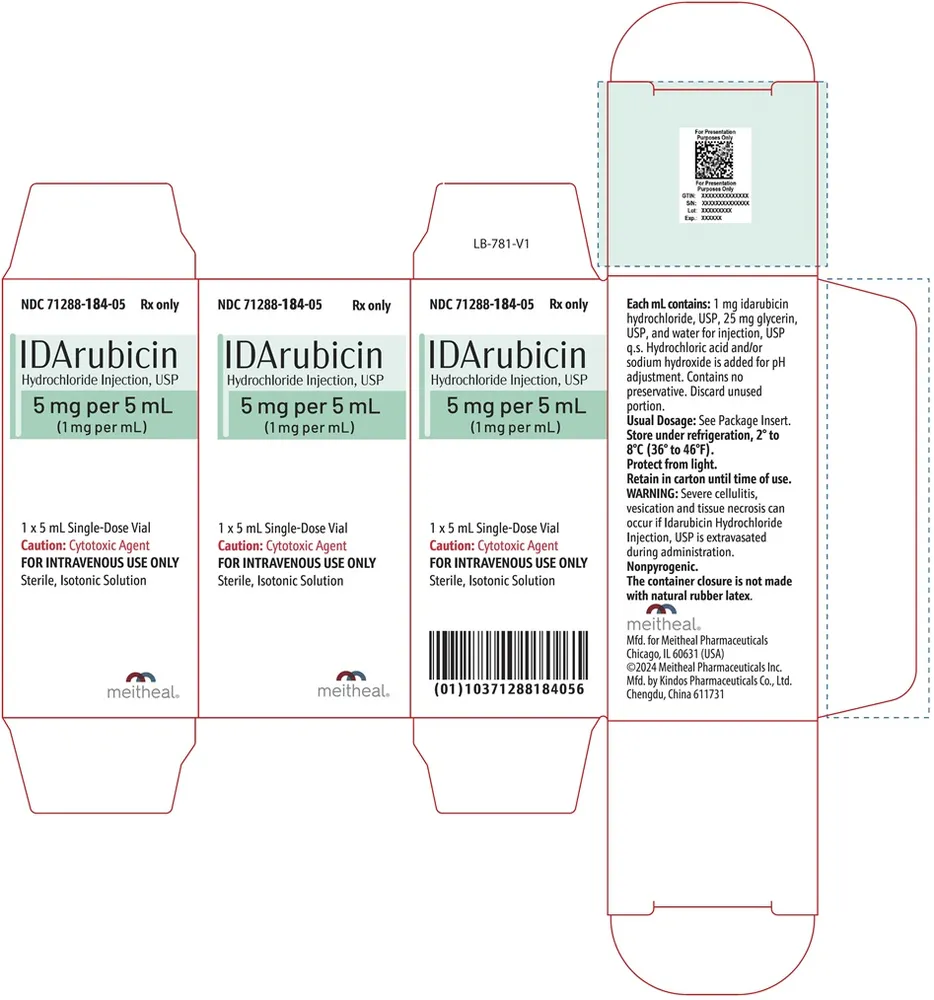
Table of Contents
- Package leaflet: Information for the patient
- 1. What Idarubicin Accord is and what it is used for
- 2. Important information before using Idarubicin Accord
- 3. How to use Idarubicin Accord
- 4. Possible adverse effects
- 5. How to store Idarubicin Accord
- 6. Contents of the pack and other information
- INFORMATION INTENDED EXCLUSIVELY FOR PROFESSIONAL MEDICAL PERSONNEL:
Package leaflet: Information for the patient
Idarubicin Accord, 5 mg/5 ml, solution for injection
Idarubicin Accord, 10 mg/10 ml, solution for injection
Idarubicin Accord, 20 mg/20 ml, solution for injection
Idarubicini hydrochloridum
Please read carefully all the information in this leaflet before using this medicine, as it contains
important information for the patient.
- Keep this leaflet, so that you can read it again if necessary.
- If you have any questions, please consult your doctor, pharmacist, or nurse.
- This medicine has been prescribed for a specific individual. Do not pass it on to others. This medicine may harm others, even if their symptoms are the same.
- If you experience any adverse reactions, including any not listed in this leaflet, inform your doctor, pharmacist, or nurse. See section 4.
Table of contents of the leaflet
- What Idarubicin Accord is and what it is used for
- Important information before using Idarubicin Accord
- How to use Idarubicin Accord
- Possible side effects
- How to store Idarubicin Accord
- Contents of the pack and other information
1. What Idarubicin Accord is and what it is used for
Idarubicin Accord belongs to a group of medicines called cytotoxic and antimitotic agents,
which bind to DNA and interact with topoisomerase II, thereby inhibiting nucleic acid synthesis.
Idarubicin Accord is used in the treatment of:
Adults:
- Acute myeloid leukaemia, to induce remission in previously untreated patients or in patients with relapsed or treatment-resistant disease.
- Acute lymphoblastic leukaemia – as a second-line treatment.
Children:
- First-line treatment of acute myeloid leukaemia, in combination with cytarabine, to induce remission.
- Treatment of acute lymphoblastic leukaemia, as a second-line treatment.
Idarubicin Accord may also be used in combination with other anticancer medicines.
2. Important information before using Idarubicin Accord
When not to use Idarubicin Accord:
- if the patient is allergic to idarubicin or any of the other ingredients of this medicine (listed in section 6),
- if the patient is allergic to other anthracyclines or anthracenediones,
- if the patient has untreated infection;
- if the patient's liver or kidneys are not functioning properly,
- if the patient has or has previously had bone marrow suppression due to prior therapy,
- if the patient has or has previously had heart disease,
- if the patient has or has previously had abnormal heart rhythm,
- if the patient has previously been treated with idarubicin hydrochloride and/or other anthracyclines or anthracenediones,
- if the patient is breastfeeding.
Warnings and precautions
Before starting treatment with Idarubicin Accord, consult a doctor, pharmacist or
nurse:
- if the patient has heart disorders. Cardiac function should be assessed before starting idarubicin treatment and monitored during therapy to minimize the risk of severe heart failure;
- if the patient has bone marrow suppression due to prior therapy;
- if the patient has marked and persistent increase in the number of abnormal white blood cells in the blood. The patient may develop leukemia;
- if the patient has or has previously had gastrointestinal disorders (e.g. ulcers) or any intestinal disorders;
- if the patient has impaired liver function;
- if the patient has impaired kidney function;
- this medicine may cause vomiting, inflammation of the mucous membrane of the mouth and inflammation of the mucous membrane of the gastrointestinal tract;
- reactions at the injection site may occur;
- if extravasation occurs during injection, the patient may experience pain, and extravasation may cause severe tissue damage. If extravasation occurs, administration of the medicine must be stopped immediately;
- as with other cytotoxic medicines, thrombophlebitis may occur;
- if the patient is to receive or has recently received a vaccine;
- in men, idarubicin may cause irreversible infertility;
- if the patient is currently or recently received trastuzumab (a medicine used in the treatment of certain cancers). Trastuzumab may remain in the body for up to 7 months. Because trastuzumab may affect the heart, Idarubicin Accord must not be used within 7 months after stopping trastuzumab. If Idarubicin Accord is administered before this time, cardiac function should be closely monitored.
Idarubicin should only be administered under the supervision of a physician experienced in the use of cytotoxic chemotherapy.
The medicine may cause red discoloration of urine for 1 to 2 days after administration.
Regular blood, liver, kidney and heart examinations should be performed before and during treatment with Idarubicin Accord. Infants and children appear to be more sensitive to the cardiotoxic effects of anthracyclines; therefore, long-term periodic monitoring of cardiac function should be performed in these patients.
Idarubicin Accord and other medicines
Tell your doctor about all medicines the patient is currently taking or has recently taken, as well as any medicines the patient plans to take.
Idarubicin is mainly used in combination with other cytotoxic medicines, so cumulative toxicity may occur, particularly affecting the bone marrow, blood and gastrointestinal tract. The risk of cardiotoxicity may be increased in patients who have received other cardiotoxic medicines simultaneously.
Since idarubicin is extensively metabolized in the liver, liver function disorders caused by other medicines may affect the metabolism, pharmacokinetic properties, therapeutic efficacy and/or toxicity of idarubicin.
Anthracyclines, including idarubicin, must not be used in combination with other cardiotoxic medicines unless cardiac function is carefully monitored.
When oral anticoagulants are used concomitantly with anticancer chemotherapy, it is recommended to increase the frequency of monitoring of the International Normalized Ratio (INR).
Pregnancy, breastfeeding and effects on fertility
If the patient is pregnant or breastfeeding, suspects she may be pregnant, or is planning to have a child, she should consult a doctor or pharmacist before using this medicine.
Men receiving treatment with idarubicin must use effective contraception for 3 months after completion of therapy.
There are no adequate, controlled studies in pregnant women. Idarubicin may be used during pregnancy only if potential benefits justify the potential risk to the fetus.
Breastfeeding
It is not known whether idarubicin passes into human milk. Because many drugs are excreted in human milk, mothers must discontinue breastfeeding before starting treatment.
Driving and using machines
There has been no systematic assessment of the effect of idarubicin on the ability to drive and use machines.
Idarubicin Accord contains sodium
The medicine contains less than 1 mmol of sodium (23 mg) per vial, i.e. the medicine is considered "sodium-free".
3. How to use Idarubicin Accord
This medicine should always be used exactly as directed by your doctor or pharmacist. If you have any doubts,
you should consult your doctor or pharmacist.
The dose is usually calculated based on body surface area (mg/m²). The medicine is typically administered
intravenously.
Acute myeloid leukaemia
Adults: In the treatment of acute myeloid leukaemia, the recommended dose is 12 mg/m²/day
intravenously for 3 days, in combination with cytarabine. Another dosing regimen which may be
used in the treatment of acute myeloid leukaemia, either as monotherapy or in combination therapy,
is 8 mg/m²/day intravenously for 5 days.
Children: The recommended dose ranges from 10 to 12 mg/m²/day intravenously for 3 days,
in combination with cytarabine.
Acute lymphoblastic leukaemia
Adults: In monotherapy for acute lymphoblastic leukaemia, the recommended dose is 12 mg/m²/day,
intravenously for 3 days.
Children: In monotherapy, the recommended dose is 10 mg/m²/day, intravenously for 3 days.
However, in all these dosing regimens, the patient's haematological status and doses of other
cytotoxic medicines used concomitantly should be taken into account.
If a patient receives more Idarubicin Accord than recommended
Very high doses of idarubicin may cause acute toxic effects on the myocardium within the first 24 hours
and severe bone marrow suppression within one to two weeks.
Delayed heart failure due to anthracycline use has been observed, occurring up to several months
after overdose.
Missed dose of Idarubicin Accord
Do not use a double dose to make up for a missed dose.
If you have any further questions about the use of this medicine, consult your doctor or pharmacist.
4. Possible adverse effects
Like all medicines, this medicine can cause adverse effects, although not everyone will experience them.
Very common adverse effects: infections; reduced number of circulating red blood cells, white blood cells, and platelets; marked decrease or loss of appetite; nausea, vomiting, diarrhoea, abdominal pain, burning sensation, inflammation of the oral mucosa; hair loss; reddish discoloration of urine for 1-2 days after taking the medicine; fever, headache, and chills.
Adverse effects that may occur commonly: increased or decreased heart rate, increased and irregular heartbeat, cardiac dysfunction, phlebitis, phlebitis associated with thrombosis, bleeding, gastrointestinal bleeding, abdominal pain, increased liver enzyme activity and bilirubin concentration, skin rash, itching, radiation-induced skin hypersensitivity.
Adverse effects that may occur uncommonly: systemic infection, secondary leukaemia, increased blood uric acid concentration, ECG abnormalities, shock, oesophagitis, colitis, skin and nail pigmentation, connective tissue inflammation, tissue necrosis.
Adverse effects that may occur rarely: cerebral haemorrhage.
Adverse effects that may occur very rarely: severe systemic allergic reaction, heart infection and other disorders, vascular obstruction, erythema, ulcerative disease, skin redness, particularly in the limbs.
Cases of pancytopenia, tumour lysis syndrome, and local reactions have also been reported.
Reporting of adverse effects
If any adverse effects occur, including any adverse effects not listed in this leaflet, inform your doctor, pharmacist, or nurse. Adverse effects can be reported directly to the Department of Monitoring Adverse Drug Reactions of the Office for Registration of Medicinal Products, Medical Devices and Biocidal Products
Al. Jerozolimskie 181C
02-222 Warsaw
Phone: +48 22 49 21 301
Fax: +48 22 49 21 309
Website: https://smz.ezdrowie.gov.pl
Adverse effects can also be reported to the marketing authorisation holder.
Reporting adverse effects helps to provide more information on the safety of the medicine.
5. How to store Idarubicin Accord
Keep this medicine out of sight and reach of children.
Do not use this medicine after the expiry date stated on the label or carton after EXP. The expiry date refers to the last day of the stated month.
Store in a refrigerator (2°C - 8°C). Keep in the original packaging in order to protect from light.
Medicines must not be disposed of via wastewater or household waste. Ask your pharmacist how to dispose of medicines no longer required. Such measures will help protect the environment.
6. Contents of the pack and other information
What Idarubicin Accord contains:
The active substance is idarubicin hydrochloride.
One ml of solution contains 1 mg of idarubicin hydrochloride.
Each vial containing 5 ml of solution contains 5 mg of idarubicin hydrochloride.
Each vial containing 10 ml of solution contains 10 mg of idarubicin hydrochloride.
Each vial containing 20 ml of solution contains 20 mg of idarubicin hydrochloride.
The other ingredients are: glycerol, concentrated hydrochloric acid, sodium hydroxide (for pH adjustment), water for injections.
What Idarubicin Accord looks like and contents of the pack:
A clear, orange-red solution, without visible suspended solid particles.
The vial made of colourless type I glass contains a ready-to-use solution for injection containing 5 mg, 10 mg or 20 mg of idarubicin hydrochloride.
The pack contains 1 vial of 5 ml, 10 ml or 20 ml.
Not all pack sizes may be marketed.
Marketing Authorisation Holder
Accord Healthcare Polska Sp. z o.o.
Taśmowa 7 Street
02-677 Warsaw
Tel: + 48 22 577 28 00
Manufacturer/Importer
Accord Healthcare Polska Sp. z o.o.
Lutomierska 50 Street
95-200 Pabianice
This medicinal product is authorised in the European Economic Area and the United Kingdom (Northern Ireland) under the following names:
| Member State | Medicinal Product Name |
| Austria | Idarubicin Accord 5mg/5ml, 10mg/10ml, 20mg/20ml Injektionslösung |
| Belgium | Idarubicin Accord 5mg/5ml, 10mg/10ml, 20mg/20ml Oplossing voor injectie/ Solution injectable/ Injektionslösung |
| Czech Republic | Idarubicin Accord 5mg/5ml, 10mg/10ml, 20mg/20ml injekční roztok |
| Cyprus | Idarubicin Accord 5mg/5ml, 10mg/10ml, 20mg/20ml, solution for injection |
| Denmark | Idarubicinhydrochlorid “Accord” |
| Estonia | Idarubicin Accord |
| France | IDARUBICINE ACCORD 5mg/5ml, 10mg/10ml, 20mg/20ml, solution pour perfusion |
| Finland | Idarubicin Accord 5mg/5ml, 10mg/10ml, 20mg/20ml injektioneste, liuos |
| Netherlands | Idarubicin Accord 5mg, 10mg, 20mg, oplossing voor injectie |
| Spain | IDARUBICINA ACCORD 5mg/5ml, 10mg/10ml, 20mg/20ml solución inyectable |
| Malta | Idarubicin 5mg/5ml, 10mg/10ml, 20mg/20ml solution for injection |
| Germany | Idarubicin Accord 5mg/5ml, 10mg/10ml, 20mg/20ml Injektionslösung |
| Norway | Idarubicin Accord |
| Poland | Idarubicin Accord |
| Portugal | Idarrubicina Accord |
| Romania | Idarubicina Accord 5mg/5ml, 10mg/10ml, 20mg/20ml soluție injectabilă |
| Slovenia | Idarubicin Accord 5mg/5ml, 10mg/10ml, 20mg/20ml raztopina za injiciranje |
| Sweden | Idarubicin Accord 5mg/5ml, 10mg/10ml, 20mg/20ml, injektionsvätska, lösning |
| Italy | Idarubicina Accord |
| United Kingdom (Northern Ireland) | Idarubicin 5mg/5ml, 10mg/10ml, 20mg/20ml solution for injection |
INFORMATION INTENDED EXCLUSIVELY FOR PROFESSIONAL MEDICAL PERSONNEL:
This medicinal product is intended for intravenous administration.
Pharmaceutical incompatibilities:
Prolonged contact with any solution of alkaline pH should be avoided, as it may lead to degradation of the drug. Idarubicin hydrochloride must not be mixed with heparin, as a precipitate may form. Mixing with other medicinal products is not recommended. Idarubicin Accord is intended for single use only; any residual medicinal product must be discarded.
The ready-to-use solution of Idarubicin Accord must be administered intravenously via an infusion line, as a free-flowing intravenous infusion of 0.9% sodium chloride solution, over 5 to 10 minutes. This method minimizes the risk of thrombosis or perivenous extravasation, which may lead to severe connective tissue inflammation and tissue necrosis.
Injection into small veins or repeated injections into the same vessel may cause phlebosclerosis.
Due to the toxic properties of this substance, the following protective measures must be observed:
- Personnel must be trained in the correct handling techniques for this product.
- Pregnant women should not be involved in handling this medicinal product.
- Personnel preparing the drug must wear protective clothing: disposable protective goggles, gowns, gloves, and protective masks.
- The working surface must be located in a room equipped with a vertical laminar airflow cabinet. The surface should be protected with an absorbent pad covered with foil.
- All materials used for administration or cleaning, including gloves, must be placed in containers designated for high-risk waste, intended for incineration at high temperatures.
Spilled solution should be covered with diluted sodium hypochlorite solution (1% chlorine), followed by rinsing with water.
All cleaning materials must be disposed of as described above.
In case of accidental contact of the drug with skin or eyes, immediately rinse thoroughly with water or water and soap, or with a solution of acidified sodium carbonate; medical attention may be necessary. Unused solution must be discarded.