Ibuprom zatoki sprint
Poland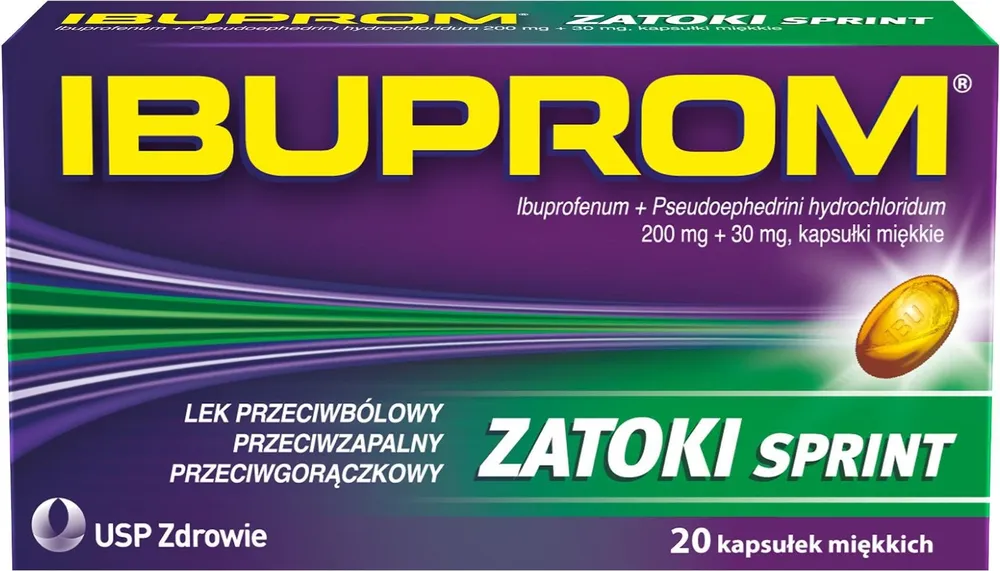
Table of Contents
- Package leaflet: Information for the user
- 1. What Ibuprom Zatoki Sprint is and what it is used for
- 2. Important information before taking Ibuprom Zatoki Sprint
- 3. How to take Ibuprom Zatoki Sprint
- 4. Possible adverse reactions
- 5. How to store Ibuprom Zatoki Sprint
- 6. Contents of the packaging and other information
Package leaflet: Information for the user
IBUPROM ZATOKI SPRINT
200 mg + 30 mg, soft capsules
Ibuprofenum + Pseudoephedrini hydrochloridum
Please read the entire leaflet carefully before taking this medicine, as it contains
important information for the patient.
This medicine should always be taken exactly as described in this patient leaflet or as advised by
the doctor or pharmacist.
- Keep this leaflet, as you may need to read it again.
- If you need advice or further information, please consult your pharmacist.
- If you experience any adverse reactions, including any not listed in this leaflet, inform your doctor or pharmacist. See section 4.
- If there is no improvement after 3 days, or if you feel worse, you should consult your doctor.
Leaflet contents
- What Ibuprom Zatoki Sprint is and what it is used for
- Important information before taking Ibuprom Zatoki Sprint
- How to take Ibuprom Zatoki Sprint
- Possible side effects
- How to store Ibuprom Zatoki Sprint
- Contents of the pack and other information
1. What Ibuprom Zatoki Sprint is and what it is used for
Ibuprom Zatoki Sprint is used to relieve symptoms associated with nasal mucosal congestion, sinus headache, fever, and joint and muscle pain due to colds and influenza.
This medicine contains ibuprofen, a non-steroidal anti-inflammatory drug (NSAID), which has analgesic and antipyretic properties. The capsules also contain pseudoephedrine hydrochloride, a decongestant that helps clear the nasal passages and reduce nasal mucosal congestion.
This medicine should only be used when nasal congestion is present together with headache, pain, and/or fever at the same time. It should not be used if only one of these symptoms is present.
Ibuprom Zatoki Sprint should be used in adults and adolescents over 12 years of age.
2. Important information before taking Ibuprom Zatoki Sprint
When not to use Ibuprom Zatoki Sprint:
- if the patient is allergic to ibuprofen, acetylsalicylic acid (aspirin), or other non-steroidal anti-inflammatory drugs (NSAIDs), or if skin rash, urticaria, itching, breathing difficulties, chest tightness, swelling of the lips, face, tongue or throat occurred during treatment with these drugs; or if the patient is allergic to any of the other ingredients of this medicine (listed in section 6);
- if the patient has active or past peptic ulcer, gastrointestinal bleeding, or history of gastrointestinal perforation;
- if the patient has diabetes, benign prostatic hyperplasia, thyroid disease, glaucoma, or pheochromocytoma (adrenal gland tumor);
- if the patient has severe liver disease, heart disease, severe heart failure, or circulatory disorders;
- if the patient has very high blood pressure (severe hypertension) or uncontrolled hypertension;
- if the patient has severe acute or chronic kidney disease or renal failure;
- if the patient is taking monoamine oxidase inhibitors (MAOIs) or tricyclic antidepressants used to treat depression (or has taken them within the last 14 days);
- if the patient has other bleeding disorders;
- if the patient has had a stroke in the past;
- if the patient is taking other non-steroidal anti-inflammatory drugs (NSAIDs), painkillers, or other oral medications reducing nasal mucosal congestion;
- in children under 12 years of age;
- during pregnancy or breastfeeding;
- if the patient has been diagnosed with hereditary fructose intolerance.
Warnings and precautions
Taking anti-inflammatory and pain-relieving medicines such as ibuprofen may be associated with a
slight increase in the risk of heart attack or stroke, particularly when used in high doses. Do not exceed
the recommended dose or duration of treatment.
Before using Ibuprom Zatoki Sprint, the patient should consult a doctor or pharmacist if:
- the patient has heart disease, such as heart failure, angina (chest pain), history of heart attack, coronary artery bypass surgery, peripheral arterial disease (poor blood circulation in the legs due to narrowed or blocked arteries), or has had any type of stroke (including mini-stroke or transient ischemic attack - TIA).
- the patient has hypertension, diabetes, high cholesterol levels, a family history of heart disease or stroke, or is a smoker. The risk is greater with higher doses and prolonged use. Do not exceed the recommended dose or duration of treatment.
- the patient has blood clotting disorders.
- the patient has stomach ulcers or inflammatory bowel disease (e.g. ulcerative colitis or Crohn's disease).
- during treatment with Ibuprom Zatoki Sprint, sudden abdominal pain or rectal bleeding may occur due to inflammation of the large intestine (ischemic colitis). If such gastrointestinal symptoms occur, discontinue use of Ibuprom Zatoki Sprint immediately and seek medical advice without delay. See section 4.
- the patient has asthma or allergies.
- the patient has heart, kidney, liver, or prostate disease.
- elderly patients – are more susceptible to adverse effects such as gastrointestinal bleeding and perforation, which may be fatal.
- in systemic lupus erythematosus (SLE) – a disease affecting the immune system, causing joint pain, skin changes, and other problems.
- when attempting to conceive.
If the patient is between 12 and 17 years old, has recently not consumed fluids, or has been diagnosed
with dehydration due to diarrhea or vomiting, consult a doctor or pharmacist before taking the
medicine. There is an increased risk of kidney problems during treatment if the patient is dehydrated.
During treatment with Ibuprom Zatoki Sprint, reduced blood flow in the optic nerve may occur. If sudden
vision loss occurs, discontinue use of Ibuprom Zatoki Sprint immediately and contact a doctor or seek
medical help without delay. See section 4.
Allergic reactions to ibuprofen have been reported, including breathing difficulties, facial and neck
swelling (angioedema), and chest pain. If any of these symptoms occur, stop taking Ibuprom Zatoki
Sprint immediately and consult a doctor or go to the emergency room.
Skin reactions
Severe skin reactions associated with the use of Ibuprom Zatoki Sprint have been reported. If any skin
rash, mucosal lesions, blisters, or other allergic symptoms appear, stop taking Ibuprom Zatoki Sprint
immediately and seek medical help without delay, as these may be early signs of a very serious skin
reaction. See section 4.
If fever with generalized redness of the skin and blistering rash occurs, discontinue taking Ibuprom
Zatoki Sprint and contact a doctor or seek immediate medical help. See section 4.
Infections
Ibuprom Zatoki Sprint may mask symptoms of infection such as fever and pain. Therefore, Ibuprom
Zatoki Sprint may delay appropriate treatment of infection and consequently increase the risk of
complications. This has been observed in bacterial pneumonia and bacterial skin infections associated
with chickenpox. If the patient is taking this medicine during an ongoing infection and symptoms
persist or worsen, consult a doctor immediately.
Cases of posterior reversible encephalopathy syndrome (PRES) and reversible cerebral vasoconstriction
syndrome (RCVS) have been reported after using medicines containing pseudoephedrine. PRES and
RCVS are rare conditions that may involve reduced blood flow to the brain.
If symptoms suggestive of PRES or RCVS occur, discontinue Ibuprom Zatoki Sprint immediately and
seek immediate medical help (symptoms, see section 4 "Possible side effects").
Children and adolescents
Do not give this medicine to children under 12 years of age.
Ibuprom Zatoki Sprint should be used in adults and adolescents over 12 years of age.
Ibuprom Zatoki Sprint and other medicines
Tell your doctor or pharmacist about all medicines currently used, recently taken, or planned to be
used.
Do not use this medicine if taking:
- other non-steroidal anti-inflammatory drugs (NSAIDs);
- medications constricting the nasal mucosa (nasal or oral);
- monoamine oxidase inhibitors (MAOIs) used as antidepressants, either in the past or within the last two weeks;
- tricyclic antidepressants (used to treat depression).
Inform your doctor if you are taking:
- anticoagulant medicines (i.e. blood thinners/preventing blood clots, such as warfarin, ticlopidine, aspirin/acetylsalicylic acid);
- medicines for lowering blood pressure (ACE inhibitors such as captopril, beta-blockers such as atenolol-containing medicines, angiotensin II receptor antagonists such as losartan) or any diuretic;
- cardiac glycosides such as digoxin (digitalis) or quinidine used in heart disease treatment;
- phenytoin (a medicine used to treat epilepsy);
- lithium (used to treat mood disorders);
- methotrexate (used to treat arthritis);
- antacids (medicines used to treat stomach ulcer symptoms, e.g. heartburn);
- cyclosporine (used to suppress the immune system, e.g. after organ transplant);
- mifepristone (used to terminate pregnancy);
- quinolone antibiotics (used to treat a wide range of infections);
- tacrolimus (a medicine used after transplantation);
- sulfonylurea derivatives, such as glibenclamide (used to treat diabetes);
- corticosteroids (a type of anti-inflammatory medicine, e.g. hydrocortisone);
- selective serotonin reuptake inhibitors (SSRIs, e.g. fluoxetine) (medicines used to treat depression);
- aminoglycosides (e.g. gentamicin or amikacin) (medicines used to treat infections);
- the antibacterial medicine furazolidone (used to treat infections);
- zidovudine (used to treat HIV infections);
- guanethidine, reserpine or methyldopa (medicines used in heart and circulatory diseases);
- sulfinpyrazone and probenecid (medicines used to treat gout);
- potassium-sparing diuretics (medicines used in heart disease);
- ergot derivatives (medicines used to treat migraine);
- dopamine receptor agonists (medicines used to treat symptoms of Parkinson's disease);
- heparin, Ginkgo biloba (used to treat blood clots).
If anesthesia is required, discontinue the medicine beforehand and inform the anesthesiologist.
Other medicines may also interact with or be affected by Ibuprom Zatoki Sprint. Therefore, always
consult a doctor or pharmacist before using Ibuprom Zatoki Sprint with other medicines.
Pregnancy and breastfeeding
Ibuprom Zatoki Sprint should not be taken during pregnancy or breastfeeding.
If the patient suspects she may be pregnant or is planning to have a child, she should consult a doctor
or pharmacist before using this medicine.
Fertility
Ibuprofen belongs to a group of medicines, NSAIDs, which may adversely affect female fertility.
This effect is reversible after discontinuation of the medicine. It is unlikely that occasional use of
ibuprofen will affect the ability to conceive. However, if there are difficulties in becoming pregnant,
inform the doctor about taking this medicine.
Driving and operating machinery
After taking the medicine, the patient may experience dizziness, unusual headaches, vision or hearing
disturbances, including visual or auditory hallucinations. In such cases, do not drive, ride a bicycle, or
operate any machinery or tools.
Ibuprom Zatoki Sprint contains sorbitol and potassium.
The medicine contains 63 mg of sorbitol per capsule. Sorbitol is a source of fructose. If the patient has
previously been diagnosed with intolerance to certain sugars or hereditary fructose intolerance, a rare
genetic condition in which the body cannot break down fructose, consult a doctor before taking or
administering the medicine.
One capsule of Ibuprom Zatoki Sprint contains 21 mg of potassium. This should be taken into account
in patients with impaired kidney function and in patients who are monitoring potassium intake in their
diet.
3. How to take Ibuprom Zatoki Sprint
This medicine should always be taken exactly as described in this patient leaflet, or as advised by your doctor or pharmacist. If in doubt, consult your doctor or pharmacist.
This medicine should be taken orally only and for short-term use only.
Adults, elderly patients, and adolescents aged over 12 years: The lowest effective dose should be used for the shortest possible duration to reduce the risk of adverse effects.
The recommended dose is 1 or 2 capsules every 4 to 6 hours. Swallow the capsules whole with a full glass of water. Take as many capsules as needed, remembering to leave an interval of 4 to 6 hours between doses. Do not exceed 6 capsules within 24 hours. If there is no improvement after 3 days, or if symptoms worsen, consult your doctor.
Do not use in children under 12 years of age.
Do not exceed the recommended dose.
Use the lowest effective dose for the shortest duration necessary to relieve symptoms. If symptoms of infection (such as fever and pain) persist or worsen, consult your doctor immediately (see section 2).
Taking more Ibuprom Zatoki Sprint than recommended
If you have taken more Ibuprom Zatoki Sprint than recommended, or if a child has accidentally taken the medicine, seek medical advice immediately from your doctor or the nearest hospital to assess any potential health risks and to receive guidance on appropriate actions. Bring the medicine pack with you to show the doctor.
Symptoms may include nausea, stomach pain, vomiting (possibly with blood), headache, tinnitus, confusion, and nystagmus. After a large overdose, drowsiness, chest pain, palpitations, loss of consciousness, seizures (mainly in children), weakness, dizziness, blood in the urine, feeling cold, and breathing difficulties may occur.
In case of accidental overdose, discontinue use of the medicine immediately.
If you miss a dose of Ibuprom Zatoki Sprint
Do not take a double dose to make up for a missed dose.
If you have any further questions about the use of this medicine, consult your doctor or pharmacist.
4. Possible adverse reactions
Like all medicines, this medicine can cause adverse reactions, although not everyone experiences them.
The risk of adverse reactions can be reduced by using the lowest effective doses.
Treatment with Ibuprom Zatoki Sprint must be stopped immediately and immediate medical help must be sought if symptoms indicating posterior reversible encephalopathy syndrome (PRES) or reversible cerebral vasoconstriction syndrome (RCVS) occur. These include:
- sudden, severe headache,
- nausea,
- vomiting,
- confusion,
- seizures,
- changes in vision.
If any of the adverse reactions listed below occur, discontinue use of Ibuprom Zatoki Sprint and contact a doctor or pharmacist.
| Often |
|
| Uncommon |
|
| Very rare |
|
| Frequency not known |
|
In addition to the above-mentioned symptoms, the following adverse reactions may occur during treatment.
| Common |
|
| Uncommon |
|
| Rare |
|
| Very rare |
|
| Frequency unknown |
|
Reporting of adverse reactions
If any adverse reactions occur, including any adverse reactions not listed
in this leaflet, inform your doctor or pharmacist. Adverse reactions can
be reported directly to the Department of Monitoring Adverse Drug Reactions of the Office for Registration of Medicinal Products, Medical Devices and Biocidal Products:
Al. Jerozolimskie 181C, 02-222 Warsaw, tel.: 22 49-21-301, fax: 22 49-21-309,
Website: https://smz.ezdrowie.gov.pl
Adverse reactions can also be reported to the marketing authorization holder.
By reporting adverse reactions, additional information on the safety of the medicinal product can be collected.
5. How to store Ibuprom Zatoki Sprint
Store below 25°C.
Keep the medicine out of sight and reach of children.
Do not use this medicine after the expiry date stated on the packaging after "Expiry date (EXP)". The expiry date refers to the last day of the specified month.
Medicines must not be disposed of via wastewater or household waste. Ask your pharmacist how to dispose of medicines no longer in use. This helps protect the environment.
6. Contents of the packaging and other information
What Ibuprom Zatoki Sprint contains
- The active substances in the medicine are ibuprofen 200 mg and pseudoephedrine hydrochloride 30 mg.
- The other components are: macrogol 600, potassium hydroxide, purified water. Capsule shell composition: gelatin, sorbitol liquid, partially dehydrated, purified water, natural beta-carotene 10% CWD, powder, with composition: natural beta-carotene (E160), modified food starch (E1450), dl-Alpha tocopherol (E307). Printing ink composition: shellac, iron oxide black (E172), n-butyl alcohol, propylene glycol, ammonium hydroxide 28%.
What Ibuprom Zatoki Sprint looks like and contents of the pack
Soft, gelatinous, transparent capsule, light yellow to light orange in colour, oval-shaped, with black print "IZS". The capsule content is a clear, light orange-coloured liquid.
PVC/PVDC/Aluminium blister pack in a cardboard box.
Pack sizes:
10 pieces – 1 blister containing 10 capsules.
20 pieces – 2 blisters containing 10 capsules each.
Not all pack sizes may be marketed.
Marketing Authorisation Holder and Importer
US Pharmacia Sp. z o.o.
Ziębicka 40,
50-507 Wrocław, Poland
For further information about this medicine, please contact the representative of the Marketing Authorisation Holder:
USP Zdrowie Sp. z o.o.
Poleczki 35
02-822 Warsaw, Poland
Tel. +48 (22) 543 60 00