Ibufen for children forte with raspberry flavor
Poland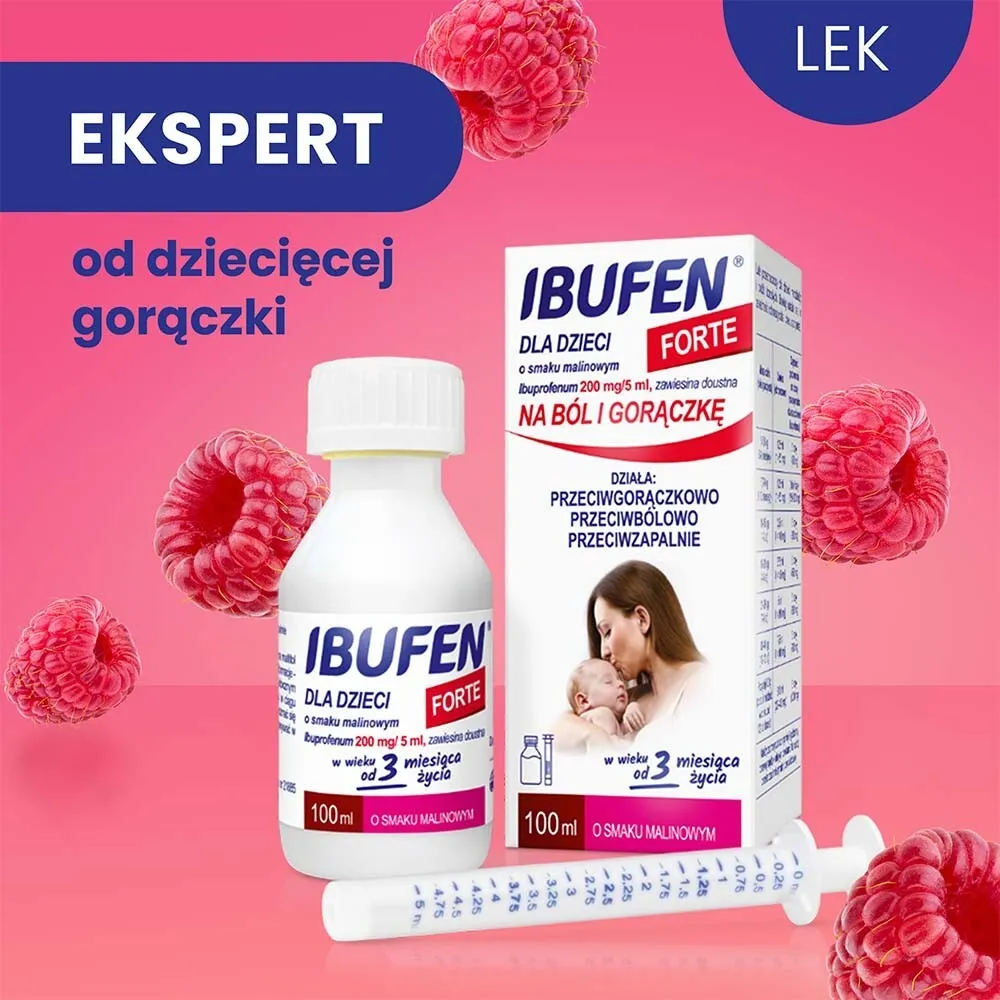
Table of Contents
- Patient Information Leaflet
- 1. What Ibufen dla dzieci FORTE o smaku malinowym is and what it is used for
- 2. Information before using Ibufen dla dzieci FORTE o smaku malinowym
- 3. How to use Ibufen dla dzieci FORTE o smaku malinowym
- 4. Possible adverse reactions
- 5. How to store Ibufen dla dzieci FORTE o smaku malinowym
- 6. Contents of the pack and other information
Patient Information Leaflet
Ibufen dla dzieci FORTE o smaku malinowym, 200 mg/5 ml, oral suspension
Ibuprofenum
Please read all of this leaflet carefully before you start taking this medicine, because it contains
important information for you.
Always use this medicine exactly as described in this patient leaflet or as your doctor or pharmacist has advised.
- Keep this leaflet so that you can read it again if necessary.
- If you need advice or further information, please consult your pharmacist.
- If you experience any side effects, including any not listed in this leaflet, tell your doctor or pharmacist. See section 4.
- If there is no improvement within 24 hours in children aged 3–5 months, or within 3 days in children aged 6 months and older, or if the patient feels worse, consult your doctor.
Table of contents
- What Ibufen dla dzieci FORTE o smaku malinowym is and what it is used for
- Important information before taking Ibufen dla dzieci FORTE o smaku malinowym
- How to take Ibufen dla dzieci FORTE o smaku malinowym
- Possible side effects
- How to store Ibufen dla dzieci FORTE o smaku malinowym
- Contents of the pack and other information
1. What Ibufen dla dzieci FORTE o smaku malinowym is and what it is used for
How the medicine works
Ibufen dla dzieci FORTE o smaku malinowym belongs to a group of medicines called non-steroidal anti-inflammatory drugs (NSAIDs). The medicine has analgesic (pain-relieving), antipyretic (fever-reducing), and anti-inflammatory properties.
What Ibufen dla dzieci FORTE o smaku malinowym is used for
This medicine is intended for use in children, adolescents, and adults in the following conditions:
- Fever of various causes (including viral infections);
- Mild to moderate pain of various origins (including ear pain associated with middle ear inflammation).
2. Information before using Ibufen dla dzieci FORTE o smaku malinowym
When not to use Ibufen dla dzieci FORTE o smaku malinowym
- if the patient is allergic to ibuprofen, other non-steroidal anti-inflammatory drugs (NSAIDs), or any of the other ingredients of this medicine (listed in section 6),
- if the patient has previously experienced allergic symptoms such as rhinitis (nasal mucosa irritation), angioedema, urticaria, bronchospasm, or bronchial asthma after taking acetylsalicylic acid or other non-steroidal anti-inflammatory drugs (NSAIDs),
- if the patient currently has or has previously had gastric or duodenal ulcers, or gastrointestinal bleeding,
- if the patient has experienced gastrointestinal bleeding or perforation related to previous treatment with NSAIDs,
- if the patient has severe liver, kidney, or heart failure,
- if the patient has intracranial hemorrhage or any other active bleeding,
- if the patient has a bleeding disorder,
- if the patient has unexplained blood disorders such as thrombocytopenia,
- if the patient has severe dehydration (caused by vomiting, diarrhea, or insufficient fluid intake),
- during the last three months of pregnancy (see section "Pregnancy, breastfeeding and fertility" below),
- do not administer to infants with body weight below 5 kg.
Warnings and precautions
Before starting treatment with Ibufen dla dzieci FORTE o smaku malinowym, discuss this with
your doctor or pharmacist.
Allergic reactions to ibuprofen, including difficulty breathing, facial and neck swelling (angioedema), and chest pain, have been reported during treatment. If the patient experiences any of these symptoms, they should immediately stop taking Ibufen dla dzieci FORTE o smaku malinowym and contact a doctor or emergency services.
Inform your pharmacist or doctor if the patient has an infection – see below, section titled "Infections".
Taking anti-inflammatory/pain-relieving medicines such as ibuprofen may be associated with a small increased risk of heart attack or stroke, particularly when used at high doses. Do not exceed the recommended dose or duration of treatment.
Before using Ibufen dla dzieci FORTE o smaku malinowym, the patient should discuss treatment with a doctor or pharmacist if:
- the patient has heart diseases such as heart failure, angina pectoris (chest pain), history of myocardial infarction, coronary artery bypass surgery, peripheral arterial disease (poor blood circulation in legs due to narrowed or blocked arteries), or has had any stroke (including mini-stroke or transient ischemic attack - TIA),
- the patient has high blood pressure, diabetes, elevated cholesterol levels, a family history of heart disease or stroke, or is a smoker,
- certain skin diseases are present (systemic lupus erythematosus (SLE) or mixed connective tissue disease),
- there is current or past gastrointestinal disease, inflammatory bowel diseases (ulcerative colitis or Crohn's disease), as these conditions may worsen,
- kidney function disorders have been diagnosed,
- liver function disorders have been diagnosed,
- the patient has recently undergone major surgery,
- blood clotting disorders are present,
- active or past bronchial asthma or history of allergic reactions has been diagnosed, as bronchospasm may occur after taking the medicine,
- chickenpox has been diagnosed – see below, section titled "Infections".
You should also consult your doctor if the patient is taking other medicines, especially anticoagulants, diuretics, cardiac medications, corticosteroids (see section "Ibufen dla dzieci FORTE o smaku malinowym and other medicines").
Avoid concomitant use of ibuprofen with other NSAIDs, including selective cyclooxygenase-2 inhibitors, due to increased risk of adverse effects (see section "Ibufen dla dzieci FORTE o smaku malinowym and other medicines").
Use of the medicine at the lowest effective dose for the shortest duration necessary to relieve symptoms reduces the risk of adverse effects. Elderly patients are more susceptible to adverse effects.
There is a risk of gastrointestinal bleeding, ulceration, or perforation, which may be fatal and may occur without warning symptoms or in patients with prior history of such symptoms. If gastrointestinal bleeding or ulceration occurs, discontinue the medicine immediately. Patients with a history of gastrointestinal disorders, especially elderly patients, should inform their doctor of any unusual gastrointestinal symptoms (particularly bleeding), especially during initial treatment.
Long-term, concomitant use of various painkillers may lead to kidney damage with risk of renal failure (analgesic nephropathy). This risk may increase with physical exertion leading to salt loss and dehydration. Therefore, avoid long-term, concomitant use of multiple painkillers.
There is a risk of kidney function impairment in dehydrated children and adolescents.
Serious skin reactions
Serious skin reactions have been reported with ibuprofen treatment, including exfoliative dermatitis, erythema multiforme, Stevens-Johnson syndrome (SJS), toxic epidermal necrolysis (TEN), drug reaction with eosinophilia and systemic symptoms (DRESS), and acute generalized exanthematous pustulosis (AGEP). Discontinue use of Ibufen dla dzieci FORTE o smaku malinowym and seek immediate medical help if any symptoms associated with serious skin reactions described in section 4 occur.
Infections
Ibufen dla dzieci FORTE o smaku malinowym may mask symptoms of infection such as fever and pain. Therefore, Ibufen dla dzieci FORTE o smaku malinowym may delay appropriate treatment of infection and consequently increase the risk of complications. This has been observed in bacterial pneumonia and bacterial skin infections associated with chickenpox. If the patient takes this medicine during an ongoing infection and infection symptoms persist or worsen, consult a doctor immediately.
Cases of toxic amblyopia (visual acuity impairment) have been reported during ibuprofen use; therefore, any visual disturbances should be reported to a doctor.
Ibufen dla dzieci FORTE o smaku malinowym and other medicines
Tell your doctor or pharmacist about all medicines the patient is currently taking or has recently taken, as well as any medicines the patient plans to take.
Ibufen dla dzieci FORTE o smaku malinowym may affect the action of other medicines, or other medicines may affect the action of Ibufen dla dzieci FORTE o smaku malinowym.
For example:
- anticoagulant medicines (i.e., blood thinners/preventing blood clots, such as aspirin/acetylsalicylic acid, warfarin, ticlopidine);
- blood pressure-lowering medicines (ACE inhibitors such as captopril, beta-blockers such as atenolol-containing medicines, angiotensin II receptor antagonists such as losartan);
- painkillers;
- other non-steroidal anti-inflammatory drugs;
- medicines used for depression (selective serotonin reuptake inhibitors (SSRIs)), lithium;
- diuretics;
- zidovudine, ritonavir (medicines used in HIV treatment);
- methotrexate (a medicine used in cancer or rheumatoid arthritis treatment);
- corticosteroids (such as prednisolone);
- cardiac glycosides, including digoxin (used in heart disease treatment);
- phenytoin (an anticonvulsant medicine);
- cyclosporine, tacrolimus (medicines that suppress the body's immune response);
- quinolone antibiotics (such as ciprofloxacin);
- aminoglycoside antibiotics (such as streptomycin);
- mifepristone (a medicine used in gynecology);
- probenecid and sulfinpyrazone (medicines used in gout treatment);
- oral antidiabetic medicines (such as glimepiride);
- voriconazole, fluconazole (antifungal medicines);
- cholestyramine (used in patients with high cholesterol levels);
- baclofen (a medicine used to reduce and relieve excessive skeletal muscle tension occurring in certain diseases, e.g., multiple sclerosis).
Some other medicines may also be affected by or affect treatment with Ibufen dla dzieci FORTE o smaku malinowym. Therefore, always consult a doctor or pharmacist before using Ibufen dla dzieci FORTE o smaku malinowym with other medicines.
Use of Ibufen dla dzieci FORTE o smaku malinowym with food and drink
The medicine should be taken after meals, with plenty of fluids.
Pregnancy, breastfeeding and fertility
If the patient is pregnant or breastfeeding, suspects she may be pregnant, or is planning to have a child, she should consult her doctor or pharmacist before using this medicine.
Pregnancy
Do not use Ibufen dla dzieci FORTE o smaku malinowym during the last three months of pregnancy, as it may harm the unborn child or cause delivery complications. It may cause kidney and heart problems in the unborn child. It may affect bleeding tendency in the patient and her child and may delay or prolong labor.
Do not take Ibufen dla dzieci FORTE o smaku malinowym during the first 6 months of pregnancy unless absolutely necessary and recommended by a doctor. If treatment is necessary during this period or when trying to conceive, use the lowest effective dose for the shortest possible time. Ibufen dla dzieci FORTE o smaku malinowym taken for longer than a few days starting from week 20 of pregnancy may cause kidney problems in the unborn child, which may lead to low levels of amniotic fluid surrounding the baby (oligohydramnios), or narrowing of a blood vessel (ductus arteriosus) in the baby's heart. If prolonged treatment is necessary, the doctor may recommend additional monitoring.
Breastfeeding
Ibuprofen passes into breast milk in small amounts, but it is very unlikely to adversely affect a breastfed infant.
Fertility
This medicine belongs to a group of medicines (non-steroidal anti-inflammatory drugs) which may adversely affect fertility in women. This effect is reversible and resolves after discontinuation of treatment.
Driving and using machines
Since undesirable effects on the central nervous system such as fatigue and dizziness may occur when using Ibufen dla dzieci FORTE o smaku malinowym at high doses, ability to drive or operate machinery may be impaired in individual cases. This warning is particularly relevant when taking the medicine with alcohol.
Ibufen dla dzieci FORTE o smaku malinowym contains maltitol liquid (E 965), sodium benzoate (E 211), and sodium
The medicine contains 2.4 g of liquid maltitol in each 5 ml of oral suspension. If the patient has previously been diagnosed with intolerance to certain sugars, they should contact their doctor before taking the medicine.
The medicine contains 5 mg of sodium benzoate in each 5 ml of oral suspension.
The medicine contains less than 1 mmol (23 mg) of sodium in each 5 ml of oral suspension, meaning the medicine is considered "sodium-free".
3. How to use Ibufen dla dzieci FORTE o smaku malinowym
This medicine should always be used exactly as described in this patient information leaflet or as directed by a doctor or pharmacist. If in doubt, consult a doctor or pharmacist.
This medicine is for oral use.
For accurate dosing, an oral dosing syringe is included in the package.
Shake the bottle well before use.
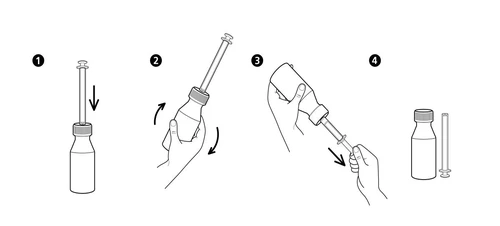
- Unscrew the bottle cap (press down and turn counterclockwise).
- Firmly insert the dosing syringe into the neck of the bottle.
- Shake the bottle vigorously.
- To fill the dosing syringe, turn the bottle upside down and slowly pull down the plunger to draw the suspension up to the desired mark on the syringe scale.
- Return the bottle to upright position and carefully remove the dosing syringe by twisting it out.
- Place the tip of the dosing syringe into the child's mouth, then slowly press the plunger to gently empty the contents.
- After use, close the bottle by screwing on the cap, and wash and dry the dosing syringe.
When determining the ibuprofen dose, consider the patient's body weight (BW) and age. The usual single dose of ibuprofen is 7 to 10 mg per kg BW, up to a maximum daily dose of 30 mg per kg BW, divided into 3 to 4 doses.
The minimum interval between doses should be at least 6 hours.
Use the lowest effective dose for the shortest duration necessary to relieve symptoms and minimize the risk of adverse effects. If signs of infection (such as fever and pain) persist or worsen, consult a doctor immediately (see section 2).
Do not exceed the maximum daily dose.
Recommended dose
| Body weight (patient's age) | Single dose | Daily frequency (maximum daily dose of ibuprofen) |
| 5-7.6 kg (3-6 months) | 1.25 ml (1 × 50 mg) | 3 times (150 mg) |
| 7.7-9 kg (6-12 months) | 1.25 ml (1 × 50 mg) | 3 to 4 times (150-200 mg) |
| 10-15 kg (1-3 years) | 2.5 ml (1 × 100 mg) | 3 times (300 mg) |
| 16-20 kg (4-6 years) | 3.75 ml (1 × 150 mg) | 3 times (450 mg) |
| 21-29 kg (7-9 years) | 5 ml (1 × 200 mg) | 3 times (600 mg) |
| 30-40 kg (10-12 years) | 7.5 ml (1 × 300 mg) | 3 times (900 mg) |
| Over 40 kg (adolescents from 12 years of age and adults) | 5-10 ml (200-400 mg) | 3 times (1200 mg) |
In children aged 3–5 months, consult a doctor if symptoms worsen or do not improve within 24 hours.
In children over 6 months of age, consult a doctor if treatment is required for more than 3 days or if symptoms worsen.
This medicinal product is intended for short-term use only.
This medicine must not be used in infants with body weight below 5 kg.
In patients with mild to moderate renal and/or hepatic impairment, there is no need to reduce the dose of Ibufen dla dzieci FORTE o smaku malinowym.
Dose adjustment is not required in elderly patients.
Use of a higher than recommended dose of Ibufen dla dzieci FORTE o smaku malinowym
If a patient has taken a higher than recommended dose of Ibufen dla dzieci FORTE o smaku malinowym or if a child has accidentally ingested the medicine, always contact a doctor or go to the nearest hospital to obtain advice on possible health risks and guidance on actions to take in such a case.
Symptoms of overdose may include nausea, epigastric pain, vomiting (possibly with blood traces), gastrointestinal bleeding (see also point 4 below), diarrhoea, headache, tinnitus, disorientation, and nystagmus. Excitation, drowsiness, disorientation, or coma may also occur. Seizures have been reported occasionally in patients. After ingestion of large doses, drowsiness, chest pain, palpitations, loss of consciousness, seizures (mainly in children), weakness, dizziness, haematuria, hypokalaemia, feeling cold, and breathing difficulties may be reported. Additionally, prothrombin time (INR) may be prolonged, probably due to impaired blood coagulation factors. Acute renal failure and liver damage may occur. In patients with asthma, worsening of asthma symptoms may occur.
Furthermore, hypotension and breathing difficulties may occur.
Cases of overdose are rare. There is no specific antidote. Treatment is symptomatic and supportive. The doctor may consider administering activated charcoal if less than one hour has passed since the overdose.
Missed dose of Ibufen dla dzieci FORTE o smaku malinowym
Do not take a double dose to make up for a missed dose.
If you have any further doubts concerning the use of this medicine, consult your doctor or pharmacist.
4. Possible adverse reactions
Like all medicines, this medicine can cause adverse reactions, although not everyone will experience them.
You should stop taking ibuprofen and seek immediate medical help if any of the following symptoms occur:
- Red, non-itchy flat or round spots on the trunk, often with blisters in the centre, peeling skin, mouth ulcers, throat, nose, genital organs and eyes. These severe skin rashes may be preceded by fever and flu-like symptoms [exfoliative dermatitis, erythema multiforme, Stevens-Johnson syndrome, toxic epidermal necrolysis] – very rare symptoms.
- Widespread rash, high body temperature and enlarged lymph nodes (DRESS syndrome) – frequency unknown.
- Red, widespread rash with subcutaneous nodules and blisters, accompanied by fever. Symptoms usually appear at the beginning of treatment (acute generalised exanthematous pustulosis) – frequency unknown.
Ibufen dla dzieci FORTE o smaku malinowym is generally well tolerated.
Adverse reactions observed during short-term use of ibuprofen at over-the-counter doses are listed below.
Adverse reactions are listed according to frequency of occurrence.
Common (occurring in fewer than 1 in 10 patients)
- Diarrhoea.
Uncommon (occurring in fewer than 1 in 100 patients)
- Indigestion, abdominal pain, nausea, bloating;
- Headache;
- Skin rashes of various types, urticaria and itching.
Rare (occurring in fewer than 1 in 1,000 patients)
- Flatulence with gas release, constipation and vomiting;
- Dizziness, insomnia, restlessness and feeling tired.
Very rare (occurring in fewer than 1 in 10,000 patients)
- Aseptic meningitis characterised by neck stiffness, headache, nausea, vomiting, fever, and disorientation – reported in patients with pre-existing autoimmune diseases such as systemic lupus erythematosus, mixed connective tissue disease;
- Blood disorders (anaemia; leukopenia – decreased white blood cell count; thrombocytopenia – decreased platelet count; pancytopenia – haematological disorder characterised by deficiency of all normal blood cells: erythrocytes, leukocytes and thrombocytes; agranulocytosis – decreased granulocyte count). Initial symptoms include fever, sore throat, superficial mucosal ulcers in the mouth, flu-like symptoms, fatigue, nosebleeds, and skin petechiae.
- Severe hypersensitivity reactions manifesting as swelling of the face, tongue and larynx; shortness of breath; rapid heartbeat; significant drop in blood pressure, anaphylaxis, angioedema or shock;
- Asthma, worsening of asthma, bronchospasm, shortness of breath and wheezing;
- Nervousness;
- Visual disturbances;
- Tinnitus, dizziness;
- Oedema, hypertension, heart failure (reported in association with use of NSAIDs at high doses);
- Gastric and duodenal ulcer disease, perforation or gastrointestinal bleeding, tarry stools, bloody vomiting, sometimes with fatal outcome, particularly in elderly patients; ulcerative inflammation of the oral mucosa, gastric mucosal inflammation, ulceration of the oral mucosal lining;
- Exacerbation of colitis and Crohn's disease;
- Liver function disorders, particularly during long-term ibuprofen use; hepatitis and jaundice;
- Acute renal failure; renal papillary necrosis, particularly after prolonged ibuprofen use, associated with increased serum urea levels and oedema, including peripheral oedema; presence of blood and/or protein in urine, interstitial nephritis, nephrotic syndrome;
- Decreased haematocrit and haemoglobin levels in laboratory tests.
Frequency not known (frequency cannot be determined from available data):
- Skin becomes sensitive to light;
- Chest pain, which may be a symptom of a potentially serious allergic reaction called Kounis syndrome.
Depression and psychotic reactions have been reported in isolated cases.
Reporting of adverse reactions
If any adverse effects occur, including any adverse effects not listed in this leaflet, inform your doctor, pharmacist or nurse. Adverse reactions can be reported directly to the Department of Monitoring Adverse Drug Reactions of the Office for Registration of Medicinal Products, Medical Devices and Biocidal Products
Al. Jerozolimskie 181C
02-222 Warsaw
Tel.: + 48 22 49 21 301
Faks: + 48 22 49 21 309
Website: https://smz.ezdrowie.gov.pl
Adverse reactions can also be reported to the marketing authorisation holder.
Reporting adverse reactions helps provide more information on the safety of the medicine.
5. How to store Ibufen dla dzieci FORTE o smaku malinowym
Do not store above 25°C.
Keep the medicine in a place invisible and inaccessible to children.
Do not use this medicine after the expiry date stated on the label and carton after: EXP.
The expiry date refers to the last day of the stated month.
The medicine is suitable for use within 6 months after first opening the bottle.
Medicines must not be disposed of via wastewater or household waste. Ask a pharmacist
how to dispose of medicines no longer in use. Such measures help protect
the environment.
6. Contents of the pack and other information
What Ibufen dla dzieci FORTE o smaku malinowym contains
- The active substance is ibuprofen. 5 ml of suspension contains 200 mg of ibuprofen.
- The other ingredients are: hypromellose, xanthan gum, glycerol (E 422), sodium benzoate (E 211), maltitol liquid (E 965), sodium citrate, citric acid monohydrate, sodium saccharin (E 954), sodium chloride, raspberry flavour, purified water.
What Ibufen dla dzieci FORTE o smaku malinowym looks like and contents of the pack
The medicine is a white or almost white suspension with a raspberry odour and taste.
Available pack sizes:
PET bottle with a capacity of 40 ml or 100 ml, fitted with a closure made of LDPE, closed with a child-resistant HDPE cap and a tamper-evident ring, together with an oral syringe of 5 ml capacity (cylinder made of LDPE, plunger made of PS), packed in a cardboard box.
Marketing Authorisation Holder
Zakłady Farmaceutyczne POLPHARMA S.A.
ul. Pelplińska 19, 83-200 Starogard Gdański
tel. + 48 22 364 61 01
Manufacturer
Zakłady Farmaceutyczne POLPHARMA S.A.
Medana Plant in Sieradz
ul. Władysława Łokietka 10, 98-200 Sieradz