Hydroxycarbamide teva
Poland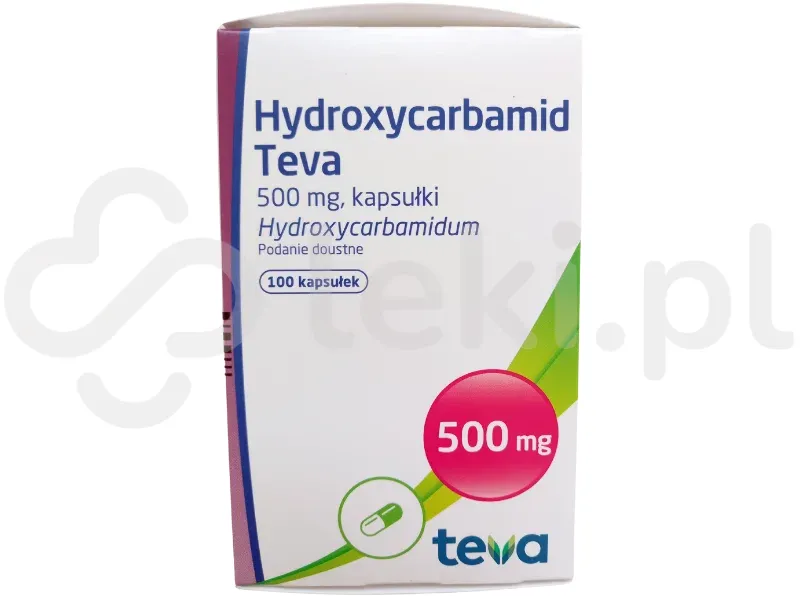
Table of Contents
- Package leaflet: Information for the patient
- 1. What is Hydroxycarbamid Teva and what is it used for
- 2. Important information before using Hydroxycarbamid Teva
- 3. How to use Hydroxycarbamid Teva
- 4. Possible adverse reactions
- 5. How to store Hydroxycarbamid Teva
- 6. Contents of the pack and other information
- Information intended exclusively for medical professionals:
Package leaflet: Information for the patient
Hydroxycarbamid Teva, 500 mg, capsules
Hydroxycarbamidum
Please read the entire leaflet carefully before using the medicine, as it contains important information for the patient.
- Keep this leaflet so that you can read it again if necessary.
- Consult your doctor or pharmacist if you have any further questions.
- This medicine has been prescribed for a specific individual. Do not pass it on to others. This medicine may harm another person, even if their symptoms are the same.
- If you experience any adverse effects, including any not listed in this leaflet, inform your doctor. See section 4.
Table of contents of the leaflet
- What is Hydroxycarbamid Teva and what is it used for
- Important information before taking Hydroxycarbamid Teva
- How to take Hydroxycarbamid Teva
- Possible side effects
- How to store Hydroxycarbamid Teva
- Contents of the pack and other information
1. What is Hydroxycarbamid Teva and what is it used for
Hydroxycarbamid Teva contains hydroxycarbamide as the active substance, which is an antineoplastic agent with cytostatic and antimetotic properties. It inhibits the growth of tumour cells and thus the progression of neoplastic disease.
Sickle cell anaemia is an inherited blood disorder in which red blood cells assume an abnormal sickle shape and become rigid, leading to anaemia and blockage of blood vessels, resulting in impaired blood flow. This may cause acute painful crises and organ damage. The hydroxycarbamide contained in the medicine helps prevent the formation of abnormally shaped red blood cells, reduces the frequency of acute painful crises and the need for hospitalisation due to the disease.
Indications for use:
Hydroxycarbamide is used in the treatment of:
- chronic myeloproliferative disorders, such as:
- chronic myeloid leukaemia (CML);
- polycythaemia vera with a high risk of thromboembolic complications;
- essential thrombocythaemia;
- myelofibrosis.
- sickle cell anaemia:
- for the prevention of recurrent vaso-occlusive crises, including acute chest syndrome, in adults, adolescents and children aged over 2 years with a body weight ≥ 33 kg who have symptomatic sickle cell anaemia.
2. Important information before using Hydroxycarbamid Teva
When not to use Hydroxycarbamid Teva
- if the patient is allergic to hydroxycarbamide or any of the other ingredients of this medicine (listed in section 6),
- if the patient has severe bone marrow suppression; reduced number of white blood cells (below 2.5 x 10⁹/L), reduced number of platelets (below 100 x 10⁹/L), or severe anaemia,
- in pregnant women and breastfeeding mothers,
- if the patient has severe liver disease,
- if the patient has severe kidney disease.
Warnings and precautions
Before starting treatment with Hydroxycarbamid Teva, consult a doctor,
pharmacist, or nurse:
- if the patient has leg ulcers,
- if the patient is to be vaccinated with certain vaccines.
If the patient has diabetes and uses a continuous glucose monitoring (CGM) system to measure blood glucose. Hydroxycarbamide (also known as hydroxyurea) may cause falsely high glucose readings from certain sensors. This may lead to administration of more insulin than needed, resulting in blood sugar levels that are too low (hypoglycaemia). Please speak with the doctor who prescribed the CGM system about whether it is safe to use it during treatment with Hydroxycarbamid Teva.
Before starting and during treatment, the doctor will recommend regular monitoring of the following parameters:
- peripheral blood parameters (blood count, white blood cell count, platelet count, differential count). Haemoglobin concentration, total white blood cell count and platelet count – at least once a week.
- kidney function parameters (creatinine concentration, blood urea nitrogen, diuresis)
- blood uric acid concentration
- liver function parameters.
If haemolytic anaemia (a condition in which red blood cells are destroyed faster than they can be produced) is detected during routine blood tests, the doctor will discontinue treatment with Hydroxycarbamid Teva.
In case of severe anaemia, before or during treatment, the doctor may decide to correct it by blood transfusion.
Use hydroxycarbamide with caution in patients who have undergone radiotherapy, previous chemotherapy, patients with kidney tumours, and patients with impaired kidney and/or liver function (especially at the beginning of treatment).
In patients receiving long-term hydroxycarbamide treatment for myeloproliferative disorders, such as polycythaemia vera or essential thrombocythaemia, secondary leukaemia may develop. The patient should report to the doctor any symptoms such as: fatigue, fever, bone and joint pain, pallor, mucosal ulcers, nosebleeds or gum bleeding. The doctor will then recommend blood laboratory tests. If the patient is taking other myelosuppressive drugs (reducing production of red blood cells, white blood cells or platelets), consult a doctor, pharmacist, or nurse.
In patients receiving long-term hydroxycarbamide, cases of skin cancer have been reported. During and after treatment with hydroxycarbamide, the skin should be protected from sunlight and self-examination of the skin should be performed regularly. In addition, the treating doctor will perform skin examinations during routine check-up visits.
The patient should report any skin changes to the doctor.
The patient should inform the doctor if taking antiretroviral drugs (used to treat HIV infection, e.g. didanosine, stavudine and indinavir). Concurrent use with hydroxycarbamide may lead to treatment failure and increased adverse effects of these drugs. This may result in acute pancreatitis, liver damage and liver failure, sometimes fatal, and peripheral neuropathy (in some cases severe) in HIV patients.
Patients and (or) parents or legally responsible persons should be able to follow instructions regarding administration, observation and care.
Children and adolescents
Chronic myeloproliferative disorders
Due to the rare occurrence of these conditions in children, a dosing regimen has not been established in this age group.
Sickle cell anaemia
The medicine is indicated for use in adolescents and children aged over 2 years with body weight of 33 kg or more (see section "Information intended exclusively for healthcare professionals").
Hydroxycarbamid Teva with other medicines
Tell the doctor about all medicines currently used, recently used, or planned to be used.
Administration of hydroxycarbamide with other drugs that suppress bone marrow function (other anticancer drugs administered concurrently or previously, reducing production of red blood cells, white blood cells or platelets responsible for clotting) or radiation therapy may enhance the suppressive effect and increase the risk of immune system damage. In irradiated patients, symptoms of erythema may worsen.
Use of hydroxycarbamide in HIV-infected patients treated with antiretroviral drugs (i.e. drugs that inhibit or destroy retroviruses such as HIV), e.g. didanosine, stavudine and indinavir, may increase toxic effects. Cases of acute pancreatitis, sometimes fatal, liver damage and liver failure, sometimes fatal, and cases of peripheral neuropathy have been reported.
Concomitant use of hydroxycarbamide with a vaccine containing live viruses may enhance replication of the vaccine virus and (or) may intensify adverse effects of the vaccine virus due to weakening of the body's normal defence mechanisms caused by hydroxycarbamide treatment.
Pregnancy, breastfeeding and effects on fertility
If the patient is pregnant or breastfeeding, suspects she may be pregnant, or plans to have a child, she should consult a doctor before using this medicine.
Women of childbearing potential/Contraception in women and men
Women of childbearing potential should use effective contraception during treatment with hydroxycarbamide and for 6 months after completion of treatment.
It is recommended that men use effective contraception and refrain from decisions about fathering a child during treatment with hydroxycarbamide and for 3 months after completion of treatment.
Pregnancy
Hydroxycarbamid Teva is contraindicated during pregnancy.
Inform the doctor if the patient becomes pregnant or suspects she may become pregnant during treatment with Hydroxycarbamid Teva.
Breastfeeding
Hydroxycarbamide passes into human milk; therefore, Hydroxycarbamid Teva is contraindicated during breastfeeding.
Fertility
Patients should be informed about the possibility of sperm or oocyte preservation before starting treatment.
Hydroxycarbamide may have genotoxic effects; therefore, if the patient plans to become pregnant after completion of hydroxycarbamide treatment, genetic counselling is recommended.
If the patient plans to have children, this should be discussed with the doctor to decide whether to continue treatment with Hydroxycarbamid Teva. Patients planning to have children should discontinue treatment 3 months (men) or 6 months (women) before possible conception.
Hydroxycarbamid Teva may reduce sperm production in men during treatment and thus may affect the ability to have children. This should be discussed with the doctor before starting treatment. Also, if the partner becomes pregnant or plans to become pregnant, this should be discussed with the doctor.
The doctor will individually assess the benefit-risk ratio, considering the risks associated with hydroxycarbamide treatment versus switching the patient to a blood transfusion programme.
Driving and operating machinery
During treatment with hydroxycarbamide (especially when high doses are used), driving vehicles and operating machinery is not recommended, as it may cause dizziness, disorientation, and hallucinations.
Hydroxycarbamid Teva contains carmine (E 124)
The medicine may cause allergic reactions.
3. How to use Hydroxycarbamid Teva
This medicine should always be used exactly as directed by your doctor or pharmacist. If in doubt,
consult your doctor or pharmacist.
The dose depends on the type of disease being treated. The doctor determines the dose based on
current body weight or ideal body weight if the current weight is lower.
Detailed dosing information is provided at the end of this leaflet under the section: "Information
intended exclusively for healthcare professionals."
Use in children and adolescents
Chronic myeloproliferative disorders
Due to the rarity of these conditions in children, a dosing regimen has not been established in this
age group.
Sickle cell anemia
This medicine may be used in adolescents and children aged 2 years and older with a body weight
of 33 kg or more (see section "Information intended exclusively for healthcare professionals").
Use in elderly patients
Elderly patients often require lower doses due to increased sensitivity to the effects of
hydroxycarbamide.
Use in patients with renal and/or hepatic impairment
Chronic myeloproliferative disorders
There is no available data on this subject. No dosing recommendations can be given for patients
with impaired renal and/or hepatic function.
Sickle cell anemia
Renal impairment
In patients with impaired renal function, the doctor may consider reducing the dose of
Hydroxycarbamid Teva, as renal excretion is the main route of elimination of the drug. Close
monitoring of blood parameters is recommended in these patients. Hydroxycarbamid Teva is
contraindicated in patients with severe renal impairment (creatinine clearance <30 mL/min).
Hepatic impairment
Close monitoring of blood parameters is recommended in these patients. For safety reasons,
Hydroxycarbamid Teva is contraindicated in patients with severe hepatic impairment.
Method of administration
This medicine is administered orally.
The capsules should be swallowed whole, without allowing them to break down in the mouth.
Monitoring during treatment for sickle cell anemia
Your doctor will inform you how long you should continue taking Hydroxycarbamid Teva.
During treatment with Hydroxycarbamid Teva, regular blood tests as well as tests to monitor
liver and kidney function will be performed. Depending on the dose taken, these tests may be
carried out every two weeks or every two months. The doctor will adjust the dose of
Hydroxycarbamid Teva according to the results of these tests.
The doctor should regularly monitor the development of children treated with Hydroxycarbamid
Teva.
Overdose of Hydroxycarbamid Teva
Following ingestion of a dose of hydroxycarbamide several times higher than recommended, acute
mucocutaneous symptoms have been observed (pain, painful erythema, swelling of hands and
soles of feet, followed by desquamation of the skin on hands and feet, intense generalized skin
pigmentation, and oral mucositis).
In case of overdose, the doctor may perform gastric lavage, followed by supportive treatment and
monitoring of haematopoietic system function.
If you or someone else has taken more than the recommended dose, or if a child has accidentally
ingested the medicine, seek immediate medical advice from a doctor or pharmacist, as urgent
medical assistance may be required.
Missed dose of Hydroxycarbamid Teva
If you miss a dose, take it as soon as possible. Do not take a double dose to make up for a
missed dose.
If you have any questions about the use of this medicine, consult your doctor or pharmacist.
4. Possible adverse reactions
Like all medicines, this medicine can cause adverse reactions, although not everyone will experience them.
If any of the following conditions occur, go to hospital immediately. Medical help may be
required:
- pain that does not resolve after using ordinary painkillers
- elevated body temperature (above 38.5°C) without pain
- vomiting
- sudden paleness, fatigue or worsening general health, or sudden enlargement of the spleen (your doctor will advise how to palpate the spleen), in men, unwanted painful erection lasting longer than three hours (priapism)
- pulmonary embolism (acute pulmonary syndrome) characterized by chest pain, fever, difficulty breathing (shortness of breath), or cough. These symptoms may be associated with severe lung disease and may occur in both adults and children. If these symptoms occur, seek medical attention immediately.
- severe infection
- unexplained bruising (blood pooling in tissues) or bleeding
- headache
- or any other symptoms suggestive of painful crises associated with the disease.
In addition, inform your doctor as soon as possible if you notice any of the following adverse
reactions to Hydroxycarbamid Teva:
- fever or chills
- nausea, weakness, lack of energy or general malaise
- rash (itchy, red skin eruptions)
- ulcers or sores on the lower limbs
- skin ulcers (open skin infections)
- disorientation (confusion) and dizziness.
At the beginning of treatment, disturbances in erythropoiesis (production of a certain type of red blood cells – megaloblasts) may occur. Hydroxyurea may reduce serum iron concentration.
Exacerbation of radiation-induced erythema may occur if radiotherapy has been previously or concurrently administered.
During hydroxyurea treatment, serum uric acid levels may increase (risk of gout development and even urate nephropathy). Patients should drink plenty of fluids, and the doctor will recommend appropriate treatment.
Bone marrow suppression is an adverse effect which necessitates dose reduction. Gastrointestinal adverse reactions are common, but rarely require dose reduction or discontinuation of treatment.
Sickle cell anaemia
The most commonly reported adverse reaction is bone marrow suppression, the most frequent manifestation of which is neutropenia. Bone marrow suppression is a toxic effect of hydroxyurea, which can be mitigated by dose reduction. Gradual dose escalation may help reduce the occurrence of adverse reactions.
Below are possible adverse reactions of hydroxyurea listed according to their frequency of occurrence.
Very common (may affect more than 1 in 10 people):
Bone marrow suppression, low blood cell count, enlargement of red blood cells, reduced resistance to infections.
Absence or low number of sperm in semen (azoospermia or oligospermia). The medicine may therefore reduce men's ability to have children.
Common (may affect up to 1 in 10 people):
Decreased white blood cell count, increased number of megaloblasts (large nucleated bone marrow cells that develop into red blood cells in pernicious anaemia), thrombocytopenia, anaemia.
Diarrhoea, constipation.
Uncommon (may affect up to 1 in 100 people):
Nausea, vomiting, loss of appetite, oral inflammation, drug-induced fever, chills, malaise.
Maculopapular rash, facial erythema, erythema of palms and soles.
Increased liver enzyme activity and bilirubin concentration.
Transient renal tubular dysfunction accompanied by increased serum concentrations of uric acid, urea and creatinine.
Rare (may affect up to 1 in 1,000 people):
Hypersensitivity reactions.
Hair loss.
Acute pulmonary reactions presenting as diffuse lung infiltrates, dyspnoea, allergic alveolitis.
Difficulty and pain during urination.
Headaches, dizziness, disorientation, hallucinations.
Very rare (may affect up to 1 in 10,000 people):
Skin changes resembling dermatomyositis, skin and nail discoloration or atrophic changes, skin ulcers (especially ulcers of the lower limbs), pruritus, keratosis, skin cancer (squamous cell carcinoma, basal cell carcinoma), cyanotic-red nodules, skin desquamation, skin inflammation causing red, scaly patches which may occur together with joint pain.
Renal function disorders.
Frequency not known (cannot be estimated from available data):
Gastrointestinal ulcer, marked decrease in blood magnesium levels, interstitial lung diseases, dry skin, absence of menstruation, parvovirus B19 infection, bleeding, weight gain, haemolytic anaemia.
Isolated cases of malignant blood disorders (leukaemia).
Reporting of adverse reactions
If any adverse reactions occur, including any not listed in this leaflet, inform your doctor or pharmacist. Adverse reactions can be reported directly to the Department of Monitoring Adverse Drug Reactions of the Office for Registration of Medicinal Products, Medical Devices and Biocidal Products,
Al. Jerozolimskie 181 C, 02-222 Warsaw
Tel.: +48 22 49 21 301
Fax: +48 22 49 21 309
Website: https://smz.ezdrowie.gov.pl
Adverse reactions can also be reported to the marketing authorisation holder.
Reporting adverse reactions helps provide more information on the safety of the medicine.
5. How to store Hydroxycarbamid Teva
Keep this medicine out of sight and reach of children.
Do not use this medicine after the expiry date stated on the packaging. The expiry date refers to the last day of the stated month.
Store below 25°C.
Medicines must not be disposed of via wastewater or household waste. Ask your pharmacist how to dispose of medicines no longer in use. This will help protect the environment.
6. Contents of the pack and other information
What Hydroxycarbamid Teva contains
- The active substance is hydroxycarbamide. Each capsule contains 500 mg of hydroxycarbamide.
- Other ingredients: potato starch; capsule shell: gelatin, titanium dioxide (E 171), indigo carmine (E 132), carmine red (E 124), quinoline yellow (E 104), iron oxide red (E 172).
What Hydroxycarbamid Teva looks like and contents of the pack
The capsules are cylindrical in shape with rounded edges. The cap of the capsule is green, the body is light pink.
The pack contains:
100 capsules in a sealed PE pouch, packed together with the patient leaflet and a silica gel desiccant (in the form of a small sachet) into an aluminium can with an aluminium membrane and cap. The silica gel acts as a moisture protectant and must not be ingested.
or
100 capsules in a 250 ml PE bottle with a PP screw cap, packed together with the patient leaflet in a cardboard box.
Marketing Authorisation Holder
Teva Pharmaceuticals Polska Sp. z o.o.
Emilii Plater 53 Street
00-113 Warsaw
Phone: (22) 345 93 00
Manufacturer
Teva Czech Industries s.r.o.
Ostravská 29, č.p. 305
747 70 Opava-Komárov
Czech Republic
Teva Operations Poland Sp. z o.o.
Mogilska 80 Street
31-546 Kraków
Information intended exclusively for medical professionals:
Dosage and administration of Hydroxycarbamid Teva
Chronic myeloproliferative disorders
Chronic myeloid leukemia
In initial treatment, hydroxycarbamide is usually administered at a daily dose of 40 mg/kg body weight (b.w.), depending on the white blood cell count. The dose is reduced by 50% (to 20 mg/kg b.w. per day) when the white blood cell count is less than 20 x 10⁹/L. The dose is then individually adjusted to maintain the white blood cell count within the range of 5 to 10 x 10⁹/L. The hydroxycarbamide dose should be reduced if the white blood cell count is less than 5 x 10⁹/L and increased if it exceeds 10 x 10⁹/L.
If the white blood cell count is less than 2.5 x 10⁹/L or the platelet count is less than 100 x 10⁹/L, treatment should be discontinued until counts increase to values close to normal.
The antineoplastic effect of hydroxycarbamide should be assessed by the physician after six weeks of treatment. In case of significant disease progression, treatment will be discontinued. If treatment proves effective, it may be continued indefinitely.
Essential thrombocythemia
Treatment of essential thrombocythemia is usually initiated at a dose of 15 mg/kg b.w. per day and adjusted to maintain the platelet count below 600 x 10⁹/L and the white blood cell count above 4 x 10⁹/L.
Polycythaemia vera
Treatment of polycythaemia vera is initiated at a daily dose of 15–20 mg/kg b.w. The physician will individually adjust the hydroxycarbamide dose to maintain haematocrit values below 45% and platelet count below 400 x 10⁹/L. In most patients, the average dose ranges from 500 mg to 1000 mg per day in continuous therapy.
If haematocrit and platelet counts can be adequately controlled, therapy should be continued indefinitely.
Myelofibrosis
In initial treatment, a dose of 5 to 20 mg/kg b.w. per day is used; for maintenance therapy, 10 mg/kg b.w. per day is recommended.
Special populations
Children and adolescents
Due to the rarity of these conditions in children, a dosing regimen has not been established in this age group.
Elderly patients
Elderly patients often require lower doses due to increased sensitivity to the effects of hydroxycarbamide.
Renal and/or hepatic impairment
No data are available. There are no specific dosage recommendations for patients with renal and/or hepatic impairment.
Sickle cell anaemia
Treatment should be initiated by a physician experienced in managing sickle cell anaemia.
Dosage
Adults, adolescents, and children above 2 years of age
Dosing should be based on the patient's body weight (b.w.).
The initial dose of hydroxycarbamide is 15 mg/kg b.w.; the standard dose ranges from 15 to 30 mg/kg b.w. per day.
The hydroxycarbamide dose should remain unchanged as long as the patient shows a clinical or haematological response (e.g. increased fetal haemoglobin [HbF] concentration, mean corpuscular volume [MCV], neutrophil count).
In the absence of response (recurrent crises or no reduction in their frequency), the daily dose may be gradually increased by 2.5 to 5 mg/kg b.w. per day.
In exceptional circumstances, a maximum dose of 35 mg/kg b.w. per day may be justified, provided strict haematological monitoring is ensured.
If after 3–6 months the patient still does not respond to the maximum dose of hydroxycarbamide (35 mg/kg b.w. per day), permanent discontinuation of the drug should be considered.
If blood cell counts fall within the toxic range, hydroxycarbamide should be temporarily discontinued until counts return to normal. Haematological normalization usually occurs within two weeks. Treatment may then be resumed at a reduced dose. The dose may later be increased under strict haematological monitoring. Attempts to use a dose causing haematological toxicity should not be repeated more than twice.
The toxic range can be characterized by the following blood test results:
Neutrophils < 2,000/mm³
Platelets < 80,000/mm³
Haemoglobin < 4.5 g/dL
Reticulocytes < 80,000/mm³ if haemoglobin concentration < 9 g/dL
In patients with body weight less than 33 kg, treatment may be initiated with one of the available hydroxycarbamide-containing medicinal products with lower strengths, registered for use in sickle cell anaemia in patients above 2 years of age.
For children unable to swallow capsules, administration of hydroxycarbamide in another pharmaceutical form is recommended.
For adults without swallowing difficulties, solid oral dosage forms may be more appropriate and convenient.
Long-term data are available on prolonged use of hydroxycarbamide in patients with sickle cell anaemia: observation lasted up to 12 years in children and adolescents and over 13 years in adults. Currently, it is unknown how long patients should be treated with hydroxycarbamide. The duration of treatment is determined by the treating physician based on assessment of the individual patient's clinical and haematological status.
Special populations
Children under 2 years of age
Due to limited long-term data on hydroxycarbamide treatment in children under 2 years of age, dosing regimens have not been established in this patient group; therefore, hydroxycarbamide treatment is not recommended in this population.
Renal impairment
In patients with renal impairment, dose reduction of Hydroxycarbamid Teva should be considered, as renal excretion is the main route of drug elimination. In patients with creatinine clearance ≤60 mL/min, the initial dose should be reduced by 50%. Close monitoring of blood parameters is recommended in this patient group. Hydroxycarbamid Teva should not be used in patients with severe renal impairment (creatinine clearance <30 mL/min).
Hepatic impairment
No data are available indicating a specific dose modification in patients with hepatic impairment. Close monitoring of blood parameters is recommended in this patient group. For safety reasons, Hydroxycarbamid Teva is contraindicated in patients with severe hepatic impairment.
Method of administration
The medicinal product is administered orally.
Dosage depends on the type of disease for which the medicinal product is indicated. The dose is calculated based on current body weight or ideal body weight if the current weight is lower.
Capsules should be swallowed whole, without allowing them to disintegrate in the oral cavity.