Hydroquinine
Poland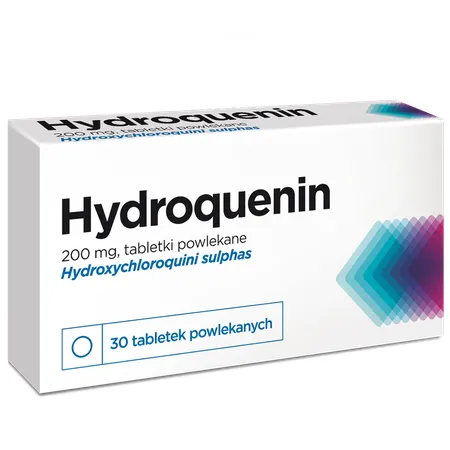
Table of Contents
Package leaflet: Information for the patient
Hydroquenin, 200 mg, film-coated tablets
Hydroxychloroquini sulphas
Please read all of this leaflet carefully before taking this medicine, because it contains
important information for the patient.
- Keep this leaflet, as you may need to read it again.
- If you have any questions, ask your doctor or pharmacist.
- This medicine has been prescribed for a specific individual. Do not pass it on to others. This medicine may harm other people, even if their symptoms are the same.
- If you experience any adverse reactions, including any adverse reactions not listed in this leaflet, inform your doctor or pharmacist. See section 4.
Contents of the leaflet
- What Hydroquenin is and what it is used for
- Important information before taking Hydroquenin
- How to take Hydroquenin
- Possible side effects
- How to store Hydroquenin
- Contents of the pack and other information
1. What Hydroquenin is and what it is used for
Hydroquenin contains the active substance hydroxychloroquine sulfate and is an
antimalarial medicine with anti-inflammatory and antirheumatic properties.
Hydroquenin is used in adults for:
- prevention and treatment of malaria,
- treatment of rheumatoid arthritis,
- treatment of skin disorders caused or aggravated by sunlight (photodermatoses),
- treatment of connective tissue diseases (lupus erythematosus: systemic and discoid).
Hydroquenin is used in children and adolescents for:
- treatment of juvenile idiopathic arthritis (in combination with other therapies),
- treatment of connective tissue diseases (lupus erythematosus: systemic and discoid).
2. Important information before taking Hydroquenin
When not to take Hydroquenin
- if the patient is allergic to hydroxychloroquine or any of the other ingredients of the medicine (listed in section 6);
- if the patient is allergic to other 4-aminoquinoline compounds (antimalarial drugs);
- if the patient has psoriasis;
- if the patient has certain eye diseases affecting the retina (retinopathy), inside the eye (maculopathy), or other vision disorders;
- if the patient has hearing loss caused by nerve damage.
Hydroquenin must not be given to children weighing less than 35 kg.
Warnings and precautions
Exercise caution and discuss with your doctor or pharmacist before starting Hydroquenin if the patient has:
- liver or kidney function disorders, and if the patient is taking medicines that may affect the liver and/or kidneys (a dose reduction may be necessary);
- severe gastrointestinal disorders;
- nervous system disorders;
- blood disorders;
- hypersensitivity to quinine;
- conduction disorders of the heart;
- glucose-6-phosphate dehydrogenase deficiency (an inherited enzyme deficiency causing anemia);
- porphyria (an inherited metabolic disorder);
- inactive chronic hepatitis B virus infection.
While taking Hydroquenin, avoid direct exposure to sunlight.
Do not take medicines containing gold salts or phenylbutazone simultaneously (medicines used in rheumatoid arthritis and gout).
Hydroxychloroquine may cause decreased blood glucose levels (hypoglycemia).
The doctor should inform the patient about the signs and symptoms of low blood sugar.
Monitoring of blood glucose levels may be necessary, and treatment may need to be adjusted if required.
Hydroxychloroquine may cause severe heart rhythm disorders with rapid, irregular heartbeat (QTc prolongation).
Before starting Hydroquenin, talk to your doctor:
- if the patient has heart failure or has previously had a heart attack;
- if the patient has or has had heart rhythm disorders, such as irregular heartbeat (arrhythmia) or very slow heartbeat (bradycardia);
- if the patient has electrolyte imbalances in the blood (especially low potassium levels (hypokalemia) and/or low magnesium levels (hypomagnesemia));
- if the patient is taking medicines known to affect heart rhythm (see section 2: "Hydroquenin and other medicines");
- if the patient or a family member has heart rhythm disorders with rapid, irregular heartbeat (QT prolongation visible on ECG).
Cases of cardiomyopathy, some fatal, have been reported in patients treated with hydroxychloroquine. The doctor will monitor for subjective and objective symptoms of cardiomyopathy.
Treatment with Hydroquenin must be discontinued if cardiomyopathy occurs. If the patient has been diagnosed with conduction disorders of the heart (bundle branch block, atrioventricular block) and biventricular hypertrophy, chronic toxicity may be suspected.
Duration of treatment should not exceed 3 years.
Before starting long-term treatment, a thorough eye examination should be performed, and vision should be monitored annually during treatment.
If visual disturbances occur, stop taking Hydroquenin and contact your doctor, who will re-evaluate vision.
Children should always be examined by an ophthalmologist before starting treatment.
Patients with visual acuity below 0.8, as well as patients over 65 years of age, should be examined by an ophthalmologist before starting treatment.
During long-term treatment, regular blood tests, as well as muscle and tendon examinations, should be performed. If abnormalities occur (e.g., blood changes or muscle weakness), the doctor will decide whether to discontinue Hydroquenin.
During treatment, movement disorders, involuntary movements, and/or tremors may occur (see section 4).
Some patients treated with Hydroquenin may experience psychiatric symptoms such as irrational thoughts, hallucinations, feelings of disorientation or depression, including self-destructive or suicidal thoughts, even in individuals who previously had no such problems. If the patient or someone close to them notices such adverse effects (see section 4), seek immediate medical help.
Serious skin rashes have been reported with the use of hydroxychloroquine (see section 4 "Possible adverse effects"). Often, the rash may involve ulceration of the mouth, throat, nose, genital organs, and conjunctivitis (redness and swelling of the eyes). Such serious skin rashes are often preceded by flu-like symptoms such as fever, headache, and body aches. The rash may progress to extensive blisters and skin peeling. If these skin symptoms occur, stop taking this medicine and contact your doctor immediately.
Children
Hydroquenin must not be given to children weighing less than 35 kg.
Young children are highly sensitive to the class of medicines to which Hydroquenin belongs. Exercise particular caution and store Hydroquenin out of reach of children to prevent poisoning.
Hydroquenin and other medicines
Tell your doctor or pharmacist about all medicines the patient is currently taking or has recently taken, as well as any medicines the patient plans to take.
Some medicines may interact with hydroxychloroquine.
Inform your doctor if the patient is taking any of the following medicines affecting heart rhythm, such as:
- medicines used to treat heart disorders (antiarrhythmic drugs);
- medicines used to treat depression (tricyclic antidepressants);
- medicines used to treat psychiatric disorders (antipsychotics);
- medicines used to treat bacterial infections (e.g., moxifloxacin, azithromycin);
- medicines used to treat HIV infection (e.g., saquinavir);
- medicines used to treat fungal infections (e.g., fluconazole);
- medicines used to treat parasitic infections (e.g., pentamidine);
- medicines used to treat malaria (e.g., halofantrine).
Inform your doctor if the patient is taking any of the following medicines:
- insulin or other antidiabetic medicines;
- medicines used to treat malaria, such as mefloquine (because it may increase the risk of seizures);
- antiepileptic medicines (used to treat epilepsy), especially phenobarbital, phenytoin, carbamazepine;
- medicines affecting the skin, blood, or eyes;
- tamoxifen – a medicine used to treat breast cancer;
- agalsidase – a medicine used in a rare disease called Fabry disease;
- medicines used to treat bacterial infections (such as rifampicin, clarithromycin);
- medicines that may affect kidney or liver function;
- medicines that neutralize stomach acid (for heartburn) and medicines containing kaolin (white clay). At least a 2-hour interval should be maintained between taking Hydroquenin and these medicines;
- cimetidine – a medicine used to treat stomach ulcers;
- medicines used to treat fungal infections (itraconazole);
- medicines used to treat lipid disorders (gemfibrozil);
- medicines used to treat AIDS (ritonavir);
- medicines used after organ transplantation or to treat immune system disorders (cyclosporine);
- anticoagulant medicines (dabigatran, clopidogrel);
- medicines used for heart conditions (digoxin, flecainide, propafenone, and metoprolol);
- a medicine used for parasitic infections (praziquantel);
- herbal medicines used to treat depression containing St. John's wort.
Hydroquenin with food and drink
Do not drink grapefruit juice while taking this medicine, as it may cause adverse effects.
Pregnancy and breastfeeding
If the patient is pregnant or breastfeeding, suspects she may be pregnant, or plans to become pregnant, she should consult her doctor or pharmacist before using this medicine. The doctor will discuss with the patient whether Hydroquenin is suitable for her.
Pregnancy
The use of Hydroquenin may be associated with a small increased risk of serious developmental abnormalities and should not be used during pregnancy unless the doctor considers that the benefits outweigh the risks.
Breastfeeding
Hydroquenin passes into human breast milk.
Hydroquenin should not be used during breastfeeding unless the doctor considers that the benefits outweigh the risks.
Driving and operating machinery
In some cases, the medicine may cause adverse effects that could affect the ability to drive and operate machinery. The medicine may impair vision and cause blurred vision.
A temporary dose reduction may be necessary if the above adverse effects do not resolve spontaneously.
3. How to take Hydroquenin
This medicine should always be taken as directed by your doctor. If in doubt, consult your doctor or pharmacist.
Recommended doses:
Malaria prophylaxis:
Adults: 400 mg (2 tablets) once weekly. Preventive treatment should begin one week before travel to a malaria-endemic area, continue during the stay, and for 4 weeks after leaving the area.
The dose should be taken on the same day each week.
For other indications, the dose is determined by the doctor, who will adjust it individually for the patient according to the following guidelines:
Treatment of malaria:
Adults: initially 800 mg (4 tablets), then 400 mg (2 tablets) after 6 hours, followed by 400 mg (2 tablets) daily for 2 days, or for 3 days in individuals weighing over 60 kg.
Photodermatoses:
Adults: 200 to 400 mg (1–2 tablets) daily, starting 14 days before anticipated exposure to sunlight.
Discoid lupus erythematosus:
Adults: initially 400 to 800 mg (2–4 tablets), then 200 to 400 mg (1–2 tablets) daily.
Connective tissue diseases:
Adults: 200 to 400 mg (1–2 tablets) daily.
Use in children and adolescents
The dosage is determined by the doctor. The lowest effective dose should be used, not exceeding 6.5 mg per kg of body weight per day based on ideal body weight.
This medicine is not suitable for children with an ideal body weight below 31 kg.
Taking more Hydroquenin than recommended
If more than the recommended dose of Hydroquenin is taken, contact your doctor, emergency services, or pharmacist immediately.
Symptoms of overdose may include headache, visual disturbances, convulsions, cardiac disturbances with irregular pulse affecting blood pressure and breathing, followed by myocardial infarction.
If such symptoms occur, go immediately to the nearest hospital and bring the medicine with you.
Missed dose of Hydroquenin
If a dose is missed, take it as soon as possible, then return to the regular dosing schedule.
Do not take a double dose to make up for a missed tablet.
Stopping Hydroquenin
Hydroquenin should only be discontinued in consultation with your doctor.
If you have any further questions about the use of this medicine, consult your doctor or pharmacist.
4. Possible adverse reactions
Like all medicines, this medicine can cause adverse reactions, although not everyone will experience them.
You must stop taking Hydroquenin immediately and contact your doctor if any of the following serious adverse reactions occur – urgent medical treatment may be required:
Severe skin reactions (see section 2: "Warnings and precautions"), such as:
- rash with flu-like symptoms and fever, and swollen lymph nodes. These may be symptoms of a condition called drug reaction with eosinophilia and systemic symptoms (DRESS);
- blisters, widespread peeling of the skin, pus-filled spots, occurring with fever. These may be symptoms of a condition called acute generalised exanthematous pustulosis (AGEP);
- blisters or peeling of the skin around the lips, eyes, mouth, nose, and genital organs, flu-like symptoms, and fever. These may be symptoms of Stevens-Johnson syndrome (SJS);
- extensive skin lesions, itching, joint pain, fever, and general malaise. This may be a condition called toxic epidermal necrolysis (TEN);
- skin reactions (including plum-coloured, raised, painful lesions, particularly on arms, hands, fingers, face, and neck), possibly accompanied by fever. This may be a condition called Sweet's syndrome;
- fatigue, bleeding from the skin and mucous membranes, and also infections and fever due to suppression of new blood cell formation (bone marrow suppression);
- irregular heart rhythm, severe cardiac arrhythmia with rapid, irregular heartbeat (QT interval prolongation);
- cardiovascular disorders (cardiomyopathy), which may lead to heart failure, and in some cases may result in death (see section 2: "Warnings and precautions");
- fulminant liver failure;
- liver problems, symptoms may include general malaise, with or without jaundice (yellowing of the skin and eyes), dark urine, nausea, vomiting, and/or abdominal pain. Rare cases of liver failure (including fatal cases) have been observed;
- rash (urticaria) and swelling (angioedema). If swelling of the face, lips, and tongue occurs, it may be life-threatening.
The most common adverse reactions (occurring in 10–20% of patients) are gastrointestinal disorders such as nausea, abdominal pain, diarrhoea, and vomiting. Adverse reactions may resolve spontaneously or after dose reduction.
Other adverse reactions
Very common (affects more than 1 in 10 people):
- nausea;
- abdominal pain.
Common (affects 1 to 10 in 100 people):
- anorexia (psychological loss of appetite);
- emotional lability;
- headache;
- blurred vision due to accommodation disorders (dose-dependent and resolves after discontinuation of treatment);
- diarrhoea, vomiting;
- rash and itching (occurring in approximately 40% of patients with systemic lupus erythematosus).
Uncommon (affects 1 to 10 in 1,000 people):
- nervousness;
- dizziness;
- retinal changes causing visual field defects, irregular pigmentation of the retina, and abnormal colour vision;
- corneal changes causing visual disturbances such as seeing halos, blurred vision, and light sensitivity (may resolve if treatment is discontinued);
- tinnitus;
- abnormal liver function test results;
- hair loss;
- changes in skin and mucous membrane pigmentation;
- hair lightening;
- sensory-motor disturbances such as muscle weakness, cramps, stiffness, or sensory disturbances, e.g. tingling.
Frequency not known (frequency cannot be estimated from available data):
- blood changes such as decreased white blood cells (leukopenia and agranulocytosis), decreased platelets (thrombocytopenia), and anaemia (anaemia and aplastic anaemia);
- porphyria (an inherited metabolic disorder);
- in patients with psoriasis, disease exacerbation may occur;
- bronchospasm;
- cold sweat, feeling of hunger, confusion, loss of consciousness, and seizures due to low blood sugar levels (hypoglycaemia);
- increased skin sensitivity to light;
- hearing loss (irreversible);
- drug-induced rash (called drug eruption);
- blistering skin inflammation (bullous eruption);
- fever, rash on the face, hands, and feet (erythema multiforme);
- seizures;
- muscle tone disorders, involuntary movements, inability to sit still, tremor;
- sensory disturbances due to nerve inflammation (neuropathy);
- muscle weakness (myopathy), which may resolve after discontinuation of treatment;
- diminished tendon reflexes;
- maculopathy and macular degeneration, which may be irreversible;
- feelings of depression, suicidal or self-harming thoughts, hallucinations, feelings of nervousness or anxiety, disorientation, agitation, sleep disturbances, feelings of euphoria or excessive excitement (see section 2 "Warnings and precautions").
Reporting of adverse reactions
If any adverse reactions occur, including any not listed in this leaflet, inform your doctor or pharmacist. Adverse reactions can be reported directly to the Department of Monitoring Adverse Reactions of Medicinal Products, Office for Registration of Medicinal Products, Medical Devices and Biocidal Products:
Al. Jerozolimskie 181C
02-222 Warsaw
Phone: +48 22 49 21 301
Fax: +48 22 49 21 309
Website: https://smz.ezdrowie.gov.pl
Adverse reactions can also be reported to the marketing authorisation holder.
Reporting adverse reactions helps provide more information on the safety of this medicine.
5. How to store Hydroquenin
Keep this medicine out of the sight and reach of children.
Do not use this medicine after the expiry date stated on the carton (EXP). The expiry date refers to the last day of the stated month.
There are no special temperature storage requirements for this medicine. Store in the original packaging to protect from light.
Medicines must not be disposed of via wastewater or household waste. Ask your pharmacist how to dispose of medicines no longer required. Such measures will help protect the environment.
6. Contents of the pack and other information
What Hydroquenin contains
- The active substance is hydroxychloroquine sulfate. Each coated tablet contains 200 mg of hydroxychloroquine sulfate.
- The other ingredients are: maize starch, calcium hydrogen phosphate dihydrate, colloidal anhydrous silica, polysorbate 80, dried maize starch, talc, magnesium stearate,
coating ingredients: (hypromellose, type 2910, 15 cps, talc, titanium dioxide E171, macrogol 6000).
What Hydroquenin looks like and contents of the pack
Hydroquenin is a coated tablet, round, 9.5 mm in diameter, biconvex, white in colour, with the imprint "200" on one side and smooth on the other side.
The pack contains 30 coated tablets. The packaging consists of aluminium/PVC blisters in a cardboard box, together with the leaflet.
Marketing Authorisation Holder
Aflofarm Farmacja Polska Sp. z o.o.
ul. Partyzancka 133/151
95-200 Pabianice
tel. (42) 22-53-100
Importer
Aflofarm Farmacja Polska Sp. z o.o.
ul. Szkolna 31
95-054 Ksawerów