Hydrocortisone-sf
Poland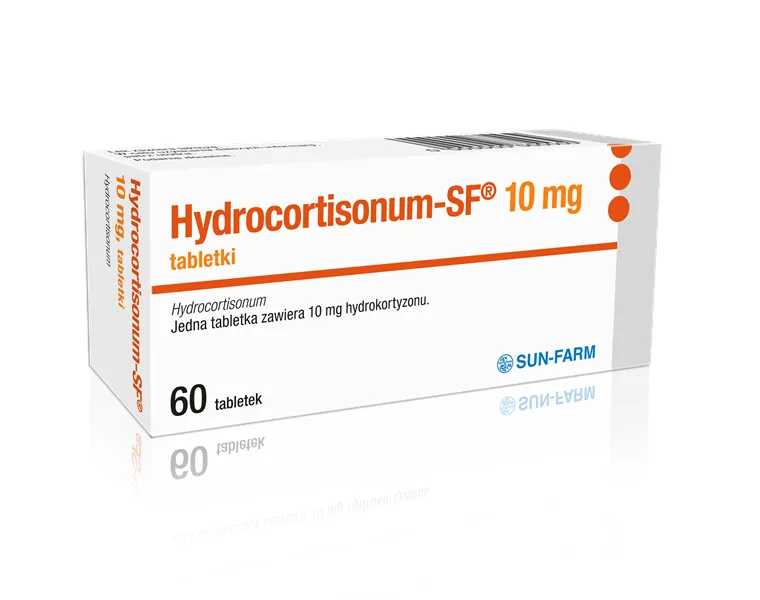
Table of Contents
Package leaflet: Information for the patient
Hydrocortisonum-SF, 10 mg, tablets
Hydrocortisonum
Read the following information carefully before using the medicine, as it contains
important information for the patient.
- Keep this leaflet, so that you can read it again if necessary.
- If you have any further questions, please consult your doctor or pharmacist.
- This medicine has been prescribed for a specific individual. Do not pass it on to others. The medicine may harm other people, even if their symptoms are the same.
- If the patient experiences any adverse reactions, including any adverse reactions not listed in this leaflet, inform the doctor or pharmacist immediately. See section 4.
Table of contents
- What Hydrocortisonum-SF is and what it is used for
- Important information before taking Hydrocortisonum-SF
- How to take Hydrocortisonum-SF
- Possible side effects
- How to store Hydrocortisonum-SF
- Contents of the pack and other information
1. What Hydrocortisonum-SF is and what it is used for
Hydrocortisonum-SF contains hydrocortisone as the active substance. Hydrocortisone belongs to a group of medicines called glucocorticoids. Glucocorticoids occur naturally in the body and help maintain normal bodily functions. Hydrocortisonum-SF reduces inflammation and should be taken as directed by the doctor to achieve the proper treatment outcome.
Hydrocortisonum-SF is used:
- in cases of impaired adrenal cortex function in patients who do not produce sufficient amounts of hydrocortisone (replacement therapy),
- before surgery and during serious injury or illness in patients diagnosed with adrenal cortex insufficiency or uncertain adrenal reserve.
If the patient is unsure why Hydrocortisonum-SF has been prescribed, they should discuss it with their doctor.
2. Information before using Hydrocortisonum-SF
When not to use Hydrocortisonum-SF:
- if the patient is allergic to hydrocortisone or to any of the other ingredients of this medicine (listed in section 6),
- if the patient has a fungal infection, e.g. aspergillosis, candidiasis.
Warnings and precautions
Before starting treatment with Hydrocortisonum-SF, discuss this with your doctor or pharmacist:
- if the patient currently has or has ever had depression or bipolar disorder (manic depression). You should also tell the doctor if the patient has experienced depression before or during treatment with glucocorticosteroid medicines such as Hydrocortisonum-SF,
- if the patient has hyperthyroidism (overactive thyroid),
- if any of the above-mentioned diseases occurred in the patient's immediate family members.
Special caution should be exercised when using Hydrocortisonum-SF in the following cases (inform your doctor about these before starting treatment with Hydrocortisonum-SF):
- recent myocardial infarction (heart attack),
- heart disease known as congestive heart failure,
- sepsis, tuberculosis, or history of these diseases,
- peptic ulcer or other digestive disorders,
- chickenpox or shingles,
- patient's contact with someone who has chickenpox or shingles, especially if the patient has never had these diseases or is unsure whether they have had chickenpox or shingles,
- herpes simplex virus infection affecting the eye,
- muscle weakness after previous steroid use,
- recent travel to tropical countries,
- intestinal diseases such as ulcerative colitis,
- epilepsy,
- phlebitis with thrombosis (swelling and redness along a vein with increased pain on touch),
- urticaria (skin disease, rash),
- cancer with metastases to other parts of the body,
- long-term prior use of glucocorticosteroid medicines due to increased susceptibility to infections,
- amoebiasis (amebiasis) or intestinal threadworm infection (strongyloidiasis) due to the risk of developing symptoms or worsening of the disease.
Additionally, consult your doctor if any of the following conditions occur in the patient or in members of their family:
- diabetes,
- heart diseases,
- hypertension (high blood pressure),
- glaucoma,
- kidney or liver function disorders,
- myasthenia (a disease characterized by muscle weakness),
- osteoporosis,
- low levels of thyroid hormones (hypothyroidism).
Use of this medicine may cause a crisis in pheochromocytoma (Pheochromocytoma crisis), which may lead to death. Pheochromocytoma is a rare adrenal gland tumour. A pheochromocytoma crisis may manifest as headache, excessive sweating, palpitations, and increased blood pressure. If any of the above symptoms occur, the patient should contact a doctor immediately.
Before starting treatment with Hydrocortisonum-SF, discuss this with your doctor if there is suspicion of, or if the patient has been diagnosed with, pheochromocytoma (an adrenal gland tumour).
If the patient experiences blurred vision or other visual disturbances, they should contact a doctor.
If the patient develops muscle weakness, muscle pain, cramps, or muscle stiffness during treatment with hydrocortisone, they should contact a doctor immediately. These may be symptoms of a condition called periodic paralysis associated with thyrotoxicosis, which may occur in patients with hyperthyroidism (hyperthyroidism) treated with hydrocortisone. Additional treatment may be required to alleviate symptoms of this condition.
If hydrocortisone is administered to premature infants, monitoring of heart function and myocardial imaging may be necessary.
If in doubt whether any of the above conditions apply to the patient or their family members, consult a doctor or pharmacist before using the medicine.
Psychiatric disorders during treatment with Hydrocortisonum-SF
Psychiatric disorders (see section 4) may occur during treatment with glucocorticosteroids such as Hydrocortisonum-SF.
These disorders may be serious.
They usually occur within a few days or weeks after starting treatment.
The likelihood of their occurrence is higher after administration of high doses of the medicine.
Most of these disorders resolve after dose reduction or discontinuation of the medicine.
If the disorders persist, appropriate treatment may be necessary.
Tell your doctor if the patient being treated with Hydrocortisonum-SF experiences any symptoms of psychiatric disorders, especially if the patient has low mood or suicidal thoughts.
In rare cases, psychiatric disorders may occur during dose reduction or after discontinuation of the medicine.
Hydrocortisonum-SF and infections
While using Hydrocortisonum-SF, the patient is more susceptible to infections and may have difficulty recognizing them.
The patient should avoid contact with people who have:
- chickenpox,
- shingles,
- measles. In case of suspected infection, consult a doctor.
Vaccinations and diagnostic tests during treatment with Hydrocortisonum-SF
Tell your doctor that you are using Hydrocortisonum-SF if the patient is to receive any vaccinations or undergo any diagnostic or laboratory tests, as this medicine may affect the results of certain tests.
Surgery during treatment with Hydrocortisonum-SF
In case of surgery requiring anaesthetic agents, inform the doctor that the patient is taking Hydrocortisonum-SF.
Hydrocortisonum-SF and other medicines
Tell your doctor about all medicines currently taken or taken recently by the patient, including those obtained without a prescription. This also applies to herbal medicines.
Hydrocortisonum-SF may affect the action of these medicines, and conversely, these medicines may modify the effect of Hydrocortisonum-SF.
Some medicines may enhance the effect of Hydrocortisonum-SF, and the doctor may wish to closely monitor the patient taking such medicines (including certain HIV medicines: ritonavir, cobicistat).
In particular, do not take Hydrocortisonum-SF if the patient is taking any of the following medicines (inform your doctor or pharmacist):
- acetylsalicylic acid (aspirin),
- medicines used to treat epilepsy, such as phenytoin, phenobarbital, carbamazepine and primidone,
- ephedrine (a medicine used, among others, to constrict blood vessels in inflammatory conditions of nasal mucosa),
- medicines used to treat tuberculosis, such as rifabutin or rifampicin,
- anticoagulants such as warfarin,
- diuretics,
- certain medicines used to treat fungal infections, such as amphotericin and ketoconazole,
- aminoglutethimide (a medicine used in oncological diseases),
- certain medicines used in heart failure, such as digoxin, furosemide,
- erythromycin (a medicine used to treat certain infections),
- oral contraceptives or hormone replacement therapy (HRT) medicines,
- somatotropin (growth hormone),
- certain medicines used to treat hypertension,
- certain medicines used in heart diseases, such as guanethidine, isosorbide mononitrate, isosorbide dinitrate, theophylline,
- sympathomimetic medicines (medicines used, e.g., in asthma, hypotension, cough or to constrict blood vessels in inflammatory conditions of nasal mucosa),
- medicinal products containing calcium,
- painkillers and anti-inflammatory medicines known as non-steroidal anti-inflammatory drugs (NSAIDs), e.g. ibuprofen, diclofenac or naproxen,
- sodium phenylbutyrate – a medicine used in urea cycle disorders (usually prescribed by a specialist doctor),
- medicines used in diabetes,
- ritonavir (a medicine used to treat HIV infection),
- methotrexate (a medicine used to treat rheumatoid arthritis),
- cyclosporine (a medicine used to treat psoriasis or in organ transplant patients),
- minoxidil and hydralazine (medicines used to lower blood pressure).
If the patient is unsure whether they are taking any of the above-mentioned medicines, they should consult a doctor or pharmacist before using Hydrocortisonum-SF.
Hydrocortisonum-SF with food and drink
The medicine may be taken during meals or independently of them.
Pregnancy and breastfeeding
If the patient is pregnant or breastfeeding, suspects she may be pregnant or is planning to have a baby, she should consult a doctor or pharmacist before using this medicine.
The medicine may be used during pregnancy only if, in the doctor's opinion, the potential benefit to the mother outweighs the potential risk to the foetus.
Infants of mothers taking high doses of systemic corticosteroids for prolonged periods may develop adrenal cortex suppression.
Driving and operating machinery
The medicine may cause dizziness, visual disturbances and muscle weakness. If any of these symptoms occur, the patient should not drive or operate machinery.
Hydrocortisonum-SF contains lactose and sodium
If the patient has previously been diagnosed with intolerance to certain sugars, they should contact a doctor before taking the medicine.
The medicine contains less than 1 mmol (23 mg) of sodium per tablet, meaning the medicine is considered "sodium-free".
While using Hydrocortisonum-SF, carry information about the ongoing treatment.
Information about the patient's use of this medicine may be important in case of an emergency. During every visit to a doctor, inform the doctor about the use of Hydrocortisonum-SF.
3. How to use Hydrocortisonum-SF
This medicine should always be used as directed by a physician. If in doubt, consult a
doctor or pharmacist.
Hydrocortisonum-SF is taken orally.
Tablets may be divided into equal doses.
Tablets may be taken during meals or independently of meals.
Adults
The usual recommended dose is 20 to 30 mg (2 to 3 tablets) per day.
Sometimes the medicine is used together with 4 to 6 g of sodium chloride or with 50 to 300 micrograms of fludrocortisone.
Children and adolescents
The usual recommended dose is 0.4 to 0.8 mg/kg body weight per day, divided into 2 or 3 doses.
In children, the smallest effective doses should be used.
Growth and development of the child should be carefully monitored.
If the patient has any doubts regarding the dosing regimen, they should contact a doctor or
pharmacist.
Taking more Hydrocortisonum-SF than recommended
If more Hydrocortisonum-SF than recommended has been taken, contact a doctor immediately.
Missing a dose of Hydrocortisonum-SF
If a dose of Hydrocortisonum-SF has been missed, take the next dose at the usual time.
Do not take a double dose to make up for the missed dose.
Stopping treatment with Hydrocortisonum-SF
Reducing the dose of Hydrocortisonum-SF too quickly may be dangerous. Abruptly stopping treatment with Hydrocortisonum-SF may result in insufficient hormone levels in the body. This may cause withdrawal symptoms such as:
- muscle and joint pain,
- fever,
- general malaise.
Strictly follow the doctor's instructions regarding how to reduce the dose of Hydrocortisonum-SF.
If you have any further questions about the use of this medicine, consult a doctor or pharmacist.
4. Possible adverse reactions
Like any medicine, this medicine can cause adverse reactions, although not everyone will experience them.
Adverse reactions are significantly dependent on the dose and duration of treatment, therefore it is
not possible to determine their frequency.
The occurrence of adverse reactions in patients receiving glucocorticoids for replacement therapy is
less likely than in patients receiving glucocorticoids for the treatment of other disorders.
If any of the conditions listed below occur, or if there is suspicion of increased risk of infection (e.g. contact with an infected person), inform your doctor immediately:
- allergic reactions such as skin rash, facial swelling, wheezing,
- irregular, very fast or slow heartbeat, fainting,
- muscle cramps and spasms,
- pseudotumour cerebri in children (increased intracranial pressure presenting as headaches with vomiting, lack of energy and drowsiness) – usually occurring after discontinuation of treatment,
- nausea, vomiting,
- perforation or bleeding of gastrointestinal ulcers – presenting as abdominal pain (especially if radiating to the back), rectal bleeding, black stools, and vomiting blood,
- acute pancreatitis (abdominal pain possibly accompanied by shock, i.e. low blood pressure, reduced urine output, and often loss of consciousness),
- worsening of vision,
- blood clot (venous thrombosis in the leg presenting as swelling, redness, increased temperature, and pain in the leg),
- thromboembolic disorders (blood clot which may travel to the lungs and cause sudden chest pain and cough with haemoptysis),
- heart failure – impaired heart function presenting as swelling around the ankles, chest pain, difficulty breathing, palpitations, irregular heartbeat, irregular, very fast or slow pulse; arterial hypertension presenting as headaches and general malaise.
Glucocorticoids, including Hydrocortisonum-SF, may cause serious psychiatric disturbances:
- depressed mood, including suicidal thoughts,
- feelings of excitement (mania) or mood swings,
- feelings of anxiety, sleep disturbances, cognitive disorders including disorientation and memory impairment,
- visual and auditory hallucinations; strange and frightening thoughts, behavioural changes and feelings of isolation. These disturbances are common in both adults and children. They may occur in approximately 5 out of 100 patients taking medicines such as Hydrocortisonum-SF.
Inform your doctor if any of the following conditions occur:
Effects on the gastrointestinal tract
- abdominal distension
- oesophageal ulcers or candidiasis (discomfort during swallowing)
- indigestion
- bloating
- nausea
- pancreatitis
Effects on muscles and bones
- muscle weakness and atrophy
- osteoporosis (changes in bone structure and increased susceptibility to fractures)
- bone fractures or cracks
- avascular necrosis (tissue death) of bone
- tendon rupture
Effects on water and electrolyte balance
- cramps and spasms due to potassium loss. In rare cases, potassium loss may lead to palpitations (irregular heartbeat).
Effects on hormones and metabolism
- suppression of normal growth in children
- in women: irregular menstruation or amenorrhea
- excessive body and facial hair growth in women
- rounded or "moon" face
- increased appetite
- elevated blood glucose levels, decreased protein deposition in the body (loss of body mass and loss of muscle mass in arms and legs), loss of calcium and nitrogen
Effects on the skin
- thin and fragile (so-called parchment-like) skin, bruising, red and purple spots
- delayed wound healing
- acne, excessive sweating, redness
- stretch marks
Effects on the eyes
- visual disturbances as a consequence of cataract or glaucoma (increased intraocular pressure)
- thinning of the surface layer of the eye
- worsening of eye infections
- exophthalmos (protrusion of the eyes)
- blurred vision
Effects on the blood
- leukocytosis (increased number of white blood cells)
Effects on the respiratory system
- hiccups
Other adverse reactions occurring with unknown frequency (frequency cannot be estimated from available data):
- hypertrophic cardiomyopathy in preterm infants
- weight gain.
Reporting of adverse reactions
If any adverse reactions occur, including any adverse reactions not listed in this leaflet, inform your doctor or pharmacist. Adverse reactions can be reported directly to the Department of Monitoring Adverse Drug Reactions, Office for Registration of Medicinal Products, Medical Devices and Biocidal Products
Al. Jerozolimskie 181C
02-222 Warsaw
Phone: +48 22 49 21 301
Fax: +48 22 49 21 309
Website: https://smz.ezdrowie.gov.pl
Adverse reactions can also be reported to the marketing authorisation holder.
Reporting adverse reactions helps to provide more information on the safety of the medicine.
5. How to store Hydrocortisonum-SF
Keep this medicine out of the sight and reach of children.
Do not store above 30 °C.
Do not use this medicine after the expiry date stated on the container. The expiry date refers to the last day of the stated month.
Medicines should not be disposed of via wastewater or household waste. Ask your pharmacist how to dispose of medicines no longer in use. Such measures help protect the environment.
6. Contents of the pack and other information
What Hydrocortisonum-SF contains
- The active substance is hydrocortisone. Each tablet contains 10 mg of hydrocortisone. Half a tablet contains 5 mg of hydrocortisone. The division line on the tablet allows it to be split into equal parts, enabling appropriate dose adjustment according to the patient's needs.
- Other ingredients are: monohydrate lactose, potato starch, talc, sodium carboxymethyl starch (type A), gelatin, magnesium stearate, purified water.
What Hydrocortisonum-SF looks like and contents of the pack
Hydrocortisonum-SF is a white, round, biconvex tablet with a division line on one side and an embossment "H" on the other side.
Hydrocortisonum-SF is available in PVC/PVDC/Aluminium blisters, packed in a cardboard box containing 60 or 180 tablets.
Marketing Authorisation Holder and Manufacturer
Marketing Authorisation Holder
SUN-FARM Sp. z o.o.
ul. Dolna 21
05-092 Łomianki
tel. +48 22 350 66 69
Manufacturer
mibe GmbH Arzneimittel
Münchener Straße 15
06796 Brehna
Germany
SUN-FARM Sp. z o.o.
ul. Dolna 21
05-092 Łomianki