Cholecalciferol ibsa
PolandTable of Contents
- PACKAGE LEAFLET: INFORMATION FOR THE PATIENT
- 1. What Cholecalciferol IBSA is and what it is used for
- 2. Important information before using Cholecalciferol IBSA
- 3. How to use Cholecalciferol IBSA
- 4. Possible adverse reactions
- 5. How to store Cholecalciferol IBSA
- 6. Contents of the pack and other information
PACKAGE LEAFLET: INFORMATION FOR THE PATIENT
Cholecalciferol IBSA, 50,000 IU, orodispersible tablets
Cholecalciferolum
Please read this leaflet carefully before taking the medicine, as it contains important information for the patient.
- Keep this leaflet, as you may need to read it again.
- If you have any questions, please consult your doctor or pharmacist.
- This medicine has been prescribed for a specific individual. Do not share it with others. This medicine may harm other people, even if their symptoms are similar.
- If the patient experiences any adverse reactions, including any not listed in this leaflet, inform the doctor or pharmacist. See section 4.
Table of contents of the leaflet
- What Cholecalciferol IBSA is and what it is used for
- Important information before taking Cholecalciferol IBSA
- How to take Cholecalciferol IBSA
- Possible side effects
- How to store Cholecalciferol IBSA
- Contents of the pack and other information
1. What Cholecalciferol IBSA is and what it is used for
Cholecalciferol IBSA contains cholecalciferol (vitamin D). The main function of vitamin D is to ensure proper absorption of calcium in the intestines and support normal bone mineralization.
Cholecalciferol IBSA is indicated in the following cases:
- Prevention and initial treatment of vitamin D deficiency in adults identified as being at risk.
- As an adjunct to specific osteoporosis therapy in adult patients with vitamin D deficiency or at risk of vitamin D deficiency.
2. Important information before using Cholecalciferol IBSA
When not to use Cholecalciferol IBSA:
- If the patient is allergic to cholecalciferol or any of the other ingredients of this medicine (listed in section 6).
- If the patient has a particular sensitivity to vitamin D (tissue damage in organs caused by vitamin D poisoning) (hypervitaminosis D).
- If there is a high level of calcium in the blood, especially during breastfeeding.
- If the urine contains large amounts of calcium, particularly in cases of kidney stones.
- If excessive calcium is deposited in the kidneys (nephrocalcinosis).
- If kidney function is severely impaired (severe kidney dysfunction).
If any of the above situations apply, consult a doctor or pharmacist before using
Cholecalciferol IBSA.
Warnings and precautions
Before starting treatment with Cholecalciferol IBSA, discuss it with a doctor or
pharmacist.
Inform the doctor if the patient is already taking other products containing vitamin D,
or vitamin D-fortified food and milk, because vitamin D accumulates in the body and
overdosing may cause toxic effects.
Therefore, the recommended dose should not be exceeded.
If any of the following situations occur, inform the doctor:
- If the patient has a strong tendency to form kidney stones.
- If the patient has a disorder in the metabolism of parathyroid hormone (parathormone) (pseudohypoparathyroidism).
If any of the following conditions occur, the doctor will monitor blood calcium or phosphate levels, or urinary calcium levels:
- If the patient is being treated long-term with this medicine.
- If the patient has kidney problems.
- If the patient has sarcoidosis; an immune system disorder that may affect the liver, lungs, skin, or lymph nodes.
- If the patient is elderly and is being treated with cardiac glycosides or diuretics.
Children and adolescents
Cholecalciferol IBSA is not recommended for children and adolescents under 18 years of age.
Cholecalciferol IBSA and other medicines
Tell your doctor or pharmacist about all medicines the patient is currently taking or has recently taken, as well as any medicines the patient plans to use, including over-the-counter medicines.
In particular, inform the doctor if the patient is taking:
- Diuretics (water tablets) – blood calcium levels will be monitored regularly.
- Corticosteroids (‘steroids’, e.g. prednisolone, dexamethasone) – a higher dose of vitamin D may be required.
- Cholestyramine (a cholesterol-lowering medicine) or laxatives (e.g. liquid paraffin) – these reduce the absorption of vitamin D.
- Cardiac glycosides (heart medicines) – the patient should remain under medical supervision and ECG and blood calcium levels may need to be monitored.
- Anticonvulsants (used to treat epilepsy, e.g. phenytoin), sedatives (e.g. hydantoin, barbiturates) or primidone – these weaken the effect of vitamin D.
- Rifampicin, isoniazid (antibiotics) – may reduce the effectiveness of vitamin D.
- Actinomycin (a medicine used in the treatment of certain cancers) and imidazole antifungal medicines (e.g. clotrimazole and ketoconazole, used to treat fungal infections) – may reduce the effectiveness of vitamin D.
- Calcium-containing products in high doses: increase the risk of high blood calcium levels.
- Magnesium-containing products (e.g. antacids) – should not be administered during vitamin D treatment, as they may increase the risk of high magnesium levels.
- Phosphorus-containing products in high doses – when taken together with vitamin D, may increase the risk of high blood phosphate levels.
- Orlistat (used in the treatment of obesity, including weight loss) – may potentially impair the absorption of vitamin D. Vitamin D should not be administered within 2 hours before or 2 hours after taking orlistat.
Taking Cholecalciferol IBSA with food and drink
See section 3 “How to take Cholecalciferol IBSA”.
Pregnancy, breastfeeding and fertility
During pregnancy and breastfeeding, high-dose vitamin D products are not recommended. Products with lower doses should be used. If the patient is pregnant, breastfeeding, suspects she may be pregnant, or is planning to have a baby, she should consult a doctor or pharmacist before taking vitamin D. Vitamin D passes into breast milk. This should be taken into account when giving additional vitamin D to a breastfed infant. There are no data on the effect of vitamin D on fertility. However, normal levels of vitamin D are not expected to have any adverse effect on fertility.
Driving and using machines
Cholecalciferol IBSA has no effect or has a negligible effect on the ability to drive and operate machinery.
Cholecalciferol IBSA contains:
- Sunset Yellow FCF (E110), which may cause allergic reactions.
- Butylated hydroxyanisole (E320), which may cause irritation of the oral mucosa.
3. How to use Cholecalciferol IBSA
This medicine should always be used as directed by a physician or pharmacist. If in
doubt, consult a doctor or pharmacist.
The dose and duration of treatment depend on the blood level of 25-hydroxycholecalciferol (25(OH)D),
the severity of the disease, and the response to treatment.
Initial treatment of vitamin D deficiency in adults
Recommended dosage: maximum cumulative dose is 100,000 IU (2 orally disintegrating tablets,
50,000 IU) as a single dose in the first month.
The physician may decide to reduce the dose after the first month of treatment.
Prevention of vitamin D deficiency in adults
Recommended dosage: one orally disintegrating tablet (25,000 IU) once a month or one orally
disintegrating tablet (25,000 IU) once every two months.
Cholecalciferol IBSA used as a supplement to specific osteoporosis therapy in adults
Recommended dose: one orally disintegrating tablet (25,000 IU) per month.
If the recommended dose (25,000 IU) cannot be achieved using Cholecalciferol IBSA, another
available cholecalciferol-containing medicine with the appropriate dose (i.e. 25,000 IU) should be used.
Use in children and adolescents
Cholecalciferol IBSA is not intended for use in children and adolescents under 18 years of age.
Instructions for use
Place the tablet in the mouth, on the tongue, and allow it to dissolve before swallowing. The medicine
should be taken immediately after removing the tablet from the sachet. Cholecalciferol IBSA may be
taken with or without food.
Important: Do not touch the orally disintegrating tablet with wet hands!
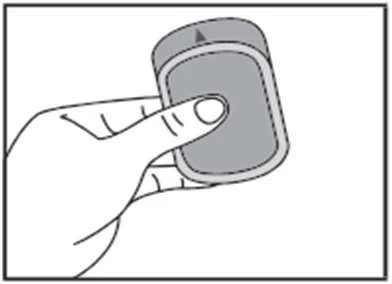
a) Take the sachet in hand, locate the arrow mark at the top of the sachet, and hold it with the arrow side facing upwards (as indicated by the arrow). The sachet is not sealed at this point.
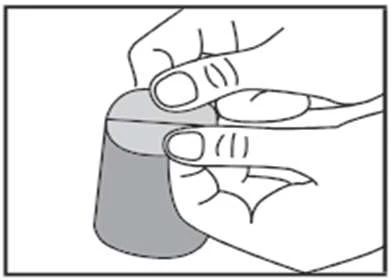
b) Gently peel apart both sides of the sachet.
Each side of the sachet can now be held between the thumb and index finger using both hands, so that each separated part of the sachet is held by one hand.
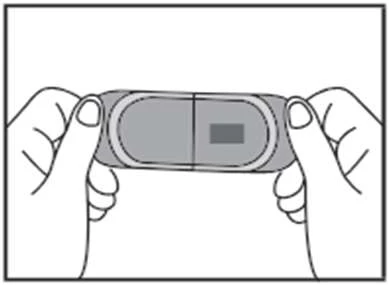
c) Carefully pull both parts of the sachet in opposite directions until they separate.
The tablet is now visible and located on one of the separated parts of the sachet.
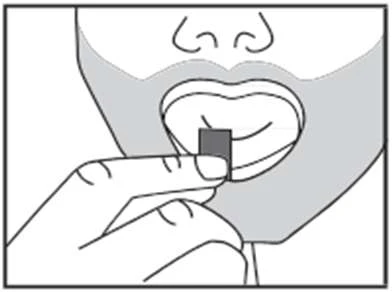
d) With dry fingers, remove the tablet from the sachet and place it directly on the tongue in the mouth. The tablet should begin to dissolve quickly, allowing for easy swallowing.
Accidental overdose of Cholecalciferol IBSA
If an excessive dose of Cholecalciferol IBSA has been taken, contact a doctor or pharmacist immediately.
Excess vitamin D leads to disturbances in calcium metabolism. Symptoms may include: weakness, fatigue, headache, nausea, vomiting, diarrhea, and later stages may involve constipation, increased urination, calcium in urine, dryness of the mouth, nocturia (nighttime frequent urination), excessive thirst, loss of appetite, muscle and joint pain, abdominal pain, and irregular heartbeat.
Emergency treatment:
Calcitonin, corticosteroid therapy (to prevent intestinal calcium absorption), intensive hydration, diuretics increasing urinary calcium excretion (furosemide), and a low-calcium diet. In cases of significantly elevated blood calcium levels, immediate hospitalization is required.
Missed dose of Cholecalciferol IBSA
Do not take a double dose to make up for a missed dose.
Discontinuation of Cholecalciferol IBSA
This should occur only if adverse effects occur. For any other questions regarding the use of this medicine, consult a doctor or pharmacist for further information.
4. Possible adverse reactions
Like all medicines, this medicine can cause adverse reactions, although not everybody will experience them.
You should stop taking Cholecalciferol IBSA and contact your doctor immediately:
- if you experience any of the following symptoms, which may be signs of an allergic reaction (hypersensitivity):
- swelling of the face, lips, tongue or throat
- difficulty swallowing
- urticaria
- difficulty breathing.
Uncommon adverse reactions (may occur in less than 1 in 100 patients):
- too high a concentration of calcium in the blood (hypercalcemia)
- too high a concentration of calcium in the urine (hypercalciuria).
Rare adverse reactions (may occur in less than 1 in 1,000 patients):
- itching, rash and urticaria.
Frequency not known: frequency cannot be estimated from the available data:
- constipation, bloating, nausea, abdominal pain, diarrhoea.
Reporting of adverse reactions
If any adverse reactions occur, including any adverse reactions not listed in this leaflet, inform your doctor or pharmacist. Adverse reactions can be reported directly to the Department of Monitoring of Adverse Drug Reactions of the Office for Registration of Medicinal Products, Medical Devices and Biocidal Products,
Al. Jerozolimskie 181C,
02-222 Warsaw,
tel.: +48 22 49 21 301,
fax: +48 22 49 21 309,
website: https://smz.ezdrowie.gov.pl
Adverse reactions can also be reported to the Marketing Authorisation Holder or its representative in Poland.
Reporting adverse reactions helps provide more information on the safety of the medicine.
5. How to store Cholecalciferol IBSA
Keep this medicine out of the sight and reach of children.
Do not use this medicine after the expiry date stated on the packaging following the abbreviation
EXP.
Do not store above 30°C.
To protect from light, store in the original packaging.
Medicines must not be disposed of via wastewater or household waste. Ask your pharmacist how to dispose of medicines no longer required. Such measures help protect the environment.
6. Contents of the pack and other information
What Cholecalciferol IBSA contains
- The active substance is cholecalciferol. Each orodispersible tablet contains 1250 micrograms of cholecalciferol (vitamin D), equivalent to 50,000 IU.
The other ingredients are: purified olive oil, purified water, maltodextrin,
hydroxypropylbetadex, copovidone, mannitol (E421), glycerol (E422),
polysorbate 80 (E433), glycerol monolinoleate, titanium dioxide (E171),
sucralose (E955), orange flavour*, ascorbic acid (E300), all-rac-alpha-tocopherol (E307),
orange yellow (E110).
What Cholecalciferol IBSA looks like and contents of the pack
Cholecalciferol IBSA 50,000 IU is available as square, flexible, opaque, light orange orodispersible films (measuring 30 mm x 30 mm).
The pack contains 2 or 4 orodispersible films. Each orodispersible film is individually packed in a sachet made of PET/aluminium/PE laminate. Each sachet contains one orodispersible film.
Not all pack sizes may be marketed.
Marketing Authorisation Holder and Manufacturer
Marketing Authorisation Holder:
IBSA Farmaceutici Italia S.r.l.
Via Martiri di Cefalonia 2
26900 Lodi, Italy
[email protected]
Manufacturer:
IBSA Farmaceutici Italia S.r.l
S.S. n. 11 Padana Superiore Km 160
20051 Cassina de’ Pecchi (MI), Italy
Altergon Italia Srl
Zona Industriale
83040 Morra de Sanctis (AV), Italy