Chlorchinaldin h
Poland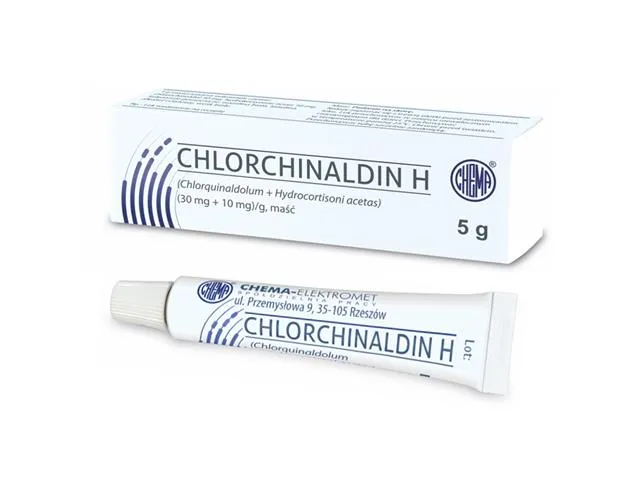
Table of Contents
Package leaflet: Information for the patient
CHLORCHINALDIN H, (30 mg + 10 mg)/g, ointment
Chlorquinaldolum + Hydrocortisoni acetas
Please read the entire leaflet carefully before using the medicine, as it contains important information for the patient.
- Keep this leaflet for future reference.
- If you have any questions, please consult your doctor or pharmacist.
- This medicine has been prescribed for a specific individual. Do not pass it on to others. The medicine may harm someone else, even if their symptoms are similar.
- If you experience any adverse reactions, including any not listed in this leaflet, inform your doctor or pharmacist. See section 4.
Table of contents:
- What is Chlorchinaldin H and what is it used for
- Important information before using Chlorchinaldin H
- How to use Chlorchinaldin H
- Possible side effects
- How to store Chlorchinaldin H
- Contents of the pack and other information
1. What is Chlorchinaldin H and what is it used for
Chlorchinaldin H is an ointment containing the active substances: chlorquinaldol, a derivative of 8-hydroxyquinoline, and hydrocortisone acetate, a glucocorticosteroid.
Chlorquinaldol has bactericidal activity against Gram-positive and Gram-negative bacteria, including Salmonella, Shigella, Proteus vulgaris, Escherichia coli, as well as Corynebacterium diphtheriae, Streptococcus pyogenes, and Staphylococcus aureus.
Additionally, chlorquinaldol exerts fungistatic (inhibits fungal growth) effects against Candida albicans and is protozoicidal.
Hydrocortisone acetate is a glucocorticosteroid for topical application to the skin, with weak activity. It has anti-inflammatory, antipruritic, and vasoconstrictive properties.
Indications
Chlorchinaldin H is indicated for local treatment of purulent, superficial skin diseases associated with inflammatory reactions, and bacterial complications of allergic skin disorders, including fungal infections, and in leg ulcers – in infections caused by microorganisms sensitive to chlorquinaldol.
2. Important information before using Chlorchinaldin H
When not to use Chlorchinaldin H:
- if the patient is allergic to hydrocortisone acetate, chlorquinaldol, or any of their derivatives (e.g. clioquinol), or to any of the other ingredients of this medicine (listed in section 6);
- during the first trimester of pregnancy;
- in children under 12 years of age;
- in cases of liver or kidney insufficiency;
- in non-bacterial diarrhoea;
- in viral skin infections;
- on tuberculous or syphilitic skin lesions;
- on deep and extensive purulent wounds;
- in perioral dermatitis;
- in occlusive vascular inflammation (endarteritis);
- in patients with Buerger's disease due to trophic disorders and delayed wound healing;
- for prophylactic use;
- for prolonged periods.
Warnings and precautions
Before starting treatment with Chlorchinaldin H, consult your doctor or pharmacist.
Corticosteroids can be absorbed through the skin; therefore, during treatment, systemic adverse effects related to hydrocortisone acetate content, typical for corticosteroids, may occur.
For this reason, avoid using the medicine:
- over large skin areas, wounds, or damaged skin, and in high doses;
- on skin areas with a thin stratum corneum (e.g. genital area, skin folds, groin, in children), when the epidermis lacks a stratum corneum, and in acute inflammatory skin conditions;
- under occlusive dressings (e.g. plaster, diaper).
Occlusive dressings enhance systemic absorption of corticosteroids and may lead to bacterial or fungal superinfections.
With prolonged treatment, epidermal atrophy, steroid acne, and skin striae may occur.
When used as recommended, it is unlikely that systemic adverse effects of chlorquinaldol, such as gastrointestinal disturbances, optic nerve damage, or polyneuritis, will occur.
If neurological symptoms or visual disturbances occur, discontinue use of the medicine and contact your doctor.
Do not use this medicine simultaneously with medicines that may cause interactions described below under "Chlorchinaldin H and other medicines".
If allergic reactions occur, discontinue use of the medicine and contact your doctor.
Children and adolescents
Do not use in children under 12 years of age.
Chlorchinaldin H and other medicines
Inform your doctor about all medicines currently or recently used, as well as any medicines you plan to use.
Using this medicine together with quaternary ammonium compounds may cause sensitization. Do not use this medicine simultaneously with other topically applied medicines containing iodine or metals with a similar mechanism of action, as they may reduce treatment efficacy.
Vaccinations must not be performed during treatment with Chlorchinaldin H.
Pregnancy and breastfeeding
If the patient is pregnant or breastfeeding, suspects she may be pregnant, or is planning to become pregnant, she should consult a doctor or pharmacist before using this medicine.
Do not use during the first trimester of pregnancy. During the remainder of pregnancy, do not use the medicine over large areas of diseased skin or for prolonged periods.
In every case, the decision to use this medicine in pregnant women should be made by a doctor, after weighing whether the benefits of treatment outweigh the potential risks to the fetus.
Do not use this medicine during breastfeeding, as the safety of use has not been established.
Driving and operating machinery
Chlorchinaldin H has no effect or has a negligible effect on the ability to drive and operate machinery.
Chlorchinaldin H contains: lanolin and cetyl alcohol. Due to the presence of lanolin and cetyl alcohol, this medicine may cause local skin reactions (e.g. contact dermatitis).
3. How to use Chlorchinaldin H
This medicine should always be used exactly as directed by the physician. In case of doubt, consult
your doctor or pharmacist.
This medicine is intended for topical application to the skin.
Affected areas of the skin should be covered with a thin layer of the medicine once or twice daily
and covered with sterile gauze.
Use on the facial skin should be cautious and of short duration.
Hands should be washed after applying the medicine.
Use in children and adolescents
Do not use in children under 12 years of age.
Use of a larger than recommended dose of Chlorchinaldin H
If more than the recommended dose is used, contact your doctor immediately.
In case of excessive use, application to damaged skin, or prolonged treatment, systemic absorption may occur, leading to general adverse effects of chloroquine (such as gastrointestinal disturbances, optic neuropathy, and polyneuritis) and hydrocortisone acetate (e.g. suppression of the hypothalamic-pituitary-adrenal axis, Cushing's syndrome).
In case of accidental ingestion, seek medical advice immediately.
Missed dose of Chlorchinaldin H
Do not use a double dose to make up for a missed dose.
If in doubt about how to use the medicine, consult your doctor or pharmacist.
If a dose is missed, apply the medicine as soon as possible. Then continue treatment according to the dosing regimen previously recommended by the doctor.
Stopping treatment with Chlorchinaldin H
If you have any further questions about the use of this medicine, consult your doctor or pharmacist.
4. Possible adverse effects
Like all medicines, this medicine can cause adverse effects, although not everyone will experience them.
The frequency of the adverse effects listed below is unknown (frequency cannot be determined from the available data).
Transient skin irritation, drying, redness, itching or burning sensation, contact dermatitis, and allergic reactions may occur.
Due to the presence of hydrocortisone acetate in the medicine, skin atrophy, telangiectasia, pigmentary disturbances, acne-like changes, and bacterial, viral, or fungal superinfections may occur—mainly after application under occlusive dressings.
When applied to facial skin, the medicine may relatively quickly cause perioral dermatitis, atrophic dermatitis, and persistent vasodilation. As a result of systemic absorption of hydrocortisone acetate into the bloodstream, systemic adverse effects typical of corticosteroids may also occur, including suppression of the hypothalamic-pituitary-adrenal axis and Cushing's syndrome. These occur primarily with prolonged use, application over a large skin surface area, use under occlusive dressings, or use in children.
Allergic reactions due to sensitization to excipients may occur.
Reporting of adverse effects
If any adverse effects occur, including any adverse effects not listed in this leaflet, inform your doctor, pharmacist, or nurse. Adverse effects can be reported directly to the Department of Monitoring of Adverse Drug Reactions at the Office for Registration of Medicinal Products, Medical Devices and Biocidal Products
Al. Jerozolimskie 181C
02-222 Warsaw
Phone: +48 22 49 21 301
Fax: +48 22 49 21 309
Website: https://smz.ezdrowie.gov.pl
Adverse effects can also be reported to the marketing authorization holder.
Reporting of adverse effects allows the collection of further information on the safety of using the medicine.
5. How to store Chlorchinaldin H
Store below 25°C.
Keep the tube tightly closed.
Protect from light.
Keep the medicine out of sight and reach of children.
Take care to observe the expiry date of the medicine.
Do not use this medicine after the expiry date stated on the tube and carton.
The expiry date refers to the last day of the stated month.
Medicines must not be disposed of via wastewater or household waste. Ask your pharmacist how to dispose of medicines you no longer use. This will help protect the environment.
6. Contents of the package and other information
What Chlorchinaldin H contains
- The active substances in this medicine are chlorquinaldol and hydrocortisone acetate. 1 g of the ointment contains 30 mg of chlorquinaldol and 10 mg of hydrocortisone acetate.
- Other ingredients: white vaseline, lanolin, cetyl alcohol, white wax.
What Chlorchinaldin H looks like and contents of the pack
Chlorchinaldin H is a greenish-cream ointment with the smell of lanolin.
The medicine is packed in an aluminium tube containing 5 g of ointment. The tube, together with the patient leaflet, is placed in a cardboard box.
Marketing Authorisation Holder and Manufacturer
CHEMA-ELEKTROMET
Labour Cooperative
ul. Przemysłowa 9
35-105 Rzeszów
tel. 17 862 05 90
e-mail: [email protected]