Heparin wzf
Poland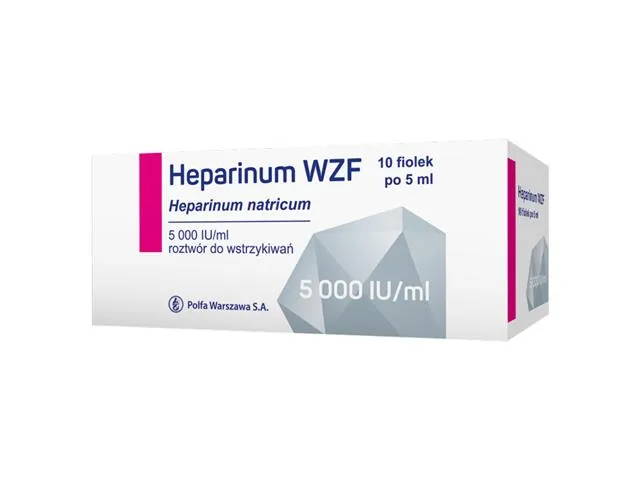
Table of Contents
Package leaflet: Information for the patient
Warning! Keep the leaflet! Information on the immediate packaging in a foreign language.
Heparinum WZF, 5,000 IU/ml, solution for injection
Heparinum natricum
Please read the entire leaflet carefully before using the medicine, as it contains
important information for the patient.
- Keep this leaflet so that you can read it again if necessary.
- If you have any doubts, consult your doctor, pharmacist, or nurse.
- This medicine has been prescribed for a specific individual. Do not pass it on to others. The medicine may harm another person, even if their symptoms are identical.
- If you experience any adverse reactions, including any adverse reactions not listed in this leaflet, inform your doctor, pharmacist, or nurse. See section 4.
Table of contents of the leaflet
- What Heparinum WZF is and what it is used for
- Important information before using Heparinum WZF
- How to use Heparinum WZF
- Possible side effects
- How to store Heparinum WZF
- Contents of the pack and other information
1. What Heparinum WZF is and what it is used for
Heparinum WZF contains unfractionated heparin, an anticoagulant substance. It reduces the blood's ability to clot, thereby preventing the formation of blood clots in blood vessels. Heparinum WZF may also be used for flushing intravenous catheters and cannulae to maintain their patency prior to intravenous injection.
Heparinum WZF is used:
- in the treatment of thrombotic disorders: deep vein thrombophlebitis, pulmonary embolism, unstable angina pectoris, acute peripheral arterial embolism;
- during procedures involving extracorporeal circulation and hemodialysis procedures (used to remove toxic substances from the blood in cases of severe kidney dysfunction);
- in the diagnosis and treatment of acute and chronic coagulation disorders such as disseminated intravascular coagulation;
- for flushing intravenous catheters and cannulae to maintain their patency prior to intravenous injection.
2. Important information before using Heparinum WZF
When not to use Heparinum WZF:
- if the patient is allergic to heparin or benzyl alcohol, or to any of the other ingredients of this medicine (listed in section 6).
For intravenous administration:
- if the patient has uncontrollable bleeding from sites such as gastrointestinal ulcers, tumour-affected areas, or haemorrhoids;
- if the patient has experienced intracranial haemorrhage, cerebral vascular thrombosis, threatened miscarriage, bacterial endocarditis (inflammation of the inner layer of the heart), or retinal changes (retinopathies);
- if the patient has haemophilia or haemorrhagic diathesis (except disseminated intravascular coagulation);
- if the patient has or has previously had reduced platelet count;
- if the patient has severe liver disease;
- if the patient has purpura (skin lesions appearing as isolated or confluent petechiae);
- if the patient has active tuberculosis;
- if the patient has severe arterial hypertension;
- if the patient has increased capillary permeability, manifested by skin petechiae and oedema;
- if the patient has sustained extensive trauma;
- before ophthalmic or neurosurgical procedures (brain surgery).
Warnings and precautions
Before starting treatment with Heparinum WZF, discuss this with the doctor.
The doctor will exercise particular caution when using Heparinum WZF and will take appropriate measures:
- if the patient has previously experienced hypersensitivity to low molecular weight heparins;
- if the patient has diabetes;
- if the patient has had metabolic acidosis (appearance in the blood of acidic metabolic products, e.g. from carbohydrates);
- if the patient has conditions causing increased blood potassium levels or is taking potassium-sparing drugs, because heparin may increase blood potassium concentration;
- if the patient develops reduced platelet count (when heparin is used long-term);
- if the patient has severe renal and/or liver dysfunction;
- if the female patient is over 60 years of age and uses heparin long-term, due to the risk of haemorrhagic complications;
- if the patient is elderly.
Immediately inform the doctor if, after a spinal or epidural anaesthesia procedure,
the patient develops symptoms such as back pain, sensory disturbances, motor disturbances,
or disturbances in bowel or bladder function (e.g. urinary incontinence).
During long-term use of Heparinum WZF, the doctor may recommend monitoring platelet count. If reduced platelet count is detected, the doctor will recommend discontinuation of heparin.
Precautions regarding use for flushing intravenous catheters and cannulae to maintain patency:
Careful use of the medicine is recommended in patients with hypersensitivity to low molecular weight heparins.
Aseptic techniques must be strictly observed during use.
The doctor will recommend blood testing if Heparinum WZF has been used for flushing a catheter or cannula for more than five days. Repeated flushing with heparin may lead to anticoagulant effects.
Heparinum WZF and other medicines
Inform the doctor about all medicines currently used, recently used, or planned for use.
Heparinum WZF and other concomitantly used medicines may interact with each other, particularly the following:
- The anticoagulant effect of heparin is increased by:
- acetylsalicylic acid, phenylbutazone, indomethacin (anti-inflammatory drugs);
- dipyridamole, antithrombin III (anticoagulants);
- cefamandole, cefoperazone (antibiotics – used in bacterial infections);
- dextran (used as a blood volume expander).
- The anticoagulant effect of heparin is decreased by:
- nitroglycerin, especially when administered intravenously (a vasodilator, mainly of veins);
- digitalis glycosides (used in heart diseases);
- tetracyclines (antibiotics – used in bacterial infections);
- nicotine (contained in tobacco);
- quinine (antimalarial drug);
- antihistamines.
- Concomitant use of heparin and antihypertensive drugs belonging to the angiotensin-converting enzyme (ACE) inhibitors group (e.g. enalapril, captopril) may lead to increased blood potassium levels.
- When heparin is used together with so-called thrombolytic drugs that dissolve clots (e.g. streptokinase), the risk of haemorrhagic complications increases.
- Simultaneous administration of heparin and aprotinin (a drug reducing bleeding) may prolong whole blood clotting time.
Pregnancy and breastfeeding
If the patient is pregnant or breastfeeding, suspects she may be pregnant, or is planning to have a child, she should consult a doctor before using this medicine.
The doctor may recommend using Heparinum WZF during pregnancy in strictly justified cases, after careful consideration of risks and benefits for the woman. The medicine should be administered with particular caution during the third trimester of pregnancy and the peripartum period due to the risk of bleeding.
If the patient is pregnant and intends to receive epidural anaesthesia during childbirth, she should not use heparin. Discuss this with the doctor.
The safety of using Heparinum WZF for flushing intravenous catheters and cannulae in pregnant women has not been established, but it is not expected that the doses used for this purpose would pose a risk.
Heparin does not pass into breast milk.
See also below – "Heparinum WZF contains benzyl alcohol and sodium".
Driving and operating machinery
Heparinum WZF has no effect on the ability to drive or operate machinery.
Heparinum WZF contains benzyl alcohol and sodium
The medicine contains 9 mg of benzyl alcohol in each millilitre, equivalent to 45 mg/5 ml. Benzyl alcohol may cause allergic reactions. Administration of benzyl alcohol to small children is associated with the risk of severe adverse effects, including respiratory disorders (so-called "gasping syndrome").
Do not administer to newborns (under 4 weeks of age) without medical advice.
Do not administer to young children (under 3 years of age) for longer than one week without medical advice.
Pregnant or breastfeeding women should consult a doctor before using the medicine, as large amounts of benzyl alcohol may accumulate in their bodies and cause adverse effects (so-called metabolic acidosis).
Patients with liver or kidney disease should consult a doctor before using the medicine, as large amounts of benzyl alcohol may accumulate in their bodies and cause adverse effects (so-called metabolic acidosis).
The medicine contains 26.65 mg of sodium (the main component of table salt) in 5 ml. This corresponds to 1.33% of the maximum recommended daily sodium intake in the adult diet.
The medicine can be diluted – see below: "Information intended exclusively for medical personnel". The sodium content originating from the diluent should be taken into account when calculating the total sodium content in the prepared diluted solution. For precise information on the sodium content in the solution used for dilution, refer to the leaflet of the diluent used.
3. How to use Heparinum WZF
This medicine should always be used as directed by the physician. If in doubt, consult your
doctor.
- Heparinum WZF is usually administered by medical personnel.
- This medicine is given intravenously – either by direct injection into a vein or by infusion.
- After dilution, the medicine may be used to flush intravenous catheters and cannulae to maintain their patency prior to intravenous injection.
- The physician will determine the dosage and duration of treatment individually for each patient.
Use of more Heparinum WZF than prescribed
The symptom of overdose with Heparinum WZF is bleeding – if this occurs, seek immediate medical advice.
Missed dose of Heparinum WZF
Do not use a double dose to make up for a missed dose. Heparinum WZF should be used exactly as prescribed by the physician.
Stopping Heparinum WZF treatment
The decision to discontinue treatment with Heparinum WZF will be made by the physician.
If you have any further questions regarding the use of this medicine, consult your doctor, pharmacist, or nurse.
4. Possible adverse reactions
Like all medicines, this medicine can cause adverse reactions, although not everyone will experience them.
You must immediately inform the treating physician if:
- Bleeding occurs, which may indicate that the patient has received more medicine than needed;
- The patient develops first signs of hypersensitivity (e.g. swelling of the face, lips, tongue, or throat causing difficulty in breathing or swallowing, urticaria, itching, conjunctivitis). Such symptoms are rare after administration of heparin.
The physician will decide on further management.
After intravenous administration, the following may occur:
- Skin and generalized hypersensitivity reactions (particularly reported in individuals who previously experienced allergic reactions to low-molecular-weight heparin). These include urticaria, conjunctivitis, rhinitis, asthma, cyanosis, dyspnea, sense of impending doom, fever, chills, angioedema, and anaphylactic shock (reported sporadically). See information above.
- Burning sensation in the feet, lacrimation. These symptoms occurred rarely.
- Decrease in platelet count (thrombocytopenia) – most commonly appears between the 6th and 12th day of treatment and is usually mild and asymptomatic. Platelet count usually returns to baseline within 48–72 hours after discontinuation of heparin. However, it may recur upon re-administration of heparin. Severe cases have also been reported, known as "white clot syndrome," associated with skin necrosis or limb gangrene.
- Deficiency of a hormone called aldosterone, leading to increased potassium levels in blood, which may occur 5 to 27 days after starting heparin. Increased potassium levels are reversible and resolve after discontinuation of the drug, particularly affecting patients with diabetes or renal insufficiency.
- Increased liver enzyme activity (aminotransferases) and increased levels of free fatty acids in serum – these are asymptomatic and usually reversible.
- Osteoporosis – observed in women receiving more than 10,000 IU per day for six months;
- Transient alopecia, which occurred after long-term use of heparin, usually at high doses.
It is highly unlikely that Heparinum WZF used for flushing intravenous catheters and cannulae will exert systemic effects due to the low concentration of heparin in blood. However, rare cases of immune-mediated thrombocytopenia and thrombosis have been reported in patients receiving heparin for catheter flushing. Hypersensitivity reactions to heparin are rare; symptoms – see above.
Reporting of adverse reactions
If any adverse reactions occur, including any not listed in this leaflet, inform your doctor, pharmacist, or nurse. Adverse reactions can be reported directly to the Department of Monitoring Adverse Drug Reactions, Office for Registration of Medicinal Products, Medical Devices and Biocidal Products, Al. Jerozolimskie 181C, 02-222 Warsaw, tel.: +48 22 49 21 301, fax: +48 22 49 21 309, website: https://smz.ezdrowie.gov.pl.
Reporting adverse reactions helps to provide more information on the safety of the medicine.
5. How to store Heparinum WZF
Store below 25°C.
Keep the medicine out of the sight and reach of children.
Note: after the first dose has been withdrawn, the vials must be stored in the refrigerator (2°C - 8°C) for no longer than 3 days.
Do not use this medicine after the expiry date stated on the packaging. The expiry date refers to the last day of the stated month.
Medicines must not be disposed of via wastewater or household waste. Ask your pharmacist how to dispose of medicines no longer required. This will help protect the environment.
6. Package Contents and Other Information
What Heparinum WZF Contains
- The active substance is sodium heparin. Each ml of solution contains 5,000 IU of sodium heparin.
- Other components: sodium chloride, benzyl alcohol, 10% sodium hydroxide (for pH adjustment), water for injections.
What Heparinum WZF Looks Like and Contents of the Package
Heparinum WZF is a colourless, pale yellow or pale green, clear liquid.
The package contains 10 vials of 5 ml each.
For more detailed information, please contact the marketing authorisation holder or parallel importer.
Marketing Authorisation Holder in Bulgaria, Country of Export:
Warsaw Pharmaceutical Works Polfa S.A.
Karolkowa 22/24
01-207 Warsaw, Poland
Manufacturer:
Warsaw Pharmaceutical Works Polfa S.A.
Karolkowa 22/24
01-207 Warsaw, Poland
Parallel Importer:
InPharm Sp. z o.o.
Strumykowa 28/11
03-138 Warsaw, Poland
Repackaged in:
InPharm Sp. z o.o. Services sp. k.
Chełmżyńska 249
04-458 Warsaw, Poland
Marketing Authorisation Number in Bulgaria, Country of Export: 20011026
Parallel Import Licence Number: 49/23
Information intended exclusively for medical personnel:
Heparinum WZF, 5,000 IU/ml, solution for injection
Heparinum natricum
Method of Administration of Heparinum WZF
- Heparinum WZF is intended for intravenous administration via repeated injections or, after dilution with 5% glucose solution or 0.9% NaCl solution, via continuous infusion. It is also used for flushing intravenous catheters and cannulae.
- Heparinum WZF intended for flushing intravenous catheters and cannulae should be diluted with 0.9% NaCl solution.
- Heparinum WZF may be diluted with:
- 0.9% NaCl solution at concentrations ranging from 1 IU/ml to 1,000 IU/ml,
- 5% glucose solution at concentrations ranging from 100 IU/ml to 1,000 IU/ml. Chemical and physical stability has been demonstrated for 24 hours at 25°C. From a microbiological standpoint, the diluted medicinal product should be used immediately. If not used immediately, the user is responsible for the conditions and duration of storage. If necessary, the prepared solution may be stored for up to 24 hours at a temperature below 25°C, provided that dilution is performed under controlled and validated aseptic conditions. Any unused solution not consumed within 24 hours must be discarded.
- All procedures related to dilution of the medicinal product must be carried out under controlled and validated aseptic conditions. Aseptic techniques must be observed both for Heparinum WZF and for equipment used during administration.
- After the first dose has been withdrawn, vials should be stored in a refrigerator (2°C – 8°C) for no longer than 3 days.
- Doses and infusion rates should be individually adjusted based on coagulation function test results – a 1.5 to 2.5-fold prolongation of activated partial thromboplastin time (aPTT) compared to the normal mean or pre-treatment values is recommended. The medicinal product is usually administered for 7 to 10 days.
- Penicillin, tetracycline, erythromycin, gentamicin, kanamycin, colistin, novobiocin, vancomycin, chlordiazepoxide, hydroxyzine, prochlorperazine, hydrocortisone hydrogen succinate, dobutamine hydrochloride, as well as morphine and its derivatives form insoluble complexes with heparin. Heparin and reteplase must not be mixed in the same solution.
- When a cannula is permanently placed and used for repeated blood sampling for laboratory analysis, the presence of heparin or physiological saline may potentially interfere with or alter blood test results; prior to blood sampling, the in situ heparin solution should be aspirated from the cannula and discarded.
Dosage
Treatment of Deep Vein Thrombophlebitis, Pulmonary Embolism, Unstable Angina Pectoris, Acute Peripheral Arterial Embolism
Adults:
Initial dose: intravenous 5,000 IU (1 ml of solution); in severe pulmonary embolism, the dose may be increased to 10,000 IU (2 ml of solution).
Maintenance doses: 1,000 to 2,000 IU/h via intravenous infusion or 5,000 to 10,000 IU via intravenous injections repeated every 4 hours.
Elderly Patients
Dosage reduction may be required in elderly patients.
Children and Adults with Low Body Weight
Initial dose: intravenous 50 IU/kg body weight.
Maintenance doses: 15 to 25 IU/kg body weight/h via intravenous infusion or 100 IU/kg body weight via intravenous injections repeated every 4 hours.
Patients Undergoing Extracorporeal Circulation and Hemodialysis
Adults:
Extracorporeal circulation:
Initial dose: 300 IU/kg body weight, followed by continued administration aiming to maintain activated coagulation time (ACT) between 400 and 500 seconds.
Hemodialysis:
Initial dose: 1,000 to 5,000 IU.
Maintenance doses: 1,000 to 2,000 IU/h to maintain clotting time above 40 minutes.
For Flushing Intravenous Catheters and Cannulae to Ensure Patency Prior to Intravenous Injection
The medicinal product must be diluted before use – see above section: "Method of Administration of Heparinum WZF".
Typically, flushing is performed using a dose of 200 IU heparin (e.g., 2 ml of a solution containing 100 IU/ml), once every 4 hours or as needed.