Groprinosin baby
Poland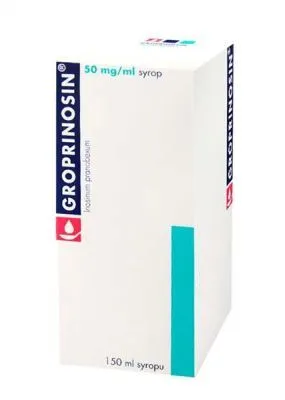
Table of Contents
Package leaflet: Information for the user
Groprinosin Baby, 250 mg/5 ml, syrup
Inosinum pranobexum
Please read the entire leaflet carefully before using this medicine, as it contains
important information for the patient.
- Keep this leaflet for future reference.
- If you have any questions, consult your doctor or pharmacist.
- This medicine has been prescribed for a specific individual. Do not share it with others. This medicine may harm others, even if their symptoms are the same.
- If any adverse reactions occur in the patient, including any adverse reactions not listed in this leaflet, inform your doctor or pharmacist immediately. See section 4.
Table of contents of the leaflet
- What is Groprinosin Baby and what is it used for
- Important information before taking Groprinosin Baby
- How to take Groprinosin Baby
- Possible side effects
- How to store Groprinosin Baby
- Contents of the pack and other information
1. What is Groprinosin Baby and what is it used for
Groprinosin Baby contains as the active substance inosinum pranobexum, which has antiviral activity and stimulates the immune system.
Indications for Groprinosin Baby are:
- Skin and mucous membrane infections caused by herpes simplex virus type I (cold sores) or type II (genital herpes), as well as varicella-zoster virus (chickenpox and shingles);
- Supportive treatment in individuals with reduced immunity in cases of recurrent upper respiratory tract infections;
- Other viral infections (e.g. subacute sclerosing panencephalitis).
2. Important information before taking Groprinosin Baby
When not to take Groprinosin Baby
- If the patient is allergic to inosine pranobex or any of the other ingredients of this medicine (listed in section 6). Symptoms of an allergic reaction may include: rash, itching, difficulty breathing, swelling of the face, lips, throat or tongue.
- If the patient currently has an attack of gout (severe joint pain with swelling and redness of the skin, or effusion in large joints), or tests have shown increased levels of uric acid in the blood.
Warnings and precautions
Before starting treatment with Groprinosin Baby, discuss this with your doctor or pharmacist.
- If the patient has previously experienced gout attacks or elevated serum or urinary uric acid levels. Groprinosin Baby may transiently increase uric acid levels in serum and urine.
- If the patient has previously had kidney or gallstones.
- If the patient has impaired kidney function. In such a case, the doctor will monitor the patient carefully.
- If treatment is long-term (3 months or longer), the doctor will order regular blood tests and monitor kidney and liver function. Long-term treatment may lead to the formation of kidney stones.
- If symptoms of an allergic reaction occur, such as rash, itching, difficulty breathing, or swelling of the face, lips, throat or tongue. In such a case, treatment must be stopped immediately and the patient should contact their doctor.
Children
Do not use this medicine in children under 1 year of age.
Groprinosin Baby with other medicines
Tell your doctor or pharmacist about all medicines the patient is currently taking or has recently taken, as well as any medicines the patient plans to take. Especially inform the doctor about the following medicines, as they may interact with Groprinosin Baby:
- allopurinol or other medicines used in the treatment of gout;
- medicines that increase uric acid excretion, including diuretics such as furosemide, torasemide, ethacrynic acid, hydrochlorothiazide, chlorthalidone, indapamide;
- medicines affecting the immune system, e.g. those used after organ transplantation;
- medicines used in the treatment of AIDS (zidovudine).
In the above cases, the doctor may decide on the necessity of using Groprinosin Baby.
Pregnancy and breastfeeding
If the patient is pregnant or breastfeeding, suspects she may be pregnant, or is planning to have a baby, she should consult her doctor or pharmacist before taking this medicine.
Do not take Groprinosin Baby during pregnancy or breastfeeding unless otherwise advised by a doctor.
Driving and operating machinery
It is unlikely that Groprinosin Baby will affect the ability to drive or operate machinery.
Groprinosin Baby contains methyl parahydroxybenzoate (E 218), propyl parahydroxybenzoate (E 216), sucrose, and sodium
Groprinosin Baby contains methyl parahydroxybenzoate and propyl parahydroxybenzoate, which may cause allergic reactions (including delayed-type reactions).
Groprinosin Baby also contains sucrose. If the patient has been diagnosed with intolerance to certain sugars, consult a doctor before taking this medicine.
1 ml of Groprinosin Baby contains 650 mg of sucrose. This should be taken into account in patients with diabetes.
Groprinosin Baby contains sucrose, which may harm teeth.
Groprinosin Baby contains sodium. The medicine contains less than 1 mmol (23 mg) of sodium per 80 ml, meaning the medicine is considered "sodium-free".
3. How to take Groprinosin Baby
This medicine should always be taken as recommended by a doctor or pharmacist. In case of
doubt, consult a doctor or pharmacist.
The recommended dose is based on the patient's body weight and depends on the severity of the
disease. The daily dose should be divided into equal single doses administered several times a
day.
Adults, including elderly people
The recommended daily dose is 50 mg/kg body weight per day (1 ml of syrup per 1 kg body weight per
day), usually 3 g (i.e. 60 ml of syrup) per day, given in 3 or 4 divided doses. The maximum dose is 4 g of inosine pranobex per day (i.e. 80 ml of syrup per day).
Children above 1 year of age
The usual recommended dose is 50 mg/kg body weight per day (1 ml of syrup per 1 kg body weight per
day) in 3 or 4 equal divided doses administered throughout the day.
The table below shows dosing according to the patient's body weight.
Body weight Dosage/per day
| 10 - 14 kg | 3 x 5 ml of syrup* |
| 15 - 20 kg | 3 x 5 to 7.5 ml of syrup* |
| 21 - 30 kg | 3 x 7.5 to 10 ml of syrup* |
| 31 - 40 kg | 3 x 10 to 15 ml of syrup* |
| 41 - 50 kg | 3 x 15 to 17.5 ml of syrup* |
-
To measure the recommended volume, use the oral dosing syringe provided with the package, which has a graduated scale to facilitate dosing (from 0.5 ml to 5 ml).
Dosing in subacute sclerosing panencephalitis
In subacute sclerosing panencephalitis, during the acute phase of the disease, the physician may increase the dose to 100 mg/kg body weight per day, divided into equal doses administered every 4 hours.
Instructions for dosing using the oral syringe: -
Before first use, wash the syringe with warm (not boiling) water and detergent.
-
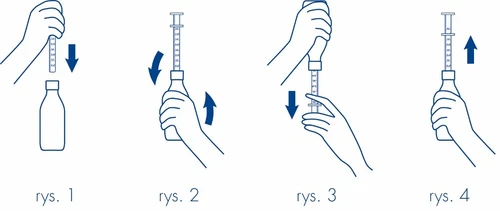
Unscrew the cap, then firmly insert the syringe into the opening in the neck of the bottle (Fig. 1).
-
To fill the syringe, turn the bottle upside down (Fig. 2), then carefully pull the plunger down slowly, drawing the syrup up to the desired mark on the scale (Fig. 3).
-
To measure the dose accurately, the flange of the syringe barrel should align with the mark on the plunger scale. If air bubbles appear, slowly push the plunger back into the syringe to return the bubbles into the bottle.
-
After measuring the correct amount, return the bottle to its upright position and carefully unscrew the syringe from the stopper, removing it from the bottle (Fig. 4).
-
Place the tip of the syringe into the child's mouth, then slowly press the plunger to gently empty the syringe's contents. The patient must be conscious and in an upright or sitting position to avoid choking.
-
After administration, close the bottle by screwing on the cap. Wash and dry the syringe. To clean the syringe, remove the plunger from the barrel and wash both parts in warm water with detergent. Rinse with clean water and leave to dry completely. Reinsert the plunger into the barrel. Note: The oral syringe must not be sterilized by boiling or cleaned in a dishwasher! If the syringe is broken, the tip is damaged, or the measurement scale is illegible, the oral syringe should not be used.
The duration of treatment is determined by the physician. Depending on the patient's condition, treatment usually lasts from 5 to 14 days. After symptoms resolve, the medication is typically continued for an additional 1 to 2 days.
Taking more than the recommended dose of Groprinosin Baby
Cases of overdose have not been reported to date. If you have any doubts or experience discomfort, contact your doctor immediately.
Missing a dose of Groprinosin Baby
If a dose is missed, take it as soon as you remember, unless it is almost time for the next dose. Do not take a double dose to make up for a missed dose.
Stopping treatment with Groprinosin Baby
If treatment is discontinued, the intended therapeutic effect may not be achieved, or symptoms of the disease may worsen. Consult your doctor before deciding to stop treatment.
If you have any further questions regarding the use of this medication, consult your doctor or pharmacist.
4. Possible adverse reactions
Like any medicine, this medicine may cause adverse reactions, although not everyone experiences them.
Any medicine can cause an allergic reaction; however, severe allergic reactions after taking
Groprinosin Baby occur very rarely.
You should consult a doctor immediately if any of the following symptoms occur:
- sudden onset of wheezing,
- difficulty breathing,
- swelling of the eyelids, face, lips or tongue,
- rash or itching (especially if affecting the whole body).
Other possible adverse reactions of Groprinosin Baby are listed below.
Very common (occurring in more than 1 in 10 patients):
- increased blood uric acid concentration, increased urinary uric acid concentration.
Common (occurring in no more than 1 in 10 patients):
- increased liver enzyme activity in blood, increased blood urea nitrogen concentration – these may be revealed by blood laboratory tests ordered by a doctor,
- headache,
- dizziness,
- fatigue, malaise,
- nausea, vomiting,
- discomfort in the upper abdomen,
- skin itching,
- skin rash (as the only symptom),
- joint pain.
Uncommon (occurring in no more than 1 in 100 patients):
- drowsiness or difficulty sleeping (insomnia),
- diarrhoea,
- constipation,
- polyuria (increased urine output),
- nervousness.
Frequency not known (cannot be estimated from available data):
- upper abdominal pain, facial, lip, eyelid or throat swelling (angioedema), urticaria, allergic reaction, systemic allergic reaction (anaphylactic reaction), anaphylactic shock, skin redness (erythema).
Reporting of adverse reactions
If any adverse symptoms occur, including any adverse symptoms not listed
in this leaflet, inform your doctor or pharmacist. Adverse reactions can be reported
directly to the Department of Monitoring Adverse Drug Reactions of the Office for Registration of Medicinal Products, Medical Devices and Biocidal Products
Al. Jerozolimskie 181C
02-222 Warsaw
Tel.: +48 22 49 21 301
Fax: +48 22 49 21 309
Website: https://smz.ezdrowie.gov.pl
Adverse reactions can also be reported to the marketing authorization holder.
Reporting adverse reactions helps to provide more information on the safety of the medicine.
5. How to store Groprinosin Baby
Keep the medicine out of the sight and reach of children.
Do not use this medicine after the expiry date stated on the packaging after "EXP".
The expiry date refers to the last day of the stated month.
Do not store above 25°C. Do not store in the refrigerator, do not freeze.
After first opening the bottle, do not store for longer than 6 months.
Medicines must not be disposed of via wastewater or household waste. Ask your pharmacist how to dispose of medicines no longer in use. This will help protect the environment.
6. Contents of the pack and other information
What Groprinosin Baby contains
- The active substance is inosine pranobex (a complex containing inosine and 2-hydroxypropyl dimethyl ammonium 4-acetamidobenzoate in a molar ratio of 1:3). One ml of syrup contains 50 mg of inosine pranobex.
- Other ingredients: sucrose, methyl 4-hydroxybenzoate (E 218), propyl 4-hydroxybenzoate (E 216), purified water, sodium hydroxide, citric acid monohydrate.
What Groprinosin Baby looks like and contents of the pack
Groprinosin Baby is a clear syrup with a sweet taste.
Groprinosin Baby is available in amber glass bottles containing 150 ml of syrup.
The bottle is placed in a cardboard carton with a patient information leaflet and an oral dosing syringe with graduated markings facilitating accurate dosing (from 0.5 ml to 5 ml).
Marketing Authorisation Holder and Manufacturer
Marketing Authorisation Holder:
GEDEON RICHTER POLSKA Sp. z o.o.
ul. Ks. J. Poniatowskiego 5
05-825 Grodzisk Mazowiecki
Poland
Manufacturers:
GEDEON RICHTER POLSKA Sp. z o.o.
ul. Ks. J. Poniatowskiego 5
05-825 Grodzisk Mazowiecki
Poland
GEDEON RICHTER ROMÂNIA S.A.
99-105, Cuza Vodă Street
540306 Târgu – Mureş
Romania
For further information about this medicinal product, please contact:
GEDEON RICHTER POLSKA Sp. z o.o.
ul. Ks. J. Poniatowskiego 5
05-825 Grodzisk Mazowiecki
Poland
Tel. +48 (22)755 96 48
[email protected]
{logo of the marketing authorisation holder}
((pharmacode))