Gabapentin teva
Poland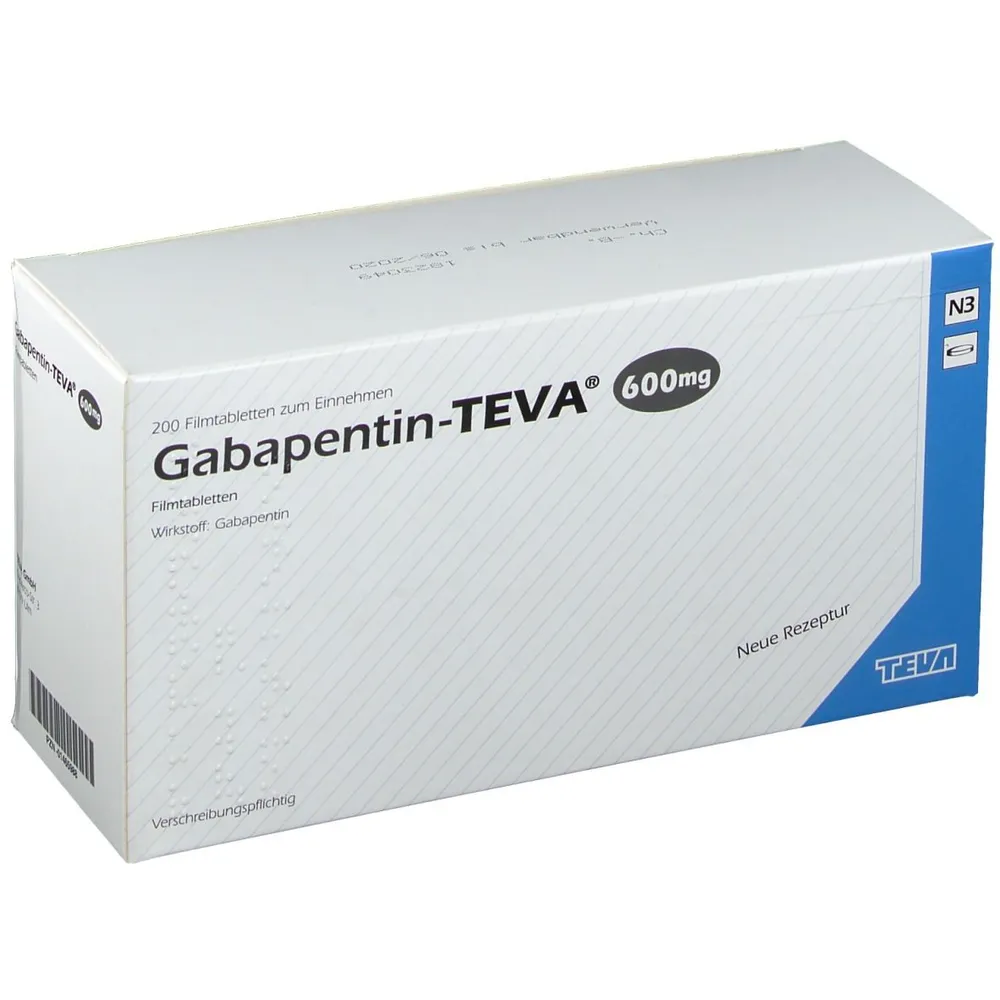
Table of Contents
Package leaflet: Information for the user
Gabapentin Teva, 600 mg, film-coated tablets
Gabapentin Teva, 800 mg, film-coated tablets
Gabapentin
Read the entire leaflet before taking this medicine because it contains important information for you:
- Keep this leaflet. You may need to read it again.
- Speak to your doctor or pharmacist if you need advice or further information.
- This medicine has been prescribed for a specific individual. Do not pass it on to others. This medicine may harm others, even if their symptoms are the same.
- If you experience any adverse effects, including any not listed in this leaflet, tell your doctor or pharmacist. See section 4.
Leaflet contents:
- What Gabapentin Teva is and what it is used for
- What you need to know before taking Gabapentin Teva
- How to take Gabapentin Teva
- Possible side effects
- How to store Gabapentin Teva
- Contents of the pack and other information
1. What Gabapentin Teva is and what it is used for
Gabapentin Teva belongs to a group of medicines used in the treatment of epilepsy and peripheral neuropathic pain (long-term pain caused by nerve damage).
The active substance in Gabapentin Teva is gabapentin.
Gabapentin Teva is used to treat:
- Various forms of epilepsy (seizures that start in a specific part of the brain and may or may not spread to other areas). Gabapentin Teva is prescribed for adults and children aged 6 years and older as an add-on therapy when previous treatment has not fully controlled seizures. Gabapentin Teva should be taken as an additional medicine in the treatment of epilepsy in adults and children aged 6 years and older, unless otherwise directed by a doctor. Gabapentin Teva may also be used as monotherapy in adults and children over 12 years of age.
- Peripheral neuropathic pain (long-term pain caused by nerve damage). Peripheral pain (occurring mainly in the lower and/or upper limbs) is caused by various conditions such as diabetes or shingles. Patients describe this pain as burning, stabbing, shooting, sharp, electric-like, cramping, aching, tingling, numbness, etc.
2. Important information before using Gabapentin Teva
When not to use Gabapentin Teva
- if the patient is allergic to gabapentin or any of the other ingredients of this medicine (listed in section 6).
Warnings and precautions
Before starting treatment with Gabapentin Teva, please discuss this with your doctor or
pharmacist
- if the patient has kidney disease, the doctor may recommend a different dosing regimen,
- if the patient is undergoing haemodialysis (to remove waste products due to kidney failure), inform the doctor if muscle pain or weakness occurs,
- if the patient experiences symptoms such as persistent abdominal pain, nausea or vomiting, contact the doctor immediately, as these may be signs of acute pancreatitis,
- if the patient has neurological disorders, respiratory disorders or is over 65 years of age; the doctor may recommend a different dosage,
- before starting treatment with this medicine, inform the doctor if the patient has ever abused or been dependent on alcohol, prescription medicines or illegal drugs; this may mean that the risk of becoming dependent on Gabapentin Teva is higher.
Dependence
Some people may develop dependence on Gabapentin Teva (the need to keep taking the medicine continuously). After stopping Gabapentin Teva, withdrawal symptoms may occur (see section 3, “How to take Gabapentin Teva” and “Stopping Gabapentin Teva”). If the patient is concerned about becoming dependent on Gabapentin Teva, it is important to consult the doctor.
If the patient notices any of the following signs while taking Gabapentin Teva, this may indicate developing dependence:
- Feels the need to take the medicine longer than prescribed by the doctor
- Feels the need to take a higher dose than prescribed
- Takes the medicine for reasons other than those prescribed
- Has made multiple unsuccessful attempts to stop or control medicine use
- Feels unwell after stopping the medicine, but feels better after taking it again.
If the patient notices any of the above behaviours, they should speak with their doctor to discuss the best treatment approach, including when it may be appropriate to stop taking the medicine and how to do so safely.
A small number of people taking antiepileptic medicines containing gabapentin have had thoughts of harming themselves or ending their life. If the patient ever has such thoughts, they should contact their doctor immediately.
Important information about potentially serious side effects
Serious skin rashes have occurred with the use of gabapentin, including Stevens-Johnson syndrome, toxic epidermal necrolysis, and drug reaction with eosinophilia and systemic symptoms (DRESS). If any of the symptoms associated with serious skin reactions described in section 4 occur, gabapentin should be discontinued immediately and medical advice sought without delay.
Please read the description of serious symptoms in section 4 “Contact your doctor immediately if any of the following symptoms occur after taking this medicine, as they may be serious”.
Muscle weakness, tenderness or pain, especially when accompanied by feeling unwell and high fever, may be due to abnormal breakdown of muscle fibres, which can be life-threatening and lead to kidney problems. Changes in urine colour or blood test results (markedly increased blood creatine kinase levels) may occur. If such symptoms occur, contact the doctor immediately.
Gabapentin Tea and other medicines
Inform your doctor or pharmacist about all medicines currently taken, recently taken or planned to be taken. In particular, inform the doctor (or pharmacist) about all medicines currently or recently used for the treatment of seizures, sleep disorders, depression, anxiety or any other neurological or psychiatric disorders.
Medicines containing opioids, such as morphine
Patients taking medicines containing opioids (such as morphine) should inform their doctor or pharmacist, as opioids may enhance the effect of Gabapentin Teva.
Additionally, concomitant use of Gabapentin Teva and opioids may cause drowsiness, sedation, respiratory depression or death.
Medicines that neutralise gastric acid for indigestion
When Gabapentin Teva is taken together with antacids containing aluminium and magnesium, absorption of Gabapentin Teva from the stomach may be reduced. It is therefore recommended to take Gabapentin Teva at least two hours after taking an antacid.
Gabapentin Teva
- is not expected to interact with other antiepileptic medicines or with oral contraceptives.
- may affect the results of certain laboratory tests; if undergoing a urine test, inform the doctor or hospital that you are taking Gabapentin Teva.
Pregnancy, breastfeeding and fertility
- If the patient is pregnant or suspects she may be pregnant, she should contact her doctor immediately to discuss the potential risks to the unborn child associated with taking this medicine.
- Do not stop treatment without discussing it with your doctor.
- If the patient plans to become pregnant, treatment should be discussed with the doctor or pharmacist as early as possible before conception.
- If the patient is breastfeeding or plans to breastfeed, she should consult her doctor or pharmacist before starting this medicine.
Pregnancy
Gabapentin Teva may be used during the first trimester of pregnancy if necessary.
If the patient plans to become pregnant, is pregnant or suspects she may be pregnant, she should contact her doctor immediately.
If the patient becomes pregnant and has epilepsy, it is important not to stop taking the medicine without first consulting her doctor, as this could worsen the condition. Worsening seizures may pose a risk to both the pregnant woman and her unborn child.
In a study involving data from women in Scandinavian countries who took gabapentin during the first three months of pregnancy, no increased risk of congenital malformations or brain development problems (neurodevelopmental disorders) was observed. However, in children of women who took gabapentin during pregnancy, there was an increased risk of low birth weight and premature birth.
When used during pregnancy, gabapentin may cause withdrawal symptoms in newborns. This risk may be increased when gabapentin is taken together with opioid pain medicines (medicines used to treat severe pain).
If pregnancy occurs, is suspected or planned while taking Gabapentin Teva, contact the doctor immediately. Do not stop taking this medicine suddenly, as this may lead to withdrawal seizures, which could have serious consequences for both the pregnant woman and her child.
Breastfeeding
Gabapentin – the active substance in Gabapentin Teva – passes into human milk. As its effect on the breastfed infant is unknown, breastfeeding is not recommended during treatment with Gabapentin Teva.
Fertility
No effect of the medicine on fertility was observed in animal studies.
Driving and operating machinery
Gabapentin Teva may cause dizziness, drowsiness and fatigue. Until the patient knows how this medicine affects their ability to drive, operate complex machinery or perform other potentially hazardous activities, they should refrain from such activities.
3. How to take Gabapentin Teva
This medicine should always be taken exactly as directed by your doctor or pharmacist. If you are unsure,
you should consult your doctor or pharmacist. Do not take more medicine than prescribed.
The dose appropriate for each patient is determined by the doctor.
Epilepsy – recommended dose
Adults and adolescents
Take the number of tablets as prescribed by your doctor. Doses are usually increased gradually.
The usual initial dose ranges from 300 to 900 mg per day. This may then be gradually increased to a
maximum dose of 3600 mg per day, divided into 3 smaller doses (one in the morning, one in the afternoon,
and one in the evening).
Children aged 6 years and older
The dose to be given to a child is determined by the doctor based on the child's body weight.
Treatment starts with a low initial dose, which is gradually increased over a period of 3 days.
The usual effective dose for controlling epilepsy ranges from 25 to 35 mg/kg body weight/day. The medicine
is usually taken in three divided doses daily: one tablet (or tablets) in the morning, one in the afternoon,
and one in the evening.
Gabapentin Teva is not recommended for use in children under 6 years of age.
Peripheral neuropathic pain – recommended dose
Adults
Take the number of tablets as prescribed by your doctor. Your doctor will gradually increase the dose.
The usual initial dose ranges from 300 to 900 mg per day. This may then be gradually increased up to
a maximum dose of 3600 mg per day, taken in 3 divided doses as directed by your doctor (one in the
morning, one in the afternoon, and one in the evening).
If a lower dose is required and the available strengths are not suitable, other strengths and pharmaceutical
forms are available.
Use in patients with renal impairment or patients undergoing haemodialysis
For patients with kidney disease or those undergoing haemodialysis, the doctor may recommend a
different dosing schedule and/or a different dose.
Elderly patients (over 65 years of age) should take Gabapentin Teva according to the normally
recommended dosing schedule, unless they have kidney problems. In patients with kidney disease,
the doctor may recommend a different dosing schedule and/or a different dose.
If you feel that the effect of Gabapentin Teva is too strong or too weak, you should consult your doctor or
pharmacist immediately.
Method and route of administration
Gabapentin Teva should be taken orally. Tablets should always be swallowed whole, with plenty of water.
Gabapentin Teva may be taken with or without food.
Gabapentin Teva should only be discontinued when instructed by your doctor.
Taking more Gabapentin Teva than prescribed
Taking more than the prescribed dose may increase the risk of adverse effects, including loss of
consciousness, dizziness, double vision, slurred speech, drowsiness, and diarrhoea. If you have taken
more Gabapentin Teva than prescribed, contact your doctor immediately or go to the nearest hospital
emergency department (A&E).
Take any remaining tablets, the packaging, and the leaflet with you so that hospital staff can immediately
identify which medicine has been taken.
Missing a dose of Gabapentin Teva
If you miss a dose, take it as soon as you remember, unless it is almost time for your next dose. Do not
take a double dose to make up for a missed dose.
Stopping Gabapentin Teva
Do not stop taking Gabapentin Teva suddenly. If you wish to discontinue treatment, you should first discuss
this with your doctor. Your doctor will advise you on how to proceed. The medicine should be withdrawn
gradually over a period of at least 1 week. After stopping short-term or long-term treatment with Gabapentin
Teva, be aware that certain adverse effects, known as withdrawal symptoms, may occur. These may
include seizures, anxiety, difficulty sleeping, nausea, pain, sweating, tremor, headache, depression,
feelings of abnormality, dizziness, and general malaise. These symptoms usually occur within 48 hours
after stopping Gabapentin Teva. If withdrawal symptoms occur, contact your doctor.
If you have any doubts about how to use this medicine, consult your doctor or pharmacist.
4. Possible adverse reactions
Like all medicines, this medicine can cause adverse reactions, although not everyone will experience them.
Due to the possible serious health consequences, you must stop taking the medicine
Gabapentin Teva and contact your doctor immediately if any of the following symptoms occur after taking Gabapentin Teva:
- Reddish, non-elevated, flat or round spots on the trunk, often with blisters in the center, peeling of the skin, and ulceration of the mouth, throat, nose, genital organs, and eyes. These severe skin rashes may be preceded by fever and flu-like symptoms (Stevens-Johnson syndrome, toxic epidermal necrolysis).
- Widespread rash, high fever, and swollen lymph nodes (DRESS syndrome or drug hypersensitivity syndrome).
Contact your doctor immediately if any of the following symptoms occur after taking this medicine,
as they may be serious:
- Persistent abdominal pain, nausea, and vomiting, as these may be symptoms of acute pancreatitis.
- Breathing difficulties, which may, especially in severe cases, require immediate and intensive medical care to restore normal breathing.
- Gabapentin Teva may cause severe or life-threatening allergic reactions affecting the skin or other parts of the body, such as the liver or blood cells. During such reactions, a rash may or may not appear. The above symptoms may require hospitalization or discontinuation of Gabapentin Teva. Contact your doctor if any of the following symptoms occur:
- Skin rash and redness, and (or) hair loss
- Urticaria (hives)
- Fever
- Swollen lymph nodes that do not subside
- Swelling of the lips, face, and tongue
- Yellowing of the skin or whites of the eyes
- Unusual bruising or bleeding
- Severe fatigue or weakness
- Unexpected muscle pain
- Frequent infections
The above symptoms may be the first signs of a severe reaction. Your doctor should decide whether
continuing treatment with Gabapentin Teva is necessary.
If you are undergoing hemodialysis, inform your doctor if you experience pain and (or)
muscle weakness.
Other adverse reactions include:
Very common (may affect more than 1 in 10 people):
- Viral infections
- Drowsiness, dizziness, lack of coordination
- Feeling tired, fever
Common (may affect up to 1 in 10 people):
- Pneumonia, respiratory tract infections, urinary tract infections, ear infection, or other infections
- Decreased white blood cell count
- Loss of appetite, increased appetite
- Irritability towards others, confusion, mood swings, depression, anxiety, nervousness, difficulty thinking
- Seizures, sudden muscle movements, speech problems, memory loss, tremor, sleep disturbances, headache, increased skin sensitivity, reduced sensation (numbness), coordination disorders, unusual eye movements, exaggerated, reduced, or absent reflexes
- Blurred vision, double vision
- Dizziness
- Hypertension, skin redness or blood vessel dilation
- Shortness of breath, bronchitis, sore throat, cough, dryness in the nose
- Vomiting, nausea, dental problems, gum inflammation, diarrhea, abdominal pain, indigestion, constipation, dry mouth or throat, bloating
- Facial swelling, bruising, rash, itching, acne
- Joint pain, muscle pain, back pain, muscle twitching
- Erectile dysfunction (impotence)
- Swelling of hands and feet, difficulty walking, weakness, pain, malaise, flu-like symptoms
- Decreased white blood cell count, weight gain
- Accidental injuries, bone fractures, skin abrasions
Additionally, in clinical trials, aggressive behavior and sudden jerking movements of limbs were frequently reported in children.
Uncommon (may affect up to 1 in 100 people):
- Agitation (a state of constant restlessness and unintentional, purposeless movements)
- Allergic reactions, e.g., urticaria
- Reduced mobility
- Rapid heartbeat
- Difficulty swallowing
- Swelling affecting the face, trunk, and limbs
- Abnormal blood test results suggesting liver problems
- Psychiatric disorders
- Falls
- Increased blood glucose levels (most commonly observed in diabetic patients)
Rare (may affect up to 1 in 1000 people):
- Low blood glucose levels (most commonly observed in diabetic patients)
- Loss of consciousness
- Breathing difficulties, shallow breathing (respiratory depression)
After gabapentin was placed on the market, the following adverse reactions have been reported:
- Decreased platelet count (cells responsible for blood clotting)
- Suicidal thoughts, hallucinations
- Abnormal movements, such as twisting of limbs, sudden jerking, and stiffness
- Ringing in the ears
- Yellowing of the skin and eyes (jaundice), hepatitis
- Acute kidney failure, urinary incontinence
- Breast tissue swelling, breast enlargement
- Adverse reactions after abrupt discontinuation of gabapentin (anxiety, sleep problems, nausea, pain, excessive sweating), chest pain
- Muscle fiber breakdown (rhabdomyolysis)
- Changes in blood test results (increased creatine phosphokinase levels)
- Sexual dysfunction, including inability to achieve orgasm, delayed ejaculation
- Low sodium levels in the blood
- Anaphylactic reactions (severe, potentially life-threatening reactions involving breathing difficulties, swelling of lips, throat, and tongue, and hypotension requiring immediate treatment)
- Risk of developing dependence on Gabapentin Teva ("drug dependence").
After stopping short-term or long-term treatment with Gabapentin Teva, be aware that certain adverse reactions, known as withdrawal effects, may occur (see "Stopping Gabapentin Teva treatment").
Reporting of adverse reactions
If any adverse symptoms occur, including any adverse reactions not listed in this leaflet, inform your doctor, pharmacist, or nurse.
Adverse reactions can be reported directly to the Department of Monitoring Adverse Drug Reactions of the Office for Registration of Medicinal Products, Medical Devices and Biocidal Products
Al. Jerozolimskie 181C
02-222 Warsaw
Phone: +48 22 49 21 301
Fax: +48 22 49 21 309
Website: https://smz.ezdrowie.gov.pl
Adverse reactions can also be reported to the marketing authorization holder.
Reporting adverse reactions helps to collect more information on the safety of the medicine.
5. How to store Gabapentin Teva
Keep out of the sight and reach of children.
Do not use this medicine after the expiry date stated on the outer carton following
"Expiry date:" or "EXP:". The expiry date refers to the last day of the stated month.
Do not store above 30°C.
Keep in the original packaging. Store blisters in the outer container.
Medicines must not be disposed of via wastewater or household waste. Ask your pharmacist how to dispose of medicines no longer required. These measures will help protect the environment.
6. Contents of the pack and other information
What Gabapentin Teva contains
The active substance is gabapentin.
Gabapentin Teva 600 mg, coated tablets
Each coated tablet contains 600 mg of gabapentin.
Gabapentin Teva 800 mg, coated tablets
Each coated tablet contains 800 mg of gabapentin.
The other ingredients are:
Tablet core: copovidone, microcrystalline cellulose, crospovidone type A, talc, magnesium stearate.
Coating: polyvinyl alcohol, talc, polyethylene glycol, titanium dioxide.
What Gabapentin Teva looks like and contents of the pack
Gabapentin Teva coated tablets are available in two strengths, distinguishable by the numbers imprinted on them:
Gabapentin Teva 600 mg, coated tablets:
white or almost white, oval coated tablet with bevelled edges. The number "7173" is imprinted on one side and "93" on the other.
Gabapentin Teva 800 mg, coated tablets:
white or almost white, oval coated tablet with bevelled edges. The number "7174" is imprinted on one side and "93" on the other.
The coated tablets are available in blisters containing 30, 50, 90, 100 or 200 coated tablets. Not all pack sizes may be marketed.
Marketing Authorisation Holder and Manufacturer
Marketing Authorisation Holder
Teva Pharmaceuticals Polska Sp. z o.o.
ul. Emilii Plater 53
00-113 Warsaw
Poland
Manufacturer
Pharmachemie B.V., Swensweg 5, Postbus 552, 2003 RN Haarlem, The Netherlands
TEVA Pharmaceutical Works Private Limited Company, Pallagi út 13, 4042 Debrecen, Hungary
Teva Operations Poland Sp. z o.o., ul. Mogilska 80, 31-546 Kraków, Poland
This medicinal product is authorised in the Member States of the European Economic Area under the following names:
| Czech Republic | Gabapentin - Teva 600 mg |
| Norway | Gatonin 600, 800 mg tablets, film-coated |
| Poland | Gabapentin Teva |
| Portugal | Gabapentin 600, 800 mg Tablets |