Furosemide kabi
Poland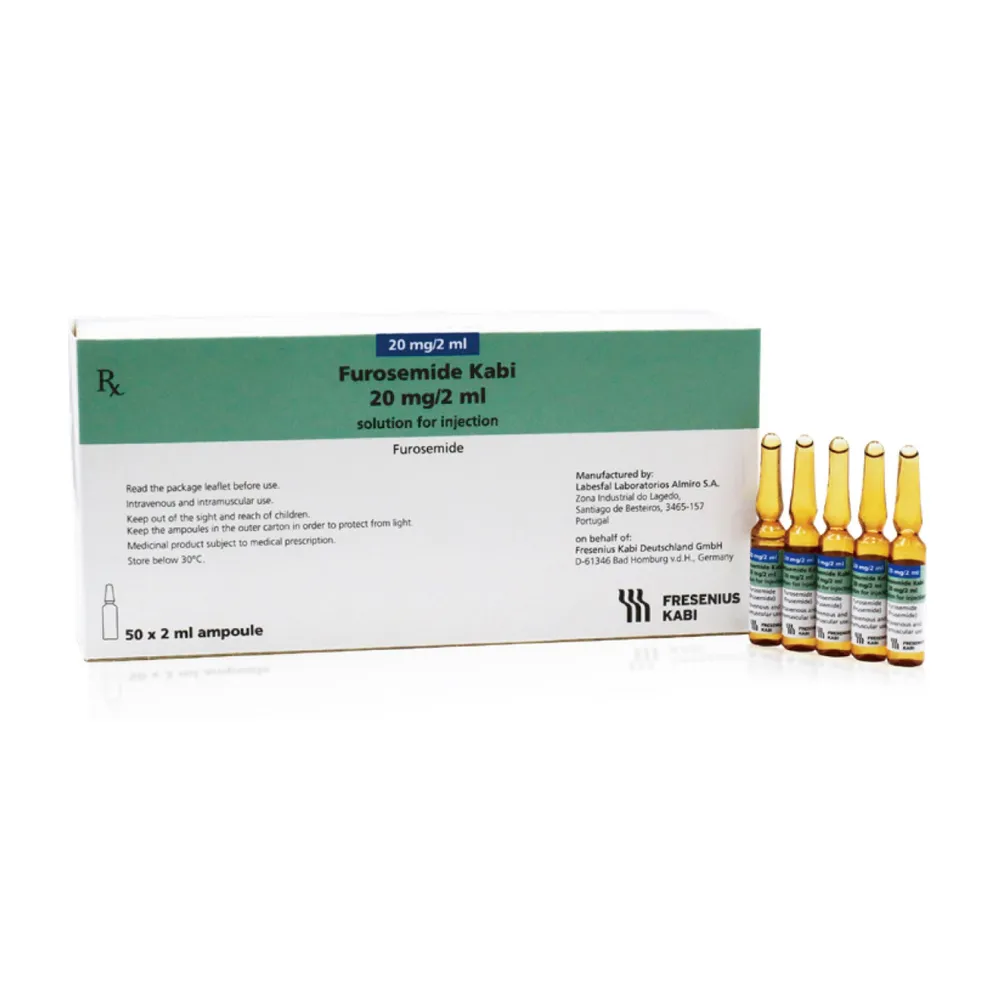
Table of Contents
- Package leaflet: Information for the user
- 1. What Furosemide Kabi is and what it is used for
- 2. Important information before using Furosemide Kabi
- 3. How to use Furosemide Kabi
- 4. Possible adverse effects
- 5. How to store Furosemide Kabi
- 6. Contents of the pack and other information
- Information intended exclusively for medical professionals:
Package leaflet: Information for the user
Furosemide Kabi, 20 mg/2 mL, solution for injection/infusion
Furosemidum
Please read all of this leaflet carefully before this medicine is administered because it contains
important information for you.
- Keep this leaflet. You may need to read it again.
- If you have any further questions, ask your doctor or nurse.
- This medicine has been prescribed for you personally. Do not pass it on to others. It may harm them, even if their symptoms are the same as yours.
- If you experience any side effects, including any not listed in this leaflet, tell your doctor or nurse. See section 4.
Contents of the leaflet
- What Furosemide Kabi is and what it is used for
- What you need to know before you are given Furosemide Kabi
- How to use Furosemide Kabi
- Possible side effects
- How to store Furosemide Kabi
- Contents of the pack and other information
1. What Furosemide Kabi is and what it is used for
Furosemide Kabi belongs to a group of medicines called diuretics. Furosemide increases the amount of urine produced by the body.
Furosemide is used to relieve symptoms caused by excess fluid in the body (oedema). Excess fluid in the body may be caused by:
- heart diseases,
- liver diseases,
- kidney diseases.
Your doctor will recommend furosemide if:
- rapid and effective removal of excess fluid is required;
- the patient cannot take this type of medicine by mouth or in emergency situations;
- the patient has excess fluid around the heart, lungs, liver, or kidneys;
- there is very high blood pressure which may lead to life-threatening conditions (hypertensive crisis).
2. Important information before using Furosemide Kabi
When not to use Furosemide Kabi:
- if the patient is allergic to furosemide or any of the other ingredients of this medicine (listed in section 6);
- if the patient is allergic to sulfonamide antibiotics;
- in case of significant dehydration (loss of substantial amount of fluids, e.g. due to severe diarrhoea or vomiting);
- in case of kidney failure and inability to pass urine despite administration of furosemide;
- in case of kidney failure caused by substances toxic to the kidneys or liver;
- if the patient has very low blood potassium or sodium levels;
- if the patient is in a coma due to liver failure;
- during breastfeeding.
In case of any doubts regarding the use of the medicine, consult a doctor or pharmacist.
Warnings and precautions
Before starting treatment with Furosemide Kabi, discuss with your doctor or nurse if:
- there are urinary disorders caused by obstruction of the urinary tract (e.g. related to enlarged prostate);
- the patient has diabetes;
- the patient has hypotension or episodes of sudden drop in blood pressure (this is particularly important in patients with narrowed blood vessels of the heart or brain);
- the patient has liver disease (e.g. cirrhosis);
- the patient has kidney disease (e.g. nephrotic syndrome);
- the patient is dehydrated (loss of fluids due to severe diarrhoea or vomiting), as this condition may lead to circulatory collapse or thrombosis;
- the patient has gout (pain or inflammation of joints) caused by high blood levels of uric acid (a metabolic product);
- the patient has an autoimmune inflammatory disease called systemic lupus erythematosus, which affects the immune system and attacks skin, bones, joints, and internal organs;
- the patient has hearing disorders;
- the patient is using sorbitol (a sugar substitute for diabetic patients);
- the patient is taking medicines causing life-threatening irregular heart rhythm (QT prolongation);
- the patient is taking lithium;
- the patient has porphyria (a disorder involving impaired oxygen binding by red blood cells and presence of violet-colored urine);
- the patient has increased skin sensitivity to sunlight (photosensitivity);
- the patient is an athlete – the medicine may lead to a positive result in anti-doping tests;
- the patient is elderly, taking other medicines causing low blood pressure, or has other medical conditions associated with risk of low blood pressure.
Administration of furosemide to premature infants may lead to formation of kidney stones or renal calcification.
If any of the above conditions apply to the patient, the doctor may change the treatment or provide appropriate advice.
During treatment with Furosemide Kabi, the doctor may recommend regular monitoring of blood glucose or uric acid levels. The doctor may also recommend monitoring of key electrolytes such as sodium and potassium, especially in case of vomiting or diarrhoea.
Furosemide Kabi and other medicines
Tell your doctor or nurse about all medicines the patient is currently taking or has recently taken, including medicines the patient plans to use, even those available without prescription. This is important because some medicines should not be used together with Furosemide Kabi. In particular, inform the doctor if the patient is taking any of the following medicines:
- Lithium (used in mood disorders) – concomitant use with furosemide may increase the effect and adverse reactions of lithium. The doctor will recommend using both medicines together only if absolutely necessary and will monitor blood lithium levels. The dose of lithium may be adjusted if needed.
- Risperidone, used in the treatment of certain psychoses.
- Cardiac glycosides, such as digoxin – the doctor may adjust the dose of the medicine.
- Medicines used to treat high blood pressure, including thiazide diuretics (e.g. bendroflumethiazide or hydrochlorothiazide), ACE inhibitors (e.g. lisinopril), angiotensin II antagonists (e.g. losartan), because furosemide may cause excessive drop in blood pressure. The doctor may adjust the dose of furosemide.
- Medicines reducing cholesterol and lipid levels, such as fibrates, e.g. clofibrate, fenofibrate or bezafibrate, because the effect of furosemide may be enhanced.
- Medicines used to treat diabetes, such as metformin and insulin, because blood glucose levels may increase.
- Anti-inflammatory medicines, including NSAIDs (e.g. aspirin or celecoxib), because they may reduce the effectiveness of furosemide. High doses of painkillers (salicylates) may increase adverse effects of furosemide.
- Anti-inflammatory and anti-allergic medicines, such as corticosteroids, carbenoxolone (used in the treatment of gastric ulcers) or laxatives, because when used together with furosemide they affect blood sodium and potassium levels. Liquorice has similar effects as carbenoxolone. The doctor will recommend monitoring blood potassium levels.
- Medicines administered by injection during surgical procedures, including tubocurarine, curare derivatives and succinylcholine.
- Chloral hydrate (used in sleep disorders), because intravenous administration of furosemide within 24 hours before chloral hydrate may in isolated cases cause sudden facial flushing, excessive sweating, restlessness, nausea, elevated blood pressure and increased heart rate. Therefore, concomitant use of furosemide and chloral hydrate is not recommended.
- Phenytoin or phenobarbital, used in the treatment of epilepsy, because the effect of furosemide may be reduced.
- Theophylline, used in the treatment of asthma, because furosemide may enhance its effect.
- Antibiotics, such as cephalosporins, polymyxins, aminoglycosides or quinolones, and other medicines affecting kidney function, such as immunosuppressants, iodinated contrast agents, foscarnet or pentamidine, because furosemide may enhance their effects.
- Amphotericin B used long-term (used in the treatment of fungal infections).
- Probenecid (used as a nephroprotective agent with other medicines), because it may reduce the effect of furosemide.
- Organoplatinum compounds (used in the treatment of certain cancers), because furosemide may enhance their adverse effects.
- Methotrexate, used in the treatment of certain cancers and severe arthritis, because it may reduce the effect of furosemide.
- Medicines increasing blood pressure (vasopressors), because concomitant use of furosemide may reduce their effect.
- Aminoglutethimide, used to suppress corticosteroid secretion (in Cushing's syndrome), because it may enhance adverse effects of furosemide.
- Carbamazepine, used in the treatment of epilepsy or schizophrenia, because it may enhance adverse effects of furosemide.
- Cyclosporine, used to prevent rejection of transplanted organs, because the risk of developing gouty arthritis (joint pain) increases.
- Medicines affecting heart function, such as amiodarone, sotalol, dofetilide, ibutilide, because furosemide may enhance their effects.
- Medicines administered by injection before X-ray examinations.
- Levothyroxine, used in thyroid disorders.
Furosemide Kabi with food, drink and alcohol
Food does not affect the action of this medicine when administered intravenously. The patient may eat and drink as usual during treatment with furosemide. There is no need to change diet unless the doctor advises otherwise.
Pregnancy, breastfeeding and fertility
Furosemide should not be used during pregnancy unless absolutely necessary.
If the patient is pregnant or breastfeeding, suspects she may be pregnant, or is planning to have a child, she should consult a doctor or pharmacist before using this medicine.
- Furosemide may pass from the mother's body to the child.
- Furosemide is used in pregnant women only when absolutely necessary.
- Do not use Furosemide Kabi during breastfeeding.
- The medicine passes into human milk.
Before using any medicine, consult a doctor or pharmacist.
Driving and using machines
Furosemide Kabi may impair concentration. Do not drive or operate machinery, as furosemide may affect the ability to concentrate (see section 4. "Possible side effects").
Furosemide Kabi contains sodium
This medicine contains 3.7 mg of sodium (the main component of table salt) in each mL. This corresponds to 0.2% of the maximum recommended daily dietary sodium intake for adults.
3. How to use Furosemide Kabi
This medicine should always be used exactly as instructed by your doctor or nurse. If you have any doubts,
you should consult your doctor or nurse.
Furosemide Kabi is administered by a doctor or nurse:
- as a slow intravenous injection (into a vein), or
- in exceptional cases, as an intramuscular injection (into muscle).
The doctor will determine the appropriate dose, timing, and duration of treatment. This depends on age, body weight, medical history, other medicines the patient is taking, and the type and severity of the condition.
General recommendations
- Parenteral administration of furosemide is indicated when oral administration is impossible or ineffective (e.g., due to reduced intestinal absorption) or when a rapid effect is required.
- When parenteral administration is necessary, switching to oral administration as soon as possible is recommended.
- To achieve optimal efficacy and prevent compensatory reactions, continuous infusion of furosemide is generally preferred over repeated bolus injections.
- If continuous furosemide infusion is not feasible during ongoing treatment after one or more bolus injections, repeated small intravenous doses at short intervals (approximately every 4 hours) are preferred over larger doses given at longer intervals.
- Furosemide must be administered intravenously as a slow injection or infusion. It must not be given faster than 4 mg per minute and must not be mixed with other medicines in the same syringe.
Dosage
Adults
- Unless dose reduction is necessary (see below), the recommended initial dose for adults and adolescents over 15 years of age is 20 mg to 40 mg of furosemide administered intravenously (or in exceptional cases, intramuscularly). The maximum dose varies depending on the individual patient's response to treatment.
- If a higher dose is required, the doctor may administer an additional 20 mg injection. Subsequent doses are usually given every 2 hours until the desired fluid loss is achieved.
- In certain cases, a higher initial or maintenance dose may be necessary, depending on the patient's condition. The dose is determined by the doctor. If such doses are required, they may be administered via continuous infusion.
Children and adolescents (under 18 years of age)
Experience with use in children and adolescents is limited. Intravenous administration of furosemide in children and adolescents under 15 years of age is recommended only in exceptional cases. Dosage should be adjusted according to body weight, with a recommended dose of 0.5 to 1 mg/kg body weight per day, up to a maximum total daily dose of 20 mg. Treatment should be switched to oral administration as soon as possible.
Elderly patients
In elderly patients, the usual initial dose is generally 20 mg per day. The dose may be gradually increased until the desired fluid loss is achieved. Fluid loss leading to body weight reduction should not exceed 1 kg per day. If prolonged treatment with Furosemide Kabi is necessary, the doctor will recommend switching to oral administration (tablets) as quickly as possible.
Use of a higher than recommended dose of Furosemide Kabi
If the patient is concerned that too high a dose has been administered, they should inform the doctor immediately. Symptoms of furosemide overdose include: dryness of the oral mucous membranes, increased thirst, irregular heartbeat, mood disturbances, muscle cramps or pain, nausea or vomiting, unusual fatigue or weakness, weakly palpable pulse, or loss of appetite.
Missed administration of Furosemide Kabi
If the patient is concerned that an injection has been missed, they should speak with the doctor or nurse.
If there are any further doubts regarding the use of this medicine, the patient should consult the doctor or nurse.
4. Possible adverse effects
Like all medicines, this medicine can cause adverse effects, although not everyone will experience them.
The following adverse effects may occur during treatment with furosemide:
Common (may affect less than 1 in 10 patients):
-
Hepatic encephalopathy in patients with liver failure (symptoms include memory loss, tremors, mood changes, coma).
Uncommon (may affect less than 1 in 100 patients): -
Skin rashes (including itching, redness, peeling), tendency to bruise easily, or increased sensitivity of the skin to sunlight;
-
Blood cell disorders, which may lead to coagulation disorders (with increased risk of bleeding);
-
Deafness (sometimes irreversible).
Rare (may affect less than 1 in 1,000 patients):
-
Nausea or vomiting, diarrhoea, constipation, loss of appetite, discomfort in the mouth and stomach;
-
Hearing disturbances (more frequent in patients with renal failure) and tinnitus (ringing in the ears);
-
Anaphylaxis, a severe allergic reaction, which may cause rash, swelling, breathing difficulties, and loss of consciousness; in such a case, contact a doctor immediately;
-
Kidney damage (interstitial nephritis);
-
Very low number of white blood cells in the blood (which may lead to life-threatening infections); in such a case, contact a doctor immediately;
-
Muscle disorders, including leg muscle cramps or muscle weakness;
-
Pain or discomfort at the injection site (especially after intramuscular injection);
-
Possibility of occurrence or worsening of an inflammatory condition called lupus erythematosus;
-
Abnormal blood test results (changes in blood levels of fat-like substances);
-
Numbness or tingling sensations, vertigo (dizziness);
-
High body temperature;
-
Blurred vision, confusion, drowsiness;
-
Dryness of the oral mucosa.
Very rare (may affect less than 1 in 10,000 patients): -
Severe muscle disorders, including tremors, spasms, and muscle cramps (also known as tetany);
-
Blood cell disorders which may lead to anaemia and reduced resistance to infections;
-
Pancreatitis, causing severe pain in the upper abdomen.
Frequency not known (cannot be estimated from available data): -
Stevens-Johnson syndrome (formation of blisters and skin peeling around the lips, eyes, mouth, nose, and genital organs, flu-like symptoms, fever);
-
Toxic epidermal necrolysis (sloughing off of large areas of the epidermis, exposing the dermis);
-
Acute generalized exanthematous pustulosis (acute febrile rash due to a drug reaction, so-called AGEP syndrome);
-
Drug reaction with eosinophilia and systemic symptoms (so-called DRESS syndrome);
-
Dizziness, fainting, and loss of consciousness (due to orthostatic hypotension or other causes), headache;
-
Worsening or activation of systemic lupus erythematosus (symptoms may include rash, joint pain, fever);
-
Cases of muscle damage (rhabdomyolysis) have been reported, often associated with severe hypokalaemia.
The following adverse effects may also occur: -
Low blood pressure causing fainting or dizziness, which may also lead to a feeling of pressure in the head, joint pain, blood clot formation, or circulatory collapse (shock).
-
Low potassium levels in the blood, which may cause muscle weakness, tingling and numbness, mild difficulties in moving body parts, vomiting, bloating, constipation, increased urination, intense thirst, slow or irregular heartbeat. These disorders occur more frequently in patients with other diseases, e.g. liver or heart disorders, when following a diet low in potassium, or when taking other medicines (see section “Furosemide Kabi and other medicines”). Significant potassium loss may lead to transient inhibition of intestinal motility or disturbances of consciousness, including loss of consciousness in extreme cases. The doctor may recommend regular blood tests and potassium supplements.
-
Low levels of sodium, calcium, and magnesium in the blood, caused by their increased excretion in urine. Low sodium levels may cause concentration disorders, calf cramps, loss of appetite, weakness, drowsiness, vomiting, and confusion. Low calcium levels may cause
painful muscle cramps. Painful muscle cramps and cardiac arrhythmias may also be
caused by low magnesium levels in the blood. -
Gout – possibility of occurrence or worsening.
-
Urination disorders – possibility of worsening.
-
Diabetes – possibility of occurrence or worsening.
-
Liver function disorders or blood changes, which may lead to jaundice (yellowing of the skin, dark urine, fatigue).
-
Reduction in intravascular volume, especially in elderly patients, which, in case of significant fluid loss, may lead to blood concentration with a tendency to form blood clots.
-
In preterm newborns, kidney stone formation or renal calcification may occur.
-
Possibility of maintaining patency of the ductus arteriosus (the vessel connecting the pulmonary artery and aorta) in premature infants (this duct is normally open in unborn children).
Reporting of adverse effects
If any adverse symptoms occur, including any adverse effects not listed in this leaflet, inform your doctor, pharmacist, or nurse. Adverse effects can be reported directly to the Department of Monitoring Adverse Drug Reactions of the Office for Registration of Medicinal Products, Medical Devices and Biocidal Products, Al. Jerozolimskie 181C, 02-222 Warsaw, tel.: +48 22 49 21 301, fax: +48 22 49 21 309, website: https://smz.ezdrowie.gov.pl Adverse effects can also be reported to the marketing authorization holder. Reporting adverse effects helps to gather more information on the safety of the medicine.
5. How to store Furosemide Kabi
- Keep the medicine out of sight and reach of children.
- Do not use this medicine after the expiry date stated on the packaging after EXP. The expiry date refers to the last day of the stated month.
- Store the ampoules in their outer packaging to protect them from light.
- Medicines should not be disposed of via wastewater or household waste. Ask your pharmacist how to dispose of medicines no longer required. This will help protect the environment.
6. Contents of the pack and other information
What Furosemide Kabi contains
- The active substance is furosemide.
- The other components are: sodium chloride, sodium hydroxide, water for injections.
What Furosemide Kabi looks like and contents of the pack
Furosemide Kabi is a clear, colourless or almost colourless solution. The pack may contain 5, 50 or 100 amber glass ampoules of 2 mL containing Furosemide Kabi 20 mg/2 mL solution for injection/infusion.
Marketing Authorisation Holder
Fresenius Kabi Polska Sp. z o.o.
Al. Jerozolimskie 134
02-305 Warsaw
Manufacturer
LABESFAL - Laboratórios Almiro S.A. (Fresenius Kabi Group)
Lagedo, 3465-157 Santiago de Besteiros
Portugal
For further information, please contact the Marketing Authorisation Holder:
Fresenius Kabi Polska Sp. z o.o.
Al. Jerozolimskie 134
02-305 Warsaw
Tel. +48 22 345 67 89
This medicinal product is authorised in the European Economic Area and in the United Kingdom (Northern Ireland) under the following names:
Belgium
Furosemide Fresenius Kabi 20 mg/2 ml solution for injection/infusion
Furosemide Fresenius Kabi 20 mg/2 ml solution injectable/ pour perfusion
Furosemide Fresenius Kabi 20 mg/2 ml Injektionslösung/ Infusionslösung
Czech Republic
Furosemid Kabi
Finland
Furosemide Fresenius Kabi 10 mg/ml injektio-/infuusioneste
Spain
Furosemida Fresenius Kabi 20 mg/2 ml solución inyectable y para perfusión EFG
Netherlands
Furosemide Fresenius Kabi 20 mg/2 ml oplossing voor injectie/infusie
Ireland
Furosemide 20 mg/2 ml solution for injection/infusion
Poland
Furosemide Kabi
Portugal
Furosemida Fresenius Kabi 20 mg/2 ml solução injectável ou para perfusão
Slovakia
Furosemid Kabi 20 mg/2 ml, injekčný /infúzny roztok
United Kingdom
Furosemide 20 mg/2 ml solution for injection/infusion
(Northern Ireland)
Information intended exclusively for medical professionals:
Route of administration:
Furosemide should be administered intravenously slowly, at a rate not exceeding 4 mg per minute. Other medications must not be administered in the same syringe.
Intramuscular administration of furosemide should be restricted to exceptional cases when oral or intravenous administration is not possible. It should be noted that intramuscular administration is not appropriate in acute conditions such as pulmonary edema.
The recommended initial dose for adults and adolescents over 15 years of age is 20 mg to 40 mg (1 or 2 vials), administered intravenously (or in exceptional cases, intramuscularly). The maximum dose depends on the individual patient's response to treatment. If a higher dose is required, it should be increased by 20 mg at a time and administered no more frequently than every 2 hours.
In adult patients, the maximum recommended daily dose is 1500 mg of furosemide.
Pharmaceutical incompatibilities:
Furosemide Kabi may be mixed with neutral and weakly alkaline solutions with a pH of 7–10, such as 0.9% sodium chloride solution and lactated Ringer's solution.
Due to the risk of precipitation, furosemide must not be mixed with strongly acidic solutions (pH less than 5.5), such as solutions containing ascorbic acid, noradrenaline, and adrenaline.
Solutions containing visible solid particles must not be used.
The preparation is intended for single use only; any unused solution should be discarded.
Shelf life:
3 years
Shelf life after opening:
After opening, the product should be used immediately.
Shelf life after dilution:
Chemical and physical stability of the solution is maintained for 24 hours at 25°C, protected from light.
From a microbiological standpoint, the product should be used immediately. If not used immediately, the user is responsible for the storage conditions and duration prior to use. The solution should not be stored for longer than 24 hours at a temperature of 2 to 8°C, unless dilution has been carried out under controlled and validated aseptic conditions.