Frisium 10
Poland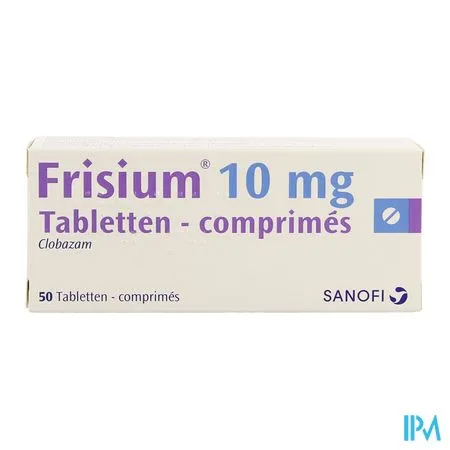
Table of Contents
Package leaflet: Information for the patient
Warning! Keep the leaflet! Information on the immediate packaging in a foreign language.
Frisium 10 (Frisium)
10 mg, tablets
Clobazamum
Frisium 10 and Frisium are different trade names for the same medicine.
Please read the entire leaflet carefully before using this medicine, as it contains
important information for the patient.
- Keep this leaflet for future reference.
- If you have any questions, consult your doctor or pharmacist.
- This medicine has been prescribed for a specific individual. Do not pass it on to others. The medicine may harm someone else, even if their symptoms are identical.
- If any adverse reactions occur in the patient, including any adverse reactions not listed in this leaflet, inform your doctor or pharmacist. See section 4.
Table of contents of the leaflet:
- What Frisium 10 is and what it is used for
- Important information before taking Frisium 10
- How to take Frisium 10
- Possible side effects
- How to store Frisium 10
- Contents of the package and other information
1. What Frisium 10 is and what it is used for
Frisium 10 is an anxiolytic and anticonvulsant medicine belonging to a group of medicines called benzodiazepines.
Frisium 10 is indicated in the treatment of acute and chronic anxiety states, particularly manifested by: increased anxiety, tension, inner restlessness, agitation, irritability, sleep disturbances of emotional origin, and psychosomatic and psychovegetative disorders (e.g. affecting the cardiovascular or gastrointestinal system).
Before initiating treatment for anxiety states associated with mood disorders, the doctor will determine whether the patient has depressive disorders requiring additional or different treatment.
The medicine may also be used as an adjunctive treatment in epilepsy where previous anticonvulsant therapy has not provided satisfactory results.
2. Important information before using Frisium 10
When not to use Frisium 10:
- if the patient is allergic to clobazam or any of the other ingredients of this medicine (listed in section 6),
- if the patient has myasthenia gravis (a disease characterised by rapid fatigue of skeletal muscles), as this may increase the risk of worsening the condition,
- if the patient has acute respiratory disorders (risk of worsening),
- if the patient has sleep apnoea syndrome (risk of worsening),
- if the patient has severe liver function disorders (risk of inducing hepatic coma – encephalopathy),
- during breastfeeding.
Benzodiazepines must not be given to children without careful assessment of the necessity of using these medicines.
Frisium 10 must not be used in children aged from 6 months to 6 years, except in
special cases of seizure treatment with absolute indications.
Warnings and precautions
Before starting Frisium 10, consult a doctor or pharmacist.
Suicidal thoughts and behaviour
Some studies have shown an increased risk of suicidal thoughts, suicide attempts and
suicide in patients taking certain sedative and hypnotic medicines, including this medicine. However, it has not been established whether this is caused by taking this medicine or whether there are other causes. If the patient experiences suicidal thoughts, they should contact their doctor as soon as possible to obtain further medical advice (see section 4).
Risk associated with concomitant use of opioids and benzodiazepines
Concomitant use of benzodiazepines, including clobazam, and opioids may cause sedation,
respiratory depression, coma and death. Due to these risks, the doctor will prescribe opioids and benzodiazepines together only for patients in whom other treatment options are insufficient.
If a decision is made to administer clobazam together with opioids, the medicines will be prescribed at the lowest effective dose and for the shortest possible duration of concomitant use.
Anterograde amnesia (inability to remember events after taking the medicine)
When using benzodiazepines, even at the recommended dose and especially at higher doses,
anterograde amnesia (difficulty in learning and remembering new information – new
data are not permanently stored) may occur.
Tolerance to the medicine
When treating epilepsy with benzodiazepines, including clobazam, particular caution should be taken and attention paid to the possibility of reduced anticonvulsant effect (development of tolerance) during treatment.
Physical and psychological dependence
Use of benzodiazepines, including Frisium 10, may lead to physical and
psychological dependence. The risk is greater when higher doses are used and treatment is prolonged, but it may occur even with daily use of therapeutic doses for several weeks.
This risk is increased in patients with a history of alcohol or drug dependence.
Withdrawal symptoms
If physical dependence develops, abrupt discontinuation of clobazam treatment may lead to
withdrawal symptoms. These include headache, sleep disturbances, increased frequency of dreams, intensified anxiety, tension, restlessness, disorientation and agitation, loss of reality, feelings of depersonalisation, hallucinations, symptomatic psychoses (e.g. delirium after discontinuation), numbness and tingling of limbs, muscle pain, tremor, sweating, nausea,
vomiting, heightened hearing, hypersensitivity to light, sound and physical contact, and seizures.
Withdrawal symptoms may also occur after abrupt switching from a benzodiazepine with a long duration of action (e.g. Frisium 10) to a benzodiazepine with a short duration of action.
If benzodiazepine treatment is suddenly discontinued, a so-called rebound phenomenon may also occur, i.e. recurrence of intensified symptoms that Frisium 10 was intended to eliminate (e.g. anxiety states, seizures). This may be accompanied by sudden mood changes, anxiety, sleep disturbances and restlessness.
Elderly patients
In elderly patients, due to increased susceptibility to adverse effects such as:
drowsiness, dizziness, muscle weakness, there is an increased risk of falls, which may result in serious injury. Dose reduction is recommended (see sections 3 and 4).
If the patient has experienced any of the symptoms listed below, inform the doctor before taking the medicine:
- chronic or acute respiratory insufficiency (clobazam may cause respiratory disturbances),
- muscle weakness or ataxia (unsteadiness, impaired coordination of body movements) in the past (clobazam may cause muscle weakness),
- kidney or liver function disorders (may result in increased susceptibility to adverse effects),
- personality disorders (risk of suicidal behaviour). Patients should use Frisium 10 only under strict medical supervision. The treating doctor may decide to reduce the dose in such cases to minimise the risk of adverse effects.
Severe skin diseases
During treatment with clobazam, severe skin diseases such as Stevens-Johnson syndrome and toxic epidermal necrolysis have been reported in both children and adults.
Most of these cases involved concomitant use of other medicines, e.g. antiepileptic drugs. These conditions may even lead to death. The doctor will monitor the patient for signs of severe skin diseases, especially during the first 8 weeks of treatment. If symptoms suggestive of Stevens-Johnson syndrome or toxic epidermal necrolysis occur, the doctor will advise immediate discontinuation of clobazam. Treatment with this medicine will not be continued, and the doctor will consider alternative treatment options.
Cannabidiol
Consult a doctor or pharmacist:
- before taking any non-medicinal products containing cannabidiol, as they may intensify adverse effects caused by clobazam,
- if the patient is taking any medicinal products containing cannabidiol, as they may intensify adverse effects caused by clobazam.
Frisium 10 and other medicines
Inform your doctor or pharmacist about all medicines currently taken or recently taken, including those obtained without a prescription.
Exercise caution when using clobazam concomitantly with the following medicines:
- antiepileptic drugs used in epilepsy treatment, such as: valproic acid, phenytoin, carbamazepine, stiripentol. When these drugs are used concomitantly with clobazam, the doctor will adjust the dose of Frisium 10 (interactions may occur with the patient's main antiepileptic drugs),
- antipsychotic medicines,
- anxiolytic medicines,
- antidepressants,
- sedating antihistamines (medicines used in allergy),
- anaesthetics and muscle relaxants (risk of intensified effect),
- hypnotics,
- opioid analgesics (risk of intensified euphoria, which may lead to increased psychological dependence),
- other medicines with sedative effects, especially when clobazam is administered at higher doses (may lead to intensified central nervous system depressant effects),
- opioids, as concomitant use of clobazam and opioids increases the risk of sedation, respiratory depression, coma and death due to intensified central nervous system depressant effects,
- products (medicinal or non-medicinal) containing cannabidiol,
- ticlopidine – an antiplatelet medicine used to prevent blood clots,
- fluconazole – used in the treatment of fungal diseases,
- fluvoxamine – used in the treatment of depression,
- omeprazole – used in the treatment of stomach diseases.
Exercise particular caution when using clobazam in patients who have experienced poisoning with the above-mentioned medicines or lithium.
The doctor may change (adjust) the dosage of clobazam when the following medicines are used:
- medicines that inhibit clobazam metabolism (may cause increased concentration of the active drug in the body), e.g. fluconazole, fluvoxamine, ticlopidine, omeprazole,
- medicines metabolised by the CYP2D6 enzyme, e.g. dextromethorphan, pimozide, paroxetine, nebivolol (clobazam may inhibit CYP2D6 enzyme activity).
Frisium 10 with food, drink and alcohol
Frisium 10 may be taken before meals or independently of meals.
During treatment with clobazam, alcohol consumption should be avoided (increased risk of excessive sedation and other adverse effects).
Pregnancy, breastfeeding and effects on fertility
Pregnancy
If the patient is pregnant or breastfeeding, suspects she may be pregnant, or plans to become pregnant, she should consult a doctor before using this medicine.
Use of Frisium 10 during pregnancy or in women of childbearing age who are not using contraception is not recommended.
If the patient discovers she is pregnant or plans to become pregnant, she should consult her doctor immediately to reassess the need for treatment. Do not stop taking Frisium 10 without consulting a doctor.
A large body of data has not revealed evidence linking developmental abnormalities to the use of benzodiazepines. However, some studies have shown an increased risk of cleft lip and palate in newborns compared to the general population.
Cleft lip and palate (sometimes called "hare lip") is a congenital malformation caused by incomplete fusion of the palate and upper lip during fetal development.
Taking Frisium 10 during the second and/or third trimester of pregnancy may cause reduced fetal movements and changes in fetal heart rate.
Use of Frisium 10 towards the end of pregnancy or during delivery may cause drowsiness (sedation), muscle weakness (hypotonia or "floppy infant syndrome"), low body temperature (hypothermia), feeding difficulties (sucking problems leading to poor weight gain) and breathing problems (respiratory depression, sometimes severe) in the newborn.
If Frisium 10 is taken regularly in late pregnancy, withdrawal symptoms such as agitation or tremor may occur in the newborn. In such cases, the newborn should be closely monitored during the postnatal period.
Clobazam crosses the placenta.
Breastfeeding
Frisium 10 must not be used during breastfeeding, as the active substance (clobazam) passes into breast milk.
Driving and operating machinery
Some adverse effects (e.g. sedation, amnesia, muscle weakness) may impair concentration and reaction time and adversely affect the ability to drive vehicles and operate machinery.
Frisium 10 contains monohydrate lactose
Frisium 10 contains monohydrate lactose. If the patient has previously been diagnosed with intolerance to certain sugars, they should contact their doctor before taking this medicine.
3. How to use Frisium 10
This medicine should always be taken exactly as directed by the doctor. In case of doubt, consult the doctor or pharmacist.
Dosage in the treatment of anxiety disorders
Adults: The usual recommended initial dose is generally 20 mg per day. If necessary, the daily dose may be increased to 30 mg. It is not recommended to exceed a total daily dose of 30 mg.
Elderly patients: In elderly patients, the effect of the medicine may be enhanced and susceptibility to adverse reactions increased, requiring the use of low initial doses and gradual dose escalation under close supervision (see "Warnings and precautions"). A daily maintenance dose of 10 to 15 mg is usually sufficient.
After improvement has been achieved, the dose may be reduced.
If the daily dose is divided, the larger part should be taken in the evening.
The duration of treatment should be as short as possible and should not exceed 8–12 weeks (including the tapering-off period). The patient should be re-evaluated after no more than 4 weeks and then at regular intervals to determine the need for continued treatment.
In special cases, treatment longer than the maximum recommended period may be necessary. However, treatment must not be prolonged without re-evaluation of the patient's clinical condition by a specialist. Prolonged uninterrupted use of the medicine should be avoided, as it may lead to dependence.
If clobazam has been used for a prolonged period, the medicine should not be stopped abruptly. The dose should be gradually reduced under medical supervision to avoid withdrawal symptoms (see "Warnings and precautions").
Dosage in the treatment of epilepsy in combination with one or more anticonvulsant medicines
Adults: Treatment should be initiated with a low starting dose (5 to 15 mg per day). If necessary, the dose should be gradually increased to a maximum daily dose of approximately 80 mg.
Children aged 6 years and older: Treatment should be initiated with a starting dose of 5 mg per day. A maintenance dose of 0.3 to 1 mg/kg body weight is usually sufficient.
There are no dosage recommendations for children under 6 years of age due to the lack of an appropriate formulation ensuring safe use and accurate dosing.
Elderly patients: In elderly patients, increased susceptibility to adverse reactions may occur, requiring the use of low initial doses and gradual dose escalation under strict supervision (see "Warnings and precautions").
If the daily dose is divided, the larger part should be taken in the evening.
Doses up to 30 mg may also be taken as a single dose in the evening.
Duration of treatment: The patient should be re-evaluated after no more than 4 weeks and then at regular intervals to determine the need for continued treatment.
Before completely discontinuing the medicine, even in the absence of therapeutic effect, the dose should be gradually reduced, as seizures and other withdrawal symptoms may occur during too rapid dose reduction.
Special patient groups
Patients with renal or hepatic impairment
Due to the possible enhanced effect of the medicine and increased frequency of adverse reactions, the doctor will use small initial doses, gradually increasing them under close supervision.
Method of administration
The tablets may be taken whole or crushed and mixed with apple puree.
Frisium 10 tablets may be divided into equal 5 mg doses.
Clobazam may be taken regardless of meals.
Duration of treatment
The medicine should be taken for as long as directed by the doctor.
If you feel that the effect of Frisium 10 is too strong or too weak, consult your doctor.
Use of a higher than recommended dose of Frisium 10
Overdose and poisoning with benzodiazepines, including clobazam, may cause the following symptoms: dizziness, disorientation, and drowsiness, which may worsen to include: impaired body movement coordination, respiratory depression, decreased blood pressure, and in rare cases, coma. Overdose symptoms are more pronounced and, under certain circumstances, may be life-threatening, especially when other central nervous system depressants, including alcohol, have been taken concomitantly.
In the treatment of overdose, the influence of other medicines should be considered.
The doctor may perform gastric lavage, administer intravenous fluids, and provide general supportive treatment, including monitoring of consciousness, respiratory function, pulse, and blood pressure.
In case of ingestion of a higher than recommended dose of the medicine, contact a doctor immediately or go to the nearest hospital emergency department. Bring the medicine in its original packaging so that the medical staff can clearly identify which medicine was taken.
Missed dose of Frisium 10
If a dose is missed, take it as soon as possible, except when the next dose is due soon. Do not take two doses at the same time or within a short interval. In case of doubt, consult your doctor.
Stopping Frisium 10 treatment
Do not discontinue treatment with Frisium 10 or change the dose without consulting your doctor.
If treatment is stopped without consulting a doctor, the patient's condition may worsen.
4. Possible adverse reactions
Like all medicines, this medicine can cause adverse reactions, although not everyone will experience them.
Adverse reactions are listed below by frequency of occurrence:
Very common (occurring in more than 1 in 10 people):
- drowsiness, particularly at the beginning of treatment and when higher doses are used;
- fatigue, particularly at the beginning of treatment and when higher doses are used;
Common (occurring in less than 1 in 10 people):
- decreased appetite;
- irritability, aggression, restlessness, depression (may reveal pre-existing depression), drug tolerance (particularly when the medicine is used for a prolonged period), excitement;
- sedation, dizziness, concentration difficulties, slowed or slurred speech / speech disorders (particularly when the medicine is used in high doses or for prolonged treatment; transient), headache, tremor, impaired body movement coordination;
- dry mouth, constipation, nausea;
Uncommon (occurring in less than 1 in 100 people):
- unusual behaviour, confusion, anxiety, hallucinations, nightmares, decreased libido (particularly when the medicine is used in high doses or for prolonged treatment; transient);
- emotional blunting, memory disturbances (may be associated with unusual behaviour), memory impairment (after doses usually used, but especially after higher doses);
- double vision (particularly when the medicine is used in high doses or for prolonged treatment; transient);
- rash;
- weight gain (particularly when the medicine is used in high doses or for prolonged treatment);
- falls (see "Warnings and precautions");
Frequency not known (cannot be estimated from available data):
- dependence (particularly when the medicine is used for a prolonged period), difficulty sleeping, outbursts of anger, delusions, psychotic reactions, poor quality of sleep, suicidal tendencies;
- cognitive disturbances, altered state of consciousness (particularly in elderly patients, sometimes with accompanying breathing disorders), nystagmus (particularly when the medicine is used in high doses or for prolonged treatment), gait disturbances (particularly when the medicine is used in high doses or for prolonged treatment; transient);
- respiratory centre depression, respiratory failure (particularly in patients with pre-existing respiratory disorders (e.g. bronchial asthma) or in patients with brain damage) (see "When not to take Frisium 10" and "Warnings and precautions");
- urticaria; Stevens-Johnson syndrome, toxic epidermal necrolysis (in some cases potentially leading to death);
- muscle spasms, muscle weakness;
- slowed response to stimuli, excessive lowering of body temperature.
Other adverse reactions may occur in some individuals during treatment with Frisium 10.
Reporting of adverse reactions
If any adverse effects occur, including any adverse effects not listed
in this leaflet, inform your doctor or pharmacist. Adverse reactions can be reported
directly to the Department of Monitoring Adverse Drug Reactions of the Office for Registration of Medicinal Products, Medical Devices and Biocidal Products,
Al. Jerozolimskie 181C, 02-222 Warsaw, tel.: + 48 22 49 21 301, fax: + 48 22 49 21 309,
website: https://smz.ezdrowie.gov.pl.
Reporting adverse reactions helps to provide more information on the safety of the medicine.
5. How to store Frisium 10
Keep this medicine out of the sight and reach of children.
Do not use this medicine after the expiry date stated on the container. The expiry date refers to the last day of the stated month.
Store below 25 °C.
Medicines should not be disposed of via wastewater or household waste. Ask your pharmacist how to dispose of medicines no longer required. This will help protect the environment.
6. Contents of the packaging and other information
What Frisium 10 contains
The active substance is clobazam. Each tablet contains 10 mg of clobazam.
Other components are: monohydrate lactose, corn starch, anhydrous colloidal silicon dioxide,
talc, magnesium stearate.
What Frisium 10 looks like and contents of the pack
White, round, biconvex tablet with a diameter of 7 mm, with a central break line on one side,
and embossing: letter B on one half and letters GL on the other half. On the reverse side of the tablet,
the logo "Hoechst" is embossed.
The tablet can be divided into equal doses.
The pack contains 20 tablets.
For further detailed information, please contact the responsible party or the parallel importer.
Responsible party in the Czech Republic, country of export:
Sanofi, s.r.o., Generála Píky 430/26, 160 00 Prague 6, Czech Republic
Manufacturer:
Opella Healthcare International SAS, 56, Route de Choisy, 60200 Compiègne, France
Parallel importer:
InPharm Sp. z o.o., Strumykowa 28/11, 03-138 Warsaw, Poland
Repackaged in:
InPharm Sp. z o.o. Services sp. k., Chełmżyńska 249, 04-458 Warsaw, Poland
Authorization number in the Czech Republic, country of export: 70/177/97-C
Authorization number for parallel import: 30/21