Fraxodi
Poland
Table of Contents
Package leaflet: Information for the patient
Fraxodi, 11,400 IU AXa/0.6 ml, solution for injection
Fraxodi, 15,200 IU AXa/0.8 ml, solution for injection
Fraxodi, 19,000 IU AXa/1 ml, solution for injection
(Nadroparinum calcicum)
Please read all of this leaflet carefully before using this medicine because it contains important information for you.
- Keep this leaflet as you may need to read it again.
- If you have any further questions, please ask your doctor or pharmacist.
- This medicine has been prescribed for a specific individual. Do not pass it on to others. It may harm them even if their symptoms are the same.
- If you experience any adverse reactions, including any not listed in this leaflet, inform your doctor or pharmacist. See section 4.
Contents of the leaflet
- What Fraxodi is and what it is used for
- What you need to know before using Fraxodi
- How to use Fraxodi
- Possible side effects
- How to store Fraxodi
- Contents of the pack and other information
1. What Fraxodi is and what it is used for
Fraxodi is an anticoagulant medicine used in the treatment of deep vein thrombosis.
The medicine is administered by subcutaneous injection.
Indications for use:
- Treatment of venous thromboembolic disease.
2. Important information before using Fraxodi
When not to use Fraxodi:
- if the patient is allergic to the active substance, calcium nadroparin, heparin, or a similar product (such as enoxaparin, bemiparin, dalteparin), or to any of the other ingredients of this medicine (listed in section 6);
- if the patient previously experienced a decrease in platelet count—blood cells involved in blood clotting—after receiving Fraxodi (nadroparin-dependent thrombocytopenia);
- if the patient has active bleeding or any condition causing reduced blood clotting;
- if the patient has a medical condition associated with an increased risk of bleeding [e.g. active gastric and/or duodenal ulcer];
- if the patient recently suffered a hemorrhagic stroke;
- if the patient has acute infective endocarditis;
- if the patient has severe renal impairment and is being treated for thrombosis, e.g. in the lungs (pulmonary embolism) or in the leg (deep vein thrombosis);
- if the patient has severe renal impairment and is being treated for heart disease (e.g. unstable angina or non-Q-wave myocardial infarction).
Warnings and precautions
During treatment with Fraxodi, a decrease in platelet count may rarely occur, which can sometimes be severe. During treatment, your doctor will recommend blood tests to monitor for this effect.
Before using Fraxodi, the patient should inform the doctor if:
- the patient has conditions that increase the risk of bleeding, particularly if:
- the patient has a gastric and/or duodenal ulcer,
- the patient has coagulation disorders,
- the patient recently underwent surgery involving the brain, spinal cord, or eyes,
- the patient has high blood pressure (hypertension);
- the patient has severe liver dysfunction;
- the patient has impaired kidney function;
- the patient has eye diseases affecting blood vessels (vascular disorders of the choroid and retina);
- the patient is taking other medicines affecting blood clotting (see section: "Fraxodi with other medicines").
In case of bleeding, contact a doctor immediately.
If skin necrosis occurs, which may be preceded by small subcutaneous hemorrhages or hard, painful redness of the skin, discontinue the medicine immediately and contact a doctor.
Use of Fraxodi may lead to increased potassium levels in the blood.
If the patient has conditions in which elevated potassium levels may occur, such as diabetes, severe kidney disease, prior metabolic acidosis, or if the patient is taking other medicines that increase blood potassium levels, the doctor may recommend regular blood tests. If the patient is unsure whether they are taking such medicines, they should consult their doctor.
If the patient receives epidural or spinal anaesthesia, or lumbar puncture (spinal tap), while being treated with Fraxodi, there is a risk of bleeding into the spinal canal at the puncture site, which may lead to serious consequences. During such procedures, the patient's condition will be frequently monitored for any concerning symptoms.
If the patient is elderly (over 65 years of age), the doctor may recommend blood tests before starting treatment with Fraxodi.
The needle cover of the pre-filled syringe may contain latex [see section: "Packaging contains latex (natural rubber)"].
Fraxodi with other medicines
Inform your doctor or pharmacist about all medicines the patient is currently taking, has recently taken, or plans to take.
Concomitant use of Fraxodi with the following medicines is not recommended due to the risk of bleeding. If such combination cannot be avoided, the doctor will closely monitor the patient's condition. These include:
- acetylsalicylic acid (e.g. aspirin),
- non-steroidal anti-inflammatory drugs - NSAIDs (medicines used to relieve pain, such as ibuprofen),
- antiplatelet medicines (used to prevent blood clots, such as clopidogrel).
Fraxodi should be used with caution with:
- oral anticoagulants (medicines preventing blood clotting, such as warfarin),
- glucocorticosteroids (steroid medicines used, among others, in asthma treatment),
- dextran (a medicine administered intravenously to increase circulating blood volume).
Pregnancy and breastfeeding
If the patient is pregnant or breastfeeding, suspects she may be pregnant, or plans to become pregnant, she should consult her doctor or pharmacist before using this medicine.
Fraxodi may be used during pregnancy only if the doctor considers the expected benefits to outweigh the potential risks.
It is unknown whether Fraxodi components pass into human milk; therefore, breastfeeding should not be performed during treatment with Fraxodi.
Driving and using machines
There are no data available on the effect of Fraxodi on the ability to drive vehicles or operate machinery.
Packaging may contain latex (natural rubber)
The packaging of the medicine (needle cover) may contain latex rubber, which may cause severe allergic reactions.
3. How to use Fraxodi
This medicine should always be used as directed by the physician. In case of doubt, consult
your doctor or pharmacist.
Method of administration
Fraxodi should be administered by subcutaneous injection.
Fraxodi must not be administered by intramuscular injection.
Pre-filled syringes with graduated markings facilitate administration of appropriate doses, especially when dose adjustment according to the patient's body weight is required.
When administering the medicine by subcutaneous injection, the usual injection site is the anterior-lateral abdominal wall, alternating between the right and left side. Another possible injection site is the thigh.
Detailed instructions for performing the injection are provided in the section: “Instructions for self-administration of subcutaneous injections of Fraxodi”.
Recommended dosage
The dosage is determined individually by the physician for each patient, depending on the indication, clinical condition, and patient's body weight.
Use in children and adolescents
Fraxodi must not be used in children and adolescents.
Elderly patients (over 65 years of age)
Renal function may be impaired in these patients. Therefore, the physician may recommend kidney function tests and adjust the dose of Fraxodi accordingly.
Renal impairment
The physician will adjust the dose of Fraxodi according to the severity of renal impairment.
Fraxodi is contraindicated in patients with severe renal impairment.
Use of a higher than recommended dose of Fraxodi
If a dose higher than recommended is administered, contact your doctor immediately. The main symptom of overdose is bleeding.
Missed dose of Fraxodi
Continue using the medicine as prescribed, without increasing the next dose. Do not shorten the interval between doses.
Do not use a double dose to make up for a missed dose.
Stopping Fraxodi treatment
Fraxodi should be used for as long as directed by the physician. Do not discontinue Fraxodi without consulting your doctor.
If a patient wishes to discontinue treatment with Fraxodi, this should be discussed first with the doctor or pharmacist.
If you have any further questions regarding the use of this medicine, consult your doctor or pharmacist.
4. Possible adverse reactions
Like all medicines, this medicine can cause adverse reactions, although not everyone will experience them.
Stop the medicine immediately and contact your doctor if any of the following occur:
- allergic reaction presenting as: urticaria (pinkish, itchy skin blisters), angioedema (facial or lip swelling making breathing difficult),
- skin necrosis at the injection site – preceded by subcutaneous haemorrhage or hard, painful redness of the skin, with or without accompanying general symptoms.
Very common adverse reactions (may affect more than 1 in 10 patients):
- bleeding at various sites, more frequent in patients with other risk factors,
- minor bruising at the injection site. In some cases, hard lumps may appear, which do not indicate heparin crystallisation and should disappear within a few days.
Common adverse reactions (may affect up to 1 in 10 patients):
- skin reaction at the injection site,
- increased liver enzyme activity (aminotransferases), usually transient (detected in blood test results).
Uncommon adverse reactions (may affect up to 1 in 1000 patients):
- decreased platelet count (thrombocytopenia),
- increased platelet count (thrombocytosis),
- rash, urticaria, redness, itching of the skin,
- subcutaneous calcification at the injection site.
Very rare adverse reactions (may affect up to 1 in 10,000 patients):
- allergic reactions, including angioedema and skin reactions,
- pseudo-anaphylactic reaction (symptoms similar to anaphylactic – allergic – reaction; see beginning of this section),
- skin necrosis,
- increased eosinophil count (a type of white blood cell) – transient after discontinuation of treatment (detected in blood test results),
- increased blood potassium levels,
- prolonged, painful penile erection (priapism) – if this occurs, urgent medical advice must be sought, as treatment may be required to avoid serious complications.
Unknown frequency (cannot be estimated from available data):
- headache,
- migraine.
Reporting of adverse reactions
If any adverse reactions occur, including any possible adverse reactions not listed in this leaflet, inform your doctor or pharmacist. Adverse reactions can be reported directly to the Department of Monitoring of Adverse Drug Reactions of the Office for Registration of Medicinal Products, Medical Devices and Biocidal Products, Al. Jerozolimskie 181C, 02-222 Warsaw, tel.: +48 22 49 21 301, fax: +48 22 49 21 309, website: https://smz.ezdrowie.gov.pl
Adverse reactions can also be reported to the marketing authorisation holder.
Reporting adverse reactions helps provide more information on the safety of this medicine.
5. How to store the medicine Fraxodi
Keep the medicine out of the sight and reach of children.
Store below 25 °C.
Do not use this medicine after the expiry date stated on the packaging. The expiry date refers to the last day of the stated month.
Medicines and syringes must not be disposed of via the sewage system or in household waste.
Ask your pharmacist how to dispose of medicines no longer required. This will help protect the environment.
6. Package contents and other information
What the medicinal product contains
- The active substance is: 11,400 IU AXa of calcium nadroparin in 0.6 ml solution for injection
15,200 IU AXa of calcium nadroparin in 0.8 ml solution for injection
19,000 IU AXa of calcium nadroparin in 1 ml solution for injection - Other components: calcium hydroxide solution or diluted hydrochloric acid for pH adjustment, water for injections.
What Fraxodi looks like and contents of the pack
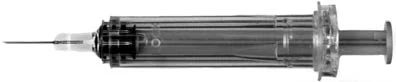
Fraxodi is a solution for injection. The pre-filled syringe contains a clear to slightly opalescent, colourless or slightly coloured solution. The medicine is packaged in pre-filled syringes with a needle safety guard to prevent needlestick injury after injection.
The pack contains 2, 6 or 10 pre-filled syringes with safety guard, individually blister-packed in a cardboard carton.
Marketing Authorisation Holder
Viatris Healthcare Sp. z o.o.
ul. Postępu 21B
02-676 Warsaw
tel.: 22 546 64 00
Manufacturer
Aspen Notre Dame de Bondeville
1, rue de l’Abbaye
76960 Notre-Dame de Bondeville
France
or
GlaxoSmithKline Pharmaceuticals S.A.
ul. Grunwaldzka 189
60-322 Poznań
Poland
Information for healthcare professionals
Detailed dosage and administration instructions are provided in section 4.2 of the approved Product Characteristics.
SELF-INJECTION INSTRUCTIONS FOR SUBCUTANEOUS INJECTIONS OF FRAXODI
- Wash your hands thoroughly with soap and water and dry them completely with a towel.
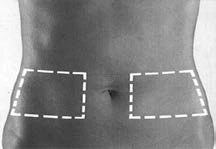
- Sit or lie down in a comfortable position. Choose an injection site on the side of the abdomen (Picture 1). Alternate injections between the left and right side. Picture 1
- Clean the injection site with an alcohol swab.
- Remove the needle cap. Discard the needle cap.
Important notes
- Do not touch the needle and avoid contact between the needle and any surface before injection.
- The presence of a small air bubble in the pre-filled syringe is normal. Do not remove the air bubble before injecting – this may result in loss of some of the medicine.

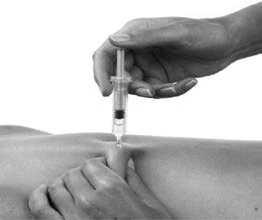
- Gently pinch the previously cleaned skin to create a skin fold. Hold the skin fold between your thumb and index finger throughout the entire injection (Picture 2).
Picture 2
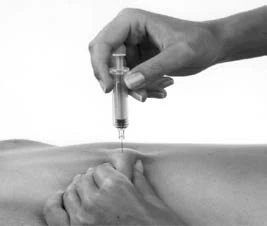
- Hold the pre-filled syringe firmly by the grip. Insert the entire length of the needle perpendicularly into the skin fold (Picture 3).
Picture 3
- Inject the entire contents of the pre-filled syringe by pressing the plunger down until resistance is felt.
- Remove the syringe with the needle from the skin (Picture 4). Do not rub the injection site.
Picture 4
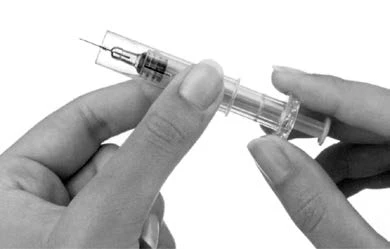
- Appearance of the pre-filled syringe after injection (Picture 5).
Safety shield
Syringe grip
Picture 5
- After completing the injection, slide the protective cap forward on the pre-filled syringe to protect against needlestick injury (Picture 6).
While firmly holding the syringe grip with one hand, use the other hand to grasp the outer cap of the pre-filled syringe and slide it toward the needle. This will unlock the safety shield. Then slide the shield forward until it locks into position, fully covering the needle.
Resistance will be felt during activation and locking of the safety shield.
Picture 6
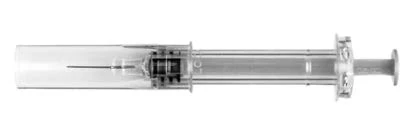
- Appearance of the pre-filled syringe after deployment of the safety shield (Picture 7).
Safety shield
Syringe grip
Picture 7
- Do not dispose of the used pre-filled syringe in household waste. Dispose of it according to your doctor’s or pharmacist’s instructions.