Forlax 10 g
Poland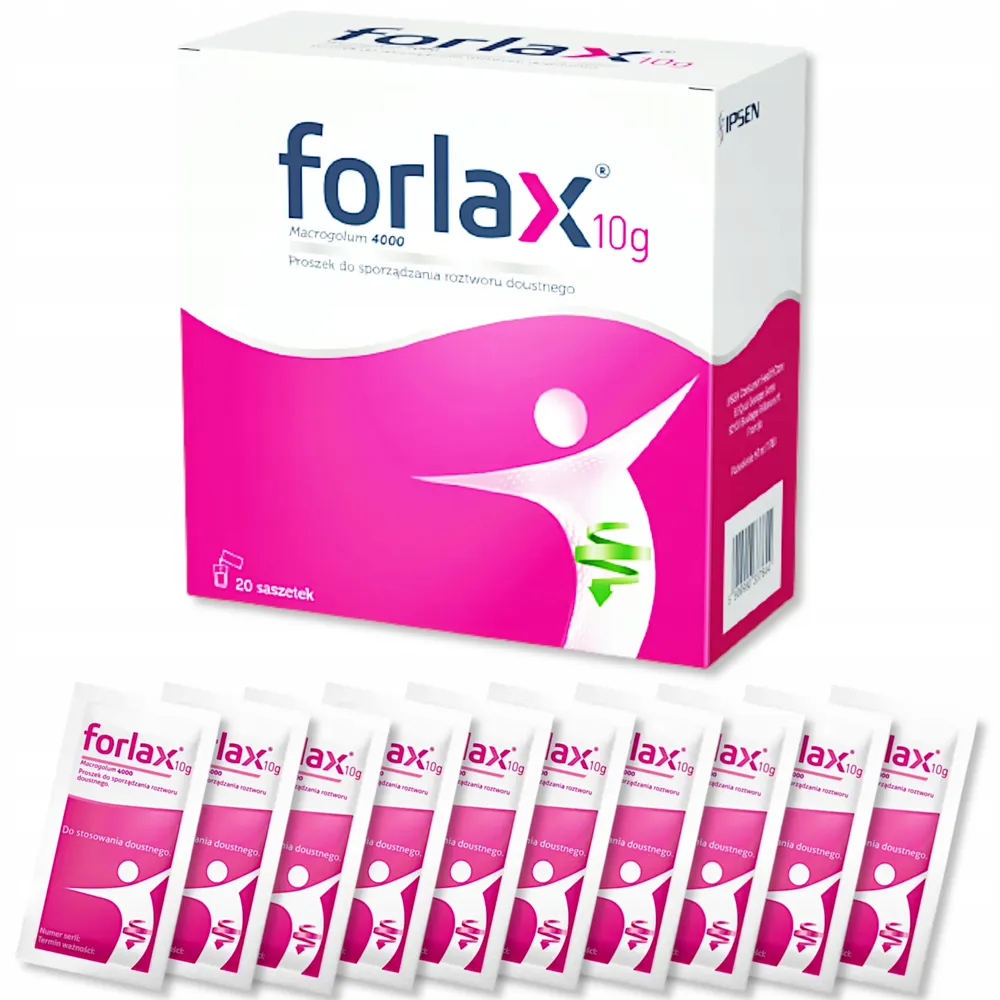
Table of Contents
Package leaflet: Information for the user
FORLAX 10 g, powder for oral solution
Macrogol 4000
Please read all of this leaflet carefully before taking this medicine because it contains
important information for you.
- Keep this leaflet. You may need to read it again.
- If you have any further questions, please ask your doctor or pharmacist.
- This medicine has been prescribed for a specific patient only. Do not pass it on to others. It may harm other people even if their symptoms are the same.
- If you experience any adverse reactions, including any possible adverse reactions not listed in this leaflet, tell your doctor or pharmacist. See section 4.
Contents of the leaflet
- What Forlax 10 g is and what it is used for
- Important information before taking Forlax 10 g
- How to take Forlax 10 g
- Possible side effects
- How to store Forlax 10 g
- Contents of the pack and other information
1. What Forlax 10 g is and what it is used for
Forlax 10 g contains macrogol 4000 as the active substance and belongs to a group of medicines called osmotic laxatives. It works by increasing the amount of water in the stool, which helps overcome problems related to slow bowel function. Forlax 10 g is not absorbed into the bloodstream and is not metabolized in the body.
Forlax 10 g is indicated for the symptomatic treatment of constipation in adults and children aged 8 years and older.
The medicine is in the form of a powder which should be dissolved in a glass of water (at least 50 ml) and taken orally. The effect usually occurs within 24 to 48 hours.
Treatment of constipation with medicines should only be an addition to a healthy lifestyle and diet.
2. Important information before taking Forlax 10 g
When not to take Forlax 10 g
- if the patient is allergic (hypersensitive) to macrogol (polyethylene glycol) or any of the other ingredients (listed in section 6).
- if the patient has a disease such as severe intestinal disorder:
- inflammatory bowel disease (such as ulcerative colitis, Crohn's disease, abnormal intestinal stricture)
- intestinal perforation or risk of intestinal perforation
- intestinal obstruction or suspected intestinal obstruction
- abdominal pain of unknown cause
Do not take this medicine if any of the above symptoms occur. In
case of doubt, consult a doctor or pharmacist before taking the medicine.
Warnings and precautions
Allergic reactions, including rash and swelling of the face or throat (angioedema), have been reported after administration of products containing macrogol (polyethylene glycol) in adults. Isolated severe allergic reactions have been reported, leading to fainting, collapse, or breathing difficulties and causing general malaise. If such symptoms occur, discontinue taking Forlax 10 g and seek immediate medical advice.
Since this medicine may occasionally cause diarrhoea, consult a doctor or pharmacist before taking it in the following cases:
- impaired liver or kidney function,
- use of diuretics (water pills), or in elderly patients, as they may be at increased risk of low blood sodium or potassium levels.
Before using Forlax, consult a doctor or pharmacist if the patient has known swallowing difficulties.
In patients who have difficulty swallowing, avoid mixing Forlax 10 g – a laxative containing macrogol (polyethylene glycol) – with food thickeners based on starch. This may result in the formation of a watery liquid which could enter the lungs and cause pneumonia.
Forlax 10 g and other medicines
When using Forlax, a transient reduction in the absorption of other medicinal products may occur, leading to decreased effectiveness, particularly affecting medicinal products with a narrow therapeutic index or short half-life, such as digoxin, antiepileptic drugs, coumarins, and immunosuppressive drugs.
Inform your doctor or pharmacist about all medicines currently or recently taken, as well as any medicines the patient intends to take.
Forlax 10 g may reduce the effectiveness of thickening agents used to thicken liquids for safe swallowing.
Pregnancy and breastfeeding
Forlax may be used during pregnancy and breastfeeding.
If the patient is pregnant or breastfeeding, suspects she may be pregnant, or is planning to have a baby, she should consult a doctor or pharmacist before using this medicine.
Driving and operating machinery
No studies on the effects on the ability to drive vehicles and (or) operate machinery have been conducted.
Important information about certain ingredients of Forlax 10 g
Due to the presence of sulfur dioxide, Forlax 10 g may rarely cause severe hypersensitivity reactions and breathing difficulties.
This medicine contains 1.7 mg of sorbitol per sachet. However, Forlax 10 g may be used by people with diabetes or those on a galactose-free diet.
This medicine contains less than 1 mmol (23 mg) of sodium per sachet, meaning the medicine is considered "sodium-free".
3. How to take Forlax 10 g
Forlax 10 g should always be taken according to this leaflet or as directed by a doctor or pharmacist.
If in doubt, consult a doctor or pharmacist.
Use in children over 8 years of age and adults
The recommended dose is one to two sachets per day, preferably taken as a single dose in the morning.
The daily dose depends on the effect achieved and may range from one sachet every other day (especially in children) up to a maximum of two sachets per day.
The contents of the sachet should be dissolved in a glass of water (at least 50 ml) immediately before consumption, then the prepared solution should be drunk.
Note:
- The effect of Forlax 10 g occurs within 24–48 hours after administration.
- In children, the duration of treatment with Forlax 10 g should not exceed 3 months.
- Improvement in peristalsis achieved with Forlax 10 g may be maintained provided a healthy lifestyle and dietary recommendations are followed.
- Inform your doctor or pharmacist if symptoms worsen or if there is no improvement.
Taking more Forlax 10 g than recommended
Taking too high a dose of Forlax 10 g may cause diarrhoea, abdominal pain, or vomiting.
Diarrhoea usually resolves after discontinuation of the medicine or reduction of the dose.
In case of severe diarrhoea or vomiting, contact a doctor as soon as possible, as treatment to prevent loss of salts (electrolytes) accompanying fluid loss may be necessary.
Missed dose of Forlax 10 g
Take the next dose as soon as possible, but do not take a double dose to make up for the missed dose.
4. Possible adverse effects
Like any medicine, Forlax 10 g may cause adverse effects, although not everybody experiences them.
Adverse effects, which are usually mild and short-lived, include:
In children
Common (may affect up to 1 in 10 people)
- Abdominal pain
- Diarrhoea, which may also cause pain around the anus
Uncommon (may affect up to 1 in 100 people)
- Nausea or vomiting
- Abdominal distension
Frequency not known (frequency cannot be estimated from the available data)
- Allergic reactions (hypersensitivity) (rash, urticaria, facial or throat swelling, breathing difficulties, fainting or collapse)
In adults:
Common (may affect up to 1 in 10 people)
- Abdominal pain
- Abdominal distension
- Nausea
- Diarrhoea
Uncommon (may affect up to 1 in 100 people)
- Vomiting
- Sudden urge to defecate
- Faecal incontinence
Frequency not known (frequency cannot be estimated from the available data)
- Low blood potassium levels, which may cause muscle weakness, muscle tremors or irregular heartbeat
- Low blood sodium levels, which may cause fatigue and confusion, muscle tremors, seizures
- Dehydration due to severe diarrhoea, particularly in elderly people
- Symptoms of allergic reaction such as skin redness, rash, urticaria, facial or throat swelling, breathing difficulties, fainting or collapse
Reporting of adverse effects
If any adverse effects occur, including any not listed in this leaflet, please inform your doctor or pharmacist. Adverse effects can be reported directly to the Department of Monitoring Adverse Drug Reactions of the Office for Registration of Medicinal Products, Medical Devices and Biocidal Products
Al. Jerozolimskie 181 C
02-222 Warsaw
Tel.: +48 22 49 21 301
Fax: +48 22 49 21 309
Website: https://smz.ezdrowie.gov.pl
Adverse effects can also be reported to the Marketing Authorisation Holder or its representative.
Reporting adverse effects helps to provide more information on the safety of the medicine.
5. How to store the medicine Forlax 10 g
Keep the medicine out of the sight and reach of children.
Do not use the medicine Forlax 10 g after the expiry date stated on the carton. The expiry date refers to the last day of the stated month.
There are no special precautions for the storage of the medicine Forlax 10 g.
Medicines must not be disposed of via wastewater or household waste. Ask your pharmacist how to dispose of medicines no longer required. These measures will help protect the environment.
6. Contents of the package and other information
What Forlax 10 g contains
The active substance is macrogol 4000 – 10.00 g in each sachet.
The other ingredients are:
sodium saccharin (E954), orange-grapefruit flavour [essential oils: orange and grapefruit, concentrated orange juice, citral, acetaldehyde, linalool, ethyl butyrate, alpha-terpineol, octanal, beta-gamma-hexenol, maltodextrin, arabic gum, sorbitol, butylated hydroxyanisole (E320) and sulfur dioxide (E220)].
What Forlax 10 g looks like and contents of the pack
Forlax 10 g is an almost white powder with an orange-grapefruit odour and taste, used to prepare an oral solution.
Forlax 10 g is available in packs containing 10, 20, 50 or 100 sachets of powder.
Not all pack sizes may be marketed.
Marketing Authorisation Holder and Manufacturer
Marketing Authorisation Holder
MAYOLY PHARMA FRANCE
3 Place Renault
92500 Rueil-Malmaison
France
Manufacturer
MAYOLY Industrie
Rue Ethe Virton
28100 Dreux, France
For further information, please contact the Marketing Authorisation Holder's representative:
MAYOLY POLSKA Sp. z o.o.
ul. Domaniewska 39B
02-672 Warsaw
tel.: 22 166 26 26