Fluoxetine
Poland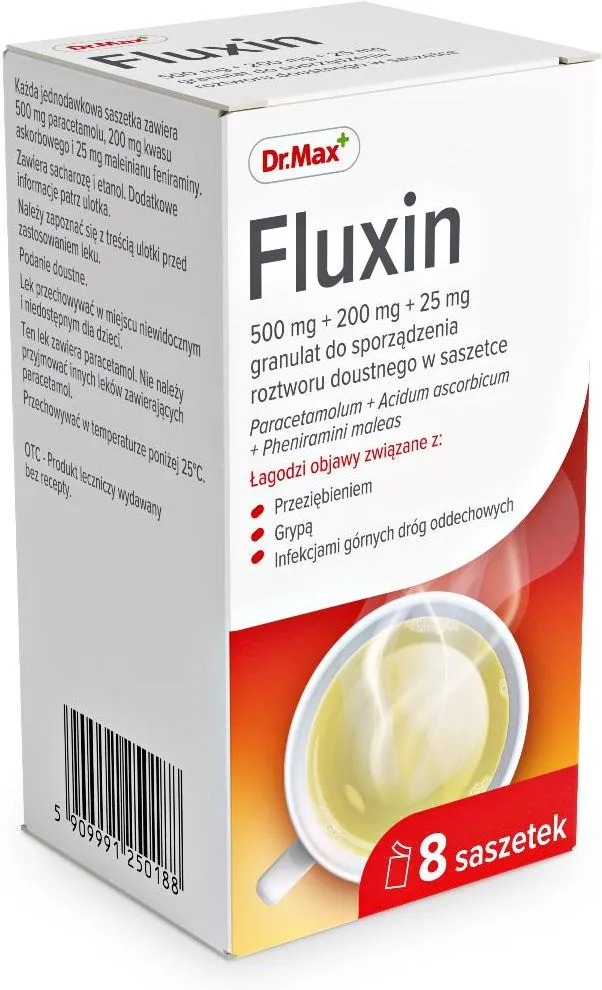
Table of Contents
Package leaflet: information for the patient
Fluxin
Paracetamolum + Acidum ascorbicum + Pheniramini maleas
500 mg + 200 mg + 25 mg
oral granules for oral solution in sachets
Please read the entire leaflet carefully before taking the medicine, as it contains
important information for the patient.
This medicine should always be taken exactly as described in the patient leaflet or according to
the instructions of a doctor or pharmacist.
- Keep this leaflet, so that you can read it again if necessary.
- If you need advice or further information, please contact your pharmacist.
- If you experience any adverse reactions, including any possible side effects not listed in this leaflet, inform your doctor or pharmacist. See section 4.
- If there is no improvement after 5 days, or if you feel worse, consult your doctor.
Table of contents of the leaflet:
- What Fluxin is and what it is used for
- Important information before taking Fluxin
- How to take Fluxin
- Possible side effects
- How to store Fluxin
- Contents of the pack and other information
1. What Fluxin is and what it is used for
Fluxin is indicated for the relief of symptoms of colds, influenza and upper respiratory tract infections, such as nasal congestion, runny eyes, sneezing, headache and/or fever.
This medicine should only be used to relieve the following symptoms when occurring together: pain and/or fever along with nasal congestion, watery eyes or sneezing. Do not use the medicine if the patient has only one of these symptoms.
Fluxin is indicated for adults and adolescents aged over 15 years (with body weight of 50 kg or more).
If symptoms do not improve or worsen after 5 days, consult a doctor.
2. Important information before taking Fluxin
When not to use Fluxin
- if the patient is allergic to paracetamol, ascorbic acid, pheniramine maleate, or any of the other ingredients of the medicine (listed in section 6);
- if the patient has severe liver disease;
- if the patient is at risk of narrow-angle glaucoma;
- if the patient has benign prostatic hyperplasia;
- Fluxin must not be given to children and adolescents under 15 years of age.
Warnings and precautions
Talk to your doctor or pharmacist before taking Fluxin
- if the patient weighs less than 50 kg;
- if the patient has mild to moderate liver or kidney impairment;
- if the patient is alcohol-dependent;
- if the patient has nutritional problems (low hepatic glutathione reserves);
- if the patient is dehydrated;
- if the patient has haemolytic anaemia (abnormal breakdown of red blood cells);
- if the patient has acute viral hepatitis or develops acute viral hepatitis during treatment with Fluxin, treatment with this medicine should be discontinued;
- if the patient has asthma, chronic obstructive pulmonary disease, cardiovascular disorders, hypertension, hyperthyroidism, or pyloroduodenal obstruction.
During treatment with Fluxin, inform your doctor immediately:
If the patient has serious conditions, including severe kidney disorders or sepsis
(when bacteria and their toxins circulate in the blood, leading to organ damage), malnutrition,
chronic alcoholism, or if the patient is also taking flucloxacillin (an antibiotic).
Cases of a serious condition called metabolic acidosis (a disturbance in blood and body fluids) have been reported in patients who take paracetamol regularly for a prolonged period or who take paracetamol together with flucloxacillin. Symptoms of metabolic acidosis may include: severe breathing difficulties, including rapid deep breathing, drowsiness, nausea, and vomiting.
This medicine contains paracetamol. Do not take any other products containing paracetamol while taking this medicine, as this may exceed the recommended daily dose. (See section: How to take Fluxin). Doses higher than recommended may cause serious liver damage.
In very rare cases, paracetamol may cause serious skin reactions. If a rash or other allergic symptoms occur, stop treatment and contact your doctor immediately.
Vitamin C should be used with caution in patients with disorders of iron metabolism and in patients with glucose-6-phosphate dehydrogenase deficiency.
Consult your doctor or pharmacist if you have high fever, signs of secondary infection, or if symptoms persist for more than 5 days.
Fluxin and other medicines
Tell your doctor or pharmacist about all medicines the patient is currently taking, has recently taken, or plans to take.
Do not take Fluxin together with other medicines containing paracetamol or antihistamines.
Inform your doctor before taking Fluxin if you are taking any of the following medicines:
- metoclopramide or domperidone (medicines used to treat nausea and vomiting);
- cholestyramine (a medicine used to lower cholesterol levels);
- anticholinergic medicines (e.g. glycopyrronium (used to treat chronic obstructive pulmonary disease), propantheline (used to treat ulcers), medicines used in Parkinson’s disease);
- opioids (morphine derivatives – medicines used to treat severe pain and cough);
- sedative antihistamines H (medicines used to treat allergy symptoms);
- warfarin and other coumarin derivatives (blood-thinning medicines);
- probenecid (a medicine used to treat gout);
- isoniazid and rifampicin (medicines used to treat tuberculosis);
- phenytoin (a medicine used to treat epilepsy);
- sedatives, especially barbiturates (medicines that cause relaxation and drowsiness);
- antidepressants, sedatives (amitriptyline, doxepin, mianserin, mirtazapine, trimipramine) (medicines used to treat depression);
- antipsychotics, e.g. clozapine (medicines used to treat psychoses such as schizophrenia);
- benzodiazepines and other anxiolytics (e.g. meprobamate) (medicines used to treat anxiety disorders);
- hypnotics (medicines used to treat insomnia);
- antidepressants known as monoamine oxidase inhibitors (medicines used to treat depression);
- centrally-acting antihypertensive medicines (medicines used to treat high blood pressure);
- baclofen and other antispasmodic medicines (medicines used to treat spasms of various origins);
- thalidomide (a medicine used to treat various types of cancer);
- disopyramide (a medicine used to treat heart rhythm disorders);
- zidovudine (a medicine used to treat HIV/AIDS infections);
- sodium oxybate (a medicine used to treat narcolepsy);
- flucloxacillin (an antibiotic), due to the serious risk of a disturbance in blood and body fluids (called metabolic acidosis), which requires urgent treatment.
Inform your doctor that you are taking this medicine if your doctor recommends testing for uric acid levels or blood glucose levels. This medicine may affect the results of these tests.
Fluxin and alcohol
Drinking alcohol and taking medicines containing alcohol is not recommended during treatment with Fluxin. The medicine may cause drowsiness, which may be intensified by alcohol.
Pregnancy, breastfeeding and fertility
If the patient is pregnant or breastfeeding, suspects she may be pregnant, or is planning to become pregnant, she should consult her doctor or pharmacist before taking this medicine.
Fluxin is not recommended during pregnancy and breastfeeding.
Driving and operating machinery
Fluxin may cause drowsiness and/or dizziness. This effect may be intensified by consuming alcoholic beverages, taking medicines containing alcohol, or taking sedatives. If the patient feels drowsy and/or dizzy, he/she should not drive or operate machinery.
Fluxin contains sucrose
This medicine contains 11.555 g of sucrose per single dose. This should be taken into account in the diet of patients with diabetes.
If the patient has previously been diagnosed with intolerance to certain sugars, he/she should contact the doctor before taking this medicine.
Fluxin contains sodium
This medicine contains less than 1 mmol of sodium (23 mg) per dose, meaning the medicine is considered "sodium-free".
Fluxin contains alcohol (ethanol)
This medicinal product contains less than 15.2 mg of alcohol (ethanol) in each sachet.
The amount in one dose of this medicinal product corresponds to less than 1 ml of beer or wine.
The small amount of alcohol in this medicine will not cause any noticeable effects.
3. How to take Fluxin
This medicine should always be taken exactly as described in the patient information leaflet or as directed by a doctor or pharmacist. If in doubt, consult a doctor or pharmacist.
Fluxin is indicated for use in adults and adolescents over 15 years of age (with body weight 50 kg and above).
The recommended dose is 1 sachet 2 or 3 times daily. The interval between doses should be at least 4 hours.
If the patient has kidney problems, the dosing interval should be adjusted by a doctor.
Do not use more than 3 sachets per day.
The maximum duration of treatment without consulting a doctor is 5 days.
Method of administration:
The contents of the sachet should be dissolved in a glass of warm or cold water.
Use of a higher than recommended dose of Fluxin
If an overdose of Fluxin is taken or if it is accidentally ingested by a child, medical advice should be sought immediately due to the risk of delayed, severe liver damage. Symptoms of paracetamol overdose include nausea, vomiting, and loss of appetite.
Missed dose of Fluxin
Do not take a double dose to make up for a missed dose.
If you have any further questions about the use of this medicine, consult your doctor or pharmacist.
4. Possible adverse reactions
Like all medicines, this medicine can cause adverse reactions, although not everyone will experience them.
Rare (may occur in up to 1 in 1,000 patients):
- Skin rash, redness of the skin, or an allergic reaction manifesting as sudden swelling of the face or neck, or general malaise (general discomfort) associated with a significant drop in blood pressure. In such a case, discontinue use of the medicine immediately, inform your doctor, and do not take paracetamol-containing medicines in the future.
Very rare (may occur in up to 1 in 10,000 patients):
- Severe skin reactions. In such a case, stop taking this medicine immediately, inform your doctor, and do not take paracetamol-containing medicines in the future.
- Blood disorders (reduced platelet count, low levels of certain white blood cells, decreased red blood cell levels), which may cause nosebleeds or bleeding gums. In such a case, contact your doctor.
Frequency not known (frequency cannot be estimated from the available data):
- Drowsiness, reduced alertness, more pronounced at the beginning of treatment
- Dry mouth, constipation, visual disturbances
- Problems with urination (marked reduction in urine volume, difficulty passing urine)
- Dizziness upon changing position (to standing or lying down), which may be associated with a drop in blood pressure
- Dizziness, memory or concentration difficulties (more common in elderly patients)
- Impaired motor coordination, tremors
- Disorientation, hallucinations
- Restlessness, nervousness, insomnia
- A serious condition which may cause the blood to become more acidic (so-called metabolic acidosis) in patients with severe disease taking paracetamol (see section 2).
Reporting of adverse reactions
If any adverse reactions occur, including any adverse reactions not listed in this leaflet, inform your doctor or pharmacist. Adverse reactions can be reported directly to the Department of Monitoring Adverse Drug Reactions of the Office for Registration of Medicinal Products, Medical Devices and Biocidal Products, Al. Jerozolimskie 181C, 02-222 Warsaw, tel.: +48 22 49 21 301, fax: +48 22 49 21 309, website: https://smz.ezdrowie.gov.pl
Adverse reactions can also be reported to the marketing authorization holder.
Reporting adverse reactions helps to provide more information on the safety of the medicine.
5. How to store Fluxin
Keep out of the sight and reach of children.
Do not use Fluxin after the expiry date stated on the sachet and packaging after EXP. The expiry date refers to the last day of the specified month.
Store below 25°C.
Medicines should not be disposed of via wastewater or household waste. Ask your pharmacist what to do with medicines no longer required. This will help protect the environment.
6. Contents of the pack and other information
What Fluxin contains
- The active substances in Fluxin are: paracetamol, ascorbic acid, and pheniramine maleate. Each sachet contains 500 mg of paracetamol, 200 mg of ascorbic acid, and 25 mg of pheniramine maleate.
- Other components: sucrose, citrus and rum flavouring, citric acid, gum arabic, dried dispersion, and sodium saccharin (E 954).
What Fluxin looks like and contents of the pack
Fluxin is packed in sachets (containing 13.1 g of granules for preparing an oral solution), made of a multi-layer material: paper/aluminium/PE (the layer in direct contact with the product). Each sachet contains white to slightly yellowish powder with a characteristic citrus and rum odour.
Pack sizes: 2, 4, 5, 6, 8, 10, 12, 14, 15, 16, 18, 20 sachets in a cardboard box.
Not all pack sizes may be marketed.
Marketing Authorisation Holder:
Dr. Max Pharma s.r.o.
Na Florenci 2116/15
110 00 Prague
Czech Republic
Tel.: (+420) 516 770 199
Manufacturer:
Farmea
10, Rue Bouché Thomas - ZAC d’Orgemont, Angers
France
This medicinal product is authorised in the European Economic Area countries under the following names:
| Country | Brand Name |
| Czech Republic | Nogrip 500 mg/200 mg/25 mg |
| Poland | Fluxin |
| Slovakia | Nogrip 500 mg/200 mg/25 mg |