Fluorescite 100 mg/ml solution for injection
Poland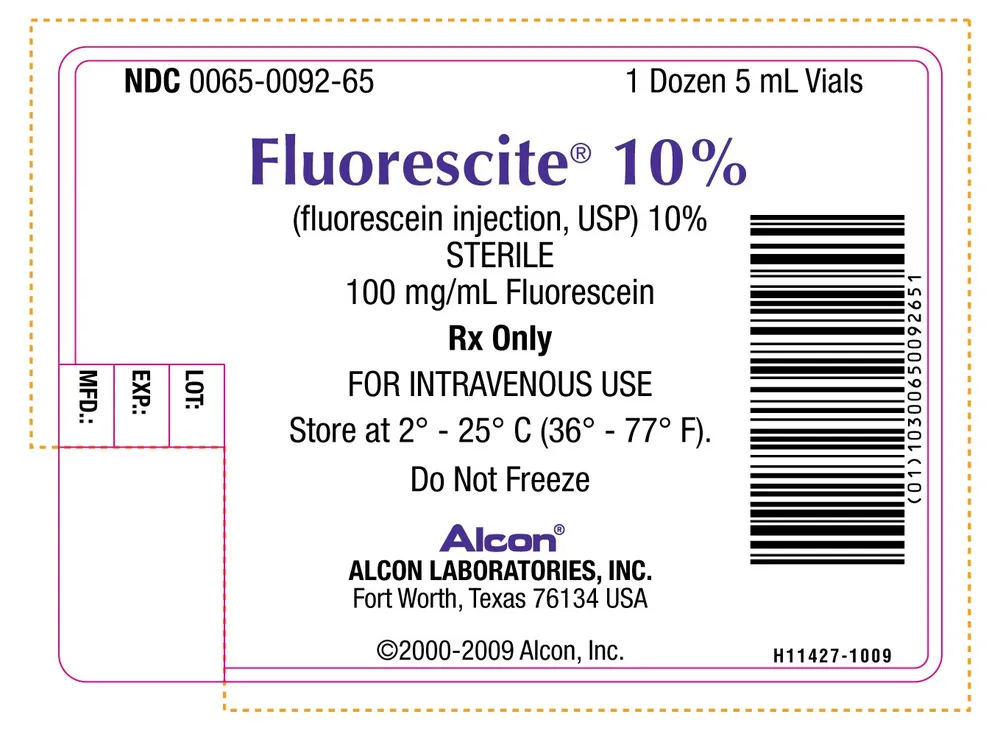
Table of Contents
- Package leaflet: Information for the user
- 1. What Fluorescite 100 mg/ml solution for injection is and what it is used for
- 2. Important information before use of Fluorescite 100 mg/ml solution for injection
- 3. How to use Fluorescite 100 mg/ml solution for injection
- 4. Possible side effects
- 5. How to store Fluorescite 100 mg/ml solution for injection
- 6. Contents of the package and other information
Package leaflet: Information for the user
Fluorescite, 100 mg/ml, solution for injection
Fluorescein
Please read all of this leaflet carefully before use, as it contains important information for the patient.
- Keep this leaflet, as you may need to read it again.
- If you have any further questions, please ask your doctor.
- If you experience any adverse reactions, including any not listed in this leaflet, inform your doctor. See section 4.
Contents of the leaflet
- What Fluorescite 100 mg/ml solution for injection is and what it is used for
- Important information before use of Fluorescite 100 mg/ml solution for injection
- How to use Fluorescite 100 mg/ml solution for injection
- Possible side effects
- How to store Fluorescite 100 mg/ml solution for injection
- Contents of the pack and other information
- Information for healthcare professionals
1. What Fluorescite 100 mg/ml solution for injection is and what it is used for
Fluorescite 100 mg/ml solution for injection is a dye solution which, during examination, enables visualisation of blood vessels at the back of the eye (this procedure is called fluorescein angiography). The medicine is intended for diagnostic use only. It is not used to treat any disease.
2. Important information before use of Fluorescite 100 mg/ml solution for injection
When not to use Fluorescite 100 mg/ml solution for injection
- if the patient is allergic (hypersensitive) to fluorescein or to any of the other ingredients of this medicine (listed in section 6). If the patient suspects hypersensitivity or allergy to fluorescein or any other ingredient of Fluorescite 100 mg/ml solution for injection, they should inform their doctor.
Warnings and precautions
Before administration of Fluorescite 100 mg/ml solution for injection, tell your doctor:
- if the patient has previously been diagnosed with cardiovascular disease or diabetes
- if the patient has kidney function disorders. Fluorescein angiography may weaken or damage kidney function, which may pose a risk to patients with severe kidney disease. Consult your doctor to determine whether this examination is safe for the patient. If necessary, the doctor may use a lower dose of Fluorescite 100 mg/ml solution for injection.
- if the patient is taking beta-blockers. Beta-blockers are used to treat hypertension and many heart conditions, and are also administered as eye drops for glaucoma treatment. An allergic reaction to Fluorescite 100 mg/ml solution for injection may cause a sudden drop in blood pressure. This effect may be more pronounced in patients taking beta-blockers (such as atenolol, sotalol, propranolol, metoprolol, bisoprolol).
- if the patient previously experienced an adverse reaction to fluorescein. In such cases, an alternative medicine may be used to prevent recurrence.
- if the patient is on a low-sodium diet. Fluorescite 100 mg/ml solution for injection contains up to 3.15 mmol (72.45 mg) of sodium per dose.
Before administering Fluorescite 100 mg/ml solution for injection, the patient should inform the doctor if any of the above conditions apply.
Fluorescite 100 mg/ml solution for injection and other medicines
Inform the doctor about all medicines currently or recently used, as well as any medicines the patient plans to use. Do not mix this medicine with other medicines.
Pregnancy, breastfeeding and fertility
Pregnancy and fertility
The patient should inform the doctor if she is pregnant or planning to become pregnant. Fluorescite 100 mg/ml solution for injection may be administered only if prescribed by the attending physician. Due to limited experience, administration of Fluorescite 100 mg/ml solution for injection during pregnancy requires special caution.
Breastfeeding
The patient should inform the doctor if she is breastfeeding. Fluorescein, the active substance of Fluorescite 100 mg/ml solution for injection, passes into human milk and is slowly eliminated. Therefore, breastfeeding must be discontinued for 7 days after administration of Fluorescite 100 mg/ml solution for injection. During this period, milk should be expressed and discarded.
Driving and operating machinery
During ophthalmological examination, dilating eye drops may be administered. This may temporarily impair vision and make driving or operating machinery difficult. Until normal vision returns, driving and operating machinery must not be undertaken.
Fluorescite 100 mg/ml solution for injection contains sodium
The medicine contains 72.45 mg of sodium (the main component of table salt) in each 5 ml dose. This corresponds to 3.7% of the maximum recommended daily sodium intake in the adult diet.
3. How to use Fluorescite 100 mg/ml solution for injection
Fluorescite 100 mg/ml solution for injection is administered by a doctor. Depending on the patient's condition, the doctor may adjust the dose. The medicine has not been studied in children; therefore, there are no data on dose adjustment for this group. Fluorescite 100 mg/ml solution for injection should not be used in patients under 18 years of age, as efficacy and safety have not been established in this population.
Administration as an injection:
Typically, one vial of Fluorescite 100 mg/ml solution for injection is injected intravenously into the arm. Fluorescite 100 mg/ml solution for injection must not be administered intrathecally (into the spinal canal) or intra-arterially (into an artery).
If you have any further questions about the use of this medicine, please consult your doctor.
4. Possible side effects
Like all medicines, this product can cause side effects, although not everyone will experience them. The following side effects have been observed:
Very common side effects
May occur in more than 1 in 10 patients
Nausea
Common side effects
May occur in not more than 1 in 10 patients
Vomiting, stomach discomfort, fainting, itching, leakage of blood or fluid into tissues
Uncommon side effects
May occur in not more than 1 in 100 patients
Headache, dizziness, tingling or prickling sensation, cough, sensation of tightness in the throat, abdominal pain, urticaria, speech disturbances, pain, feeling of warmth, hypersensitivity, phlebitis
Rare side effects
May occur in not more than 1 in 1000 patients
Severe allergic reactions, cardiac arrest, hypotension, shock, breathing difficulties or wheezing (bronchospasm)
Very rare side effects
May occur in not more than 1 in 10,000 patients
Anaphylactic shock, seizures, angina pectoris, bradycardia, tachycardia, high blood pressure, vasoconstriction, calf muscle cramps, circulatory disturbances, sudden skin redness, pallor, hot flushes, respiratory arrest, pulmonary oedema, asthma, respiratory depression, laryngeal oedema, dyspnoea, nasal mucosal oedema, sneezing
Frequency not known
(Frequency cannot be estimated from available data)
Stroke, chest pain, loss of consciousness, tremor, abnormal or reduced skin sensation, rash, cold sweats, skin inflammation, sweating, oedema, generalised weakness, myocardial infarction, throat irritation, skin discoloration, taste disturbances, chills, diarrhoea.
After receiving Fluorescite 100 mg/ml solution for injection, the patient may experience taste disturbances. The skin may turn yellowish, usually resolving within 6–12 hours. Urine may also appear bright yellow, normalising within 24–36 hours.
After injection, phlebitis or blood clot formation in the vein may occur. If the solution leaks from the vein into surrounding tissues, it may cause skin damage and inflammation of the vein, nerves, and nearby tissues, resulting in severe pain. Any pain or other problems at the injection site should be reported to the doctor. Pain relief medication or other medical intervention may be necessary.
As previously mentioned, fluorescein may unexpectedly cause severe adverse reactions. This is particularly likely if the patient previously reacted abnormally to fluorescein, has allergies (food or drug), eczema, asthma, or hay fever.
If any of the described adverse effects occur, or if any unlisted adverse effects occur, inform the doctor immediately.
Laboratory blood and urine tests
For 3–4 days after fluorescein administration, results of certain blood and urine tests may be altered. If blood or urine tests or further radiological examinations are planned during this period, inform the doctor about the fluorescein injection.
Reporting of adverse reactions
If any adverse reactions occur, including those not listed in this leaflet, inform your doctor or pharmacist. Adverse reactions can be reported directly to the Department of Monitoring Adverse Drug Reactions, Office for Registration of Medicinal Products, Medical Devices and Biocidal Products, Al. Jerozolimskie 181C, 02-222 Warsaw, tel.: +48 22 49 21 301, fax: +48 22 49 21 309, website: https://smz.ezdrowie.gov.pl
Adverse reactions can also be reported to the marketing authorisation holder.
Reporting adverse reactions helps to gather more information on the safety of the medicine.
5. How to store Fluorescite 100 mg/ml solution for injection
Keep the medicine out of sight and reach of children.
Do not use this medicine after the expiry date stated on the label and carton after “EXP”. The expiry date refers to the last day of the stated month.
After opening, the contents of the vial must be used immediately.
Doctors and nurses are familiar with the proper storage of Fluorescite 100 mg/ml solution for injection.
Do not store above 25°C. Do not freeze. Store in the original packaging to protect from light.
Do not use Fluorescite 100 mg/ml solution for injection if the vial is cracked or otherwise damaged.
Do not use this medicine if floating solid particles or a colour change are observed. The solution may be administered only when it is clear and free from solid particles.
Any unused medicine or waste material should be disposed of in accordance with local regulations.
6. Contents of the package and other information
What Fluorescite 100 mg/ml solution for injection contains
- The active substance is fluorescein. 1 ml of solution contains 100 mg of fluorescein in the form of 113.2 mg of fluorescein sodium. One 5 ml vial contains 500 mg of fluorescein in the form of 566 mg of fluorescein sodium.
- The other components are sodium hydroxide and (or) hydrochloric acid (for adjustment of pH) and water for injections.
What Fluorescite 100 mg/ml solution for injection looks like and contents of the pack
Fluorescite 100 mg/ml solution for injection is a clear, red-orange solution.
Fluorescite 100 mg/ml solution for injection is available in packs containing 12 vials with 5 ml of solution for injection.
Marketing Authorisation Holder
Alcon Polska Sp. z o.o.
ul. Marynarska 15
02-674 Warszawa
tel.: (+48) 22 820 34 50
Importer from whom batch release takes place
Alcon Laboratories Belgium
Lichterveld 3
2870 Puurs-Sint-Amands
Belgium
The product is also authorised in other European Economic Area countries and in the United Kingdom (Northern Ireland) under the following names:
| Member State | Name of medicinal product | |--------------|----------------------------| | Denmark | Anatera 100 mg/ml solution for injection | | Finland | Fluorescite 100 mg/ml solution for injection | | Netherlands | Fluorescite 100 mg/ml solution for injection | | Iceland | Anatera 100 mg/ml solution for injection | | Lithuania | Fluorescite 100 mg/ml solution for injection | | Germany | Fluorescein Alcon 10% | | Norway | Anatera 100 mg/ml solution for injection | | Poland | Fluorescite 100 mg/ml solution for injection | | Sweden | Fluorescite 100 mg/ml solution for injection | | United Kingdom (Northern Ireland) | Anatera 100 mg/ml solution for injection |
7. Information for healthcare professionals
The complete Product Information is included in the package as a separate document.