Fludara
Poland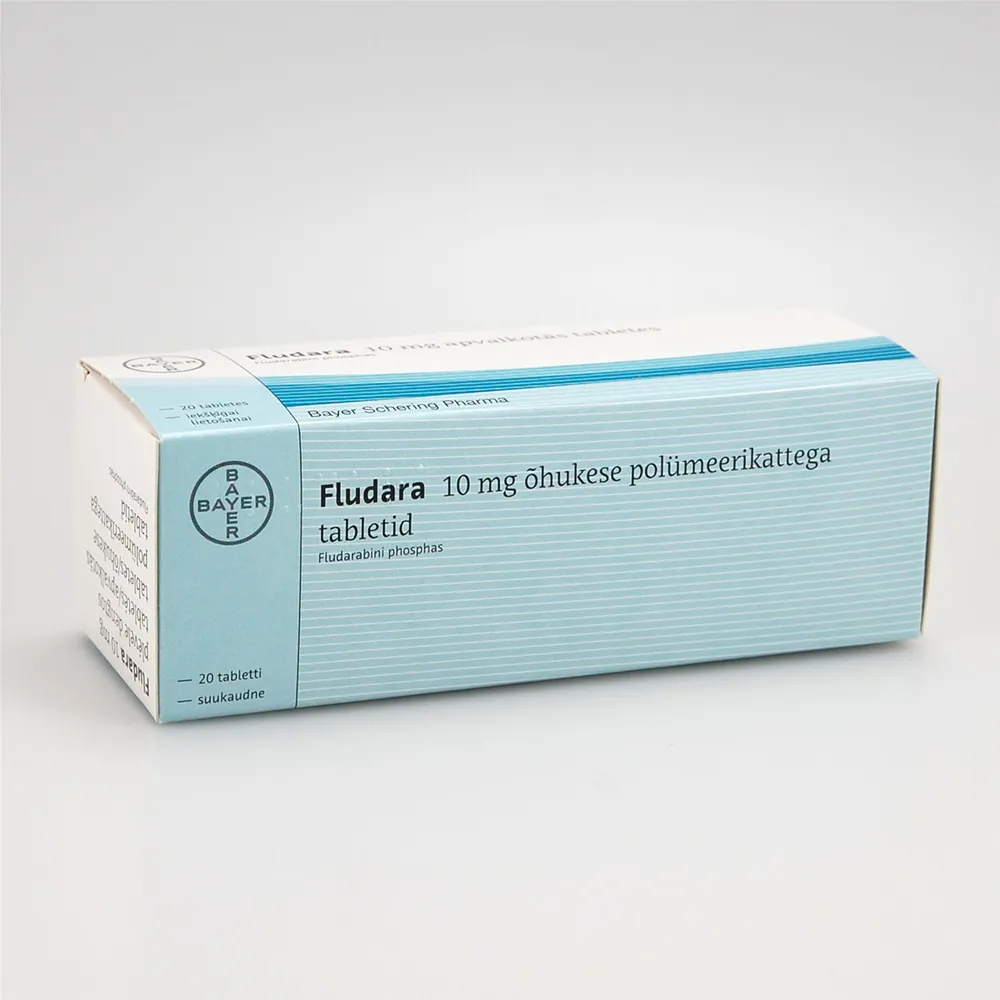
Table of Contents
Package leaflet: Information for the user
Fludara, 10 mg, coated tablets
Fludarabini phosphas
Please read carefully the entire leaflet before use, as it contains
important information for the patient.
- Keep this leaflet, so that you can read it again if necessary.
- If you have any questions, please consult your doctor or pharmacist.
- This medicine has been prescribed for a specific individual. Do not pass it on to others. The medicine may harm another person, even if their symptoms are the same.
- If you experience any adverse effects, including any not listed in this leaflet, tell your doctor or pharmacist. See section 4.
Table of contents of the leaflet
- What Fludara is and what it is used for
- Important information before taking Fludara
- How to take Fludara
- Possible side effects
- How to store Fludara
- Contents of the pack and other information
1. What Fludara is and what it is used for
Fludara is used in the treatment of chronic lymphocytic leukaemia (CLL). This is a type of cancer affecting white blood cells called lymphocytes. In this disease, too many abnormal lymphocytes – immature or not functioning properly – are produced, which are unable to perform the body's normal defence functions. If the number of abnormal white blood cells is too high, they displace healthy blood cells from the bone marrow, where blood cells are normally produced. An insufficient number of healthy white blood cells may lead to infections, anaemia, bruising, excessive bleeding, or even organ failure.
All cells in the body, both normal and cancerous, divide and produce new cells identical to themselves. To do this, the genetic material (DNA) of each cell must be copied and reproduced. The mechanism of action of Fludara is to inhibit the formation of new DNA. As a result, after uptake of Fludara by cancer cells, the production of new cancer cells is blocked.
Indications
Fludara is indicated for initial treatment of patients with B-cell chronic lymphocytic leukaemia (CLL), and in patients with B-cell chronic lymphocytic leukaemia (CLL) who have not responded to or have progressed during or after at least one standard treatment regimen containing an alkylating agent.
2. Important information before taking Fludara
When not to take Fludara
- if you are allergic to the active substance or to any of the other ingredients of this medicine (listed in section 6);
- if you are pregnant or breastfeeding;
- if you have severe kidney problems, significant renal impairment (creatinine clearance < 30 ml/min);
- if you have a low number of red blood cells due to anaemia (uncontrolled haemolytic anaemia). Your doctor will inform you about this condition. Before starting treatment, you should inform your doctor if you believe any of the above contraindications apply to you.
Warnings and precautions
Before starting treatment with Fludara, discuss this with your doctor.
- Fludara should be used at a reduced dose in patients with kidney impairment;
- particular caution is required when treating patients with signs of liver damage or in poor general condition;
- men and women of reproductive age should use an effective method of contraception during treatment and for at least 6 months after treatment ends;
- vaccination needs should be discussed with your treating doctor, as vaccines containing live organisms should not be administered during or after treatment with Fludara;
- if blood transfusion or bone marrow biopsy is required, inform your doctor that you are currently undergoing or have recently completed treatment with Fludara;
- if you have skin cancer, your skin condition may worsen during or after treatment with Fludara. Inform your doctor if you notice any skin changes occurring during or after treatment with Fludara.
Inform your doctor if you notice any new onset of bruising, severe bleeding from cuts, or increased susceptibility to infections.
In such cases, the number of normal blood cells may have decreased, and regular monitoring of blood counts will therefore be necessary. In very rare cases, death due to reduced red blood cell count has occurred.
Inform your doctor if you experience headache, nausea and vomiting, seizures, visual disturbances or loss of vision, optic neuritis, disorientation, drowsiness, agitation, limb paralysis, increased muscle tension, or urinary incontinence.
These symptoms may indicate life-threatening complications and require close medical monitoring.
Nausea and vomiting have been observed more frequently with oral administration of Fludara than with intravenous administration. If these symptoms constitute a serious clinical problem, intravenous administration of the drug is recommended.
Fludara must not be taken during pregnancy, except on explicit medical advice.
Women must not become pregnant during treatment with Fludara and must use an effective method of contraception during treatment with Fludara and for 6 months after treatment ends, as Fludara may harm the unborn child.
If you become pregnant during treatment, inform your doctor immediately. Your doctor will decide together with you whether treatment with Fludara should be continued.
Men must use an effective method of contraception and should be advised not to father a child during treatment with Fludara and for at least 3 months after treatment ends. Before starting treatment, men should seek advice regarding sperm cryopreservation, as Fludara may affect fertility.
Breastfeeding must not be undertaken during treatment with Fludara.
Children
The safety and efficacy of Fludara in children have not been established.
Fludara with other medicines
Tell your doctor or pharmacist about all medicines you are currently taking, have recently taken, or plan to take. Ask your doctor for advice before taking any new medicine.
Do not take Fludara together with pentostatin (deoxycoformycin), as this may lead to severe lung disease.
Some medicines, such as dipyridamole, may reduce the effectiveness of Fludara.
If you have any doubts about taking other medicines together with Fludara, consult your doctor or pharmacist before starting treatment.
Fludara in elderly patients
Caution should be exercised when administering this medicine to patients over 75 years of age, due to insufficient data on its use in elderly individuals.
Pregnancy and breastfeeding
Pregnancy
Women must not become pregnant during treatment with Fludara, as animal studies and very limited human experience have shown a possible risk of fetal abnormalities, as well as premature loss of pregnancy or premature delivery. If you become pregnant during treatment, inform your doctor immediately. Your doctor will decide together with you whether treatment with Fludara should be continued.
Breastfeeding
Breastfeeding must not be undertaken during treatment with Fludara.
Fertility in men and women
Women must use an effective method of contraception during treatment with Fludara and for 6 months after treatment ends, as Fludara may harm the unborn child.
Men must use an effective method of contraception and should be advised not to father a child during treatment with Fludara and for at least 3 months after treatment ends. Before starting treatment, men should seek advice regarding sperm cryopreservation, as Fludara may affect fertility.
Both men and women who plan to have children after treatment are advised to consult their doctor before starting treatment with Fludara.
Driving and operating machinery
Some patients treated with Fludara have reported fatigue, weakness, visual disturbances, disorientation, agitation, or seizures. Therefore, do not drive or operate machinery until you are certain that you do not experience such symptoms. Reaction speed may be particularly impaired due to lack of sleep, individual sensitivity to the medicine, and dosage.
Fludara contains lactose
Fludara Oral contains lactose (a type of sugar). If you have been previously diagnosed with intolerance to certain sugars, you should contact your doctor before taking this medicine.
Fludara contains sodium
The medicine contains less than 1 mmol (23 mg) of sodium per tablet; therefore, the medicine is considered "sodium-free".
3. How to use Fludara
This medicine should always be taken exactly as prescribed by your doctor. In case of any doubts,
please consult your doctor or pharmacist.
How to take Fludara tablets
Swallow the whole tablet with water. Do not break or chew the tablets. Fludara may be taken on an empty stomach or with food.
How many tablets to take
The dose you should take depends on body surface area. This is expressed in square metres
(m²) and is determined in practice by your doctor based on your height and body weight.
The recommended dose is 40 mg per square metre of body surface area. It should be taken once daily for
5 consecutive days, in cycles repeated every 28 days. The exact number of tablets to be taken by the patient is
calculated by the doctor.
How long to take the medicine
The dose calculated by your doctor should be taken once daily for 5 consecutive days. Your doctor
will inform you how many tablets to take once daily.
This 5-day treatment cycle will be repeated every 28 days, until your doctor decides that the best treatment outcome has been achieved (complete or partial remission, usually after 6 cycles).
The duration of treatment depends on its effectiveness and on your tolerance to Fludara. If adverse reactions occur, your doctor may reduce the dose or extend the intervals between treatment cycles.
Patients with impaired kidney or liver function
In patients with impaired kidney function, the dose of Fludara should be individually adjusted. If creatinine clearance is 30–70 ml/min, the dose should be reduced by 50%, and careful haematological monitoring must be performed to assess toxic effects.
Fludara is contraindicated in cases where creatinine clearance is < 30 ml/min.
There are no available data on the use of Fludara in patients with impaired liver function. In this patient group, the medicine should be used with caution and only when the expected benefits outweigh the potential risks of treatment.
Taking more Fludara than prescribed
You should inform your doctor immediately if you have taken more tablets than prescribed.
After administration of high doses, headache, nausea, vomiting, seizures, visual disturbances including loss of vision, optic apparatus disorders and focal neurological deficits have been observed. Additionally, the following may occur: optic neuritis, intraocular inflammation of the optic nerve, disorientation, drowsiness, agitation, limb paresis, increased muscle tone and urinary incontinence, irreversible changes in the central nervous system which may lead to delayed vision loss (not immediately after administration), coma and death. High doses also cause severe thrombocytopenia and neutropenia due to bone marrow suppression. There is no known specific antidote in case of overdose.
If you have taken more tablets than your doctor prescribed, seek medical help immediately: contact your doctor or go to the nearest hospital. Always bring the medicine container with the labelled packaging, regardless of whether any tablets remain inside.
If you miss a dose of Fludara
Inform your doctor as soon as possible if you might have missed a dose or if you vomit after swallowing a tablet. Your doctor will advise you to take the medicine at a consistent time each day.
Do not take a double dose to make up for a missed tablet.
Stopping Fludara treatment
Do not stop taking Fludara without consulting your doctor.
If adverse effects become too severe, you and your doctor may decide to discontinue treatment with Fludara.
If you have any further questions about the use of this medicine, consult your doctor or pharmacist.
4. Possible adverse reactions
Like all medicines, this medicine can cause adverse reactions, although not everyone will experience them.
Based on post-marketing experience with Fludara, the most commonly occurring adverse reactions include: myelosuppression, i.e. reduced number of bone marrow cells (neutropenia, i.e. reduced number of white blood cells, thrombocytopenia, i.e. reduced number of platelets, and anaemia), infections including pneumonia, cough, fever, feeling of fatigue, weakness, nausea, vomiting and diarrhoea. Other commonly observed symptoms are: chills, swelling, malaise, peripheral neuropathy, vision disorders, loss of appetite, mucositis and skin rashes. Severe opportunistic infections have occurred in patients treated with Fludara. Fatal cases due to severe adverse reactions have been reported.
The possible adverse reactions listed below are categorized according to their frequency of occurrence. Rare adverse reactions are primarily based on experience obtained after the medicine was placed on the market.
Very common (occurring in more than 1 in 10 patients):
- infections (some severe);
- infections due to weakened immune system (opportunistic infections), e.g. herpes virus, Epstein-Barr virus, progressive multifocal leukoencephalopathy (neurological disorders);
- pneumonia with possible symptoms such as difficulty in breathing and (or) cough with or without fever;
- reduced number of platelets (thrombocytopenia) with petechiae and bleeding;
- reduced number of white blood cells (neutropenia);
- reduced number of red blood cells (anaemia);
- cough;
- vomiting, diarrhoea, nausea;
- fever;
- feeling of fatigue;
- weakness.
Common (occurring in less than 1 in 10 patients):
- other blood cancers (myelodysplastic syndrome, acute myeloid leukaemia); most patients with these symptoms had previously, concurrently or subsequently been treated with anticancer medicines (alkylating agents, topoisomerase inhibitors) or radiotherapy;
- suppression of bone marrow function (myelosuppression);
- significant loss of appetite leading to weight loss;
- numbness or weakness of limbs (peripheral neuropathy);
- vision disorders;
- inflammation of the mouth;
- skin rash;
- oedema due to excessive fluid accumulation;
- mucositis;
- chills;
- general malaise.
Uncommon (occurring in less than 1 in 100 patients):
- autoimmune disorders, involving spontaneous destruction of the body's own cells and tissues, including: autoimmune haemolytic anaemia, thrombocytopenic purpura, pemphigus, Evans syndrome (a condition within the group of anaemias), acquired haemophilia (a blood coagulation disorder);
- tumour lysis syndrome, including: kidney damage, increased blood potassium levels, metabolic acidosis, presence of blood in urine, presence of crystals in urine, increased blood uric acid levels, increased blood phosphate levels, decreased blood calcium levels;
- gastrointestinal bleeding;
- disorientation (confusion);
- toxic effects on the lungs, pulmonary fibrosis, pneumonia, dyspnoea;
- changes in liver or pancreatic enzyme activity.
Rare (occurring in less than 1 in 1000 patients):
- lymphatic system disorders due to viral infection (lymphoproliferative disorder associated with EBV virus);
- coma;
- seizures;
- agitation;
- blindness;
- inflammation or damage of the optic nerve;
- heart failure;
- irregular heart rhythm (arrhythmia);
- skin cancer;
- skin and (or) mucosal reactions associated with redness, inflammation, blistering or tissue breakdown (Lyell's syndrome, Stevens-Johnson syndrome).
If any adverse reactions occur, including any possible adverse reactions not listed in this leaflet, inform your doctor or pharmacist.
Reporting suspected adverse reactions
If any adverse reactions occur, including any adverse reactions not listed in this leaflet, inform your doctor, pharmacist or nurse. Adverse reactions can be reported directly to the Department of Monitoring Adverse Drug Reactions, Office for Registration of Medicinal Products, Medical Devices and Biocidal Products
Al. Jerozolimskie 181 C, 02 - 222 Warsaw
Tel.: + 48 22 49 21 301, Fax: + 48 22 49 21 309, Website: https://smz.ezdrowie.gov.pl
Adverse reactions can also be reported to the marketing authorisation holder or its representative in Poland.
Reporting of adverse reactions allows further collection of information on the safety of the medicine.
5. How to store Fludara
Keep this medicine out of sight and reach of children.
Do not use this medicine after the expiry date stated on the container cap or blister foil after: EXP (expiry date). The expiry date refers to the last day of the stated month.
Do not store above 25°C. Do not store in the refrigerator. Store in the original packaging.
Medicines must not be disposed of via wastewater or household waste. Ask your pharmacist how to dispose of medicines no longer required. Such measures help protect the environment.
6. Contents of the pack and other information
What Fludara contains
- The active substance is fludarabine phosphate. Each coated tablet of Fludara contains 10 mg of fludarabine phosphate.
- The other ingredients are:
- microcrystalline cellulose, lactose monohydrate, colloidal silicon dioxide, sodium croscarmellose, magnesium stearate;
- coating ingredients: hypromellose, talc, titanium dioxide (E171), yellow iron oxide (E172), red iron oxide (E172).
What Fludara looks like and contents of the pack
Fludara is salmon-pink, coated, capsule-shaped tablets, marked on one side with the letters "LN" within a hexagon.
The immediate packaging consists of blisters containing 5 coated tablets each. To protect against access by children, the blisters are placed in a container with a child-resistant cap.
Fludara is available in pack sizes containing:
- 15 tablets in 3 blisters placed in a child-resistant container.
- 20 tablets in 4 blisters placed in a child-resistant container.
The container is placed in a cardboard box.
Marketing Authorisation Holder
Sanofi B.V.
Paasheuvelweg 25
1105 BP Amsterdam
The Netherlands
Manufacturer
SANOFI WINTHROP INDUSTRIE
30-36, avenue Gustave Eiffel
37100 Tours
France
For further information, please contact the local representative of the Marketing Authorisation Holder:
Sanofi Sp. z o.o.
ul. Marcina Kasprzaka 6
01-211 Warszawa
Tel.: 022 280 00 00