Fluanxol
Poland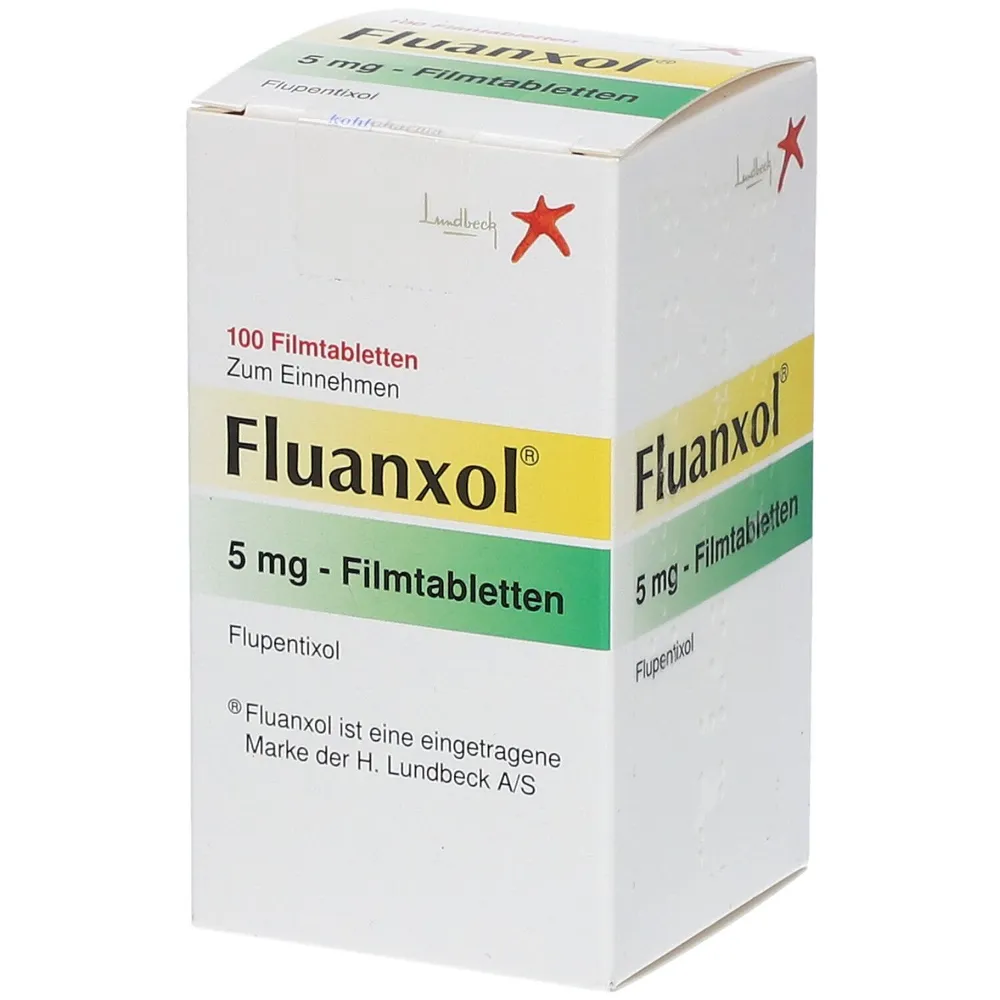
Table of Contents
Patient Information Leaflet
Fluanxol, 0.5 mg, coated tablets
Flupentixolum
Please read this leaflet carefully before using the medicine, as it contains important information for the patient.
- Keep this leaflet for future reference.
- If you have any doubts, consult your doctor or pharmacist.
- This medicine has been prescribed for a specific individual. Do not pass it on to others. The medicine may harm someone else, even if their symptoms are the same.
- If you experience any adverse reactions, including any not listed in this leaflet, inform your doctor or pharmacist. See section 4.
Table of contents:
- What Fluanxol is and what it is used for
- Important information before taking Fluanxol
- How to take Fluanxol
- Possible side effects
- How to store Fluanxol
- Contents of the pack and other information
1. What Fluanxol is and what it is used for
How Fluanxol works
Fluanxol contains the active substance flupentixol. Fluanxol belongs to a group of medicines that relieve symptoms of low mood.
When Fluanxol is used
Fluanxol is used in psychotic disorders without depressive symptoms.
Fluanxol is also used temporarily in depressive disorders other than those occurring during psychosis.
2. Information before using Fluanxol
When not to use Fluanxol
- if the patient is allergic (hypersensitive) to flupentixol or any of the other ingredients of this medicine (listed in section 6);
- if the patient has reduced level of consciousness regardless of the cause (e.g. alcohol, barbiturates or opiates intoxication), circulatory collapse, or coma. Fluanxol must not be used in patients with severe depression, for example in patients requiring hospital treatment or patients undergoing electroconvulsive therapy.
Warnings and precautions
Before starting treatment with Fluanxol, discuss the following with your doctor or pharmacist:
- if the patient has impaired liver function;
- if the patient has had seizures in the past;
- if the patient has diabetes (adjustment of antidiabetic treatment may be required);
- if the patient has organic brain syndrome (a condition that may develop as a result of alcohol or organic solvents intoxication);
- if the patient has risk factors predisposing to stroke (e.g. smoking, hypertension);
- if the patient has hypokalaemia or hypomagnesaemia (too low potassium or magnesium levels in blood) or genetic predisposition to such abnormalities;
- if the patient has had cardiovascular disorders;
- if the patient is taking other antipsychotic medicines;
- if the patient is more agitated or shows increased activity, as these medicines may worsen such symptoms;
- if the patient or someone in their family has had venous thrombosis, because use of medicines like this one has been associated with development of blood clots.
Children and adolescents
Fluanxol is not recommended for this patient group.
Suicidal thoughts and worsening of depression or anxiety disorder
Patients with depression or anxiety disorders may sometimes experience thoughts about self-harm or suicide. These symptoms or behaviours may worsen at the beginning of treatment with antidepressants, as these medicines usually start to work only after about 2 weeks, sometimes later.
These symptoms are more likely in:
- patients who previously had thoughts of self-harm or suicide;
- young adult patients. Clinical trial data show an increased risk of suicidal behaviour in people under 25 years of age with psychiatric disorders who were treated with antidepressants. If the patient experiences thoughts about self-harm or suicide, they should contact their doctor immediately or go to hospital.
It may be helpful to inform relatives or friends about the depression or anxiety disorder and ask them to read this leaflet. The patient may ask them to inform him/her if they notice that depression or the medicine is worsening or if worrying changes in behaviour occur.
Other medicines and Fluanxol
Tell your doctor or pharmacist about all medicines the patient is currently taking, has recently taken, or plans to take.
Inform your treating doctor if the patient is taking any of the following medicines:
- tricyclic antidepressants;
- guanethidine and similar medicines (lowering blood pressure);
- barbiturates (medicines causing drowsiness);
- medicines used in epilepsy treatment;
- levodopa and similar medicines (used in the treatment of Parkinson's disease);
- metoclopramide (a medicine used for gastrointestinal disorders);
- piperazine (an anthelmintic medicine acting against pinworms and roundworms);
- medicines affecting water and electrolyte balance (causing low potassium or magnesium levels in blood);
- medicines known to increase blood levels of Fluanxol.
The following medicines should not be taken at the same time as Fluanxol:
- medicines affecting heart rhythm (quinidine, amiodarone, sotalol, dofetilide, erythromycin, terfenadine, astemizole, gatifloxacin, moxifloxacin, cisapride, lithium);
- other antipsychotic medicines.
Fluanxol with food, drink and alcohol
Fluanxol can be taken with or without food.
Fluanxol may enhance the sedative effect of alcohol, causing drowsiness. Drinking alcoholic beverages is not recommended during treatment with Fluanxol.
Pregnancy, breastfeeding and fertility
If the patient is pregnant or breastfeeding, suspects she may be pregnant, or is planning to have a baby, she should consult her doctor or pharmacist before using this medicine.
Pregnancy
During pregnancy, breastfeeding, or if pregnancy is suspected or planned, consult your doctor before using this medicine.
Fluanxol should not be used during pregnancy unless clearly necessary.
Newborn babies of mothers who took Fluanxol during the third trimester of pregnancy (last three months of pregnancy) may experience the following symptoms: tremors, muscle stiffness and/or weakness, drowsiness, agitation, breathing difficulties, feeding problems. If such symptoms occur in a newborn, contact a doctor.
Breastfeeding
Women who are breastfeeding should consult their doctor. Fluanxol should not be used by breastfeeding women, as small amounts of the medicine may be excreted in breast milk.
Fertility
Animal studies have shown that Fluanxol affects fertility. The patient should consult their doctor for advice.
Driving and operating machinery
There is a risk of drowsiness and dizziness after taking Fluanxol. In such cases, the patient should not drive, operate machinery, or use tools until these symptoms have resolved.
Fluanxol contains lactose.
If the patient has ever been diagnosed with an intolerance to certain sugars, they should consult their doctor before starting treatment with this medicine.
3. How to use Fluanxol
Fluanxol should always be used as directed by your doctor. If you have any doubts, consult your doctor or pharmacist.
Recommended dosage:
Adults
The usual starting dose is 1 mg per day. After one week, your doctor may increase this dose to 2 mg per day. The maximum dose is 3 mg per day.
Elderly patients (over 65 years of age)
The usual starting dose is 0.5 mg per day. After one week, your doctor may increase this dose to 1 mg per day. The maximum dose is 1.5 mg per day.
Use in children and adolescents
Fluanxol is not recommended for use in children and adolescents.
If you feel that the effect of Fluanxol is too strong or too weak, consult your doctor.
Method of administration
Swallow the tablets whole with water. Do not chew.
Fluanxol is usually administered once daily in the morning as a single daily dose.
Doses exceeding 2 mg per day in adults (1 mg in elderly patients) should be divided into two doses, given in the morning and in the afternoon.
Duration of treatment
Response to Fluanxol treatment is usually rapid. If there is no improvement after approximately one week of treatment at the maximum dose, your doctor may decide to discontinue therapy.
The duration of treatment is determined by your doctor. Continue treatment for as long as your doctor recommends.
Do not change the dose of Fluanxol without consulting your doctor.
Taking more Fluanxol than recommended
If you suspect that an excessive number of Fluanxol tablets have been taken, seek immediate medical attention from your doctor or the nearest hospital emergency department, even if you do not experience any symptoms or signs of poisoning. Bring the Fluanxol packaging with you.
Symptoms of overdose may include:
- drowsiness;
- loss of consciousness;
- movement disorders or muscle rigidity;
- seizures;
- low blood pressure, weak pulse, rapid heartbeat, pallor, restlessness;
- elevated or reduced body temperature;
- changes in heart rate, including irregular or slowed heartbeat, particularly when Fluanxol has been taken in excessively high doses in combination with medicines known to affect the heart.
Missed dose of Fluanxol
Take the next dose at your usual time.
Do not take a double dose to make up for a missed dose.
Stopping Fluanxol treatment
Do not stop taking Fluanxol even if you feel better, unless your doctor specifically advises you to do so.
If you have any questions about how to use Fluanxol, consult your doctor or pharmacist.
4. Possible adverse effects
Like any medicine, Fluanxol may cause adverse effects, although not everyone experiences them.
If any of the symptoms described below occur, contact your doctor or go to hospital immediately:
Uncommon adverse effects (occurring in 1 to 1000 and up to 1 in 100 patients):
- involuntary rhythmic movements of the lips and tongue; this may be a symptom of a condition called tardive dyskinesia.
Very rare adverse effects (occurring in less than 1 in 10,000 patients):
- high fever, unusual muscle stiffness and disturbances of consciousness, accompanied by sweating and rapid heartbeat; these may be symptoms of a rare condition called neuroleptic malignant syndrome, reported in association with the use of various antipsychotic drugs;
- yellowing of the skin and whites of the eyes (jaundice), which may indicate liver damage;
- blood clots in the veins, especially in the legs (symptoms include swelling, pain and redness of the skin in the legs), which may travel through the bloodstream to the lungs, causing chest pain and breathing difficulties.
The adverse effects listed below are most pronounced at the beginning of treatment, and most of them diminish with continued treatment:
Very common adverse effects (occurring in more than 1 in 10 patients):
- drowsiness, inability to sit or stand still for a prolonged period (akathisia), involuntary movements (hyperkinesia), slowed or impaired movements (hypokinesia);
- dryness of the mouth.
Common adverse effects (occurring in more than 1 and less than 10 in 100 patients):
- increased heart rate (tachycardia), sensation of rapid, strong or irregular heartbeat (palpitations);
- tremor, twisting or repetitive movements or unusual body posture due to sustained muscle contraction (dystonia), dizziness, headache;
- disturbances in visual acuity (accommodation disorders), abnormal vision;
- shallow and rapid breathing (dyspnea);
- increased salivation (sialorrhea), constipation, vomiting, gastrointestinal problems or discomfort in the upper abdomen (dyspepsia), diarrhea;
- disturbances in urination, urinary retention;
- excessive sweating, itching (pruritus);
- muscle pain;
- increased appetite, weight gain;
- fatigue, feeling of weakness (asthenia);
- insomnia, depression, nervousness, agitation, reduced sexual drive (decreased libido).
Uncommon adverse effects (occurring in more than 1 in 1000 and less than 1 in 100 patients):
- uncoordinated movements (dyskinesia), parkinsonism, speech disorders, seizures;
- an attack of forced upward gaze with rotation of the eyeballs;
- abdominal pain, nausea, bloating with flatulence; rash, skin reactions due to photosensitivity (photosensitivity), skin inflammation;
- muscle stiffness;
- decreased appetite;
- low blood pressure (hypotension), hot flushes;
- abnormal liver function test results;
- disturbances in ejaculation, erectile dysfunction;
- confusion.
Rare adverse effects (occurring in more than 1 in 10,000 and less than 1 in 1000 patients):
- low platelet count (thrombocytopenia), low neutrophil granulocyte count (neutropenia), reduced white blood cell count (leukopenia), absence of granulocytes in the blood (agranulocytosis);
- increased prolactin levels in the blood (hyperprolactinemia);
- increased blood glucose levels (hyperglycemia), impaired glucose tolerance;
- overreaction (hypersensitivity), acute systemic and severe allergic reaction (anaphylactic reaction);
- development of breast tissue in men (gynecomastia), excessive milk production (galactorrhea);
- absence of menstruation;
- changes in ECG (prolongation of QT interval);
- irregular heartbeat (ventricular arrhythmias; in rare cases, irregular heartbeat (arrhythmia) may lead to sudden death). In elderly patients with dementia treated with antipsychotic drugs, a slightly higher number of deaths has been observed compared to patients not receiving antipsychotic drugs.
If any of the adverse effects worsen or if any adverse effects not listed in this leaflet occur, inform your doctor or pharmacist.
Reporting of adverse effects
If any adverse effects occur, including those not listed in this leaflet, tell your doctor or pharmacist. Adverse effects can be reported directly to:
Department for Monitoring of Adverse Drug Reactions, Office for Registration of Medicinal Products, Medical Devices and Biocidal Products
Al. Jerozolimskie 181 C
PL-02 222 Warsaw
Tel.: + 48 22 49 21 301
Fax: + 48 22 49 21 309
e-mail: [email protected]
Reporting adverse effects helps to provide more information on the safety of the medicine.
5. How to store the medicine Fluanxol
Keep the medicine out of the sight and reach of children.
Do not use this medicine after the expiry date stated on the label. The expiry date refers to the last day of the specified month.
No special storage conditions required.
Medicines must not be disposed of via wastewater or household waste. Ask your pharmacist how to dispose of medicines no longer required. Such practices help protect the environment.
6. Contents of the pack and other information
What Fluanxol contains
The active substance is flupentixol.
Each coated tablet contains 0.5 mg flupentixol in the form of flupentixol dihydrochloride.
Other ingredients are:
Tablet core: betadex, lactose monohydrate, maize starch, hydroxypropylcellulose, microcrystalline cellulose, sodium croscarmellose, talc, hydrogenated vegetable oil, magnesium stearate.
Coating of the coated tablet: coating layer of the film: Opadry II 85F38027 Yellow: polyvinyl alcohol partially hydrolyzed, polyethylene glycol/PEG 3350, talc, titanium dioxide (E171), yellow iron oxide (E172); sealing layer of the film: polyethylene glycol/PEG 6000.
What Fluanxol looks like and contents of the pack
Fluanxol is available as 0.5 mg coated tablets.
The 0.5 mg coated tablets are round, biconvex, yellow, with the imprint "FD".
The pack contains 50 or 100 coated tablets in blisters or in a high-density polyethylene (HDPE) container, placed in a cardboard box.
Not all pack sizes may be marketed.
Marketing Authorisation Holder and Manufacturer
H. Lundbeck A/S
Ottiliavej 9,
DK-2500 Valby
Denmark
For further information, please contact the Marketing Authorisation Holder.
Swixx Biopharma Sp. z o.o.
ul. Prosta 51
00-838 Warsaw, Poland
Tel. +48 22 4600 720