Fervex lemon
Poland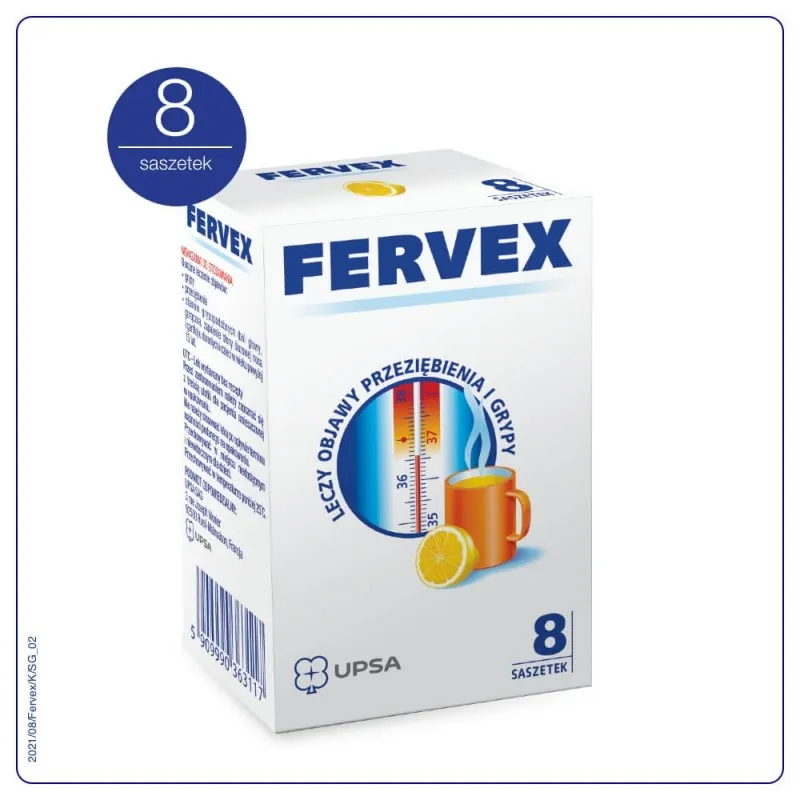
Table of Contents
Package leaflet: Information for the patient
Fervex lemon, 500 mg + 200 mg + 25 mg,
effervescent granules for oral solution
Paracetamolum + Acidum ascorbicum + Pheniramini maleas
Please read the entire leaflet carefully before using this medicine, as it contains important information for the patient.
This medicine should always be taken exactly as described in this patient leaflet or as directed by a doctor, pharmacist, or nurse.
- Keep this leaflet, so that you can read it again if necessary.
- If you need advice or further information, please consult your pharmacist.
- If you experience any adverse reactions, including any not listed in this leaflet, inform your doctor, pharmacist, or nurse. See section 4.
- If there is no improvement after 5 days, or if symptoms worsen, or if fever persists beyond 3 days, consult a doctor.
Table of contents
- What Fervex lemon is and what it is used for
- Important information before taking Fervex lemon
- How to take Fervex lemon
- Possible side effects
- How to store Fervex lemon
- Contents of the pack and other information
1. What Fervex lemon is and what it is used for
Fervex lemon is a combination medicine. Paracetamol has analgesic and antipyretic effects.
Pheniramine maleate reduces congestion and swelling of mucous membranes, thereby clearing nasal passages, suppressing sneezing reflex, and reducing eye tearing. Ascorbic acid replenishes vitamin C deficiency in the body.
Indications
Fervex lemon is indicated for the symptomatic relief of flu, colds, and flu-like conditions (headache, fever, nasal and throat mucous membrane inflammation) in adults and adolescents over 15 years of age.
In case of bacterial infection, antibiotic treatment may be required.
If there is no improvement after 5 days, or if symptoms worsen, consult a doctor.
2. Important information before using Fervex cytrynowy
When not to use Fervex cytrynowy
- if the patient is allergic to paracetamol, pheniramine maleate, ascorbic acid, or any of the other ingredients of this medicine (listed in section 6),
- if the patient has severe liver or kidney failure,
- if the patient has glaucoma (increased pressure in the eye) with narrow filtration angle,
- if the patient has benign prostatic hyperplasia with difficulty in urination,
- in children and adolescents under 15 years of age.
Warnings and precautions
Before starting treatment with Fervex cytrynowy, consult a doctor, pharmacist, or nurse.
If symptoms persist for more than 5 days or fever lasts longer than 3 days, the patient should consult a doctor.
Do not use the medicine for longer than 5 days without consulting a doctor.
The risk of developing dependence, mainly psychological, is mainly observed when higher than recommended doses are used or during prolonged treatment.
The medicine contains paracetamol and pheniramine maleate.
Check whether other medicines being taken (including those prescribed or available without prescription) contain paracetamol, pheniramine maleate, or other antihistamines. These medicines should not be used simultaneously to avoid the risk of overdose.
In adults and adolescents with body weight above 50 kg, the TOTAL DAILY DOSE OF PARACETAMOL (including all other medicines containing paracetamol) SHOULD NOT EXCEED 4000 MILLIGRAMS PER DAY.
Related to paracetamol
Inform your doctor or pharmacist before using the medicine if:
- body weight is below 50 kg,
- mild or moderate liver failure,
- kidney function disorders,
- chronic alcoholism,
- chronic malnutrition (low glutathione reserves in the liver),
- dehydration.
In case of acute viral hepatitis, treatment should be discontinued.
Alcohol consumption is not recommended during treatment.
Paracetamol may cause severe skin reactions. Treatment should be stopped immediately and the patient should contact a doctor if skin rash or other allergic symptoms occur.
During treatment with Fervex cytrynowy, immediately inform the doctor if the patient has severe conditions, including severe kidney disorders or sepsis (when bacteria and their toxins circulate in the blood, leading to organ damage), malnutrition, chronic alcoholism, or if the patient is also taking flucloxacillin (an antibiotic). In these cases, patients have been reported to develop a serious condition called metabolic acidosis (abnormality in blood and body fluids) when taking paracetamol regularly for a prolonged period or when taking paracetamol together with flucloxacillin. Symptoms of metabolic acidosis may include: severe breathing difficulties, including rapid deep breathing, drowsiness, nausea, and vomiting.
Related to pheniramine maleate
During treatment, avoid consuming alcoholic beverages and using sodium hydroxymethylglycinate, as they enhance the sedative effect of antihistamines.
Related to ascorbic acid
Use with caution in patients with iron metabolism disorders and glucose-6-phosphate dehydrogenase deficiency.
Children and adolescents
The medicine may be used in adolescents aged over 15 years (with body weight above 50 kg).
Fervex cytrynowy and other medicines
Tell your doctor or pharmacist about all medicines the patient is currently taking or has recently taken, as well as any medicines the patient plans to take.
Due to the presence of paracetamol
Contact your doctor if the patient is taking oral anticoagulants or drugs that slow blood clotting (vitamin K antagonists). Fervex cytrynowy, when taken in high doses, may enhance the effect of anticoagulant drugs. If necessary, the doctor will adjust the dose of the anticoagulant.
Inform your doctor or pharmacist if the patient is taking flucloxacillin (an antibiotic) due to the serious risk of blood and body fluid disorders (called metabolic acidosis), which require urgent treatment (see section 2).
Rifampicin, antiepileptic drugs, barbiturate sedatives, and other drugs inducing microsomal enzymes, when used together with paracetamol, increase the risk of liver damage.
Concurrent use of high doses of paracetamol and non-steroidal anti-inflammatory drugs (NSAIDs) may increase the risk of kidney function disorders.
Paracetamol used together with MAO inhibitors may cause a state of excitation and high fever.
Inform your doctor about using this medicine if the doctor orders tests for uric acid or blood glucose.
Due to the presence of pheniramine maleate
Avoid consuming alcoholic beverages or using medicines containing alcohol. Alcohol enhances the sedative effect of most antihistamines – H receptor antagonists. Changes in attention and concentration ability may impair the ability to drive and operate machinery.
Contact your doctor if the patient is taking sodium hydroxymethylglycinate. It enhances the depressive effect on the central nervous system and causes changes in concentration ability, which may impair the ability to drive and operate machinery.
Use caution when using other sedative medicines: morphine derivatives (analgesics, antitussives), neuroleptics, barbiturates, benzodiazepines, non-benzodiazepine anxiolytics (e.g., meprobamate), hypnotics, sedative antidepressants (amitriptyline, doxepin, mianserin, mirtazapine, trimipramine), sedative H receptor-blocking antihistamines, centrally-acting antihypertensives, baclofen, and thalidomide. Increased central nervous system depression and associated changes in concentration ability may impair the ability to drive and operate machinery.
Use caution when using other drugs with anticholinergic (atropine-like) effects: tricyclic antidepressants similar to imipramine, most H receptor-blocking antihistamines, anticholinergic antiparkinsonian drugs, antispasmodic atropine-like drugs, disopyramide, phenothiazine derivative neuroleptics, clozapine. Cumulative anticholinergic side effects such as urinary retention, constipation, and dry mouth may occur.
Contact your doctor if the patient is taking cholinesterase inhibitors due to the risk of reduced efficacy resulting from the antagonistic action of pheniramine on acetylcholine receptors.
Contact your doctor if the patient is taking morphine-like drugs due to the significant risk of colonic akinesia with severe constipation.
Due to the presence of ascorbic acid
Ascorbic acid may reduce the effectiveness of warfarin and lower plasma levels of fluphenazine, and may decrease urine pH, which may affect the excretion of other concurrently administered drugs.
Using Fervex cytrynowy with food and drink
There are no contraindications.
Using Fervex cytrynowy with alcohol
Consuming alcoholic beverages or taking sedatives (especially barbiturates) enhances the sedative effect of antihistamines; therefore, simultaneous use should be avoided.
Particular risk of liver damage exists in patients who are fasting and regularly consume alcohol.
Pregnancy, breastfeeding, and fertility
If the patient is pregnant or breastfeeding, suspects she may be pregnant, or is planning to have a child, she should consult a doctor or pharmacist before using this medicine.
Pregnancy
Use of this medicine during pregnancy is not recommended.
Paracetamol may be used during pregnancy if necessary. In such cases, the lowest effective recommended dose should be administered for the shortest possible duration and as infrequently as possible.
Breastfeeding
Use of this medicine during breastfeeding is not recommended.
Paracetamol may be used during breastfeeding only with a doctor's approval and in individual cases. Caution should be exercised when using paracetamol during lactation.
There are insufficient available data to demonstrate the effect of paracetamol on fertility.
Driving and operating machinery
During treatment, especially at the beginning, drowsiness may occur, affecting the psycho-physical performance of individuals driving motor vehicles or operating machinery.
This effect is intensified by consumption of alcoholic beverages, use of medicines containing alcohol, or use of sedative medicines.
Fervex cytrynowy contains sucrose, glucose, fructose, and ethanol
The medicine contains 7.6 g of sucrose in each sachet. This should be taken into account in patients with diabetes.
If the patient has previously been diagnosed with intolerance to certain sugars, the patient should consult a doctor before taking the medicine.
The medicine contains 195 mg of glucose (as a component of maltodextrin) in each sachet. If the patient has previously been diagnosed with intolerance to certain sugars, the patient should consult a doctor before taking the medicine.
The medicine contains 5 mg of fructose (as a component of maltodextrin) in each sachet. The additive effect of simultaneously administered products containing fructose and food containing fructose should be taken into account.
The medicine contains 7 mg of alcohol (ethanol) in each sachet. The amount of alcohol in a sachet of this medicine is equivalent to a trace amount of beer or wine and will not cause any noticeable effects.
The medicine contains less than 1 mmol (23 mg) of sodium per sachet, meaning the medicine is considered "sodium-free".
3. How to use Fervex cytrynowy
This medicine should always be taken exactly as described in this patient leaflet or as advised by your doctor, pharmacist, or nurse. If in doubt, consult your doctor, pharmacist, or nurse.
Recommended dose:
Adults and adolescents over 15 years of age (with body weight above 50 kg):
One sachet 2 or 3 times daily (corresponding to 1500 mg paracetamol, 75 mg pheniramine maleate, and 600 mg vitamin C).
Intervals between doses should be at least 4 hours. Do not take more than 3 sachets per day.
Use the lowest effective dose. Do not exceed the recommended dose.
If symptoms persist, the patient should seek medical advice.
Patients with impaired renal function
For patients with impaired kidney function, the doctor will determine the dosing regimen and adjust the minimum interval between doses and reduce the maximum daily dose according to the following scheme:
| Creatinine clearance | Interval between doses | Maximum daily dose of paracetamol | |----------------------|------------------------|-----------------------------------| | CrCl > 50 ml/min | 4 hours | 4000 mg (4 g) | | CrCl 10–50 ml/min | 6 hours | 3000 mg (3 g) | | CrCl < 10 ml/min | 8 hours | 2000 mg (2 g) |
The maximum daily dose of paracetamol refers to all medications containing paracetamol taken simultaneously with Fervex cytrynowy.
Depending on creatinine clearance (as indicated above), the total daily paracetamol dose (including other paracetamol-containing medicines) should not exceed 2000–3000 mg/day.
Administration method
Oral administration. Dissolve the contents of one sachet in a glass of hot or cold water.
For treating influenza-like conditions, it is recommended to take the medicine dissolved in hot water, in the evening, as soon as possible after symptoms appear.
The prepared solution should not be stored for longer than three hours.
Duration of treatment
Do not use this medicine for longer than 5 days without consulting a doctor. If symptoms persist for more than 5 days or fever lasts longer than 3 days, the patient should consult a doctor.
Overdose of Fervex cytrynowy
In case of accidental ingestion or overdose, contact a doctor immediately for appropriate advice.
Overdose of pheniramine maleate may cause: seizures (especially in children), disturbances of consciousness, coma.
There is a particular risk of paracetamol poisoning in elderly individuals and young children (most commonly due to exceeding the recommended dose or accidental ingestion); such poisonings may lead to death.
Overdose may cause symptoms such as: nausea, vomiting, excessive sweating, drowsiness, and general weakness; the following day, upper abdominal discomfort, recurrence of nausea, and jaundice may occur.
Rare cases of acute pancreatitis have been observed.
Overdose of ascorbic acid may cause gastrointestinal disturbances (heartburn, diarrhea, abdominal pain). Doses of ascorbic acid exceeding 1 g/day may cause hemolysis in individuals with G6PD deficiency.
Missed dose of Fervex cytrynowy
Do not take a double dose to make up for a missed dose.
If you have any further questions about the use of this medicine, consult your doctor, pharmacist, or nurse.
4. Possible adverse effects
Like all medicines, this medicine can cause adverse effects, although they do not occur in everyone.
Related to paracetamol
Adverse effects occurring rarely (may affect less than 1 in 1,000 but more than 1 in 10,000 patients treated):
- anaphylactic reaction (including hypotension), anaphylactic shock, hypersensitivity reactions, angioedema,
- erythema, skin rash, urticaria. If any of these occur, this medicine and medicines with a similar composition must be permanently discontinued.
Adverse effects occurring very rarely (may affect no more than 1 in 10,000 patients):
- thrombocytopenia (reduced number of blood platelets), leukopenia (reduced number of white blood cells), neutropenia (reduced number of granulocytes),
- severe skin reactions: Stevens-Johnson syndrome, toxic epidermal necrolysis, acute generalized exanthematous pustulosis. If any of these occur, this medicine and other medicines with a similar composition must be permanently discontinued.
Frequency not known (cannot be estimated from available data):
- diarrhoea, abdominal pain,
- increased liver enzyme activity,
- purpura,
- serious condition that may cause blood acidification (so-called metabolic acidosis) in patients with severe disease taking paracetamol (see section 2). If any of the above symptoms occur, treatment with this medicine must be immediately discontinued. The medicine may only be re-administered after consultation with a physician.
Related to pheniramine maleate
Adverse effects of varying intensity, both dose-dependent and independent, may occur.
Nervous system disorders:
- sedation or drowsiness, more pronounced at the beginning of treatment,
- anticholinergic symptoms such as dryness of mucous membranes, constipation, accommodation disturbances, pupil dilation, palpitations, risk of urinary retention,
- orthostatic hypotension,
- impaired balance, dizziness, memory or concentration disturbances, more frequent in elderly patients,
- motor coordination disturbances, tremors,
- confusion, hallucinations,
- less frequently, symptoms of excitation: motor restlessness, nervousness, insomnia.
Skin and subcutaneous tissue disorders:
- erythema, pruritus, urticarial rash. If any of these occur, this medicine and medicines with a similar composition must be permanently discontinued.
- purpura. Occurrence of this symptom requires immediate discontinuation of the medicine. The medicine may only be re-administered after consultation with a physician.
Blood and lymphatic system disorders:
- leukopenia,
- neutropenia,
- thrombocytopenia,
- haemolytic anaemia.
Immune system disorders:
- oedema, less frequently angioedema (Quincke's oedema),
- anaphylactic shock. If any of these occur, this medicine and medicines with a similar composition must be permanently discontinued.
Reporting of adverse effects
If any adverse effects occur, including any adverse effects not listed in this leaflet, inform your doctor, pharmacist, or nurse. Adverse effects can be reported directly to the Department of Monitoring Adverse Drug Reactions of the Office for Registration of Medicinal Products, Medical Devices and Biocidal Products: Al. Jerozolimskie 181C, 02-222 Warsaw, tel.: +48 22 49 21 301, fax: +48 22 49 21 309, website: https://smz.ezdrowie.gov.pl
Adverse effects can also be reported to the marketing authorization holder.
Reporting adverse effects helps to gather more information on the safety of the medicine.
5. How to store Fervex cytrynowy
Keep this medicine out of sight and reach of children.
Store below 25°C.
Do not use this medicine after the expiry date stated on the packaging, after EXP.
The expiry date refers to the last day of the stated month.
Medicines must not be disposed of via wastewater or household waste. Ask your pharmacist how to dispose of medicines no longer required. This will help protect the environment.
6. Contents of the pack and other information
What Fervex cytrynowy contains
The active substances are: 500 mg paracetamol, 200 mg ascorbic acid, 25 mg
pheniramine maleate in each sachet.
The other ingredients are: sucrose, anhydrous citric acid, sodium saccharin, lemon-rum flavouring.
Composition of lemon-rum flavouring: maltodextrin, arabic gum, dextrose, silicon dioxide (E551), butylated hydroxyanisole (E320), sugar syrup, ethanol, potassium, sodium, Peru balsam, α-pinen, β-pinen, limonene, γ-terpinene, linalool, neral, α-terpineol, geranial.
What Fervex cytrynowy looks like and contents of the pack
A sachet made of three-layer foil (paper/Al/PE) containing a light beige granulate for oral solution, packed in a cardboard box.
The cardboard box contains 5, 8 or 12 sachets.
Not all pack sizes may be marketed.
Marketing Authorisation Holder
UPSA SAS
3 rue Joseph Monier
92500 Rueil-Malmaison, France
Manufacturer
UPSA SAS
979, Avenue des Pyrénées
47520 Le Passage, France
UPSA SAS
304, Avenue du Docteur Jean Bru
47000 Agen, France
For further information about this medicinal product, please contact the local representative of the Marketing Authorisation Holder:
MagnaPharm Poland sp. z o.o.
ul. Inflancka 4
00-189 Warszawa
tel.: + 48 22 570 27 00