Fenistil
Poland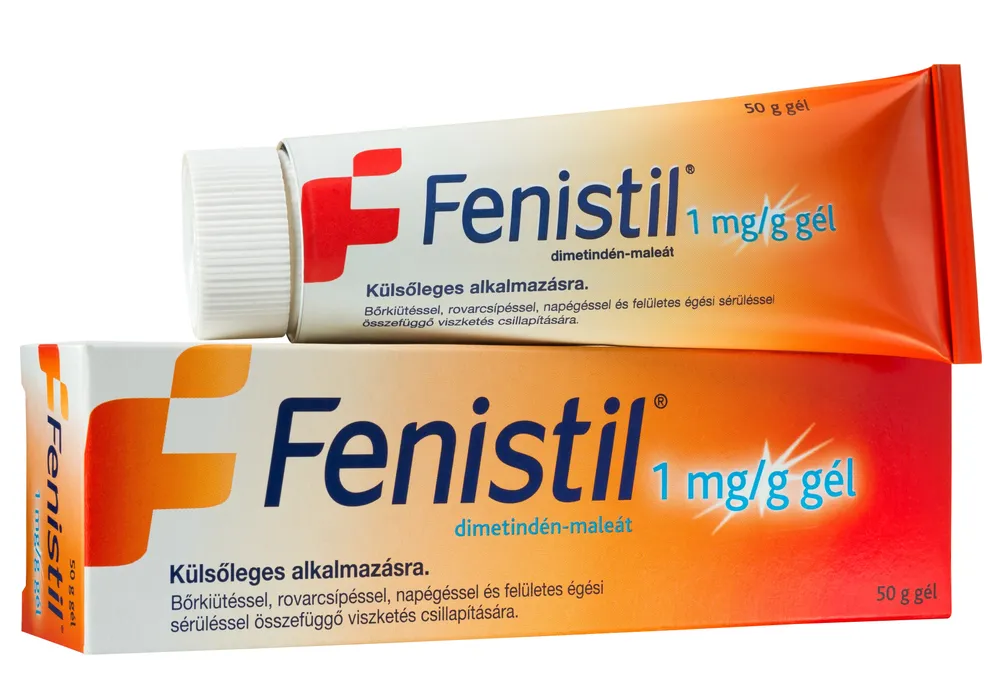
Table of Contents
Package leaflet: Information for the patient
Warning! Keep the leaflet. Information on the immediate packaging in a foreign language.
Fenistil (Fenistil)
1 mg/g (0.1%) gel
Dimetindene maleate
Fenistil and Fenistil are the same brand names of the same medicine written in Polish and Bulgarian.
Please read carefully all the information in this leaflet before using the medicine, as it contains
important information for the patient.
This medicine should always be used exactly as described in this patient leaflet or as directed by
your doctor or pharmacist.
- Keep this leaflet, as you may need to read it again.
- If you need advice or further information, consult your pharmacist.
- If you experience any adverse reactions, including any possible adverse reactions not listed in this leaflet, inform your doctor, pharmacist, or nurse. See section 4.
- If there is no improvement after 2 days of treatment in children or 7 days of treatment in adults, or if the patient feels worse, consult a doctor.
Table of contents of the leaflet:
- What Fenistil is and what it is used for
- Important information before using Fenistil
- How to use Fenistil
- Possible side effects
- How to store Fenistil
- Contents of the pack and other information
1. What Fenistil is and what it is used for
Fenistil is a topical gel. Fenistil contains the active substance dimetindene maleate, which inhibits the action of histamine – a substance responsible for allergic reactions.
When applied to the skin, the medicine acts locally as an antiallergic and strongly antipruritic agent (except for cholestatic pruritus), reduces swelling, and soothes irritation.
It also exhibits local anaesthetic properties. Its cooling effect additionally soothes irritated skin.
Indications:
Itching associated with skin diseases, urticaria, insect bites, sunburn, and superficial skin burns (first degree).
If there is no improvement after 2 days of treatment in children or 7 days of treatment in adults, or if the patient feels worse, consult a doctor.
2. Information before using Fenistil
When not to use Fenistil
- if the patient is allergic to the active substance or to any of the other ingredients of this medicine (listed in section 6),
- in cases of second- and third-degree burns.
Warnings and precautions
- When applying Fenistil to large areas of skin, avoid exposing the treated areas to sunlight.
- Inform your doctor if itching is very severe or if skin lesions are extensive.
- If there is no improvement after 2 days of using the medicinal product in children or after 7 days in adults, or if the patient feels worse, consult a doctor. Before starting to use Fenistil, discuss it with your doctor, pharmacist, or nurse. Keep the medicine out of the sight and reach of children.
Children
Avoid using the medicine in young children over large areas of skin, especially in cases of wounds, burns, and inflammatory skin conditions.
Fenistil and other medicines
Tell your doctor or pharmacist about all medicines the patient is currently taking or has recently taken, as well as any medicines the patient plans to take.
Pregnancy and breastfeeding
If the patient is pregnant or breastfeeding, suspects she may be pregnant, or is planning to have a baby, she should consult a doctor or pharmacist before using this medicine.
Do not use the medicine on large areas of skin, especially if the skin is wounded or inflamed.
During breastfeeding, do not apply the medicine to the nipples.
Breastfeeding women should not apply this medicine to the skin of the breasts, as it may be ingested by the child with breast milk.
Driving and operating machinery
Fenistil applied to the skin has no effect on the ability to drive or operate machinery.
Fenistil contains benzalkonium chloride
Fenistil contains 0.050 mg of benzalkonium chloride in each gram of gel.
Benzalkonium chloride may irritate the skin. Do not apply to mucous membranes.
Breastfeeding women should not use this medicine on the skin of the breasts, as it may be ingested by the child with breast milk (see "Pregnancy and breastfeeding").
Fenistil contains propylene glycol
Fenistil contains 150 mg of propylene glycol in each gram of gel.
Propylene glycol may cause skin irritation. Due to the presence of propylene glycol, this medicine should not be applied to open wounds or large areas of injured or damaged skin (e.g. burned skin) without consulting a doctor or pharmacist.
3. How to use Fenistil
This medicine should always be used exactly as described in this patient information leaflet or as directed by a doctor, pharmacist, or nurse. If in doubt, consult a doctor, pharmacist, or nurse.
This medicine is for topical use on the skin.
Usually, unless otherwise advised by a doctor, apply the gel 2 to 4 times daily, spreading a thin layer over the affected, itchy areas of skin.
Use of more than the recommended dose of Fenistil
There have been no reports of overdose with Fenistil when used topically on the skin.
If the medicine is swallowed, seek medical advice immediately.
If you have any further questions about the use of this medicine, consult your doctor, pharmacist, or nurse.
Missed dose of Fenistil
Do not use a double dose to make up for a missed dose.
4. Possible adverse reactions
Like all medicines, this medicine can cause adverse reactions, although not everybody gets them.
Frequency unknown (cannot be estimated from the available data)
- Dry skin.
- Skin burning sensation.
- Skin allergic reactions including rash and itching.
Reporting of adverse reactions
If any adverse reactions occur, including any possible adverse reactions not listed in this leaflet, inform your doctor, pharmacist, or nurse.
Adverse reactions can also be reported directly to the Department of Monitoring Adverse Drug Reactions at the Office for Registration of Medicinal Products, Medical Devices and Biocidal Products
Al. Jerozolimskie 181C
02-222 Warsaw
Tel.: + 48 22 49 21 301
Fax: + 48 22 49 21 309
Website: https://smz.ezdrowie.gov.pl
Reporting adverse reactions helps to provide more information on the safety of the medicine.
5. How to store Fenistil
Store below 25°C.
Keep the medicine out of sight and reach of children.
Do not use this medicine after the expiry date stated on the packaging. The expiry date refers to the last day of the stated month.
Medicines must not be disposed of via wastewater or household waste. Ask your pharmacist how to dispose of medicines no longer in use. This will help protect the environment.
6. Contents of the pack and other information
What Fenistil contains
- The active substance is dimethindene maleate. One gram of gel contains 1 mg of dimethindene maleate.
- The other components are: benzalkonium chloride, solution; disodium edetate; carbomer; sodium hydroxide; propylene glycol; purified water.
What Fenistil looks like and contents of the pack
Fenistil is a colourless, odourless, cooling, non-greasy gel.
The medicine is available in tubes containing 30 g or 50 g of gel, packed in a cardboard box.
For more detailed information, please contact the responsible party or the parallel importer.
Responsible party in Bulgaria, country of export:
Haleon Hungary Kft, Csörsz utca 43, 1124 Budapest, Hungary
Manufacturer:
Haleon Germany GmbH, Barthstrasse 4, 80339 Munich, Germany
Parallel importer:
Delfarma Sp. z o.o.
ul. Św. Teresy od Dzieciątka Jezus 111
91-222 Łódź
Repackaged by:
Delfarma Sp. z o.o.
ul. Św. Teresy od Dzieciątka Jezus 111
91-222 Łódź
Bulgaria, country of export, licence number: 20020034
Parallel import licence number: 29/26