Eziclen
Poland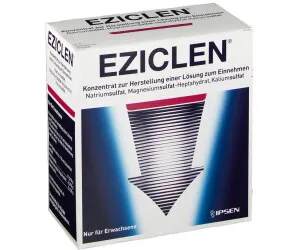
Table of Contents
Package leaflet: Information for the patient
Warning! Keep this leaflet! Information on the immediate packaging in a foreign language.
Eziclen (Izinova)
(17.510 g + 3.276 g + 3.130 g)/bottle, concentrate for oral solution
Anhydrous sodium sulfate + Magnesium sulfate heptahydrate + Potassium sulfate
Eziclen and Izinova are different trade names for the same medicinal product.
Please read this leaflet carefully before using the medicine, as it contains important information for the patient.
- Keep this leaflet so that you can read it again if necessary.
- If you have any doubts, consult your doctor or pharmacist.
- This medicine has been prescribed for a specific individual. Do not pass it on to others. It may harm someone else, even if their symptoms are the same.
- If you experience any adverse reactions, including any not listed in this leaflet, inform your doctor or pharmacist. See section 4.
Table of contents:
- What Eziclen is and what it is used for
- Important information before taking Eziclen
- How to take Eziclen
- Possible side effects
- How to store Eziclen
- Contents of the pack and other information
1. What Eziclen is and what it is used for
Eziclen contains three different active substances: sodium sulfate, magnesium sulfate, and potassium sulfate.
Eziclen is used in adults to cleanse the bowel before a medical examination or intestinal surgical procedure.
Eziclen is not a laxative for constipation.
Eziclen must be diluted with water before use, in the amount specified under Dosage instructions (see section 3).
2. Important information before using Eziclen
When not to use Eziclen:
- If the patient is allergic to sodium sulfate, magnesium sulfate, or potassium sulfate, or any of the other ingredients of this medicine (listed in section 6).
- If the patient has severe heart problems (congestive heart failure).
- If the patient has experienced a serious deterioration in general health such as severe dehydration.
- If the patient has acute phases of active inflammatory bowel disease (including Crohn’s disease and ulcerative colitis).
- If the patient has any of the following stomach or intestinal disorders:
- known or suspected intestinal obstruction or narrowing
- toxic colitis or toxic megacolon
- diagnosed or suspected perforation of the intestinal wall
- intestinal paralysis
- problems with emptying the stomach (e.g. gastric paresis, gastric stasis)
- acute abdominal conditions requiring surgery, such as acute appendicitis
- nausea and vomiting.
- If the patient has ascites (fluid accumulation in the abdominal cavity).
- If the patient has severe kidney function disorders (severe renal failure).
If in doubt, consult the treating physician before using Eziclen.
Warnings and precautions
Before starting treatment with Eziclen, consult a doctor if:
- The patient is dehydrated (symptoms may include dry mouth, thirst, headache, dizziness, urinating less than usual, extreme tiredness, palpitations, and confusion).
- There has ever been abnormal blood levels of sodium or potassium.
- The patient has heart disease. Eziclen may affect heart rhythm due to changes in blood electrolyte levels. Monitoring during treatment may be necessary.
- The patient has kidney disease (renal failure).
- Dehydration may lead to kidney function disorders (renal failure), which are reversible with appropriate treatment.
- The patient has liver disease.
- The patient has conditions related to "uric acid" (gout or other disorders).
- The patient has swallowing difficulties.
- The patient has "reflux", when stomach acid flows back into the esophagus.
- The patient is physically weakened or in poor health.
- There is reduced motility of part or all of the intestine (impaired peristalsis).
- The patient has a history of medical conditions or surgical procedures involving the gastrointestinal tract that may predispose to impaired gastrointestinal motility.
If the patient is frail or elderly (aged 65 years or older), has severe kidney, liver, or heart disease, or is at risk of electrolyte imbalances, the physician may recommend special monitoring before and after the procedure. The patient should pay particular attention to the recommendations in this section, as well as in the sections “Other medicines and Eziclen” and “How to use Eziclen”.
If the patient experiences severe vomiting or symptoms of dehydration (e.g. dry mouth, thirst) after taking this medicine, inform the physician, who may recommend rehydration therapy.
If severe or persistent abdominal pain and/or rectal bleeding occur after taking Eziclen, consult a physician. Rare cases of colitis (inflammation of the colon) have been reported during treatment with Eziclen.
If any of the above conditions apply to the patient (or if uncertain), consult the treating physician before using Eziclen.
After taking Eziclen, frequent loose bowel movements will occur. This is normal and indicates that the medicine is working. Stay close to a toilet until the effect subsides. Follow instructions carefully and drink sufficient water or clear fluids to prevent dehydration.
Children and adolescents
Eziclen is not intended for use in patients under 18 years of age. The safety and efficacy of this medicine have not been established in this patient group.
Other medicines and Eziclen
Inform the doctor or pharmacist about all medicines currently used, recently used, or planned for use, including over-the-counter medicines and herbal products.
If the patient is taking any other medicines, they should be taken either one to three hours before taking Eziclen or at least one hour after completion of the bowel cleansing process. This is because diarrhea caused by Eziclen may flush medicines out of the body, reducing their effectiveness.
Special caution is advised with:
- Medicines that may affect fluid balance or blood electrolyte levels (such as diuretics, calcium channel blockers, or lithium salts), or medicines affecting heart rhythm.
- Regularly taken oral medicines, such as oral contraceptives, antiepileptic drugs, antidiabetic medicines, antibiotics, levothyroxine (a hormone used in treating hypothyroidism), or digoxin (used in heart conditions), as Eziclen may delay or completely inhibit the absorption of these medicines, leading to reduced or absent efficacy.
Pregnancy and breastfeeding
If the patient is pregnant, breastfeeding, suspects she may be pregnant, or is planning to become pregnant, she should consult a doctor or pharmacist before using this medicine.
During breastfeeding, do not breastfeed for 48 hours after taking the second dose of Eziclen.
Driving and operating machinery
Eziclen is unlikely to affect the ability to drive or operate tools or machinery.
Eziclen contains sodium and potassium
If on a diet with restricted salt (sodium or potassium) intake, note that each bottle of Eziclen contains 5.684 g (247.1 mmol) of sodium and 1.405 g (35.9 mmol) of potassium.
3. How to take Eziclen
This medicine should always be taken exactly as described in this patient information leaflet or as directed by your doctor. If in doubt, consult your doctor or pharmacist.
Administration of the medicine
- This medicine is for oral use.
- On the day before the examination or procedure, a light breakfast may be consumed. After breakfast, only clear fluids should be taken for lunch, dinner and any other meals until the time of the examination or procedure. Do not consume red or purple-coloured drinks, milk or alcoholic beverages.
- Eziclen is supplied in 2 bottles packed in a box together with a dilution and dosing cup. All these components are required for administering the medicine.
- Do not consume the contents of both bottles at the same time.
- Do not consume the contents of the bottles before dilution.
- Do not forget to drink additional water or permitted clear fluids.
- Your doctor will provide you with a form to record the time treatment is started and the amount of fluids consumed during the bowel preparation. Follow these instructions carefully and drink sufficient water or clear fluids to prevent dehydration.
- "Clear fluids" include water, tea or coffee (without milk or non-dairy creamer), carbonated or non-carbonated drinks, strained fruit juices without pulp (of a colour other than red or purple), clear broth or strained soup to remove all solid particles.
- Alcoholic beverages should not be consumed.
How and when to take this medicine
Eziclen may be administered according to a "Two-day" or "One-day" regimen. Your doctor will decide which regimen to follow and at what time the medicine should be taken.
- For examinations or procedures performed without general anaesthesia, fluid intake should be stopped at least one hour before the examination or procedure.
- For examinations or procedures performed under general anaesthesia, fluid intake should usually be stopped at least two hours before the examination or procedure; follow the anaesthesiologist's instructions.
Two-day regimen
Dosing is divided between the evening before the examination or procedure and the morning of the examination or procedure day.
-
The evening before the examination or procedure:
Administer the first part of the regimen (first bottle) in the early evening (i.e. no later than 6:00 p.m.). -
On the day of the examination or procedure:
Administer the second part of the regimen (second bottle) in the early morning, 10 to 12 hours after starting the first part of the regimen (first bottle).
One-day regimen
Dosing starts and ends on the evening before the examination or procedure.
- The evening before the examination or procedure:
Administer the first part of the regimen (first bottle) in the early evening (i.e. no later than 6:00 p.m.).
Administer the second part of the regimen (second bottle) approximately 2 hours after starting the first part of the regimen (first bottle).
Regardless of the regimen selected by the doctor, the following steps must be performed for both the first and second parts of the regimen:
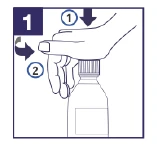
- Open the bottle with child-resistant closure by pressing down and turning the cap counterclockwise.
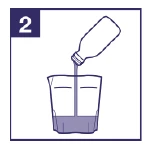
- Pour the contents of one Eziclen bottle into the cup.
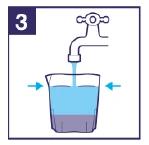
- Add water to the medicine up to the line marked on the cup.
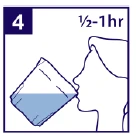
- Drink the entire contents of the cup slowly (over 30 minutes to one hour).
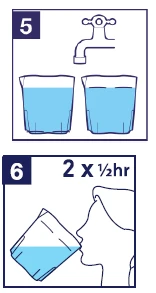
-
IMPORTANT INFORMATION: Drink two (2) additional cups of water or clear fluid. Each time, fill the cup with water or clear fluid up to the marked line.
-
Drink the entire contents of each cup slowly (over 30 minutes).
Completing steps 1 to 6 takes approximately 2 hours and must be repeated for the second part of the regimen.
Regardless of the regimen used, fluid intake must be stopped:
- At least one hour before the examination or procedure, if the examination or procedure is performed without general anaesthesia.
- Usually at least two hours before the examination or procedure, if the examination or procedure is performed under general anaesthesia; follow the anaesthesiologist's instructions.
Taking more Eziclen than recommended
- If the patient believes they have taken too much Eziclen, did not dilute the medicine as instructed, or did not drink enough additional water, they should inform their doctor and drink sufficient water or clear fluids to prevent dehydration.
Missing a dose of Eziclen
- If a dose is missed, contact your doctor as soon as possible, as this may mean the medicine will not work as expected. If you have any further doubts about the use of this medicine, consult your doctor or pharmacist.
4. Possible adverse reactions
If rectal bleeding occurs during bowel preparation or after colonoscopy,
you should contact your doctor.
Like all medicinal products, this medicine can cause adverse reactions, although not everyone experiences them.
The following adverse reactions may occur during use of this medicine:
If any of the symptoms listed below occur, stop taking the medicine Eziclen and contact your doctor immediately:
- Allergic reaction – symptoms may include skin rash or redness, itching, difficulty breathing, or swelling of the throat.
Other adverse reactions include:
Very common (may affect more than 1 in 10 people)
- General discomfort
- Nausea or vomiting
- Abdominal bloating or stomach pain
Not very common (may affect up to 1 in 100 people)
- Chills
- Dry mouth
- Headache
- Dizziness
- Pain during urination
- Discomfort around the anus or rectum
- Changes in blood levels of certain components. Examples include increased activity of aspartate aminotransferase, creatine phosphokinase, lactate dehydrogenase, increased levels of phosphates, bilirubin, or uric acid, and decreased levels of sodium, potassium, or calcium.
Frequency not known (frequency cannot be estimated from available data):
- Intestinal ulcers or intestinal disorders (ischemic colitis). You should inform your doctor immediately if you experience severe abdominal pain or rectal bleeding.
- Dehydration, changes in serum electrolyte levels, fatigue, tremor, sweating, palpitations, loss of consciousness (seizures), disorientation, muscle cramps.
Reporting of adverse reactions
If any adverse reactions occur, including any not listed in this leaflet, inform your doctor or pharmacist. Adverse reactions can be reported directly to the Department for Monitoring of Adverse Drug Reactions of the Office for Registration of Medicinal Products, Medical Devices and Biocidal Products, Al. Jerozolimskie 181C, 02-222 Warsaw, tel.: +48 22 49 21 301, fax: +48 22 49 21 309, website: https://smz.ezdrowie.gov.pl.
Reporting adverse reactions helps to provide more information on the safe use of the medicine.
5. How to store Eziclen
- Keep the medicine out of the sight and reach of children.
- Do not use this medicine after the expiry date stated on the packaging. The expiry date refers to the last day of the stated month.
- There are no special storage temperature requirements for this medicine.
- Store in the original packaging to protect from light.
- After first opening the bottle and/or diluting the contents with water, the solution should be used immediately.
- Medicines must not be disposed of via the sewage system or household waste. Ask your pharmacist how to dispose of medicines no longer in use. This will help protect the environment.
6. Contents of the package and other information
What Eziclen contains
- The active substances are: anhydrous sodium sulfate, magnesium sulfate heptahydrate, and potassium sulfate. Each bottle containing approximately 176 ml of concentrate contains 17,510 g of anhydrous sodium sulfate, 3,276 g of magnesium sulfate heptahydrate, and 3,130 g of potassium sulfate. The total electrolyte content is as follows:
Content in g Content in mmol
1 bottle 2 bottles 1 bottle 2 bottles
Sodium* 5.684 11.367 247.1 494.42
Potassium 1.405 2.81 35.9 71.8
Magnesium 0.323 0.646 13.3 26.6
Sulfates 14.845 29.69 154.5 309.0
* derived from sodium sulfate (active substance) and sodium benzoate (excipient).
Other ingredients: sodium benzoate (E 211), citric acid, sucralose, malic acid, purified water, and fruit cocktail flavour [a mixture of natural and synthetic flavours, propylene glycol (E 1520), ethyl alcohol, acetic acid, and benzoic acid (E 210)].
What Eziclen looks like and contents of the pack
- This medicinal product is a concentrate for oral solution; the concentrate is clear or slightly cloudy.
- It is supplied in two bottles with a capacity of approximately 176 ml each, packed in a carton box together with a half-litre cup for dilution and administration of the medicine.
- Available pack sizes:
- 1 pack containing two bottles and one cup.
For further detailed information, please contact the marketing authorisation holder or the parallel importer.
Marketing authorisation holder in France, country of export:
Ipsen Consumer HealthCare
65, quai Georges Gorse
92100 Boulogne Billancourt
France
Manufacturer:
Beaufour Ipsen Industrie
Rue Ethé Virton
28100 Dreux
France
Parallel importer:
InPharm Sp. z o.o.
ul. Strumykowa 28/11
03-138 Warsaw
Repackaged in:
Pharma Innovations Sp. z o.o.
ul. Jagiellońska 76
03-301 Warsaw
InPharm Sp. z o.o. Services sp. k.
ul. Chełmżyńska 249
04-458 Warsaw
Marketing authorisation number in France, country of export: 269 952-4
34009 269 952 4 9
Parallel import authorisation number: 364/19