Ezehron
Poland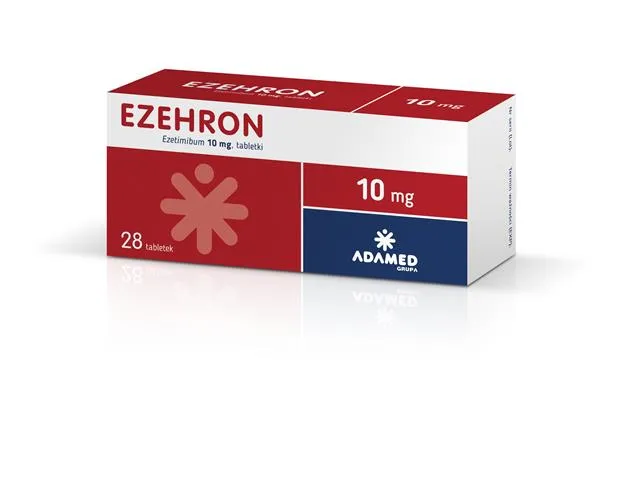
Table of Contents
Package leaflet: Information for the patient
Ezehron, 10 mg, tablets
Ezetimibe
Please read this leaflet carefully before taking this medicine because it contains important information for you.
- Keep this leaflet. You may need to read it again.
- If you have any further questions, ask your doctor, pharmacist, or nurse.
- This medicine has been prescribed for a specific individual. Do not pass it on to others. It may harm them even if their symptoms are the same.
- If you experience any side effects, including any not listed in this leaflet, tell your doctor, pharmacist, or nurse. See section 4.
Leaflet contents
- What Ezehron is and what it is used for
- What you need to know before taking Ezehron
- How to take Ezehron
- Possible side effects
- How to store Ezehron
- Contents of the pack and other information
1. What Ezehron is and what it is used for
Ezehron is a medicine used to lower elevated cholesterol levels.
Ezehron reduces blood levels of total cholesterol, "bad" cholesterol (LDL cholesterol), and fatty substances called triglycerides.
Additionally, Ezehron increases levels of "good" cholesterol (HDL cholesterol).
Ezehron works by reducing the amount of cholesterol absorbed by the body.
Ezehron complements the action of statins, a group of medicines that reduce cholesterol produced in the body.
LDL cholesterol is often called "bad" cholesterol because it can deposit in the walls of arteries as atherosclerotic plaques. The accumulation of these plaques may eventually lead to narrowing of the arteries, slowing blood flow or blocking blood supply to vital organs such as the heart and brain.
Blocked blood flow may result in heart attack or stroke.
HDL cholesterol is often called "good" cholesterol because it helps prevent the buildup of bad cholesterol in the arteries and protects against heart disease.
Triglycerides are another type of fat in the blood that may contribute to an increased risk of heart disease.
This medicine is used in patients in whom a cholesterol-lowering diet alone is not sufficient to control blood cholesterol levels. The medicine may be used alone or in combination with other medicines used to lower elevated cholesterol levels.
While taking this medicine, you should follow a cholesterol-lowering diet.
Ezehron does not affect weight loss.
Ezehron may be prescribed by a doctor in the following cases:
- elevated blood cholesterol levels (primary hypercholesterolemia [heterozygous familial or non-familial])
- in combination with a statin, if adequate cholesterol reduction cannot be achieved with a statin alone
- as monotherapy, if statin therapy is not indicated or is poorly tolerated, or
- an inherited disorder (homozygous familial hypercholesterolemia), which causes increased blood cholesterol levels. A statin will be used, and other treatments may also be applied, or
- an inherited disorder (homozygous sitosterolemia, also known as phytosterolemia), which causes increased levels of plant sterols in the blood.
If you have heart disease, Ezehron, when used in combination with cholesterol-lowering medicines called statins, reduces the risk of heart attack, stroke, surgical procedures performed to improve blood flow to the heart, and hospitalization due to chest pain.
2. Important information before taking Ezehron
When not to take Ezehron:
- if the patient is allergic (hypersensitive) to ezetimibe or any of the other ingredients of this medicine (see section 6. Contents of the pack and other information).
When not to take Ezehron in combination with a statin:
- if the patient currently has liver problems,
- if the patient is pregnant or breastfeeding.
Women of childbearing age should use effective contraceptive methods to prevent pregnancy during treatment with Ezehron in combination with statins (see section: Pregnancy and breastfeeding).
Warnings and precautions
- Inform your doctor about all medical conditions, including allergies.
- Before starting Ezehron in combination with a statin, your doctor should perform blood tests to assess liver function.
- Your doctor may also perform blood tests to monitor liver function after starting treatment with Ezehron in combination with a statin.
Ezehron is not recommended for use in patients with moderate or severe liver impairment.
The safety and efficacy of Ezehron used in combination with fibrates or other cholesterol-lowering medicines have not been established.
If the patient experiences unexplained muscle pain, tenderness or weakness while taking this medicine, especially if associated with fever, consult a doctor.
If the patient is hospitalized or undergoing treatment for other reasons, inform the medical staff about taking Ezehron.
Children and adolescents
Due to lack of data on safety and efficacy, this medicine should not be used in children and adolescents aged 6 to 17 years unless specifically prescribed by a specialist.
This medicine should not be used in children under 6 years of age due to lack of data in this age group.
Ezehron and other medicines
Tell your doctor or pharmacist about all medicines the patient is currently taking or has recently taken, as well as any medicines the patient plans to take.
In particular, inform your doctor if the patient is taking medicines containing any of the following active substances: cyclosporine (used, for example, after organ transplantation), warfarin, phenprocoumon, acenocoumarol or fluindione, and other medicines used to prevent blood clots (anticoagulants), fibrates (used to lower cholesterol levels, such as: gemfibrozil, fenofibrate), cholestyramine (also used to lower cholesterol levels).
Pregnancy and breastfeeding
If the patient is pregnant or breastfeeding, suspects she may be pregnant, or is planning to become pregnant, she should consult a doctor or pharmacist before using this medicine.
Pregnancy
Do not take Ezehron in combination with a statin if the patient is pregnant, planning to become pregnant, or suspects she may be pregnant. If the patient becomes pregnant while taking Ezehron in combination with a statin, she must immediately stop taking both medicines and contact her doctor. Women of childbearing age should use effective contraceptive methods to prevent pregnancy during treatment with Ezehron in combination with statins.
There are no clinical data available on the use of Ezehron without a statin during pregnancy. The patient should consult her doctor for advice.
Breastfeeding
Do not take Ezehron in combination with a statin during breastfeeding.
Ezehron should not be used during breastfeeding.
The patient should consult her doctor for advice.
Driving and operating machinery
Most people can drive and operate machinery after taking Ezehron – the medicine does not affect the ability to drive or operate machinery in most patients. However, dizziness may occur in some individuals after taking Ezehron. Do not drive or operate machinery if the patient experiences dizziness.
Ezehron contains lactose
If the patient has previously been diagnosed with intolerance to certain sugars, the patient should consult a doctor before taking this medicine.
Ezehron contains sodium
The medicine contains less than 1 mmol (23 mg) of sodium per tablet, meaning the medicine is considered "sodium-free".
For a full list of ingredients, see section: Contents of the pack and other information.
3. How to take Ezehron
This medicine should always be taken as directed by the physician. Unless otherwise advised by the doctor,
any previously prescribed cholesterol-lowering medicines should continue to be taken. In case of
doubt, consult a doctor or pharmacist.
Before starting to take Ezehron, a cholesterol-lowering diet should be implemented. While taking Ezehron,
a cholesterol-reducing diet should be maintained.
The recommended dose is one 10 mg Ezehron tablet taken orally once daily.
Ezehron may be taken at any time of day, with or without food.
If a doctor has prescribed Ezehron together with a statin, both medicines may be taken at the same time. In such
a case, the dosing instructions provided in the package leaflet for the respective medicine should be consulted.
If a doctor has prescribed Ezehron together with another cholesterol-lowering medicine containing the active substance cholestyramine or any other medicine containing bile acid-binding resins, Ezehron should be taken at least 2 hours before or 4 hours after taking the bile acid-binding resin.
Taking more Ezehron than recommended
Contact a doctor or the nearest hospital for advice.
If a dose of Ezehron is missed
Do not be alarmed; take the usual dose of Ezehron the next day at the regular time. Do not take a double dose to make up for a missed tablet.
Stopping Ezehron treatment
Consult a doctor if considering discontinuation of the medicine, as cholesterol levels may rise again.
In case of any further doubts concerning the use of this medicine, consult a doctor or pharmacist.
4. Possible adverse reactions
Like all medicines, this medicine can cause adverse reactions, although not everyone will experience them.
It is important that the patient is aware of which adverse reactions may occur after using
this medicine. They are usually mild in nature and resolve spontaneously after a short time.
You should contact your doctor immediately if any of the
following allergic reactions occur during treatment:
- difficulty breathing or swallowing, with or without swelling of the face, lips, tongue or throat.
You should contact your doctor immediately if unexplained
muscle pain, tenderness or weakness occur. In rare cases, muscle-related symptoms, including muscle breakdown leading to kidney damage, may be severe and progress to a potentially life-threatening condition.
The frequency of adverse reactions is categorized according to the following classification:
- Very common (may occur in more than 1 in 10 patients);
- Common (may occur in up to 1 in 10 patients);
- Uncommon (may occur in up to 1 in 100 patients);
- Rare (may occur in up to 1 in 1,000 patients);
- Very rare (may occur in up to 1 in 10,000 patients, including single cases).
Adverse reactions occurring commonly:
- abdominal pain;
- diarrhoea;
- flatulence;
- feeling tired.
Adverse reactions occurring uncommonly:
- increased parameters in certain liver function tests (aminotransferases) or muscle tests (CK);
- cough;
- indigestion;
- heartburn;
- nausea;
- joint pain;
- muscle cramps;
- neck pain;
- decreased appetite;
- pain;
- chest pain;
- sudden flushing of the face;
- high blood pressure.
Additionally, the following adverse reactions occurred when used in combination with a statin:
Adverse reactions occurring commonly:
- increased parameters in certain liver function tests;
- headache;
- muscle pain;
- muscle tenderness or weakness.
Adverse reactions occurring uncommonly:
tingling sensation; dry mouth; itching; rash; urticaria; back pain; muscle weakness;
pain in arms and legs; unexplained tiredness or weakness; swelling, particularly of hands and feet.
Furthermore, the following adverse reactions are possible when used with or without a statin:
Adverse reactions with unknown frequency:
dizziness; muscle pain, liver problems; allergic reactions including rash and urticaria;
difficulty breathing or swallowing, with or without swelling of the face, lips, tongue or throat; red, raised rash, sometimes with lesions in a target-like shape (erythema multiforme); muscle pain, tenderness
or weakness; muscle breakdown; gallstones or inflammation of the gallbladder (may
cause abdominal pain, nausea, vomiting); pancreatitis, often with severe abdominal pain;
constipation; decreased blood cell counts, which may lead to bruising/bleeding (thrombocytopenia);
tingling sensation; depression; unexplained tiredness or weakness; shortness of breath.
The following adverse reactions are possible when used in combination with fenofibrate:
Adverse reactions occurring commonly:
- abdominal pain.
Reporting of adverse reactions
If any adverse symptoms occur, including any adverse symptoms not listed
in this leaflet, inform your doctor, pharmacist or nurse. Adverse reactions
can be reported directly to the Department of Monitoring Adverse Drug Reactions of the Office for Registration of Medicinal Products, Medical Devices and Biocidal Products
Al. Jerozolimskie 181C
02-222 Warsaw
tel.: + 48 22 49-21-301
fax: + 48 22-49-21-309
Website: https://smz.ezdrowie.gov.pl
Adverse reactions can also be reported to the marketing authorization holder.
Reporting adverse reactions helps to provide more information on the safety of this medicine.
5. How to store Ezehron
Keep this medicine out of sight and reach of children.
Store in the original packaging. There are no special requirements regarding the storage temperature
of the medicinal product.
Do not use this medicine after the expiry date stated on the carton after EXP. The expiry date refers to the last day of the specified month.
Do not use this medicine if you notice any visible signs of deterioration.
Medicines must not be disposed of via wastewater or household waste. Ask your pharmacist how to dispose of medicines no longer required. Such measures help protect the environment.
6. Contents of the packaging and other information
What Ezehron contains
- The active substance is ezetimibe. Each Ezehron tablet contains 10 mg of ezetimibe.
- The other ingredients are: lactose monohydrate, microcrystalline cellulose, type 101, E 460(i), sodium lauryl sulphate, sodium croscarmellose, E 468, povidone (K30, E 1201), pregelatinised maize starch, colloidal anhydrous silica, E 551, microcrystalline cellulose, type 102, E 460(i), stearic acid, E 570.
What Ezehron looks like and contents of the pack
Pack sizes:
28, 30, 56, 60, 84, 90 or 100 tablets in blisters.
Not all pack sizes may be marketed.
Ezehron 10 mg, tablets are white or almost white, capsule-shaped tablets marked with the characters “1>1” on one side.
Marketing Authorisation Holder
Adamed Pharma S.A.
Pieńków, ul. M. Adamkiewicza 6A
05-152 Czosnów
tel.: +48 22 732 77 00
Manufacturer
Adamed Pharma S.A.
Pieńków, ul. M. Adamkiewicza 6A
05-152 Czosnów
Genericon Pharma Gesellschaft m.b.H.
Hafnerstrasse 211
8054 Graz
Austria