Esomeprazole polpharma
Poland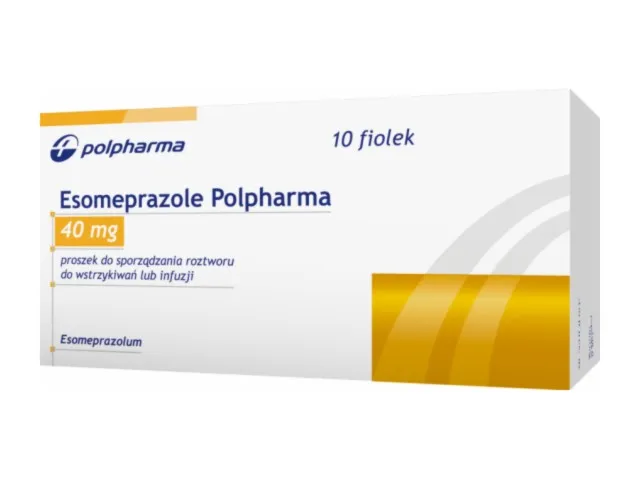
Table of Contents
- Package leaflet: Information for the patient
- 1. What Esomeprazole Polpharma is and what it is used for
- 2. Important information before using Esomeprazole Polpharma
- 3. How to use Esomeprazole Polpharma
- 4. Possible adverse reactions
- 5. How to store Esomeprazole Polpharma
- 6. Contents of the pack and other information
- Information intended exclusively for healthcare professionals:
Package leaflet: Information for the patient
Esomeprazole Polpharma
40 mg, powder for solution for injection or infusion
Esomeprazolum
Please read all of this leaflet carefully before this medicine is administered, because it contains
important information for the patient.
- Keep this leaflet so that you can read it again if necessary.
- If you have any questions, ask your doctor, pharmacist, or nurse.
- If you experience any adverse reactions, including any not listed in this leaflet, tell your doctor, pharmacist, or nurse. See section 4.
Table of contents
- What Esomeprazole Polpharma is and what it is used for
- Important information before using Esomeprazole Polpharma
- How to use Esomeprazole Polpharma
- Possible side effects
- How to store Esomeprazole Polpharma
- Contents of the pack and other information
1. What Esomeprazole Polpharma is and what it is used for
Esomeprazole Polpharma contains a substance called esomeprazole. It belongs to a group of
medicines known as proton pump inhibitors. These medicines reduce the production of
hydrochloric acid in the stomach.
This medicine is used short-term in the treatment of certain conditions when oral administration
is not possible. This medicine is used to treat the following conditions:
Adults
- Gastro-oesophageal reflux disease (GORD). This occurs when hydrochloric acid from the stomach flows back into the oesophagus (the tube connecting the throat to the stomach), causing pain, inflammation, and heartburn.
- Treatment of gastric ulcers caused by the use of non-steroidal anti-inflammatory drugs (NSAIDs). Esomeprazole Polpharma may also be used to prevent gastric and duodenal ulcers in patients taking NSAIDs.
- Prevention of rebleeding after endoscopic treatment of acute gastric or duodenal ulcer bleeding.
Children and adolescents aged 1 to 18 years
- Gastro-oesophageal reflux disease (GORD). This occurs when hydrochloric acid from the stomach flows back into the oesophagus (the tube connecting the throat to the stomach), causing pain, inflammation, and heartburn.
2. Important information before using Esomeprazole Polpharma
When not to use Esomeprazole Polpharma
- if the patient is allergic to esomeprazole or any of the other ingredients of this medicine (listed in section 6)
- if the patient is allergic to other medicines from the group of proton pump inhibitors (e.g. pantoprazole, lansoprazole, rabeprazole, omeprazole)
- if the patient is concurrently taking a medicine containing nelfinavir (a medicine used in the treatment of HIV infection).
If any of the above situations apply, Esomeprazole Polpharma must not be administered.
If the patient is unsure, they should consult their doctor or nurse before taking this medicine.
Warnings and precautions
Before starting treatment with Esomeprazole Polpharma, discuss the following with your doctor:
- if the patient has severe liver disease
- if the patient has severe kidney disease
- if the patient has ever had a skin reaction due to taking a medicine similar to Esomeprazole Polpharma that reduces stomach acid secretion. If the patient develops a skin rash, especially in areas exposed to sunlight, they should inform their doctor immediately, as it may be necessary to discontinue treatment with Esomeprazole Polpharma. The patient should also report any other adverse effects such as joint pain.
- about planned specific blood tests (chromogranin A levels).
Treatment with Esomeprazole Polpharma may mask symptoms of other diseases. Therefore, the patient should inform their doctor immediately if any of the following symptoms occur before or during treatment with Esomeprazole Polpharma:
- significant, unintentional weight loss and difficulty swallowing
- abdominal pain or indigestion symptoms
- vomiting or vomiting blood
- black, tarry stools.
When taking proton pump inhibitors such as Esomeprazole Polpharma, especially for longer than one year, there may be a slight increase in the risk of fractures of the hip, wrist, or spine. The patient should inform their doctor if they have been diagnosed with osteoporosis or if they are taking corticosteroid medicines (which may increase the risk of osteoporosis).
Esomeprazole Polpharma and other medicines
Tell your doctor or nurse about all medicines the patient is currently taking, has recently taken, or might take in the future. This includes medicines obtained without a prescription. This is important because Esomeprazole Polpharma may affect the action of other medicines, or the action of Esomeprazole Polpharma may be altered when other medicines are taken.
Do not use Esomeprazole Polpharma if the patient is taking nelfinavir (a medicine used in the treatment of HIV infection).
Inform your doctor or nurse if you are taking any of the following medicines:
- atazanavir (a medicine used in the treatment of HIV infection)
- ketoconazole, itraconazole, or voriconazole (medicines used to treat fungal infections)
- erlotinib (a medicine used to treat cancer)
- citalopram, imipramine, or clomipramine (medicines used to treat depression)
- diazepam (a medicine used to treat anxiety, to relax muscles, or for epilepsy)
- phenytoin (a medicine used to treat epilepsy). If the patient is taking phenytoin, the doctor may recommend additional blood tests at the beginning and after completion of treatment with Esomeprazole Polpharma.
- blood-thinning medicines such as warfarin. The doctor may recommend additional blood tests at the beginning and after completion of treatment with Esomeprazole Polpharma.
- cilostazol (a medicine used to treat intermittent claudication – leg pain while walking due to poor blood flow)
- cisapride (a medicine used to treat indigestion or heartburn)
- clopidogrel (an antiplatelet medicine)
- digoxin (used to treat heart rhythm disorders)
- methotrexate (a chemotherapy medicine used in high doses for cancer treatment) – if the patient is taking high-dose methotrexate, the doctor may recommend temporarily discontinuing Esomeprazole Polpharma
- tacrolimus (a medicine used in organ transplant recipients)
- rifampicin (a medicine used to treat tuberculosis)
- St John's wort (Hypericum perforatum) (used to treat depressive disorders)
Pregnancy and breastfeeding
If the patient is pregnant or breastfeeding, suspects she may be pregnant, or is planning to become pregnant, she should consult her doctor before using this medicine. The doctor will decide whether she can take Esomeprazole Polpharma during this time.
It is not known whether esomeprazole passes into breast milk. Therefore, Esomeprazole Polpharma should not be used during breastfeeding.
Driving and operating machinery
Esomeprazole Polpharma is unlikely to affect the ability to drive or operate machinery. However, uncommonly, adverse effects such as dizziness and blurred vision may occur (see section 4). If these occur, the patient should not drive or operate machinery.
Esomeprazole Polpharma contains sodium
This medicine contains less than 1 mmol of sodium (23 mg) per vial, meaning the medicine is considered "sodium-free". This medicine must be diluted by a doctor or nurse according to the instructions provided at the end of this leaflet, see "Instructions". When calculating the total sodium content of the prepared, diluted solution, the sodium content originating from the diluent must be taken into account. For accurate information on the sodium content of the solution used to dilute the medicine, refer to the leaflet of the diluent used.
3. How to use Esomeprazole Polpharma
Esomeprazole Polpharma may be administered to children and adolescents from 1 year of age up to 18 years, as well as to adults, including elderly patients.
Esomeprazole Polpharma is administered by a doctor or nurse. The doctor will decide the dose required by the patient. If the patient suspects that a dose has been missed or an overdose has been administered, the doctor should be informed immediately.
A detailed instruction for doctors or nurses on how to prepare and administer the medicine can be found at the end of this leaflet; see "Instructions".
Administration in adults
- The usual recommended dose is 20 mg or 40 mg once daily.
- In patients with severe liver disease, the maximum dose for the treatment of gastroesophageal reflux disease is 20 mg per day.
- The medicine is given as an intravenous injection or infusion. Administration may last up to 30 minutes.
- The recommended dose for the prevention of re-bleeding from gastric or duodenal ulcer is 80 mg administered as a 30-minute infusion, followed by continuous infusion over 3 days at a rate of 8 mg/hour. In patients with severe liver disease, the medicine should be administered in this indication as a continuous infusion over 3 days at a rate of 4 mg/hour.
Administration in children and adolescents
- Esomeprazole Polpharma is administered by authorized medical personnel, and the doctor will determine the appropriate dose.
- The recommended dose for children from 1 year to 11 years of age is 10 mg or 20 mg given once daily.
- The recommended dose for adolescents from 12 to 18 years of age is 20 mg or 40 mg given once daily.
- The medicine is given as an intravenous injection or infusion. Administration may last up to 30 minutes.
Administration of a higher than recommended dose of Esomeprazole Polpharma
If an overdose of Esomeprazole Polpharma is suspected, medical advice should be sought immediately.
If there are any further doubts regarding the use of this medicine, consult a doctor or nurse.
4. Possible adverse reactions
Like all medicines, this medicine can cause adverse reactions, although not everyone will experience them.
If any of the following serious adverse reactions occur, stop taking the medicine immediately and contact your doctor without delay:
- Sudden wheezing, swelling of the lips, tongue or throat, skin rash, fainting or difficulty swallowing (severe allergic reaction).
- Reddening of the skin with ulceration or peeling of the skin. Severe ulceration with bleeding of the mouth, eyes, oral cavity, nose or genital organs may also occur. This may be Stevens-Johnson syndrome or toxic epidermal necrolysis.
- Yellowing of the skin, dark urine and fatigue, which may be symptoms of liver problems. These symptoms are rare (may occur in less than 1 in 1,000 patients).
Other adverse reactions include:
Common (may occur in less than 1 in 10 patients)
- Headache.
- Gastrointestinal symptoms: diarrhoea, abdominal pain, constipation, bloating, mild gastric polyps.
- Nausea, vomiting.
- Reactions at the site of administration.
Uncommon (may occur in less than 1 in 100 patients)
- Swelling of feet and around the ankles.
- Sleep disturbances (insomnia).
- Dizziness, sensation of pricking, tingling and numbness (paraesthesia), drowsiness.
- Vertigo.
- Vision problems such as blurred vision.
- Dryness of the oral mucosa.
- Changes in blood tests assessing liver function.
- Rash, itching and itchy rash.
- Fracture of the neck of the femur, wrist or spine (if this medicine is used in high doses for a long time).
Rare (may occur in less than 1 in 1,000 patients)
- Blood disorders such as reduced number of white blood cells and platelets. This may manifest as fatigue, increased tendency to bruising and infections.
- Low sodium levels in blood. This may manifest as fatigue, vomiting and cramps.
- Feeling of restlessness, disorientation or depression.
- Changes in taste sensation.
- Sudden onset of breathlessness, difficulty breathing (bronchospasm).
- Inflammation in the mouth.
- Fungal infection known as candidiasis, which may affect intestinal function.
- Liver disorders, including jaundice, which may cause yellowing of the skin, dark urine and feeling of fatigue.
- Hair loss.
- Photosensitivity (rash after sun exposure).
- Joint or muscle pain.
- General malaise, lack of energy.
- Increased sweating.
Very rare (may occur in less than 1 in 10,000 patients)
- Marked reduction in blood cells, including agranulocytosis (lack of white blood cells).
- Aggression.
- Seeing, feeling or hearing things that are not there (hallucinations).
- Severe liver disease, including liver failure and encephalopathy.
- Severe rash or sudden ulceration or peeling of the skin. These may occur together with high fever and muscle pain (erythema multiforme, Stevens-Johnson syndrome, toxic epidermal necrolysis).
- Muscle weakness.
- Severe kidney disease.
- Breast enlargement in men.
In very rare cases, esomeprazole may affect white blood cells, thereby reducing immunity. If a patient develops an infection with symptoms such as fever with severe deterioration in health or fever with signs of local infection such as neck, throat or mouth pain or difficulty urinating, contact a doctor immediately. This lack of white blood cells (agranulocytosis) can be ruled out by performing a blood test. It is important that the patient informs the doctor about taking this medicine.
Frequency not known (cannot be estimated from available data)
- Rash which may be accompanied by joint pain.
- If Esomeprazole Polpharma has been taken for longer than three months, there is a risk of decreased magnesium levels in blood. Low magnesium levels may present as fatigue, involuntary muscle spasms, disorientation, seizures, dizziness, rapid heartbeat. If any of the above symptoms are observed, inform your doctor immediately. Low magnesium levels may lead to decreased potassium or calcium levels in blood. Your doctor may recommend regular blood tests to monitor magnesium levels.
- Inflammation of the intestine (leading to diarrhoea).
Reporting of adverse reactions
If any adverse reactions occur, including any adverse reactions not listed in this leaflet, inform your doctor or nurse. Adverse reactions can be reported directly to the Department of Monitoring Adverse Drug Reactions, Office for Registration of Medicinal Products, Medical Devices and Biocidal Products
Al. Jerozolimskie 181C
02-222 Warsaw
Tel.: + 48 22 49 21 301
Faks: + 48 22 49 21 309
Website: https://smz.ezdrowie.gov.pl
Adverse reactions can also be reported to the marketing authorisation holder.
Reporting adverse reactions helps provide more information on the safety of the medicine.
5. How to store Esomeprazole Polpharma
The doctor or nurse is responsible for the proper storage, use, and disposal of
leftover medicine.
Keep the medicine out of the sight and reach of children.
Do not use this medicine after the expiry date stated on the carton and vial. The expiry date refers to the last day of the stated month.
The marking on the packaging following "EXP" indicates the expiry date, and following "Lot" indicates the batch number.
Do not store above 30°C.
Keep the vial in its original packaging to protect from light.
Medicines should not be disposed of via wastewater or household waste. Ask your pharmacist how to dispose of medicines no longer in use. This will help protect the environment.
6. Contents of the pack and other information
What Esomeprazole Polpharma contains
- The active substance is esomeprazole. Each vial contains 42.5 mg of sodium esomeprazole, equivalent to 40 mg of esomeprazole.
- The other ingredients are:
- disodium edetate
- sodium hydroxide (for pH adjustment).
What Esomeprazole Polpharma looks like and contents of the pack
Esomeprazole Polpharma is a white to off-white, porous tablet or powder. The medicine must be dissolved before administration.
Pack size: 1 or 10 vials.
Not all pack sizes may be marketed.
Marketing Authorisation Holder and Manufacturer
Marketing Authorisation Holder
Zakłady Farmaceutyczne POLPHARMA S.A.
ul. Pelplińska 19, 83-200 Starogard Gdański, Poland
tel. + 48 22 364 61 01
Manufacturer
Valdepharm
Parc Industriel d'Incarville CS10606
27106 Val de Reuil Cedex, France
Information intended exclusively for healthcare professionals:
Instructions
The prepared solution should be inspected visually for particulate matter, discoloration, or any other changes. Only clear solution should be used.
The solution is for single use only.
Injection 40 mg
To prepare the injection solution (8 mg/ml), add 5 ml of 0.9% sodium chloride solution for intravenous administration to the vial containing 40 mg of esomeprazole.
If a 20 mg dose is required, only half of the prepared solution should be administered. Any unused portion of the solution must be discarded.
The prepared injection solution is clear, colorless or very pale yellow.
Infusion 40 mg
To prepare the infusion solution, dissolve the contents of one vial containing 40 mg of esomeprazole in 100 ml of 0.9% sodium chloride solution for intravenous administration.
The prepared infusion solution is clear, colorless or very pale yellow.
Infusion 80 mg
To prepare the infusion solution, dissolve the contents of two vials of esomeprazole (40 mg each) in 100 ml of 0.9% sodium chloride solution for intravenous administration.
Do not mix the medicinal product with other medicinal products except those mentioned above.
Any unused medicinal product or waste material should be disposed of in accordance with local regulations.
Shelf life
Medicinal product packaged: 21 months.
Period of stability after reconstitution
The solution at concentrations from 0.4 mg/ml to 8.0 mg/ml has been shown to be chemically and physically stable for 12 hours at 25°C.
Due to the risk of microbiological contamination, the solution should be used immediately after preparation. If the solution is not used immediately, the user is responsible for the storage time and conditions, which should not exceed 12 hours at 25°C.