Entus junior
Poland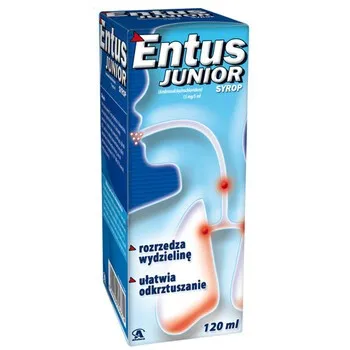
Table of Contents
Package leaflet: information for the patient
Entus Junior, 15 mg/5 ml, syrup
Ambroxoli hydrochloridum
Please read the entire leaflet carefully before taking this medicine, as it contains
important information for the patient.
This medicine should always be taken exactly as described in this patient leaflet or as directed by a physician or pharmacist.
- Keep this leaflet, as you may need to read it again.
- If you need advice or further information, consult your pharmacist.
- If the patient experiences any adverse reactions, including any not listed in this leaflet, inform your doctor or pharmacist. See section 4.
- If there is no improvement after 4 to 5 days, or if the patient feels worse, contact your doctor.
Table of contents
- What Entus Junior is and what it is used for
- Important information before taking Entus Junior
- How to take Entus Junior
- Possible side effects
- How to store Entus Junior
- Contents of the pack and other information
1. What Entus Junior is and what it is used for
Entus Junior contains the active substance ambroxol hydrochloride, which has expectorant and mucus-thinning effects in the respiratory tract. The medicine is in the form of an oral syrup.
Indications
For supportive treatment of acute and chronic respiratory diseases associated with difficulty in expectorating viscous bronchial secretions, such as pulmonary emphysema, bronchial asthma, bronchiectasis, cystic fibrosis, bronchitis, laryngitis.
If there is no improvement after 4 to 5 days, or if the patient feels worse, consult your doctor.
2. Information before taking Entus Junior
When not to take Entus Junior
- if the patient is allergic to ambroxol hydrochloride or any of the other ingredients of this medicine (listed in section 6).
Warnings and precautions
Before starting treatment with Entus Junior, discuss the following with your doctor or pharmacist:
- if the patient has peptic ulcer disease of the stomach and/or duodenum;
- if the patient has impaired kidney and/or liver function;
- if the patient has a weakened cough reflex (difficulty expectorating) or impaired ciliary clearance of the bronchi, due to the risk of mucus retention;
- if the patient has bronchial asthma, as ambroxol may initially worsen cough and cause excessive expectoration of mucus.
At the beginning of treatment, increased amounts of liquid mucus may appear in the respiratory tract.
In such cases, coughing should be encouraged to help expel the mucus. Suctioning of mucus may be necessary; in this case, the patient should contact a doctor.
Severe skin reactions associated with the use of ambroxol hydrochloride have been reported. If a rash appears (including lesions of mucous membranes, e.g. in the mouth, throat, nose, eyes, or genital organs), treatment with Entus Junior must be discontinued immediately and the patient should contact a doctor without delay.
Entus Junior and other medicines
Inform your doctor or pharmacist about all medicines currently taken or recently taken, as well as any medicines the patient intends to take.
Inform your doctor if the patient is taking:
- antibiotics (medicines used to treat infections, such as: amoxicillin, erythromycin, ampicillin, doxycycline, and cefuroxime), because ambroxol enhances their penetration into the lungs and potentiates their effect;
- theophylline (a medicine used in the treatment of bronchial asthma), because it enhances the effect of ambroxol;
- antitussives (medicines used to treat dry, exhausting cough), because they may suppress the cough reflex and lead to mucus retention in the airways.
Taking Entus Junior with food and drink
Entus Junior should be taken after meals.
The medicine should not be taken before going to sleep.
Pregnancy and breastfeeding
This section does not apply to Entus Junior syrup, as this medicine is intended for use in children aged 2 to 12 years. However, the information below is relevant regarding the active substance – ambroxol hydrochloride.
If the patient is pregnant or breastfeeding, suspects she may be pregnant, or is planning to have a child, she should consult a doctor or pharmacist before using this medicine.
Use of this medicine during pregnancy is not recommended, as it may be harmful to the embryo and fetus.
Use of this medicine during breastfeeding is not recommended, as it passes into breast milk.
Driving and using machines
This medicine has no effect or has a negligible effect on the ability to drive and operate machinery. However, if headache occurs, the patient should not drive, operate machinery, or perform any other tasks requiring concentration.
Entus Junior contains ethanol, propylene glycol, benzoic acid, non-crystallizing liquid sorbitol, and sodium
Ethanol
This medicine contains 1.68 mg of ethanol (alcohol) per dose (5 ml), equivalent to 0.34 mg/ml (0.03% w/v). The amount of alcohol in 5 ml of this medicine is equivalent to less than 1 ml of beer or 1 ml of wine. The small amount of alcohol in this medicine will not cause noticeable effects.
Propylene glycol
The medicine contains 149.35 mg of propylene glycol in each 5 ml of syrup.
Benzoic acid
The medicine contains 10 mg of benzoic acid in each 5 ml of syrup.
Non-crystallizing liquid sorbitol
The medicine contains 1742.2 mg of sorbitol in each 5 ml of syrup.
Sorbitol is a source of fructose. If the patient (or their child) has previously been diagnosed with intolerance to certain sugars or hereditary fructose intolerance—a rare genetic disorder in which the body cannot metabolize fructose—the patient should consult a doctor before taking this medicine or giving it to a child.
Sorbitol may cause gastrointestinal discomfort and may have a mild laxative effect.
Sodium
The medicine contains 0.168 mg of sodium in each 5 ml of syrup.
The medicine contains less than 1 mmol (23 mg) of sodium per 5 ml of syrup, meaning it is considered "sodium-free".
3. How to take Entus Junior
This medicine should always be taken exactly as described in this patient information leaflet, or as directed by a doctor or pharmacist. If in doubt, consult a doctor or pharmacist.
Recommended dose:
The recommended doses apply to the treatment of acute respiratory tract diseases and to the initial phase of treatment of chronic conditions.
In long-term treatment (exceeding 14 days), the doses may be reduced by half.
| Patient age | Dose | Administration |
| children up to 2 years of age | 2.5 ml of syrup | 2 times a day |
| children from 3 to 5 years of age | 2.5 ml of syrup | 3 times a day |
| children from 6 to 12 years of age | 5 ml of syrup | 2 to 3 times a day |
Instructions for use
The medicine should be taken orally.
The medicine should be taken after a meal.
Do not use before bedtime.
A dosing device is attached to the packaging to help measure the medicine.
If symptoms worsen or do not improve after 4 to 5 days, consult a doctor.
The syrup does not contain sugar.
Accidental overdose of Entus Junior
In case of taking a higher than recommended dose of the medicine, consult a doctor.
Symptoms of overdose may include: nausea, fatigue, excessive mucus secretion from the bronchi.
Missed dose of Entus Junior
Take the syrup as soon as possible, and take the next dose at the usual time.
Do not take a double dose to make up for a missed dose.
If you have any further doubts regarding the use of this medicine, consult your doctor or pharmacist.
4. Possible adverse reactions
Like all medicines, this medicine can cause adverse reactions, although not everyone will experience them.
You must stop taking Entus Junior and contact your doctor immediately if the following occurs:
- anaphylactic shock (skin rash, itching of hands and feet spreading throughout the body, facial, lip or throat swelling causing breathing difficulties, wheezing, shortness of breath, undetectable pulse, significantly lowered blood pressure, sweating, cold extremities, loss of consciousness, cardiac arrest).
The following adverse reactions may occur
Rare: may affect up to 1 in 1,000 people:
- hypersensitivity reactions;
- rash, urticaria;
- pain and burning during urination (dysuria).
Frequency not known: frequency cannot be estimated from the available data:
- anaphylactic reactions, including anaphylactic shock, angioedema (rapidly progressive swelling of the skin, subcutaneous tissue, mucous membranes or submucosal tissues), and itching;
- severe skin adverse reactions (including erythema multiforme, Stevens-Johnson syndrome, toxic epidermal necrolysis, and acute generalized exanthematous pustulosis);
- heartburn, indigestion;
- nausea, vomiting;
- diarrhoea, constipation;
- skin changes, fever, shortness of breath, chills, facial swelling, headache;
- dryness of the oral mucosa due to lack of saliva production.
Reporting of adverse reactions
If any adverse symptoms occur, including any adverse symptoms not listed in this leaflet, inform your doctor or pharmacist.
Adverse reactions can be reported directly to the Department of Monitoring Adverse Drug Reactions at the Office for Registration of Medicinal Products, Medical Devices and Biocidal Products
Al. Jerozolimskie 181C, 02-222 Warsaw
Phone: +48 22 49 21 301
Fax: +48 22 49 21 309
Website: https://smz.ezdrowie.gov.pl
Adverse reactions can also be reported to the marketing authorization holder.
Reporting adverse reactions helps provide more information on the safety of using this medicine.
5. How to store the medicine Entus Junior
Keep the medicine out of sight and reach of children.
Store below 25 °C. Do not store in the refrigerator, do not freeze.
Store in the original packaging.
Do not use this medicine after the expiry date stated on the label and on the carton.
The expiry date refers to the last day of the stated month.
Medicines should not be disposed of via wastewater or household waste. Ask your pharmacist
how to dispose of medicines no longer required. This will help protect the environment.
6. Contents of the pack and other information
What Entus Junior contains
- The active substance is ambroxol hydrochloride. 5 ml of syrup contains 15 mg of ambroxol hydrochloride.
- Other ingredients are: sorbitol liquid, non-crystallising, glycerol, sodium saccharin, benzoic acid, propylene glycol, hydroxyethylcellulose, natural orange flavour 72 VP 100 g/100 (contains ethyl alcohol), levomenthol, purified water.
What Entus Junior looks like and contents of the pack
Entus Junior is a syrup.
The medicine is supplied in a brown glass bottle containing 120 ml of syrup, closed with an aluminium cap and equipped with a measuring cup, placed in a cardboard box.
Marketing Authorisation Holder and Manufacturer
Aflofarm Farmacja Polska Sp. z o.o.
ul. Partyzancka 133/151
95-200 Pabianice
tel. (42) 22-53-100