Elidel
Poland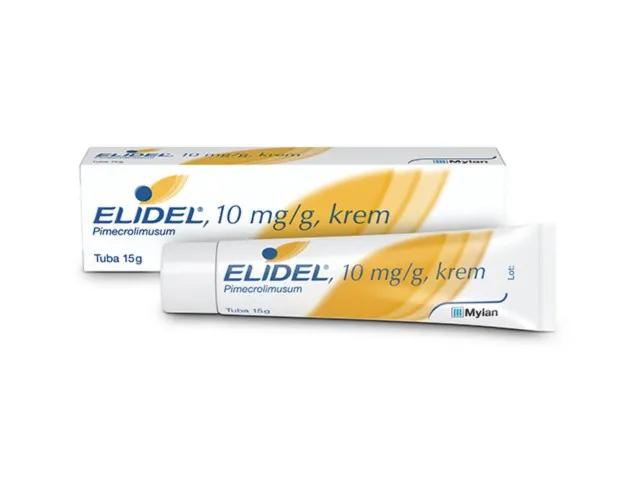
Table of Contents
Package leaflet: Information for the patient
Warning! Keep this leaflet! Information on the immediate packaging is in a foreign language.
Elidel, 10 mg/g, cream
Pimecrolimus
Please read the entire leaflet carefully before using the medicine, as it contains
important information for the patient.
- Keep this leaflet for future reference.
- If you have any questions, consult your doctor or pharmacist.
- This medicine has been prescribed for a specific individual. Do not pass it on to others. It may harm other people, even if their symptoms are the same.
- If you experience any adverse reactions, including any not listed in this leaflet, inform your doctor or pharmacist. See section 4.
Table of contents
- What Elidel is and what it is used for
- Important information before using Elidel
- How to use Elidel
- Possible side effects
- How to store Elidel
- Contents of the pack and other information
1. What Elidel is and what it is used for
Elidel is a non-steroidal anti-inflammatory medicine for topical use on the skin.
The medicine acts on skin cells that cause inflammation, characteristic redness of the skin, and itching.
Indications
Treatment of patients aged 3 months and older with mild to moderate atopic dermatitis, when topical glucocorticosteroids are not recommended or cannot be used.
This may include the following situations:
- intolerance to topical glucocorticosteroids,
- no response to topical glucocorticosteroids,
- treatment of the skin of the face and neck, where long-term intermittent therapy with glucocorticosteroids may be inappropriate.
2. Important information before using Elidel
Carefully follow all your doctor's instructions.
Read this entire leaflet before using the medicine.
When not to use Elidel
- if the patient is allergic to the active substance or to any of the other ingredients of this medicine (listed in section 6.)
Warnings and precautions
Before starting treatment with Elidel, discuss it with your doctor.
Elidel must not be used if the patient has an impaired immune system (weakened immunity).
Elidel is not intended for use in infants under 3 months of age.
Elidel is intended only for the treatment of atopic dermatitis. It should not be used for other skin disorders.
In patients with severe atopic dermatitis, treatment with Elidel may be associated with an increased risk of bacterial skin infections (impetigo).
Elidel must not be used on areas of skin with tumorous or pre-tumorous lesions.
Inform your doctor before starting treatment with Elidel if you have any malignant tumors (cancer) or a weakened (impaired) immune system.
Elidel is for topical use only. Do not apply it to mucous membranes, including the nasal mucosa, eyes, or oral mucosa. In case of accidental contact with eyes or mucous membranes, immediately rinse with water.
Take care not to swallow the medicine or allow accidental contact with the mouth, for example when applied to the hands.
Do not use the medicine on skin areas infected with viruses, such as those causing cold sores (herpes simplex) or chickenpox.
If the skin is infected, your doctor may prescribe appropriate treatment to resolve the infection. Only after the infection has healed can treatment with Elidel be started. If an infection develops during treatment with Elidel, inform your doctor. In such cases, your doctor may advise discontinuing Elidel until the infection has resolved.
Elidel may increase the risk of severe herpes simplex virus skin infection (herpetic rash). If painful skin lesions develop, contact your doctor immediately. Treatment with Elidel should be stopped until the infection has resolved.
Elidel may cause local reactions at the application site, such as a sensation of warmth or burning. These reactions are usually mild and resolve quickly. Inform your doctor if severe reactions occur during treatment with Elidel.
Do not cover or bandage the treated skin area when using Elidel, but normal clothing may be worn.
During treatment with Elidel, avoid excessive exposure to sunlight, sunlamps, and tanning beds. If going outdoors after applying Elidel, protect the skin with appropriate clothing and use suitable sunscreen products (UV filters), minimizing time spent in the sun.
The use of Elidel is not recommended in cases of erythroderma (redness affecting nearly the entire body) or in patients with Netherton's syndrome. Inform your doctor if you have either of these conditions before starting treatment with Elidel.
If lymph node swelling occurs during treatment with Elidel, contact your doctor immediately.
In patients with severe infection and/or damaged skin, systemic concentrations may be higher.
Consult your doctor, even if the above warnings refer to conditions that occurred in the past.
Elidel and other medicines
Inform your doctor about all medicines currently or recently taken, as well as any medicines you plan to use.
The use of pimecrolimus at the vaccination site is not recommended during local reactions.
In cases of extensive atopic rash, treatment with Elidel may be paused before vaccination. Your doctor will advise whether this is necessary.
Elidel should not be used concurrently with phototherapy (e.g., UVB, UVA, PUVA) or immunosuppressive drugs (e.g., azathioprine or cyclosporine).
Avoid excessive skin exposure to light during treatment with Elidel.
Interactions with other medicines are unlikely.
Elidel with food, drink, and alcohol
Rarely, shortly after alcohol consumption, sudden flushing, rash, burning sensation, itching, or swelling may occur.
Pregnancy and breastfeeding
If you are pregnant, breastfeeding, think you may be pregnant, or are planning to have a child, consult your doctor or pharmacist before using this medicine.
Elidel should not be used during pregnancy.
It is unknown whether the active substance in Elidel passes into human milk after topical application. Do not apply Elidel to the skin of the breasts during breastfeeding.
Driving and operating machinery
Elidel has no effect or a negligible effect on the ability to drive and operate machinery.
Elidel contains cetyl alcohol, stearyl alcohol, propylene glycol (E 1520), and benzyl alcohol
Cetyl alcohol and stearyl alcohol may cause local skin reactions (e.g., contact dermatitis).
Elidel contains 50 mg of propylene glycol (E 1520) per 1 g of cream. Propylene glycol (E 1520) may cause skin irritation. Due to its content of propylene glycol, Elidel should not be used on open wounds or large areas of injured or damaged skin (e.g., burned skin) without consulting a doctor or pharmacist.
Benzyl alcohol may cause allergic reactions and mild local irritation.
3. How to use Elidel
This medicine should always be used exactly as directed by your doctor. In case of doubt, consult
your doctor or pharmacist.
Use in adults
Elidel cream should be applied to affected skin areas, including the head, face, neck, and skin folds.
The medicine is usually used as described below.
- Wash and dry your hands.
- Open the tube (for the first time, pierce the seal using the protrusion inside the cap).
- Squeeze a small amount of cream onto your fingertip.
- Apply a thin layer of Elidel cream to the affected skin areas.
- Use Elidel cream only on skin areas affected by atopic dermatitis (atopic eczema).
- Gently and completely rub the cream into the skin.
- Close the tube with the cap.
Elidel cream should be applied twice daily, for example once in the morning and once in the evening. During treatment with Elidel, emollients may be used. If emollients are used simultaneously, they should be applied immediately after Elidel.
Do not bathe, shower, or swim immediately after applying Elidel cream, as this may wash off the cream.
How long to use Elidel
The medicine may be used short-term or intermittently long-term to prevent disease relapses.
Stop using Elidel cream immediately after symptoms of atopic eczema have resolved.
Continue using Elidel cream as long as directed by your doctor.
Discontinue treatment and contact your doctor if there is no improvement after 6 weeks, or if symptoms of atopic eczema worsen.
For long-term management of atopic eczema, Elidel should be restarted immediately upon recurrence of symptoms (skin redness and itching). This helps prevent disease relapse. If symptoms return, contact your doctor. Your doctor will consider whether to restart treatment.
Use in children and adolescents
Due to insufficient data, Elidel should not be used in infants under 3 months of age.
Dosage and method of application in infants (aged 3 to 23 months), children (aged 2 to 11 years), and adolescents (aged 12 to 17 years) are the same as in adult patients.
Use in elderly patients
Atopic dermatitis (atopic eczema) is rare in individuals aged 65 years and older. It has not been established whether the response to the medicine in elderly patients differs from that in younger patients.
If you feel the effect of the medicine is too strong or too weak, consult your doctor.
Use of more than the recommended dose of Elidel
If more cream than recommended has been applied to the skin, wipe off the excess.
Missed dose of Elidel
If you miss a dose of Elidel, apply it as soon as possible and then continue with the usual prescribed dosing schedule.
Stopping use of Elidel
If you have any further questions about the use of this medicine, consult your doctor.
Accidental ingestion of Elidel
In case of accidental ingestion of Elidel, inform your doctor immediately.
4. Possible adverse reactions
Like all medicines, this medicine can cause adverse reactions, although not everyone experiences them.
The most commonly observed adverse reactions associated with the use of Elidel are reactions at the site of application (e.g., discomfort). These reactions are generally mild and/or moderate in intensity, occur at the beginning of treatment, and are short-lived.
Very common (occur in more than 1 in 10 patients)
Sensation of warmth or burning at the application site.
Common (occur in fewer than 1 in 10 patients)
Irritation, itching, and redness at the application site. Skin infections (folliculitis).
Uncommon (occur in fewer than 1 in 100 patients)
Skin infections such as boils, impetigo (bacterial skin infection), herpes simplex, shingles, herpes simplex dermatitis (herpetic rash), molluscum contagiosum (viral skin infection), skin papilloma (warts). Skin reactions at the application site such as rash, pain, paresthesia (pricking, tingling sensations), peeling, dryness, swelling, and worsening of symptoms of atopic dermatitis.
Rare (occur in fewer than 1 in 1,000 patients)
Alcohol intolerance, hot flushes, rash, burning sensation, itching, or swelling shortly after alcohol consumption. Allergic reactions which may cause angioedema (swelling, most commonly affecting the face, limbs, and joint areas), skin rash, or urticaria. Changes in skin pigmentation (areas of skin may become darker or lighter in comparison to surrounding skin).
Very rare (occur in fewer than 1 in 10,000 patients)
Severe allergic reactions (anaphylactic reactions) with symptoms such as sudden shortness of breath, chest pain or tightness, swelling of the eyelids, face, and lips.
If any of the symptoms listed above occur, use of the medicine should be stopped immediately and medical advice should be sought.
Cases of malignancies, including lymphoma and skin cancers, have been reported in patients treated with Elidel.
Cases of lymph node enlargement have been observed in patients using Elidel; however, a causal relationship with Elidel treatment has not been established.
Reporting of adverse reactions
If any adverse reactions occur, including any adverse reactions not listed in this leaflet, inform a doctor or pharmacist. Adverse reactions can be reported directly to the Department of Monitoring of Adverse Drug Reactions, Office for Registration of Medicinal Products, Medical Devices and Biocidal Products, Al. Jerozolimskie 181C, 02-222 Warsaw, phone: +48 22 49 21 301, fax: +48 22 49 21 309; website: https://smz.ezdrowie.gov.pl.
Reporting adverse reactions helps to provide more information on the safety of the medicine.
5. How to store Elidel medicine
Keep this medicine out of sight and reach of children.
Do not store above 25°C. Do not freeze.
Do not use this medicine after the expiry date stated on the container. The expiry date refers to the last day of the stated month.
After first opening the tube, the medicine can be used for 12 months.
Medicines must not be disposed of via wastewater or household waste. Ask your pharmacist how to dispose of medicines no longer required. These measures will help protect the environment.
6. Contents of the packaging and other information
What Elidel contains
- The active substance is pimecrolimus. 1 g of cream contains 10 mg of pimecrolimus.
- Other ingredients are: sodium hydroxide, citric acid, benzyl alcohol, sodium cetostearyl sulfate, mono- and diglycerides, cetyl alcohol, stearyl alcohol, propylene glycol (E 1520), oleyl alcohol, medium-chain triglycerides, purified water. The medicine contains 10 mg of benzyl alcohol and 50 mg of propylene glycol in 1 g of cream. See also “Elidel contains cetyl alcohol, stearyl alcohol, propylene glycol (E 1520) and benzyl alcohol” in section 2.
What Elidel looks like and contents of the pack
A white, homogeneous, odourless cream which does not leave stains and spreads easily.
Tube in a cardboard box.
1 tube containing 15 g
For further information, please contact the responsible party or the parallel importer.
Responsible party in Latvia, country of export:
Viatris Healthcare Limited
Damastown Industrial Park
Mulhuddart, Dublin 15, Dublin, Ireland
Manufacturer:
MEDA Manufacturing
Avenue J.F. Kennedy
33700 Mérignac, France
Parallel importer:
InPharm Sp. z o.o.
ul. Strumykowa 28/11
03-138 Warsaw, Poland
Repackaged in:
InPharm Sp. z o.o. Services sp. k.
ul. Chełmżyńska 249
04-458 Warsaw, Poland
Authorisation number in Latvia, country of export: 02–0184
Parallel import authorisation number: 231/23