Duloxetine sandoz
Poland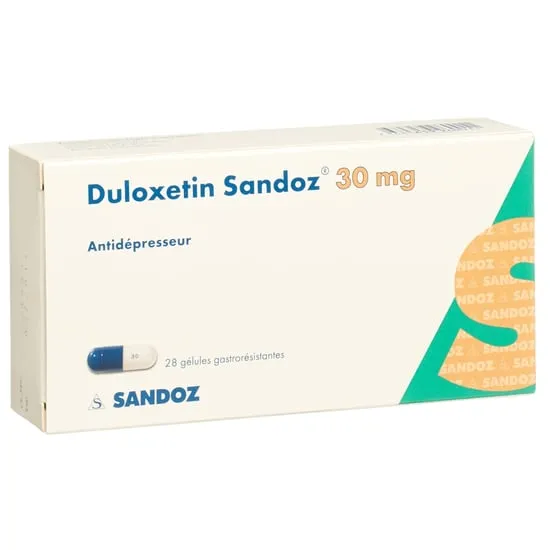
Table of Contents
Patient Information Leaflet
Duloxetine Sandoz, 30 mg, hard enteric-coated capsules
Duloxetine Sandoz, 60 mg, hard enteric-coated capsules
Duloxetinum
Please read all of this leaflet carefully before taking this medicine, because it contains
important information for you.
- Keep this leaflet. You may need to read it again.
- If you have any further questions, please ask your doctor or pharmacist.
- This medicine has been prescribed for you personally. Do not pass it on to others. It may harm them, even if their symptoms are the same as yours.
- If you experience any side effects, including any not listed in this leaflet, tell your doctor or pharmacist. See section 4.
Contents of this leaflet:
- What Duloxetine Sandoz is and what it is used for
- What you need to know before taking Duloxetine Sandoz
- How to take Duloxetine Sandoz
- Possible side effects
- How to store Duloxetine Sandoz
- Contents of the pack and other information
1. What Duloxetine Sandoz is and what it is used for
Duloxetine Sandoz contains the active substance duloxetine. This medicine increases the levels of serotonin and noradrenaline in the nervous system.
Duloxetine Sandoz is used in adults to treat:
- depression,
- generalised anxiety disorder (persistent feelings of anxiety or nervousness),
- diabetic neuropathic pain (often described as burning, stabbing, shooting, aching, or electric-shock-like pain. There may be loss of sensation in a specific part of the body, or touch, heat, cold, or pressure may be painful).
In most people with depression or anxiety, Duloxetine Sandoz starts to work within two weeks of starting treatment, but improvement in well-being may take 2 to 4 weeks. If there is no improvement after this time, you should tell your doctor. Even if your condition improves, your doctor may recommend continuing to take Duloxetine Sandoz to prevent depression or anxiety from returning.
In people with diabetic neuropathic pain, improvement may take several weeks. Please consult your doctor if there is no improvement after 2 months.
2. Important information before using Duloxetine Sandoz
When not to use Duloxetine Sandoz
- if the patient is allergic to duloxetine or to any of the other ingredients of this medicine (listed in section 6).
- if the patient has liver disease.
- if the patient has severe kidney disease.
- if the patient is taking or has taken within the last 14 days another medicine known as a monoamine oxidase inhibitor (MAOI), see "Duloxetine Sandoz and other medicines".
- if the patient is taking fluvoxamine (a medicine usually used to treat depression),
- or ciprofloxacin or enoxacin (medicines used to treat certain infections).
The patient should inform the doctor if they have high blood pressure or heart disease. The doctor will decide whether the patient should take Duloxetine Sandoz.
Warnings and precautions
Below are reasons why the use of Duloxetine Sandoz may not be recommended for the patient.
Before taking Duloxetine Sandoz, the patient should discuss with their doctor if:
- they are taking other antidepressant medicines (see "Duloxetine Sandoz and other medicines");
- they are taking a herbal medicine containing St. John's wort (Hypericum perforatum);
- they have kidney disease;
- they have previously had seizures;
- they have previously experienced episodes of mania;
- they have bipolar affective disorder;
- they have eye diseases, such as a certain type of glaucoma (increased pressure in the eye);
- they have previously had bleeding disorders (tendency to bruise easily), especially if the patient is pregnant (see "Pregnancy and breastfeeding");
- they are at risk of reduced sodium levels (e.g. due to diuretic medicines, particularly in elderly patients);
- they are taking other medicines that may cause liver damage;
- they are taking another medicine containing duloxetine (see "Duloxetine Sandoz and other medicines").
Duloxetine Sandoz may cause a feeling of restlessness or inability to sit or stand still. If such symptoms occur, the patient should inform their doctor.
The patient should also contact their doctor:
If they experience subjective and objective symptoms such as agitation, hallucinations, loss of coordination, rapid heartbeat, elevated body temperature, rapid changes in blood pressure, increased reflexes, diarrhoea, drowsiness, nausea, or vomiting, as these may indicate serotonin syndrome.
In its most severe form, serotonin syndrome may resemble neuroleptic malignant syndrome.
Symptoms of neuroleptic malignant syndrome may include: fever, rapid heartbeat, sweating, severe muscle rigidity, confusion, and increased activity of muscle enzymes (detected by blood tests).
Medicines such as Duloxetine Sandoz (so-called SNRIs) may cause symptoms of sexual dysfunction (see section 4). In some cases, these symptoms may persist after discontinuation of treatment.
Suicidal thoughts and worsening depression or anxiety disorders
Patients with depression and (or) anxiety disorders may sometimes have thoughts of self-harm or suicide. These thoughts may increase at the beginning of treatment with antidepressants, as these medicines take some time to work, usually about 2 weeks, but sometimes longer.
The occurrence of suicidal thoughts, thoughts of self-harm, or suicide attempts is more likely if:
- the patient has previously had suicidal thoughts or self-harming behaviour;
- the patient is a young adult – clinical data indicate an increased risk of suicidal behaviour in patients under 25 years of age with psychiatric disorders who are taking antidepressants.
If the patient experiences suicidal thoughts or thoughts of self-harm, they should contact their doctor immediately or go to hospital.
It may be helpful to inform family members or friends about the depression or anxiety disorder and ask them to read this leaflet. The patient may ask them to inform them if they notice that depression or anxiety worsens or if there are worrying changes in behaviour.
Children and adolescents under 18 years of age
Duloxetine Sandoz is generally not recommended for use in children and adolescents under 18 years of age. During treatment with medicines of this class, patients under 18 years of age are at increased risk of adverse effects such as suicide attempts, suicidal thoughts, and hostility (particularly aggression, oppositional behaviour, and manifestations of anger). Nevertheless, the doctor may prescribe Duloxetine Sandoz to patients under 18 years of age if they determine it to be in the patient's best interest. If the prescription of Duloxetine Sandoz to a patient under 18 years of age raises concerns, these should be discussed with the doctor. If the patient experiences or worsening of the above-mentioned symptoms while taking Duloxetine Sandoz, they should inform their doctor. Furthermore, there are currently no data on the long-term safety of Duloxetine Sandoz in this age group regarding growth, puberty, cognitive development, and behavioural development.
Duloxetine Sandoz and other medicines
The patient should inform their doctor or pharmacist about all medicines they are currently taking or have recently taken, as well as any medicines they plan to take.
Duloxetine, the main ingredient of Duloxetine Sandoz, is also contained in other medicines used to treat:
- pain in diabetic neuropathy,
- depression,
- anxiety,
- urinary incontinence.
The patient should avoid taking more than one of these medicines simultaneously. If the patient is already taking another medicine containing duloxetine, they should consult their doctor.
The doctor will decide whether Duloxetine Sandoz can be taken together with other medicines. Do not start or stop taking any other medicines, including over-the-counter medicines and herbal preparations, without consulting your doctor.
The patient should also inform their doctor if they are taking any of the following medicines:
Monoamine oxidase inhibitors (MAOIs)
If the patient is taking or has recently taken (within the last 14 days) another antidepressant medicine known as a monoamine oxidase inhibitor (MAOI), they should not take Duloxetine Sandoz. Examples of MAOIs include moclobemide (an antidepressant) and linezolid (an antibiotic). Taking MAOIs together with many prescription medicines, including Duloxetine Sandoz, may cause severe or even life-threatening adverse reactions. At least 14 days must pass after stopping an MAOI before starting Duloxetine Sandoz, and at least 5 days must pass after stopping Duloxetine Sandoz before starting an MAOI.
Medicines causing drowsiness
These include medicines prescribed by a doctor, such as benzodiazepines, strong painkillers, antipsychotics, phenobarbital, and antihistamines.
Medicines increasing serotonin levels
Triptans, tramadol, tryptophan, selective serotonin reuptake inhibitors (SSRIs, e.g. paroxetine and fluoxetine), selective norepinephrine reuptake inhibitors (SNRIs, e.g. venlafaxine), tricyclic antidepressants (e.g. clomipramine, amitriptyline), pethidine, buprenorphine, St. John's wort (Hypericum perforatum), and MAOIs (e.g. moclobemide and linezolid). These medicines increase the risk of adverse effects. If any unusual symptoms occur while taking any of these medicines together with Duloxetine Sandoz, the patient should contact their doctor.
Oral anticoagulants or antiplatelet medicines
Medicines that thin the blood or prevent blood clotting. They may increase the risk of bleeding.
Duloxetine Sandoz with food, drink and alcohol
Duloxetine Sandoz can be taken regardless of meals. The patient should exercise caution when consuming alcohol while taking Duloxetine Sandoz.
Pregnancy and breastfeeding
If the patient is pregnant or breastfeeding, suspects she may be pregnant, or plans to have a child, she should consult her doctor or pharmacist before using this medicine.
She should inform her doctor if she becomes pregnant or plans a pregnancy while taking Duloxetine Sandoz. Duloxetine Sandoz should only be taken after discussing the expected benefits of treatment and possible risks to the unborn child with the doctor.
She should ensure that her midwife and (or) doctor are aware of her use of Duloxetine Sandoz.
Similar medicines (SSRIs) taken during pregnancy may increase the risk of a serious condition in the newborn called persistent pulmonary hypertension of the newborn (PPHN), which causes rapid breathing and cyanosis. These symptoms usually occur within the first 24 hours after birth. If she notices these symptoms in her newborn, she should contact her midwife and (or) doctor immediately.
If the patient takes Duloxetine Sandoz towards the end of pregnancy, certain symptoms may occur in the newborn. These usually appear shortly after birth or within the following few days. Symptoms may include: muscle weakness, tremor, seizures, difficulty sucking, breathing difficulties, and convulsions. If any of these symptoms occur in the newborn or if she is concerned about the baby's health, she should contact her doctor or midwife, who will provide appropriate advice.
If the patient takes Duloxetine Sandoz towards the end of pregnancy, there is an increased risk of excessive vaginal bleeding shortly after delivery, especially if she has previously had bleeding disorders. She should inform her doctor or midwife about taking duloxetine so they can provide appropriate recommendations.
Available data on the use of duloxetine during the first three months of pregnancy generally do not show an increased risk of congenital malformations in the child. If the patient takes Duloxetine Sandoz during the second half of pregnancy, there may be an increased risk of premature delivery, particularly between weeks 35 and 36 of pregnancy (6 additional premature infants per 100 women taking duloxetine during the second half of pregnancy).
The patient should inform her doctor if she is breastfeeding. The use of Duloxetine Sandoz during breastfeeding is not recommended. She should consult her doctor or pharmacist for advice.
Driving and operating machinery
Duloxetine Sandoz may cause drowsiness or dizziness. The patient should not drive or operate machinery until they know how the medicine affects them.
Duloxetine Sandoz contains lactose, Allura Red AC (E 129), sodium, and Orange Yellow FCF (E 110)
This medicine contains lactose. If the patient has been diagnosed with intolerance to certain sugars, they should consult their doctor before taking this medicine.
This medicine contains Allura Red AC (E 129), which may cause allergic reactions.
This medicine contains less than 1 mmol (23 mg) of sodium per hard enteric capsule, i.e. it is considered "sodium-free".
Duloxetine Sandoz 60 mg
This medicine contains Orange Yellow (E 110), which may cause allergic reactions.
3. How to use Duloxetine Sandoz
This medicine should always be used exactly as prescribed by the doctor or pharmacist. If in doubt, the patient should consult their doctor or pharmacist.
Treatment of depression and pain in diabetic neuropathy
The usual dose of Duloxetine Sandoz is 60 mg once daily, but the doctor will recommend a dose appropriate for each patient.
Treatment of generalized anxiety disorders
The usual starting dose of Duloxetine Sandoz is 30 mg once daily. In most patients, the dose is subsequently increased to 60 mg once daily, but the doctor will recommend the appropriate dose for each patient. The dose may be increased up to 120 mg, depending on the patient's response to treatment.
Duloxetine Sandoz is intended for oral administration. The capsules should be swallowed whole with water.
Taking Duloxetine Sandoz at the same time each day may help the patient remember to take it.
The doctor will inform the patient how long they should take Duloxetine Sandoz. The patient should not stop taking the medicine or change the dose without consulting their doctor. Proper treatment of the illness is important so that the patient feels better. Without treatment, the illness may persist, worsen, and become difficult to treat.
Taking more Duloxetine Sandoz than prescribed
If the patient takes more Duloxetine Sandoz than prescribed, they should contact their doctor or pharmacist immediately. Symptoms of overdose may include: drowsiness, coma, serotonin syndrome (a rare reaction which may cause excessive feelings of well-being, drowsiness, loss of coordination, agitation, alcohol-like intoxication, fever, sweating, or muscle stiffness), seizures, vomiting, and rapid heartbeat.
Missing a dose of Duloxetine Sandoz
If a dose is missed, it should be taken as soon as remembered. However, if it is almost time for the next dose, the missed dose should be skipped and the next dose taken as usual. The patient should not take a double dose to make up for a missed dose.
The patient should not take a higher daily dose of Duloxetine Sandoz than prescribed by the doctor.
Stopping Duloxetine Sandoz
The patient must not stop taking the capsules without the doctor's advice, even if they feel better. If the doctor decides that the patient no longer needs to take Duloxetine Sandoz, they will recommend gradually reducing the dose over at least 2 weeks before stopping the medicine completely.
In some patients who abruptly stop taking Duloxetine Sandoz, the following symptoms may occur:
- dizziness
- tingling sensation or electric shock-like sensations (especially in the head)
- sleep disturbances (vivid dreams, nightmares, insomnia)
- fatigue, drowsiness
- motor restlessness or agitation
- anxiety
- nausea or vomiting
- tremor
- headache
- muscle pain
- irritability
- diarrhoea
- excessive sweating
These symptoms are usually not severe and resolve within a few days. However, if they are bothersome, the patient should consult their doctor.
If the patient has any further questions about the use of this medicine, they should consult their doctor or pharmacist.
4. Possible adverse reactions
Like any medicine, this medicine can cause adverse reactions, although they do not occur in everyone.
These reactions are usually mild or moderate and often resolve after a few weeks.
Very common adverse reactions (may affect more than 1 in 10 people)
- headache
- drowsiness
- nausea
- dry mouth
Common adverse reactions (may affect less than 1 in 10 people)
- loss of appetite
- sleep disturbances
- restlessness
- reduced sexual desire, anxiety, difficulty or inability to achieve orgasm
- unusual dreams
- dizziness
- feeling of sluggishness
- muscle tremor
- numbness, tingling or prickling sensation of the skin
- blurred vision
- tinnitus (ringing in the ears without external source)
- sensation of palpitations
- increased blood pressure, sudden reddening of the skin
- excessive yawning
- constipation
- diarrhoea
- abdominal pain
- vomiting
- heartburn or indigestion, flatulence
- increased sweating, rash (itchy)
- muscle pain, muscle cramps
- painful urination, frequent urination
- erectile dysfunction, changes in ejaculation
- falls (especially in elderly people), fatigue
- weight loss
In children and adolescents under 18 years of age with depression receiving duloxetine, a decrease in body weight has been observed at the beginning of treatment. After 6 months of treatment, body weight increased and equalized with that of other children and adolescents of the same age and sex.
Uncommon adverse reactions (may affect less than 1 in 100 people)
- sore throat causing hoarseness
- suicidal thoughts
- difficulty falling asleep
- teeth grinding or clenching
- disorientation
- lack of motivation
- sudden involuntary movements or muscle twitching
- restlessness or inability to sit or stand still quietly
- irritability
- difficulty concentrating
- taste disturbances
- difficulty controlling movements, e.g. lack of coordination or involuntary muscle movements, restless legs syndrome, worsened sleep quality
- pupil dilation (dark central part of the eye), visual disturbances
- dizziness or sensation of spinning
- ear pain
- rapid and (or) irregular heartbeat
- fainting, dizziness
- feeling of emptiness in the head or fainting upon standing
- sensation of coldness in fingers of hands and (or) feet
- tightness in the throat
- nosebleeds
- vomiting blood or black, tarry stools
- inflammation of the stomach and intestines, burping
- difficulty swallowing
- liver inflammation, which may cause abdominal pain and yellowing of the skin or whites of the eyes
- night sweats, urticaria, cold sweats
- sensitivity to sunlight
- increased tendency to bruise
- muscle stiffness and twitching
- difficulty or inability to urinate
- difficulty initiating urination
- need to urinate at night
- need to pass larger than usual amounts of urine
- reduced amount of urine output
- abnormal vaginal bleeding
- menstrual disorders, including heavier, painful, irregular or prolonged periods
- unusually light periods or absence of periods
- testicular or scrotal pain
- chest pain
- sensation of cold, thirst, chills, feeling of heat
- gait disturbances
- weight gain
Duloxetine Sandoz may cause reactions that the patient may not be aware of, such as increased liver enzyme activity or:
- increased blood potassium levels
- increased creatine kinase activity
- increased glucose levels
- increased blood cholesterol levels
Rare adverse reactions (may affect less than 1 in 1000 people)
- cough, wheezing and shortness of breath, possibly accompanied by fever
- severe allergic reaction causing breathing difficulties or dizziness with swelling of the tongue or lips, allergic reactions
- reduced thyroid function, which may cause fatigue or weight gain
- dehydration
- low blood sodium levels (mainly in elderly people; symptoms may include dizziness, weakness, confusion, drowsiness or severe fatigue, nausea or vomiting; more severe symptoms include fainting, seizures or falls)
- syndrome of inappropriate antidiuretic hormone secretion (SIADH)
- suicidal behaviour
- mania (excessive activity, racing thoughts and reduced need for sleep)
- hallucinations, aggression and anger
- "serotonin syndrome" (a rare reaction – feeling of excessive well-being, drowsiness, lack of motor coordination, restlessness, especially motor restlessness, sensation of alcohol intoxication, fever, sweating or muscle stiffness)
- seizures
- increased eye pressure (glaucoma)
- inflammation of the mouth
- bright red blood in stool, bad breath, inflammation of the large intestine (leading to diarrhoea)
- liver failure, yellowing of the skin or whites of the eyes (jaundice)
- Stevens-Johnson syndrome (a serious illness with blister formation on the skin, inside the mouth, eyes and genital organs)
- severe allergic reaction causing swelling of the face or throat (angioedema)
- jaw muscle spasm
- abnormal urine odour
- menopausal symptoms
- abnormal milky discharge from the breast in men or women
- excessive vaginal bleeding shortly after childbirth (postpartum haemorrhage)
Very rare adverse reactions (may affect less than 1 in 10,000 people)
- vasculitis of the skin
Frequency not known (cannot be estimated from available data)
- Objective and subjective symptoms of a condition called stress cardiomyopathy, which may include: chest pain, shortness of breath, dizziness, fainting, irregular heartbeat.
Reporting of adverse reactions
If any adverse reactions occur, including any adverse reactions not listed in this leaflet, inform your doctor, pharmacist or nurse.
Adverse reactions can be reported directly to the Department of Monitoring Adverse Drug Reactions, Office for Registration of Medicinal Products, Medical Devices and Biocidal Products: Al. Jerozolimskie 181C, 02-222 Warsaw
tel.: + 48 22 49 21 301/fax: + 48 22 49 21 309/ website: https://smz.ezdrowie.gov.pl
Adverse reactions can also be reported to the responsible entity.
Reporting adverse reactions helps to provide more information on the safety of the medicine.
5. How to store Duloxetine Sandoz
Keep the medicine out of the sight and reach of children.
Do not use this medicine after the expiry date stated on the blister and carton following EXP.
The expiry date refers to the last day of the stated month.
Do not store above 30°C.
Medicines should not be disposed of via wastewater or household waste. Ask your pharmacist how to dispose of medicines no longer required. This will help protect the environment.
6. Contents of the pack and other information
What Duloxetine Sandoz contains
- The active substance is duloxetine. Each enteric hard capsule contains 30 mg or 60 mg of duloxetine (as duloxetine hydrochloride).
- The other ingredients are: capsule contents: pregelatinized starch (corn), microcrystalline cellulose, povidone K30, talc, magnesium stearate, sodium stearyl fumarate, methacrylic acid copolymer type C, titanium dioxide (E171), lactose monohydrate, hypromellose and macrogol 4000. capsule shell: gelatin, titanium dioxide (E171), brilliant blue FCF (E133), Allura red AC (E129); additionally for 60 mg capsules: quinoline yellow (E104) and sunset yellow (E110). printing ink: shellac, indigo carmine (E132), titanium dioxide (E171), propylene glycol.
What Duloxetine Sandoz looks like and contents of the pack
Duloxetine Sandoz, 30 mg
A capsule (size 2) with a matt white body and printed "30", and a matt dark blue cap, containing 4 white or almost white, round, biconvex tablets.
Duloxetine Sandoz, 60 mg
A capsule (size 0E) with a yellowish-green body and printed "60", and a matt dark blue cap, containing 8 white or almost white, round, biconvex tablets.
Enteric hard capsules are packed in blisters made of PVC/PE/PCTFE/Aluminium or PA/Aluminium/PVC/Aluminium and placed in a cardboard box.
Pack sizes: 7, 14, 28, 30, 50, 56, 84, 98 enteric hard capsules.
Not all pack sizes may be marketed.
Marketing Authorisation Holder
Sandoz GmbH
Biochemiestrasse 10
6250 Kundl, Austria
Manufacturer/Importer
Pharmathen International S.A.
Industrial Park Sapes Rodopi Prefecture, Block No 5
69300 Rodopi, Greece
Pharmathen S.A.
Dervenakion 6
15351 Pallini Attiki, Greece
Salutas Pharma GmbH
Otto-von-Guericke-Allee 1
39179 Barleben, Germany
For further information about the medicinal product and its trade names in the European Economic Area countries, please contact:
Sandoz Polska Sp. z o.o.
ul. Domaniewska 50 C
02-672 Warszawa
tel. 22 209 70 00