Ducressa
Poland
Table of Contents
Package leaflet: Information for the user
Warning! Keep the leaflet. Information on the immediate packaging in a foreign language.
Ducressa 1 mg/ml + 5 mg/ml
eye drops, solution
Dexamethasonum + Levofloxacinum
Please read the entire leaflet carefully before using this medicine, as it contains
important information for the patient.
- Keep this leaflet for future reference.
- If you have any questions, please consult your doctor or pharmacist.
- This medicine has been prescribed for a specific individual. Do not pass it on to others. It may harm other people, even if their symptoms are similar.
- If you experience any adverse reactions, including any possible adverse reactions not listed in this leaflet, inform your doctor, pharmacist, or nurse. See section 4.
Table of contents
- What Ducressa is and what it is used for
- What you need to know before using Ducressa
- How to use Ducressa
- Possible side effects
- How to store Ducressa
- Contents of the pack and other information
1. What Ducressa is and what it is used for
What type of medicine is this and how does it work?
Ducressa eye drops, solution contains levofloxacin and dexamethasone.
Levofloxacin is an antibiotic belonging to a group called fluoroquinolones (sometimes referred to briefly as quinolones). It works by killing certain types of bacteria that may cause infection.
Dexamethasone is a corticosteroid with anti-inflammatory action (reducing symptoms such as pain, warmth, swelling, and redness).
What is this medicine used for?
Ducressa is used to prevent and treat inflammation and to prevent possible eye infection after cataract surgery in adults.
2. Important information before using Ducressa
When not to use Ducressa
- If the patient is allergic to levofloxacin (or other quinolones) or dexamethasone (or other corticosteroids), or to any of the other ingredients of this medicine (listed in section 6).
- If the patient has an eye infection for which medications should not be used, such as viral infections (e.g. herpes keratitis or varicella zoster), fungal infections, or tuberculosis of the eye. Signs of infection may include sticky discharge from the eye or redness of the eye that has not been examined by a doctor.
Warnings and precautions
Before using Ducressa, discuss the following with your doctor:
- If the patient is using any other antibiotics, including oral antibiotics. As with other antimicrobial agents, prolonged use may lead to antibiotic resistance and overgrowth of pathogenic microorganisms.
- If the patient has high intraocular pressure or previously experienced elevated intraocular pressure after using a steroid ophthalmic medication. Use of Ducressa may cause recurrence of this condition. Inform the doctor if you have high intraocular pressure.
- If the patient has glaucoma.
- If the patient has visual disturbances or blurred vision.
- If the patient is using ophthalmic non-steroidal anti-inflammatory drugs (NSAIDs); see section "Ducressa with other medicines".
- If the patient has a condition causing thinning of ocular tissues, as prolonged steroid treatment may lead to further thinning and potentially result in perforation.
- If the patient has diabetes.
Important information for contact lens wearers
After cataract surgery, contact lenses should not be worn throughout the duration of treatment with Ducressa.
Children and adolescents
Ducressa is not recommended for children and adolescents under 18 years of age due to lack of data on safety and efficacy in this age group.
Ducressa with other medicines
Inform your doctor or pharmacist:
- About all medicines the patient is currently using, has recently used, or plans to use, including over-the-counter medicines.
- If the patient is using other types of eye drops or ointments before starting Ducressa (see section 3 – How to use Ducressa).
- If the patient is using ophthalmic NSAIDs (for eye pain and inflammation), such as ketorolac, diclofenac, bromfenac, or nepafenac. Concomitant use of systemic steroids and ophthalmic NSAIDs may increase the risk of healing problems in the eye.
- If the patient is using ritonavir or cobicistat (used in HIV treatment), as they may increase blood levels of dexamethasone.
- If the patient is using probenecid (for gout), cimetidine (for stomach ulcers), or cyclosporine (to prevent transplant rejection), as they may alter the absorption and metabolism of levofloxacin.
Pregnancy and breastfeeding
If the patient is pregnant or breastfeeding, suspects she may be pregnant, or is planning to become pregnant, she should consult her doctor or pharmacist before using this medicine. Ducressa should not be used during pregnancy or breastfeeding.
Driving and operating machinery
If blurred vision occurs temporarily shortly after using the medicine, the patient should not drive or operate machinery until vision becomes clear.
Ducressa contains phosphate buffer
The medicine contains 4.01 mg of phosphates per ml, equivalent to 0.12 mg per drop. In cases of severe damage to the transparent front layer of the eye (cornea), phosphate may very rarely cause the formation of corneal opacities due to calcium deposits during treatment. In such cases, consult a doctor, who may recommend treatment with phosphate-free preparations.
Ducressa contains benzalkonium chloride
The medicine contains 0.05 mg of benzalkonium chloride per ml, equivalent to 0.0015 mg per drop. Benzalkonium chloride may also cause eye irritation, particularly in patients with dry eyes or corneal diseases (conditions of the transparent front layer of the eye). If the patient experiences unusual sensations in the eye, such as stinging or pain after using this medicine, consult a doctor.
3. How to use Ducressa
This medicine should always be used exactly as directed by the physician or pharmacist. In case of doubt,
consult the physician or pharmacist.
The recommended dose is 1 drop into the affected eye every 6 hours. The maximum dose is 4 drops per day.
The total treatment period with Ducressa usually lasts 7 days, after which, if considered necessary by the physician,
steroid eye drops should be used for the following 7 days.
The physician will inform you how long the drops should be used.
If the patient is using any other eye medication, at least 15 minutes should be left between applications of different types of drops.
Eye ointments should be applied last.
Instructions for use:
If possible, the patient should ask someone else to administer the drops. That person should be asked to read these instructions together with the patient.
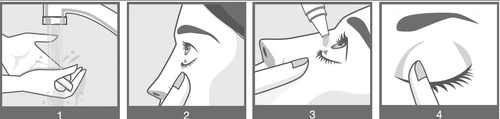
- Wash hands thoroughly (illustration 1).
- Open the bottle. When opening the bottle for the first time, remove the loose collar from the cap.
Pay special attention to ensure that the dropper tip of the bottle does not touch the eye, the skin around the eye, or fingers. - Unscrew the cap. Hold the bottle pointing downwards, between thumb and fingers.
- Pull down the lower eyelid with a finger to form a "pocket" between the eyelid and the eye. The drop should be instilled here (illustration 2).
- Tilt the head backwards and bring the dropper tip close to the eye, then gently squeeze the bottle in the middle and allow the drop to fall into the eye (illustration 3). Note that there may be a delay of several seconds between squeezing the bottle and the drop emerging. Do not squeeze the bottle too hard.
- After instilling Ducressa, press with a finger on the inner corner of the eye near the nose. This helps prevent the medicine from passing into the rest of the body (illustration 4).
If the drop does not enter the eye, try again. Immediately after use, tightly recap the bottle with the cap.
Use of more than the recommended dose of Ducressa
If more than the recommended amount of this medicine is used, the eye can be rinsed with lukewarm water.
Missed dose of Ducressa
If a dose is missed, do not worry; simply use the medicine as soon as possible. Do not use a double dose to make up for a missed dose.
Stopping treatment with Ducressa
Inform the physician if treatment is stopped earlier than recommended. In case of any further doubts regarding the use of this medicine, consult the physician or pharmacist.
4. Possible side effects
Like all medicines, this medicine can cause side effects, although not everybody gets them.
Most side effects are not serious and affect only the eyes.
- Very rarely, this medicine may cause severe allergic reactions (anaphylactic reactions), accompanied by swelling and tightness in the throat and difficulty breathing.
- If any of these symptoms occur, stop using Ducressa immediately and contact your doctor.
- In patients taking fluorochinolones orally or intravenously, especially elderly patients and those receiving concomitant corticosteroid therapy, tendon swelling and tendon ruptures have been reported. If tendon pain or swelling (tendonitis) occurs, discontinue use of Ducressa.
In the patient's eye(s), one or more of the following side effects may also occur:
Very common (may affect more than 1 in 10 people):
- increased intraocular pressure.
Common (may affect up to 1 in 10 people):
- discomfort, stinging or irritation, burning, itching in the eye;
- blurred or restricted vision;
- mucus in the eye.
Uncommon (may affect up to 1 in 100 people):
- corneal healing taking longer than expected;
- eye infections;
- unusual sensations in the eye;
- excessive tearing;
- dryness and fatigue of the eye;
- eye pain;
- brighter vision;
- swelling or redness (bloodshot eyes) of the front layer of the eye (conjunctiva);
- swelling or redness of the eyelid;
- light sensitivity;
- sticky eyelids.
Very rare (may affect up to 1 in 10,000 people):
- increased pupil size;
- drooping eyelids;
- calcium deposits on the surface of the eye (corneal calcification);
- tears and sensation of sand in the eye (crystalline keratopathy);
- change in thickness of the eye surface;
- ulcer on the surface of the eye;
- small holes on the surface of the eye (corneal perforation);
- swelling of the surface of the eye (corneal edema);
- eye inflammation causing pain and redness (uveitis).
In other parts of the body, side effects may include:
Uncommon (may affect up to 1 in 100 people):
- headache;
- altered taste;
- itching;
- stuffy or runny nose.
Rare (may affect up to 1 in 1,000 people):
- allergic reactions such as skin rash.
Very rare (may affect up to 1 in 10,000 people):
- facial swelling.
Frequency not known:
- reduced adrenal gland function, which may present as low blood glucose levels, dehydration, weight loss, and feeling disoriented;
- hormonal problems: excessive body hair growth (especially in women), muscle weakness and atrophy, purple stretch marks on the skin, high blood pressure, irregular or absent menstruation, changes in protein and calcium levels in the body, growth suppression in children and adolescents, and swelling with increased body and facial weight (known as "Cushing's syndrome").
Reporting of side effects
If any side effects occur, including any side effects not listed in this leaflet, tell your doctor, pharmacist, or nurse. Side effects can also be reported directly to the Department of Monitoring of Adverse Drug Reactions of the Office for Registration of Medicinal Products, Medical Devices and Biocidal Products
Al. Jerozolimskie 181C, 02-222 Warsaw
Phone: +48 22 49 21 301
Fax: +48 22 49 21 309
Website: https://smz.ezdrowie.gov.pl
By reporting side effects, additional information on the safety of this medicine can be collected.
5. How to store Ducressa
Keep this medicine out of the sight and reach of children.
Do not use this medicine after the expiry date stated on the packaging. The expiry date refers to the last day of the stated month.
Do not use this medicine if the plastic seal around the cap and neck is missing or broken before opening a new bottle.
Keep the bottle tightly closed. To prevent contamination, discard the bottle 28 days after first opening and use a new one.
No special storage conditions are required.
Medicines must not be disposed of via wastewater or household waste. Ask your pharmacist how to dispose of medicines no longer in use. This will help protect the environment.
6. Contents of the pack and other information
What Ducressa contains
- The active substances are levofloxacin in the form of levofloxacin hemihydrate and dexamethasone in the form of dexamethasone sodium phosphate. One millilitre of solution contains 5 mg of levofloxacin and 1 mg of dexamethasone.
- Other ingredients: monosodium dihydrogen phosphate monohydrate, disodium phosphate dodecahydrate, sodium citrate, benzalkonium chloride solution, sodium hydroxide/hydrochloric acid, diluted (for pH adjustment), water for injections.
What Ducressa looks like and contents of the pack
Ducressa is a clear, slightly greenish-yellow solution practically free from visible particles.
Even if the dispensed drops appear clear and colourless, the solution may have a slight greenish-yellow tint. It is supplied in a pack containing one 5 ml bottle made of LDPE with a dropper made of LDPE and a cap made of HDPE, packed in a cardboard box.
For further information, please contact the responsible party or the parallel importer.
Marketing Authorisation Holder in Germany, the country of export:
Santen Oy
Niittyhaankatu 20
33720 Tampere
Finland
Manufacturer:
Santen Oy
Kelloportinkatu 1
33100 Tampere
Finland
Parallel Importer:
Delfarma Sp. z o.o.
ul. Św. Teresy od Dzieciątka Jezus 111, 91-222 Łódź
Repackaged in:
Delfarma Sp. z o.o.
ul. Św. Teresy od Dzieciątka Jezus 111, 91-222 Łódź
Marketing Authorisation Number in Germany, the country of export: 2203683.00.00
Parallel Import Licence Number: 287/25
This medicinal product is authorised in the Member States of the European Economic Area and in the United Kingdom (Northern Ireland) under the following names:
Ducressa: Austria, Belgium, Bulgaria, Croatia, Czech Republic, Denmark, Estonia, Finland, Greece, Spain, Ireland, Iceland, Liechtenstein, Lithuania, Latvia, Netherlands, Germany, Norway, Poland, Portugal, Romania, Slovakia, Slovenia, Sweden, Hungary, Italy, United Kingdom (Northern Ireland)
Dugressa: France